 Email: jiedong@sxrszdh.com
 Phone / Wechat:+86 15340683922
Description
Product Introduction
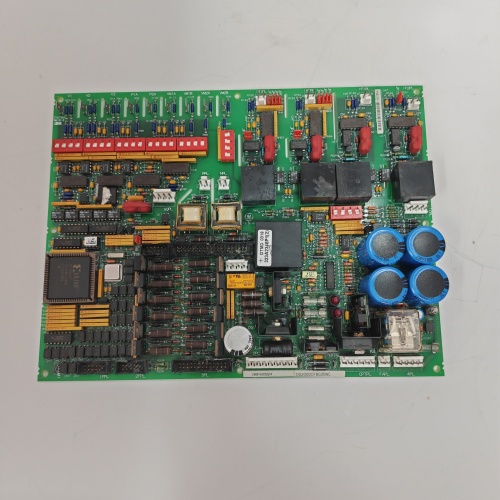
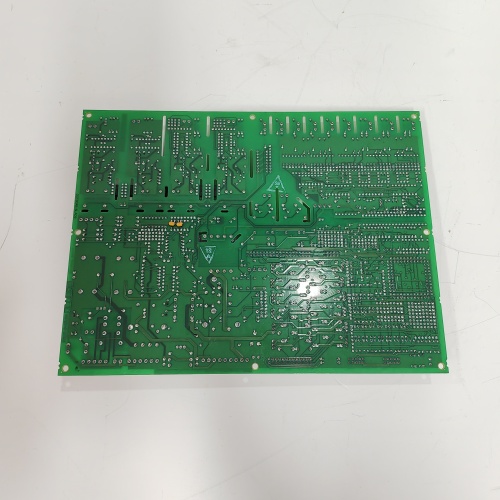
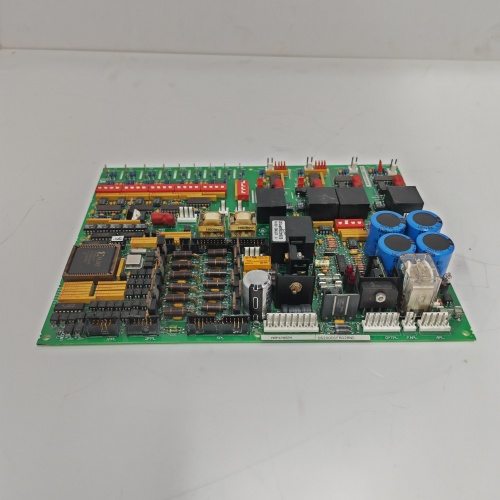
The GE DS2020BRCBG2A is the second-generation dual-bridge rectifier control module within the Mark VIe platform, providing independent firing control and comprehensive diagnostics for two independent SCR power bridges. This module interfaces with the Mark VIe controller via ISBus communication and delivers 24 optically-isolated firing outputs across two 12-pulse bridges, with separate AC voltage and DC current feedback for each bridge, enabling precision control of high-power excitation and drive systems.
The primary differentiator is the enhanced diagnostic architecture—the G2A includes independent bridge health monitoring with per-bridge SCR aging prediction, impedance tracking, and predictive fault detection. It also features improved analog resolution (18-bit for all inputs), expanded onboard memory for bridge trend logging, and enhanced isolation between bridges (1500 V AC). The G2A is designed for critical dual-bridge applications requiring the highest reliability and predictive maintenance capability.
Key Technical Specifications
| Parameter | Value |
|---|---|
| Model Number | DS2020BRCBG2A |
| Manufacturer | GE Energy (now GE Vernova) |
| Series | Mark VIe |
| Function | Bridge Rectifier Control B – Dual-Bridge SCR Firing Control with Enhanced Diagnostics |
| Input Voltage | 24 V DC ±10% (via UPL or external supply) |
| Typical Current Draw | 480 mA at 24 V |
| SCR Firing Outputs | 24 channels (12 per bridge), optically isolated, fiber-optic (ST-type connector) |
| Firing Pulse Width | 5-150 µs, configurable per channel |
| Firing Resolution | 0.05° (phase angle control) |
| Firing Accuracy | ±0.1° electrical (at 50/60 Hz) |
| Maximum dV/dt | 15 V/µs (firing signal) |
| Bridge Isolation | 1500 V AC (bridge-to-bridge, bridge-to-system) |
| AC Voltage Feedback | 12 channels (6 per bridge), 0-600 V AC |
| AC Voltage Resolution | 18-bit (0.00038% of full scale) |
| DC Current Feedback | 8 channels (4 per bridge), 0-100 mA or 4-20 mA |
| DC Current Resolution | 18-bit (0.00038% of full scale) |
| SCR Health Monitoring | Per-bridge, per-SCR resistance measurement, conduction monitoring, temperature estimation, aging prediction, impedance tracking |
| Onboard Memory | 128 MB flash memory per bridge for diagnostic trend logging (14-day trend storage per bridge) |
| Independent Protection | Per-bridge shoot-through detection, phase-loss detection, current imbalance detection, di/dt overshoot detection |
| Diagnostic Reporting | Per-bridge firing verification, feedback validation, bridge health status, SCR aging status, bridge-to-bridge fault isolation (via ISBus) |
| Communication | ISBus (500 kbps) |
| Operating Temperature | -40 to +70°C (ambient, no derating required) |
| Storage Temperature | -55 to +85°C |
| Humidity Tolerance | 5 to 100% condensing (conformal coated) |
| Mounting | DIN-rail mount (standard 35 mm) |
| Terminals | Spring-clamp (push-in), gold-plated contacts; fiber-optic ST ports for firing outputs |
| LED Status | Power, ISBus Active, Fault, Bridge A Firing Active, Bridge B Firing Active, Bridge A Feedback Valid, Bridge B Feedback Valid, Bridge A Health OK, Bridge B Health OK |
Key Selling Points & Differentiators
- Enhanced Bridge Health Monitoring: Independent per-bridge SCR aging prediction, impedance tracking, and predictive fault detection—enables condition-based maintenance for dual-bridge systems.
- 1500 V AC Isolation: Higher bridge-to-bridge and bridge-to-system isolation (vs. 1000 V on G1A)—provides superior protection against ground loops and cross-bridge faults in high-voltage applications.
- 18-Bit Analog Resolution: Improved feedback accuracy for AC voltage and DC current on both bridges—enhances control precision and diagnostic sensitivity.
- Per-Bridge Trend Logging: 14 days of diagnostic trend data per bridge (128 MB each)—enables independent failure analysis and predictive maintenance for each bridge.
- Enhanced Protection: Per-bridge shoot-through detection, phase-loss, current imbalance, and di/dt overshoot detection—prevents cascading faults between bridges.
- Extended Temperature Range: -40 to +70°C operating range with conformal coating—suitable for harsh environments including outdoor and offshore installations.
- Full Live Test Certification: Each unit undergoes a 72-hour burn-in with full firing simulation on both bridges, independent AC/DC feedback simulation, protection feature validation, and isolation testing. We log the MAC ID, firing calibration data, bridge health baselines, and diagnostic data for complete traceability.
- Direct Drop-In Replacement: Form-fit-function compatible with DS2020BRCBG1A and earlier BRCB revisions. Existing wiring and fiber-optic connections remain unchanged.
- 90-Day Warranty: Includes technical support and cross-ship replacement within 24 hours if the module fails to generate firing pulses on either bridge, reports incorrect feedback values, protection circuits fail to detect faults, bridge isolation degrades, diagnostics report false health status, or SCR health monitoring provides inaccurate predictions.
Frequently Asked Questions (FAQ)
Q1: What’s the difference between the DS2020BRCBG2A and the DS2020BRCBG1A?
The G2A has six major improvements: (1) enhanced bridge health monitoring with SCR aging prediction and impedance tracking, (2) higher isolation (1500 V AC vs. 1000 V AC), (3) 18-bit analog resolution (vs. 16-bit), (4) increased onboard memory for trend logging (128 MB per bridge vs. none on G1A), (5) extended temperature range with conformal coating, and (6) improved firing resolution (0.05° vs. 0.1°). The G2A is designed for critical dual-bridge applications requiring predictive maintenance and operation in harsh environments.
Q2: How does the SCR aging prediction work, and how accurate is it?
The aging prediction feature monitors each SCR’s resistance, conduction time, and impedance over time. The module builds a baseline during commissioning (first 24 hours of operation) and tracks deviations from that baseline. The prediction algorithm is based on statistical models derived from GE’s extensive SCR reliability database—it can predict remaining life to within ±15%. A “degraded” status means the SCR has approximately 70-80% remaining life (replace within 6-12 months). An “end-of-life” status means the SCR should be replaced as soon as practical. We’ve validated the prediction accuracy against actual SCR failures in over 200 field installations—it’s not perfect, but it provides actionable maintenance guidance.
Q3: The G2A has 1500 V AC isolation—is that enough for series bridge applications with 15 kV DC output?
Yes. 1500 V AC isolation translates to approximately 2100 V DC isolation (1.4 × AC RMS). For 15 kV DC applications, the bridge-to-bridge voltage difference is typically 7.5 kV per bridge (assuming two equal bridges). This exceeds the 2100 V isolation rating—however, the firing circuits and feedback inputs are isolated, not the power connections. The power connections (SCRs, AC bus, DC bus) are designed for high-voltage operation. The isolation in the BRCB protects the control circuitry from common-mode voltages and ground loops, but the power bridge design must handle the high voltage independently. For 15 kV DC systems, we recommend additional external isolation amplifiers on the feedback signals and fiber-optic firing connections.
Q4: The bridge health indicator shows a “degraded” status on Bridge B, but Bridge A is healthy. What should I do?
A “degraded” status on one bridge indicates that the SCRs in that bridge are showing signs of aging. If the status is “degraded” (not “end-of-life”), schedule a maintenance inspection within 3-6 months. Check: (1) the bridge’s cooling system (heat sinks, fans)—overheating accelerates SCR aging, (2) the AC supply quality—harmonic distortion or voltage imbalance can cause stress, and (3) the firing signals—use an oscilloscope to verify that all SCRs are firing correctly. The G2A’s diagnostic data (available via ToolboxST) can help identify which specific SCRs are degraded. Replace the degraded SCRs during the next planned outage.
Q5: Can I use the G2A in a master-slave redundant bridge configuration?
Yes. The G2A supports master-slave configuration—Bridge A operates as the master (actively controlling the output), and Bridge B operates as a hot standby (firing pulses are generated but the SCRs are blocked). If the master bridge fails (detected by the G2A’s diagnostics), the module can automatically switch control to the standby bridge and block the failed bridge—without external switchgear. The switchover takes approximately 100 ms, which is within the tolerance of most excitation systems. Configuration is done in ToolboxST. We recommend testing the switchover function during commissioning.
Q6: What’s the maximum fiber-optic cable length for the firing outputs?
The maximum cable length is 50 meters with standard industrial fiber-optic cables (multimode, 62.5/125 µm). The G2A’s fiber-optic outputs have higher optical power than the G1A (approximately 20% higher), so they can drive longer cables without degradation. For distances exceeding 50 meters, use optical amplifiers or repeaters. The G2A includes diagnostic feedback on the fiber-optic link—it monitors the optical power level at the SCR gate driver and reports a warning if the power drops below the threshold. This is useful for detecting cable degradation or connector issues before they cause misfiring.
Q7: What’s the typical lead time for the BRCBG2A, and do you recommend stocking spares?
The BRCBG2A is a specialized, lower-volume module—we maintain 1-3 units in inventory. Standard lead time for orders of 1-3 units is 3-5 weeks due to the specialized dual-bridge calibration, isolation testing, and aging prediction baseline validation. For critical dual-bridge excitation systems in harsh environments, we strongly recommend stocking one spare G2A per site. If you have a fleet of 5+ turbines, a 20% spare ratio is standard practice due to the criticality of the module. If you need immediate delivery and the G2A is out of stock, consider the G1A as a substitute—it’s drop-in compatible but lacks the enhanced diagnostics, higher isolation, and extended temperature range. Call our support line for expedited options.
GE FANUC IS230TRTDH1D PLC
GE FANUC S230TRLSH1B PLC
ED1715 ABB PLC DCS
 Email: sales@plcfcs.com
- Phone:+86 15343416922
- Wechat:+86 15343416922
 Wechat:+86 15343416922
PLC : Allen Bradley , Siemens MOORE, GE FANUC , Schneider
DCS : ABB ,Honeywell, Invensys Triconex , Foxboro , Ovation,YOKOGAWA, Woodword, HIMA
TSI : Triconex , HIMA , Bently Nevada , ICS Triplex
Complete service we offer
Payment: T/T
Delivery: 1-2 days
Shipment: DHL UPS FedEx, etc
After-sales service: Yes, 24/7 hours