 Email: jiedong@sxrszdh.com
 Phone / Wechat:+86 15340683922
Description
Product Core Brief (Continued)
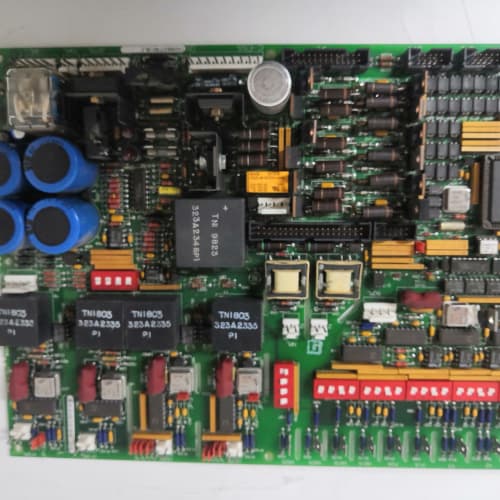
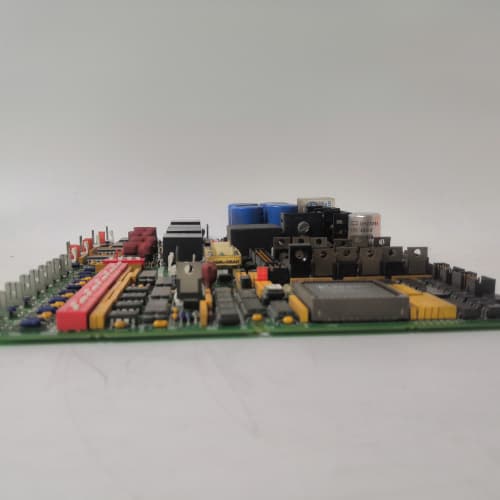
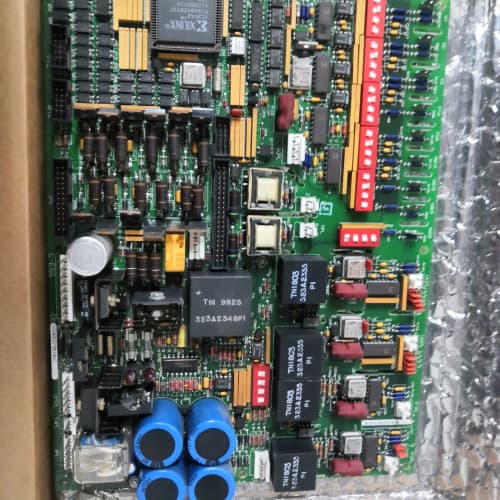
The GE DS2020BRCBG1A is the extended-capacity bridge rectifier control module within the Mark VIe platform, specifically designed for dual-bridge configurations requiring independent control and monitoring of two SCR power bridges. This module interfaces with the Mark VIe controller via ISBus communication and provides 24 optically-isolated firing outputs across two independent 12-pulse bridges, with separate AC voltage and DC current feedback for each bridge, enabling precision control of high-power excitation and drive systems.
The primary differentiator is the dual-bridge independence—the BRCB can control two separate 12-pulse SCR bridges with completely independent firing angles, feedback loops, and protection schemes. This is essential for parallel bridge configurations (used in high-current applications) or series bridge configurations (used in high-voltage applications). The G1A revision includes enhanced isolation between bridges (1000 V AC), improved diagnostic reporting per bridge, and spring-clamp terminals for all field wiring.
Key Technical Specifications
| Parameter | Value |
|---|---|
| Model Number | DS2020BRCBG1A |
| Manufacturer | GE Energy (now GE Vernova) |
| Series | Mark VIe |
| Function | Bridge Rectifier Control B – Dual-Bridge SCR Firing Control with Independent Monitoring |
| Input Voltage | 24 V DC ±10% (via UPL or external supply) |
| Typical Current Draw | 450 mA at 24 V |
| SCR Firing Outputs | 24 channels (12 per bridge), optically isolated, fiber-optic (ST-type connector) |
| Firing Pulse Width | 10-120 µs, configurable per channel |
| Firing Resolution | 0.1° (phase angle control) |
| Firing Accuracy | ±0.2° electrical (at 50/60 Hz) |
| Maximum dV/dt | 10 V/µs (firing signal) |
| Bridge Isolation | 1000 V AC (bridge-to-bridge, bridge-to-system) |
| AC Voltage Feedback | 12 channels (6 per bridge), 0-600 V AC |
| AC Voltage Resolution | 16-bit (0.0015% of full scale) |
| DC Current Feedback | 8 channels (4 per bridge), 0-100 mA or 4-20 mA |
| DC Current Resolution | 16-bit (0.0015% of full scale) |
| Independent Protection | Per-bridge shoot-through detection, phase-loss detection, current imbalance detection |
| Diagnostic Reporting | Per-bridge firing verification, feedback validation, bridge health status, bridge-to-bridge fault isolation (via ISBus) |
| Communication | ISBus (500 kbps) |
| Operating Temperature | -25 to +60°C (ambient, forced air recommended above 50°C) |
| Storage Temperature | -40 to +85°C |
| Mounting | DIN-rail mount (standard 35 mm) |
| Terminals | Spring-clamp (push-in) for feedback signals; fiber-optic ST ports for firing outputs |
| LED Status | Power, ISBus Active, Fault, Bridge A Firing Active, Bridge B Firing Active, Bridge A Feedback Valid, Bridge B Feedback Valid |
Key Selling Points & Differentiators
- Dual-Bridge Independent Control: Two completely independent 12-pulse bridge controllers in a single module—supports parallel bridges for high-current (up to 20,000 A) and series bridges for high-voltage (up to 15 kV) applications.
- Enhanced Bridge Isolation: 1000 V AC isolation between bridges—prevents cross-interference and allows independent grounding schemes for each bridge.
- Flexible Configuration: Supports parallel-bridge (current sharing), series-bridge (voltage sharing), and master-slave (redundant) configurations—configurable via ToolboxST.
- Comprehensive Diagnostics: Per-bridge diagnostic reporting includes individual SCR health, feedback validation, and bridge-to-bridge fault isolation—simplifies troubleshooting and commissioning.
- Independent Protection: Per-bridge shoot-through, phase-loss, and current imbalance detection—prevents cascading faults from one bridge to the other.
- Reduced Cabinet Footprint: Combines two bridge controllers in a single DIN-rail module—reduces cabinet space by approximately 50% compared to using two separate BRCA modules.
- Full Live Test Certification: Each unit undergoes a 48-hour burn-in with full firing simulation on both bridges, independent AC and DC feedback simulation, and protection feature validation. We log the MAC ID, firing calibration data, and diagnostic baselines for traceability.
- Direct Drop-In Replacement: Form-fit-function compatible with DS2020BRCBG1 and earlier BRCB revisions. Existing wiring and fiber-optic connections remain unchanged.
- 90-Day Warranty: Includes technical support and cross-ship replacement within 24 hours if the module fails to generate firing pulses on either bridge, reports incorrect feedback values, protection circuits fail to detect faults, bridge isolation degrades, or diagnostics report false health status.
Frequently Asked Questions (FAQ)
Q1: What’s the difference between the DS2020BRCBG1A and the DS2020BRCAG3?
The BRCB has two independent bridge controllers in a single module, while the BRCA has a single bridge controller. The BRCB has 24 firing outputs, 12 AC feedback inputs, and 8 DC current inputs—essentially twice the capacity of the BRCA. The BRCB also has higher bridge-to-bridge isolation (1000 V AC) compared to the BRCA’s bridge-to-system isolation (500 V AC). If you need to control two independent bridges (e.g., dual 12-pulse bridges in a high-current application), the BRCB is the right choice. If you need only one bridge, the BRCA is more cost-effective.
Q2: What types of dual-bridge configurations does the BRCB support?
The BRCB supports three primary configurations: (1) Parallel—both bridges share the same AC and DC buses, with current sharing controlled independently. Used for high-current applications (e.g., large excitation systems up to 20,000 A). (2) Series—bridges are connected in series on the DC side for high-voltage applications (e.g., up to 15 kV DC). (3) Master-Slave—one bridge acts as the primary controller and the second bridge is a hot standby. The master-slave configuration is used for critical applications where a bridge failure would cause a turbine trip. Configuration is done in ToolboxST.
Q3: How does the bridge-to-bridge isolation work, and why is it important?
The BRCB has 1000 V AC isolation between the two bridge controllers, meaning the firing circuits, feedback inputs, and ground references for each bridge are completely separate. This is important because: (1) in series bridges, the DC voltages can differ by thousands of volts—the isolation allows independent grounding, (2) in parallel bridges, ground loops can cause circulating currents—the isolation prevents this, and (3) in the event of a fault on one bridge, the isolation prevents the fault from damaging the other bridge. The isolation is implemented with optocouplers on the firing outputs and isolated transformers on the feedback inputs.
Q4: Can I use the BRCB to control one bridge only and leave the second bridge unused?
Yes. The BRCB supports single-bridge operation. In this configuration, Bridge B is disabled, and only Bridge A’s firing outputs, feedback inputs, and protection circuits are active. The unused bridge’s terminals and fiber-optic ports are left open. This is useful if you want a single module for both single-bridge and future dual-bridge expansion—you can add the second bridge later without replacing the module. However, the BRCB is more expensive than the BRCA, so if you’re certain you’ll never need a second bridge, the BRCA is more cost-effective.
Q5: The BRCB shows a bridge-to-bridge fault, but neither bridge shows a fault individually. What could be the cause?
A bridge-to-bridge fault indicates a cross-interference issue between the two bridges—for example, a ground loop causing AC voltage feedback cross-talk, or an imbalance in the AC supply that affects both bridges. Common causes: (1) the two bridges share a common ground point, causing circulating currents (use separate ground points for each bridge), (2) the AC voltage transformers for each bridge are not isolated from each other (use separate potential transformers), or (3) the DC current shunts are not isolated (use separate shunts). The BRCB’s diagnostics can help identify the source—check the bridge-to-bridge impedance measurements in ToolboxST. If the impedance is below the threshold, investigate your grounding scheme.
Q6: What’s the maximum current rating for parallel-bridge configurations with the BRCB?
The BRCB does not have a specific current rating—it’s a control module, not a power module. The current rating is determined by the SCRs and power bridge design. However, the BRCB supports up to 12 SCRs per bridge, which typically corresponds to 6-pulse or 12-pulse configurations. For parallel operation, the current is shared between the two bridges, so the total current can be up to twice the rating of each individual bridge. The BRCB provides independent current feedback for each bridge, enabling precise current sharing control. In typical GE excitation systems, the BRCB can support total currents up to 20,000 A with appropriate SCR bridge design.
Q7: What’s the typical lead time for the BRCBG1A, and do you recommend stocking spares?
The BRCBG1A is a specialized, lower-volume module—we maintain 2-4 units in inventory. Standard lead time for orders of 1-3 units is 2-4 weeks due to the specialized dual-bridge calibration and isolation testing. For critical dual-bridge excitation systems, we recommend stocking one spare BRCB per site. If you have a fleet of 5+ turbines, a 20% spare ratio is standard practice due to the criticality of the module. If you need immediate delivery and the BRCB is out of stock, consider using two BRCA modules (one per bridge) as a substitute—you’ll need additional wiring and cabinet space, and you’ll lose the bridge-to-bridge isolation. Call our support line for expedited options.
GE FANUC IS230TPROH2C PLC
GE FANUC IS230TPROH2CBB PLC
GE FANUC IS230TRLSH1BGG PLC
 Email: sales@plcfcs.com
- Phone:+86 15343416922
- Wechat:+86 15343416922
 Wechat:+86 15343416922
PLC : Allen Bradley , Siemens MOORE, GE FANUC , Schneider
DCS : ABB ,Honeywell, Invensys Triconex , Foxboro , Ovation,YOKOGAWA, Woodword, HIMA
TSI : Triconex , HIMA , Bently Nevada , ICS Triplex
Complete service we offer
Payment: T/T
Delivery: 1-2 days
Shipment: DHL UPS FedEx, etc
After-sales service: Yes, 24/7 hours