 Email: jiedong@sxrszdh.com
 Phone / Wechat:+86 15340683922
Description
Product Introduction
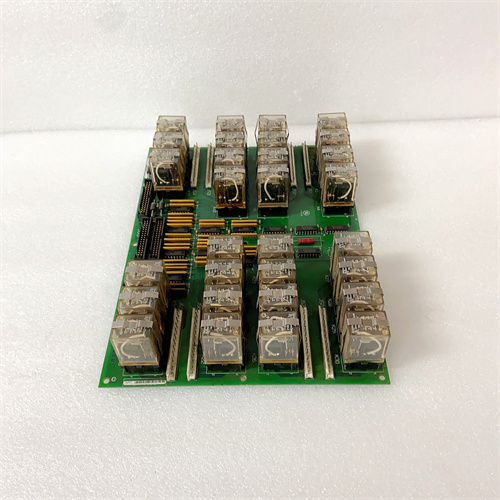
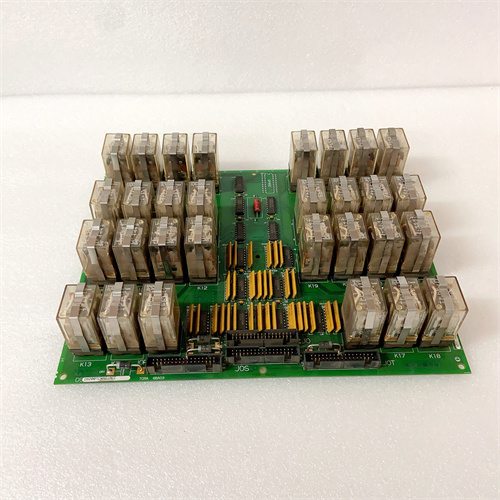
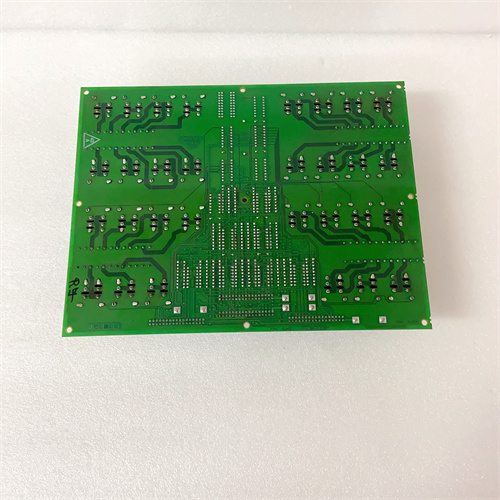
The GE DS2020ACSAG2 is the second-generation Analog Control and Signal Acquisition (ACSA) module within the Mark VIe control platform, delivering high-density analog I/O with per-channel galvanic isolation and enhanced diagnostic capabilities. This module interfaces directly with the Mark VIe controller via ISBus communication, providing 8 configurable analog inputs and 4 configurable analog outputs, all with independent isolation to eliminate ground loops and protect against field wiring faults.
The primary differentiator is the expanded diagnostic features, including sensor supply current monitoring, signal degradation trending, and improved loop health assessment—capabilities previously available only on the ACHA series. The G2 also includes expanded loop power capacity (200 mA total vs. 100 mA on the G1), improved analog resolution (18-bit for inputs, 16-bit for outputs), and enhanced accuracy (±0.1% at 25°C). This combination of isolation and advanced diagnostics makes the G2 the ideal choice for installations requiring both noise immunity and predictive maintenance.
Key Technical Specifications
| Parameter | Value |
|---|---|
| Model Number | DS2020ACSAG2 |
| Manufacturer | GE Energy (now GE Vernova) |
| Series | Mark VIe |
| Function | Analog Control and Signal Acquisition – High-Density Analog I/O with Isolation and Enhanced Diagnostics |
| Input Voltage | 24 V DC ±10% (via UPL or external supply) |
| Typical Current Draw | 220 mA at 24 V (plus loop power for analog inputs/outputs) |
| Analog Inputs | 8 channels, individually configurable |
| Analog Input Types | 0-20 mA, 4-20 mA, 0-10 V, ±10 V, RTD (Pt100, Ni100), Thermocouple (J, K, T, S) |
| Analog Input Resolution | 18-bit (0.00038% of full scale) |
| Analog Input Accuracy | ±0.1% of full scale at 25°C, ±0.3% over full temperature range |
| Analog Input Isolation | 500 V AC (channel-to-channel, channel-to-system) |
| Analog Input Loop Diagnostics | Open-circuit detection, short-circuit detection, out-of-range detection, signal degradation trending, sensor supply current monitoring |
| Analog Outputs | 4 channels, individually configurable |
| Analog Output Types | 0-20 mA, 4-20 mA, 0-10 V, ±10 V |
| Analog Output Resolution | 16-bit (0.0015% of full scale) |
| Analog Output Accuracy | ±0.2% of full scale at 25°C, ±0.5% over full temperature range |
| Analog Output Isolation | 500 V AC (channel-to-channel, channel-to-system) |
| Analog Output Loop Diagnostics | Open-circuit detection, short-circuit detection, supply voltage monitoring |
| Loop Power Supply | +24 V DC, 200 mA total (for external sensors or transmitters) |
| Sensor Supply Monitoring | Reports sensor supply current per channel (when internal loop power is used) |
| Onboard Memory | 32 MB flash memory for diagnostic trend logging (3-day trend storage) |
| Communication | ISBus (500 kbps) |
| Diagnostic Reporting | Per-channel loop status, sensor health, degradation trends, calibration counters, fault status (via ISBus) |
| Operating Temperature | -25 to +60°C (ambient, forced air recommended above 50°C) |
| Storage Temperature | -40 to +85°C |
| Mounting | DIN-rail mount (standard 35 mm) |
| Terminals | Spring-clamp (push-in), accepts 0.5-2.5 mm² (24-12 AWG) |
| LED Status | Power, ISBus Active, Fault, Analog Input 1-8 Status, Analog Output 1-4 Status, Loop Health Fault, Data Logging Active |
Key Selling Points & Differentiators
- Per-Channel Galvanic Isolation with Enhanced Diagnostics: Combines 500 V AC isolation (channel-to-channel and channel-to-system) with advanced diagnostics previously only available on non-isolated modules—provides both noise immunity and predictive maintenance capabilities.
- Improved Analog Resolution: 18-bit input and 16-bit output resolution—delivers higher precision for critical measurements while maintaining isolation protection.
- Expanded Loop Power Capacity: 200 mA total loop power (vs. 100 mA on G1)—powers more sensors or sensors with higher current requirements (e.g., multiple-wire transmitters) without external loop supplies.
- Expanded Diagnostic Features: Includes signal degradation trending, sensor supply current monitoring, and 3-day onboard trend logging—enables predictive maintenance in isolated configurations.
- Expanded Thermocouple Support: Added Type S thermocouple support (in addition to J, K, T)—extends compatibility for high-temperature applications with isolation benefits.
- Onboard Trend Logging: Stores 3 days of diagnostic data for each channel—accessible via ISBus for offline analysis or trend export. Enables failure prediction in isolated systems.
- Full Live Test Certification: Each unit undergoes a 36-hour burn-in with all 8 analog inputs and 4 analog outputs fully simulated, ISBus communication verification, isolation integrity testing (500 V AC for 1 minute), and enhanced diagnostic validation. We log the MAC ID, analog calibration constants, and diagnostic baselines for traceability.
- Direct Drop-In Replacement: Form-fit-function compatible with DS2020ACSAG1 and earlier ACSA revisions. Existing wiring and terminal assignments remain unchanged.
- 90-Day Warranty: Includes technical support and cross-ship replacement within 24 hours if the module fails to communicate, reports incorrect analog values, isolation fails, diagnostics report false faults, or analog outputs drift out of calibration.
Frequently Asked Questions (FAQ)
Q1: What’s the difference between the DS2020ACSAG2 and the DS2020ACSAG1?
The G2 has three major improvements: (1) enhanced diagnostics (signal degradation trending, sensor supply current monitoring, and onboard trend logging), (2) expanded loop power capacity (200 mA vs. 100 mA), and (3) improved resolution (18-bit inputs vs. 16-bit, 16-bit outputs vs. 14-bit). The G2 also adds Type S thermocouple support and improved accuracy (±0.1% vs. ±0.15% at 25°C). Functionally, both modules have the same isolation rating (500 V AC) and basic loop diagnostics. The G2 is the better choice if you need predictive maintenance in an isolated system. The G1 remains a cost-effective option for basic monitoring where advanced diagnostics aren’t required.
Q2: Can I use the G2’s trend logging feature without impacting the control loop performance?
Yes. The trend logging is handled by a dedicated processor on the module and doesn’t affect the analog input sampling or output update rates. The inputs sample at approximately 5 channels per second (all 8 channels in 200 ms), and the trend logging runs as a background task. The log stores diagnostic data (loop resistance trend, signal drift, etc.) at 1-minute intervals for 3 days. This doesn’t add latency to the control loops. However, accessing the trend log via ISBus may consume up to 10% of the ISBus bandwidth during data retrieval, so schedule data pulls during maintenance windows to avoid impacting other bus traffic.
Q3: Does the G2’s isolation rating (500 V AC) protect against lightning strikes?
The 500 V AC isolation provides protection against common-mode voltages up to 500 V AC. Direct lightning strikes to field wiring can exceed 500 V AC. For lightning protection, we recommend additional surge suppressors (TVS or MOV) on the field wiring in addition to the module’s isolation. The isolation protects against ground potential differences and common transients, but it’s not a surge arrester. In lightning-prone areas, we recommend installing external surge protection on all analog signal lines. The isolation helps, but it’s not sufficient for direct lightning protection.
Q4: What sensors benefit most from the G2’s isolation and enhanced diagnostics?
Sensors located far from the control cabinet (>30 meters) with ground potential differences benefit from the isolation—the 500 V AC isolation eliminates ground loop errors that can cause measurement drift. Sensors in harsh environments (outdoor, wet, or with known transients) also benefit. The enhanced diagnostics—particularly the supply current monitoring and signal degradation trending—are most valuable for: (1) critical control loops where sensor failure would cause a turbine trip, (2) sensors with known failure modes (e.g., thermocouples that drift over time, 4-20 mA transmitters that degrade with age), and (3) hard-to-access sensors where manual loop checks are difficult. The trend logging can detect these issues early, allowing you to schedule maintenance rather than react to a failure.
Q5: The open-circuit diagnostic shows a fault on channel 2, but the sensor is connected. What could be the cause?
First, verify the actual loop current with a multimeter. If the current is below the open-circuit threshold (configurable in ToolboxST, default 0.5 mA), the module will report an open circuit. Common causes: (a) the sensor’s 4-20 mA output is below 0.5 mA (unlikely, but possible for some sensors in failure mode), (b) there’s a high-resistance connection (corroded terminal, loose connection, or broken wire) that’s limiting current, (c) the internal loop power is not enabled and the sensor is not externally powered, or (d) the sensor is not connected correctly (e.g., polarity reversed). The G2 also reports the measured loop current—you can use this value to troubleshoot. If the current is above 2 mA but the open-circuit fault is still present, the threshold may be too high—reduce it in ToolboxST.
Q6: Can I use the G2’s loop power with 4-wire transmitters that already have their own power supply?
Yes. The G2’s internal loop power is per-channel configurable. For 4-wire transmitters (externally powered), you disable the internal loop power on that channel and connect only the signal wires (positive and negative). The module still provides isolation and diagnostics (open-circuit detection, signal degradation) even with external power. The supply current monitoring only works when the internal loop power is enabled—for externally powered sensors, the module cannot measure the sensor’s current consumption.
Q7: What’s the typical lead time for the ACSAG2, and do you recommend stocking spares?
The ACSAG2 is a moderately stocked module—we maintain 5-8 units in inventory. Standard lead time for orders of 1-5 units is 1-2 weeks due to the specialized isolation testing and enhanced diagnostic validation. The ACSAG1 is more heavily stocked (8-12 units) with same-day shipping availability. For critical isolated applications requiring the G2’s enhanced diagnostics, we recommend stocking one spare G2 per site. If you have a fleet of 10+ turbines, a 10% spare ratio is standard practice. If you need immediate delivery and the G2 is out of stock, consider the G1 as a substitute—it’s drop-in compatible with the same wiring and isolation, just without the advanced diagnostics. Call our support line for expedited options.
MOTOROLA MVME2604-712-I0
GE FANUC IS220PDIAH1B
GE FANUC IS220PTURH1A DCSPLC
GE FANUC IS220PVIBH1A
 Email: sales@plcfcs.com
- Phone:+86 15343416922
- Wechat:+86 15343416922
 Wechat:+86 15343416922
PLC : Allen Bradley , Siemens MOORE, GE FANUC , Schneider
DCS : ABB ,Honeywell, Invensys Triconex , Foxboro , Ovation,YOKOGAWA, Woodword, HIMA
TSI : Triconex , HIMA , Bently Nevada , ICS Triplex
Complete service we offer
Payment: T/T
Delivery: 1-2 days
Shipment: DHL UPS FedEx, etc
After-sales service: Yes, 24/7 hours