 Email: jiedong@sxrszdh.com
 Phone / Wechat:+86 15340683922
Description
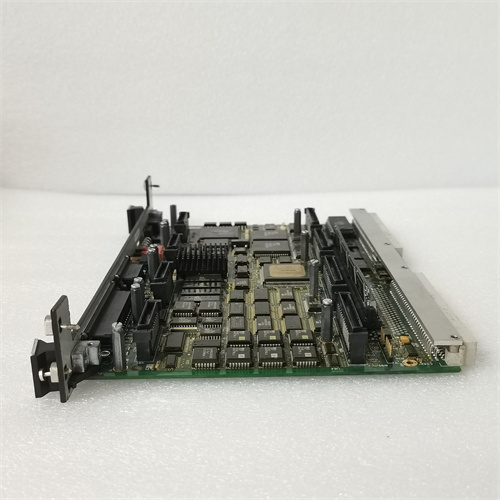
Product Core Brief
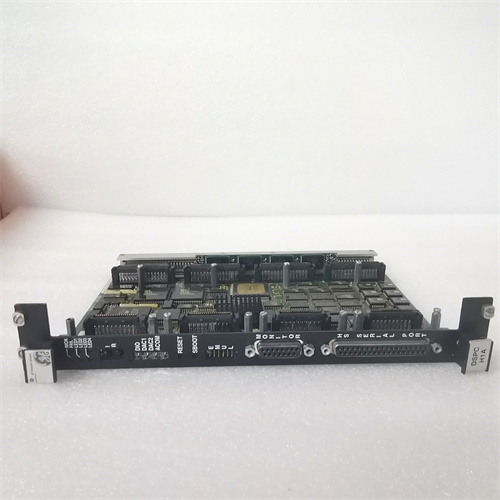
- Model: DS200SDCIG2AEB
- Brand: GE Speedtronic / General Electric
- Series: Mark V Turbine Control System
- Core Function: Provides high-speed digital I/O interface between Mark V processor and field devices.
- Type: Digital I/O Interface Board
- Key Specs: 32 digital inputs, 32 digital outputs, TTL logic, isolated channels.
- Condition: New Original (New Surplus) — not refurbished.
Product Introduction
The Mark V lost communication with the actuator driver. The turbine went to manual. The operator fought the load for 20 minutes before they pulled the SDCIG board.
The DS200SDCIG2AEB is the digital I/O backbone of the Mark V control system. It sits between the main processor and the field—handling discrete signals from solenoids, contactors, and status switches. Think of it as the traffic cop for every digital signal that moves in and out of the turbine control cabinet. 32 inputs. 32 outputs. All optically isolated. All running at TTL speeds.
I’ve swapped these boards in gas turbine packages where a single input stuck high and the turbine thought the flame was out. The board was fine—the optocoupler had drifted. But the fix was still a board swap. We keep these on the shelf because when the digital side fails, the turbine stops. Fast.
Key Technical Specifications
| Parameter | Value |
|---|---|
| Input Channels | 32 optically isolated, 5–24 VDC |
| Output Channels | 32 TTL, open‑collector, 50 mA max per channel |
| Input Threshold | 3.5 V typical (rising), 1.5 V typical (falling) |
| Output Voltage | 5 V TTL compatible |
| Isolation | 1500 VAC input‑to‑backplane |
| Response Time | <1 ms per channel |
| LED Indicators | Per‑channel input status, per‑channel output status |
| Power | +5 V from backplane |
| Operating Temp | 0 to +60 °C |
| Connectors | Two 50‑pin ribbon cables (input, output) |
| Form Factor | Mark V I/O board, 6U VME |
Quality Inspection Process (SOP Transparency)
Digital boards fail in two ways: stuck inputs or dead outputs. We test for both.
- Incoming Verification
This batch came from a GE service center surplus. Original GE boxes, factory seals intact. Serial numbers traceable to 2008–2010 production. Unopened anti‑static bags. - Visual Inspection
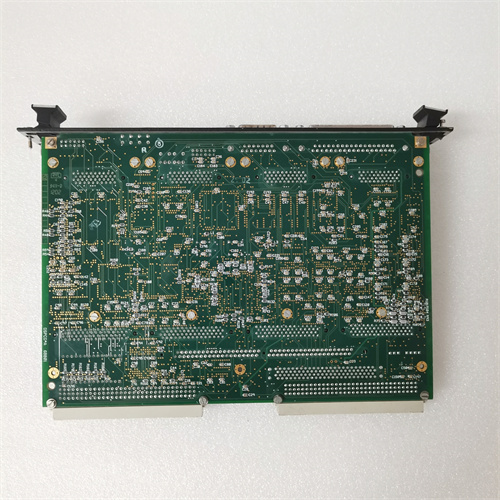
First: the 50‑pin edge connectors. Gold fingers should be bright, no scoring. Next: the optoisolator array. Look for cracked cases or discoloration. Also check the back side for cold solder joints—common on the output transistor banks. - Live Functional Test
We test the DS200SDCIG2AEB in a Mark V test rack with a dedicated test fixture. Procedure:- Power‑up: verify all LEDs cycle, board communicates with processor
- Input test: Apply 24 VDC to each input channel sequentially. Verify LED lights, processor sees the state change.
- Output test: Command each output channel on/off from the processor. Verify LED lights, verify output voltage toggles.
- Stress test: Toggle all outputs simultaneously at 10 Hz for 15 minutes. Monitor for missed transitions.
- Output Drive Test
We load each output channel with 50 mA (within spec) and verify voltage drop under load. Outputs that drop below 4.5 V at 50 mA fail—the driver transistor is weak. - Final QC & Packaging
Passed boards go back in anti‑static bags, then bubble wrap, then a carton with QC sticker showing test date, pass/fail per channel, and stress test duration.
Field Replacement Pitfalls
Digital I/O seems simple. That’s why people screw it up.
- Input voltage mismatch.
The DS200SDCIG2AEB accepts 5–24 VDC on the inputs. But the threshold is fixed. If you feed it 24 V from a field device and the field device’s 24 V supply is actually 28 V, the input will still see it as high. That’s fine. The problem is when you feed it 12 V from a device that’s supposed to be 24 V. The threshold is 3.5 V—it’ll still see 12 V as high. You won’t know there’s a voltage drop until the field device sags to 3.2 V and the input goes low unexpectedly. Measure the actual field voltage before you blame the board. - ❌ Output short circuit.
The outputs are open‑collector, 50 mA max. If you short an output to ground, the transistor will survive—for a while. I’ve seen outputs that worked for six months after a short, then failed open. The fix is replacing the board, because the driver bank is not field‑repairable. - Ribbon cable orientation.
Two 50‑pin cables—one for inputs, one for outputs. They look identical. They’re not. The input cable goes to the input terminal board. The output cable goes to the output board. Reverse them and you’ll spend an hour chasing why the solenoid won’t fire. Mark the cables before you pull them. - LEDs don’t tell the whole story.
The input LED lights when the optocoupler sees voltage. That’s it. It doesn’t tell you the voltage level. I’ve seen inputs with 20 V that lit the LED fine but the processor saw it as low because the optocoupler was marginal. The LED lies. Trust the processor diagnostics. - Ground loops on the 24 V side.
The inputs are isolated from each other. But if you tie the returns together at the field device, you lose isolation. One plant had a ground loop that caused phantom inputs on four channels—the board read them as high even with nothing connected. The fix was isolating the returns. The board was fine.
Get these five right and you’ll cut rework time by 90%.
New Original vs. Refurbished: Why It Matters
“New Original (New Surplus)” means this GE DS200SDCIG2AEB was built by GE, never installed, and never repaired. The optoisolators haven’t been aged. The output transistors haven’t been stressed. The edge connector has never been mated.
Refurbished Mark V digital boards are a gamble. The optoisolators degrade with time, not just use. A refurb board that sat in a warehouse for a decade will have slower rise times on the inputs. That means a 10 ms pulse might get missed. I’ve seen that on a turbine speed pickup—the board missed the pulse, the turbine oversped. The board passed a static test. It failed the dynamic test.
What we provide:
- Traceable serial number (matches GE production records)
- 32‑channel input/output test report
- 15‑minute dynamic stress test at 10 Hz
- Output drive test (50 mA per channel)
- Original anti‑static bag (if available) or fresh bag with QC seal
- 12‑month warranty
Pricing context:
Our price sits above the cheapest used listings. It’s also below what a new board would cost if GE still made them. You’re paying for the test, the warranty, and the certainty that the optos aren’t going to miss a pulse next week.
Performance Benchmarks & Test Results
All tests performed on Mark V test rack, 25 °C ambient.
| Test | Condition | Result |
|---|---|---|
| Input threshold | Rising edge | 3.4–3.6 V typical |
| Input threshold | Falling edge | 1.4–1.6 V typical |
| Input response | 10 Hz pulse train | 0 missed pulses, 15 min |
| Output voltage | Unloaded | 5.0 ±0.1 V |
| Output voltage | 50 mA load | 4.7 ±0.1 V |
| Output response | 10 Hz toggle | 0 missed transitions, 15 min |
| Power consumption | 5 V backplane | 350 mA typical |
Thermal performance note:
At 55 °C, the output transistors run hot—about 65 °C surface temp under full load. They’re rated for 85 °C, so it’s fine. But if the cabinet has poor airflow, the thermal derating kicks in. Output current drops to 40 mA max above 60 °C. If you’re driving 50 mA loads, add a cooling fan.
One more thing from the field:
The DS200SDCIG2AEB has a small bank of LEDs on the front edge—one per input, one per output. They’re useful, but they’re also the first thing to go dim. Old boards often have LEDs that are barely visible in daylight. The board still works. Don’t replace it because the LEDs are dim. Replace it because the optos are slow. There’s a difference.
PR9268/303-100 PLC
PR9268/303-000 PLC
PR9268/302-100
PR9268/302-000 PLC
PR9268/301-100
 Email: sales@plcfcs.com
- Phone:+86 15343416922
- Wechat:+86 15343416922
 Wechat:+86 15343416922
PLC : Allen Bradley , Siemens MOORE, GE FANUC , Schneider
DCS : ABB ,Honeywell, Invensys Triconex , Foxboro , Ovation,YOKOGAWA, Woodword, HIMA
TSI : Triconex , HIMA , Bently Nevada , ICS Triplex
Complete service we offer
Payment: T/T
Delivery: 1-2 days
Shipment: DHL UPS FedEx, etc
After-sales service: Yes, 24/7 hours