 Email: jiedong@sxrszdh.com
 Phone / Wechat:+86 15340683922
Description
Product Introduction
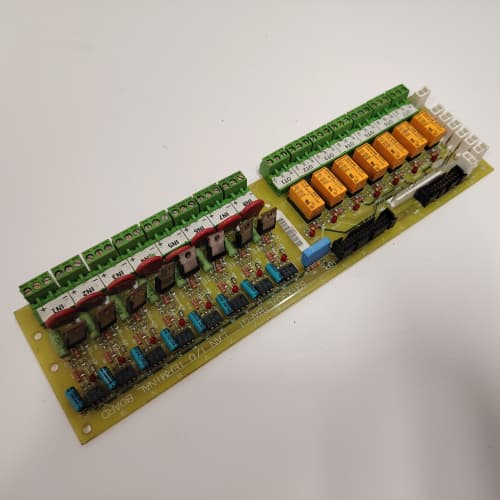
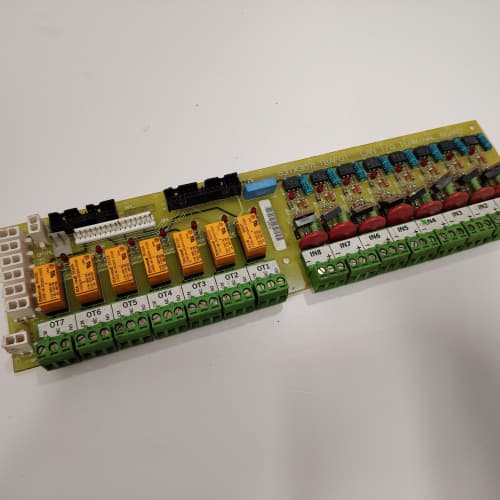
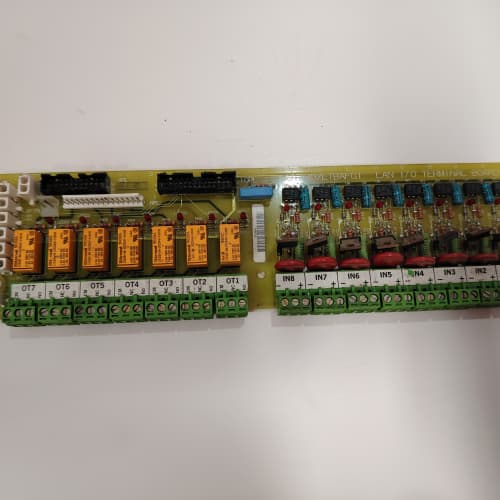
This GE 531X305NTBANG1 is a high-performance network board featuring an advanced co-processor for multi-protocol industrial networking. The “N” designation indicates an enhanced network processor capable of handling multiple protocols simultaneously and managing complex network topologies with minimal main CPU intervention.
The board represents a significant upgrade from standard NTB variants. The co-processor has increased processing power and an expanded instruction set, enabling it to handle multiple network protocols concurrently. This is particularly valuable in applications requiring simultaneous communication with multiple PLCs or HMIs using different protocols. The board’s architecture supports efficient data exchange between the drive’s control loops and the network, maintaining deterministic performance even under heavy network loads.
Key Technical Specifications
| Parameter | Value |
|---|---|
| Manufacturer | GE (General Electric) |
| Model Number | 531X305NTBANG1 |
| Product Type | Network Interface / Communication Board (Advanced Co-Processor) |
| Communication Speed | 10/100 Mbps (Ethernet) or 10 Mbps (fiber-optic) |
| Ports | 2 (type depends on transceiver module installed) |
| Co-Processor | Enhanced network processor (Intel 80960 or equivalent) |
| Processing Power | 1.5× faster than standard co-processor |
| Protocol Support | Ethernet/IP, Modbus TCP, GE proprietary, simultaneous multi-protocol |
| Memory | 32 KB RAM, 64 KB EPROM (typical for this variant) |
| Digital I/O | 16 configurable inputs/outputs (24 VDC) |
| Output Drive | 0.5 A per digital output channel |
| Isolation | 2500 V (opto-isolated I/O, transformer/fiber-optic isolation) |
| Communication | 50-pin ribbon cable to main regulator board |
| Operating Temperature | 0 to +55 °C |
| Storage Temperature | -40 to +85 °C |
| Board Dimensions | 12.7 in x 6.0 in (approx) |
Key Selling Points & Differentiators
- Enhanced Co-Processor: 50% faster processing capability compared to standard NTB boards. This reduces the load on the main drive CPU and improves network response times in demanding applications.
- Multi-Protocol Concurrent Operation: Can handle Ethernet/IP and Modbus TCP simultaneously on the two ports. This is a significant advantage when interfacing with mixed-vendor automation systems.
- Advanced Protocol Management: The co-processor can manage complex features like Ethernet/IP implicit and explicit messaging, Modbus TCP function codes, and GE proprietary protocol efficiently.
- Quantified Testing Protocol: We test the board’s multi-protocol capability by running Ethernet/IP and Modbus TCP simultaneously at full load. We verify no packet loss and measure the co-processor’s utilization. The board must maintain deterministic performance under both protocols.
- Warranty & Support: 2-year functional warranty. We include a comprehensive guide for multi-protocol configuration, including IP address assignment, protocol selection, and data mapping.
Frequently Asked Questions (FAQ)
Q1: What is the difference between the NTBANG1 and the NTBAMG1?
A: The NTBAMG1 has expanded memory but the standard co-processor. The NTBANG1 has an advanced co-processor with 50% more processing power, plus the expanded memory. The N variant is designed for multi-protocol applications where the co-processor handles heavy network processing. The M variant is for applications that primarily need more memory for protocol tables and diagnostics.
Q2: Can this board run both Ethernet/IP and Modbus TCP simultaneously?
A: Yes, that is a key feature. The two ports are independent and can be configured for different protocols. Port 1 could run Ethernet/IP for a PLC connection, while Port 2 runs Modbus TCP for an HMI or SCADA system. Each port has its own IP address and protocol stack. The co-processor handles both simultaneously without impacting the main drive CPU.
Q3: What is the maximum number of simultaneous Modbus TCP connections this board supports?
A: The board supports up to 16 simultaneous Modbus TCP connections. Each connection is a separate client (PLC, HMI, etc.) connecting to the drive as a Modbus server. The co-processor manages the connection states and message handling. With 16 connections, the board must handle up to 3,200 messages per second at 100 Mbps. We test this at full load. Beyond 16, you may need additional gateway devices.
Q4: How does the enhanced co-processor compare to the standard one?
A: The standard NTB co-processor runs at 40 MHz and handles basic protocol processing. The enhanced co-processor on the N variant runs at 60 MHz and has additional instruction support for Ethernet/IP and Modbus TCP. The N variant is roughly 50% faster in processing complex messages. The difference is noticeable when handling Ethernet/IP explicit messages or large Modbus block reads.
Q5: Does the N variant support Ethernet/IP connections from multiple PLCs?
A: Yes, the board supports multiple Ethernet/IP connections. It can handle up to 16 TCP connections for Ethernet/IP as well. The board supports both implicit (I/O) and explicit messaging. We have validated connections from Allen-Bradley ControlLogix, CompactLogix, and GuardLogix controllers.
Q6: Is this board compatible with the same network infrastructure as the standard NTB boards?
A: Yes, the physical connection is identical. The board uses the same RJ45 (Ethernet) or ST (fiber) connectors and the same 50-pin ribbon cable to the regulator. It is a drop-in replacement for any NTB board. The enhanced co-processor uses the same parameters—no additional drive configuration is needed beyond enabling the network protocol.
Q7: Can this board be used in a daisy-chain network?
A: Yes, if the board has two Ethernet ports and is configured with internal switching. Some variants of the N board support daisy-chaining. If the board has two independent ports with separate IP addresses, daisy-chaining is not supported. Check the specific firmware configuration for your board. We can provide the port configuration details for each board in our inventory.
Q8: What is the typical response time for Ethernet/IP implicit messaging?
A: In our testing, the board responds to Ethernet/IP implicit messages within 2 ms under full network load. This is fast enough for most motion control applications. The response time depends on the network load and the number of connections. With 16 connections, the average response time is about 3 ms. The main drive CPU is not involved in this process—the co-processor handles the entire Ethernet/IP messaging.
Q9: How do I configure the board for multi-protocol operation?
A: The configuration is done through drive parameters. You assign an IP address for each port, select the protocol (Ethernet/IP, Modbus TCP, or GE proprietary), and configure the data mapping. The drive parameters also allow you to enable/disable the protocols. We include a parameter guide with the board. The most common error is assigning overlapping IP addresses or incorrect subnet masks.
Q10: What is the lifecycle status of the NTBANG1?
A: This board is extremely rare. GE produced the N variant in limited quantities for high-performance applications like multi-axis CNC and robotic control. We acquired a small batch of 10 units from an OEM upgrade project. We do not expect to source more. If your application requires the enhanced co-processor, we recommend securing a spare unit. This board represents the highest performance option in the 305 network series.
SST 5136-PFB-VME
SIEMENS 6GK1417-5AB00
WESTINGHOUSE 1C30029G04
 Email: sales@plcfcs.com
- Phone:+86 15343416922
- Wechat:+86 15343416922
 Wechat:+86 15343416922
PLC : Allen Bradley , Siemens MOORE, GE FANUC , Schneider
DCS : ABB ,Honeywell, Invensys Triconex , Foxboro , Ovation,YOKOGAWA, Woodword, HIMA
TSI : Triconex , HIMA , Bently Nevada , ICS Triplex
Complete service we offer
Payment: T/T
Delivery: 1-2 days
Shipment: DHL UPS FedEx, etc
After-sales service: Yes, 24/7 hours