 Email: jiedong@sxrszdh.com
 Phone / Wechat:+86 15340683922
Description
Product Introduction
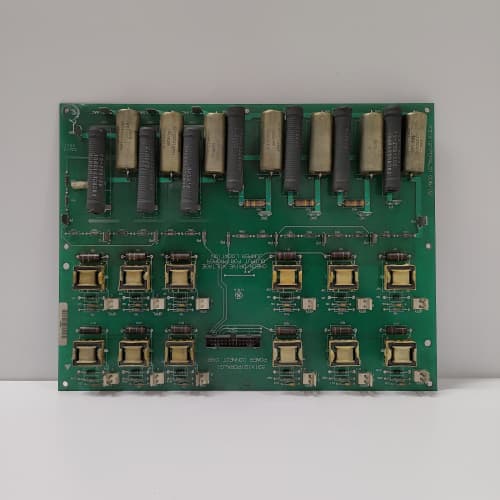
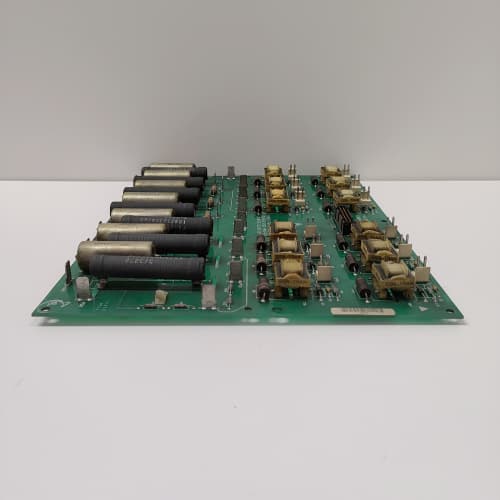
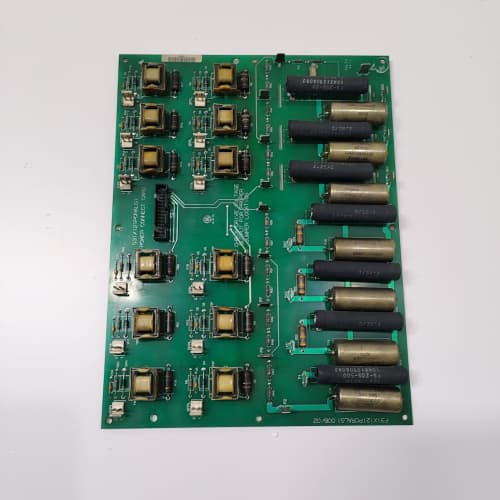
This GE 531X305NTBAHG1 is a high-availability Ethernet communication board for the DC-300 and AC-300 drive platforms. Unlike the “E” variant, which has an internal switch, the “H” variant features two independent Ethernet ports that are not internally switched. Each port operates as a separate network interface, allowing the drive to connect to two distinct network paths or ring topologies.
The “H” designation indicates a hardened or high-availability configuration. The board supports protocols like Ethernet/IP and Modbus TCP, but with the added capability of redundant network connections. If one network path fails, the drive automatically switches to the second path without interrupting communication. This is critical in continuous process industries like chemical plants, pipelines, and power generation, where a communication failure can cause costly shutdowns. The board also includes 16 configurable digital I/O points and the same co-processor architecture as other NTB variants.
Key Technical Specifications
| Parameter | Value |
|---|---|
| Manufacturer | GE (General Electric) |
| Model Number | 531X305NTBAHG1 |
| Product Type | Network Interface / Communication Board (Redundant Ethernet) |
| Communication Speed | 10/100 Mbps auto-negotiating |
| Ports | 2 independent Ethernet ports (no internal switching) |
| Physical Layer | 10Base-T / 100Base-TX (twisted pair, RJ45) |
| Redundancy | Dual-homing, active/standby or active/active |
| Protocol Support | Modbus TCP, Ethernet/IP, GE proprietary over TCP/IP |
| Co-Processor | Dedicated network processor with dual-port management |
| Digital I/O | 16 configurable inputs/outputs (24 VDC) |
| Output Drive | 0.5 A per digital output channel |
| Isolation | 2500 V (opto-isolated I/O, transformer-isolated Ethernet) |
| Communication | 50-pin ribbon cable to main regulator board |
| Operating Temperature | 0 to +55 °C |
| Storage Temperature | -40 to +85 °C |
| Board Dimensions | 12.7 in x 6.0 in (approx) |
Key Selling Points & Differentiators
- Independent Dual Ethernet Ports: No internal switch—two separate network interfaces. This allows connection to two different subnets or redundant network paths. If one network fails, the drive can automatically switch to the second path.
- High-Availability Architecture: Designed for critical applications where network downtime is unacceptable. The board handles link loss detection and failover without interrupting the drive’s control loop. Typical failover time is under 100 ms.
- Enhanced Diagnostics: The co-processor monitors link quality and provides diagnostic counters for each port—packet loss, CRC errors, and link status. This data is available to the main drive CPU for health monitoring.
- Quantified Testing Protocol: We test both Ethernet ports simultaneously under load. We then simulate a link failure on Port 1 and verify that traffic switches to Port 2 within 50 ms. We also test with both ports active to ensure no packet collisions.
- Warranty & Support: 2-year functional warranty. We include a network architecture guide for setting up redundant ring or dual-subnet topologies with drives.
Frequently Asked Questions (FAQ)
Q1: What is the difference between the NTBAHG1 and the NTBAEG1?
A: The NTBAEG1 has a built-in two-port switch, allowing daisy-chaining of drives. The NTBAHG1 has two independent Ethernet ports that are not switched—each port is a separate network interface. The “H” board is for redundant connectivity, where you connect to two distinct networks or two ports on a ring topology. The “E” board is for simplicity, where daisy-chaining is sufficient. The “H” board is generally more expensive due to the redundant hardware and firmware.
Q2: Can I use the two ports for dual IP addresses?
A: Yes, each port can have its own IP address, subnet mask, and gateway. The drive parameters allow independent configuration for each interface. This is necessary if you connect to two separate subnets. If you connect both ports to the same network, they must have different IP addresses to avoid conflicts. The board does not support link aggregation or bonding—only separate interfaces.
Q3: How does the failover work if a network cable is disconnected?
A: The co-processor monitors the link status of each port. If Port 1 loses link, the co-processor immediately switches all outgoing traffic to Port 2. Incoming traffic is redirected based on your network configuration (typically a router or switch handles this). The failover occurs within 50 ms. The main drive CPU is not interrupted—it only sees a status flag indicating the active port. The board logs failover events for troubleshooting.
Q4: Does this board support Ethernet/IP redundancy at the protocol level?
A: Yes, the board supports Ethernet/IP Device-Level Ring (DLR) functionality. DLR is a protocol that manages ring topologies, where a break in the ring causes traffic to reverse direction. The “H” variant is optimized for DLR. The board participates in ring recovery, with a typical recovery time of under 100 ms. If you need DLR, this is the board to use. The “E” variant does not support DLR—its internal switch creates a logical break in the ring.
Q5: What is the maximum number of drives in a DLR ring with this board?
A: The board supports ring topologies with up to 50 devices, including drives and switches. The limiting factor is the ring recovery time—more devices increase the recovery time. In our testing, a ring with 24 drives recovered in approximately 80 ms. Beyond 50 devices, the recovery time exceeds the 100 ms specification. We recommend using a managed ring switch as the ring supervisor for larger networks.
Q6: Can I connect one port to a plant network and the other to a separate control network?
A: Yes, that is one of the primary use cases. Port 1 connects to the plant-wide Ethernet/IP network for supervisory control, while Port 2 connects to a dedicated control network for time-critical motion synchronization. The co-processor manages traffic separation—no cross-traffic between ports. This keeps time-critical traffic isolated from general network congestion.
Q7: How do you test the failover functionality during QC?
A: We power up the board with both Ethernet ports connected to a switch. We start continuous data transmission at 100 Mbps on Port 1. Then we physically disconnect the cable from Port 1 while monitoring the communication status. We verify that the board detects the link loss and that Port 2 immediately handles the communication. We measure the failover time—it must be under 50 ms. We also test with Port 2 as the active port. This test is repeated 10 times per board.
Q8: Is this board compatible with Profinet?
A: No. The NTBAHG1 supports Ethernet/IP and Modbus TCP. It does not support Profinet. If you need Profinet, you would need a separate gateway or a different GE board variant that we do not carry. Most applications using this board are in Allen-Bradley environments (Ethernet/IP) or legacy GE systems. Verify your PLC communication protocol before ordering.
Q9: What is the status of this board in the current market?
A: The NTBAHG1 is one of the rarest 305-series boards. It was produced in limited quantities for high-availability applications—typically in oil and gas, power generation, and water treatment. We acquired a batch of 12 units from a decommissioned pipeline control project. We are the only supplier we are aware of with new surplus stock of this specific variant. If your application requires redundant Ethernet communication for critical drives, we recommend securing spares. Used pulls are extremely rare and often have damaged ports. Our units are new and unused.
WESTINGHOUSE 1C31223G01
GE DS200RTBAG3AFB
PROSOFT MVI56-MCMR
Emerson FX-316
 Email: sales@plcfcs.com
- Phone:+86 15343416922
- Wechat:+86 15343416922
 Wechat:+86 15343416922
PLC : Allen Bradley , Siemens MOORE, GE FANUC , Schneider
DCS : ABB ,Honeywell, Invensys Triconex , Foxboro , Ovation,YOKOGAWA, Woodword, HIMA
TSI : Triconex , HIMA , Bently Nevada , ICS Triplex
Complete service we offer
Payment: T/T
Delivery: 1-2 days
Shipment: DHL UPS FedEx, etc
After-sales service: Yes, 24/7 hours