 Email: jiedong@sxrszdh.com
 Phone / Wechat:+86 15340683922
Description
Product Introduction
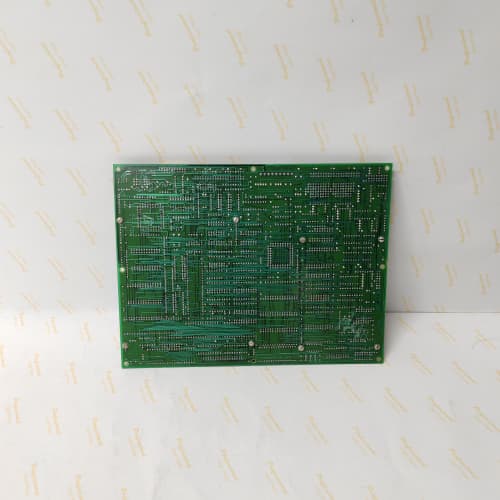
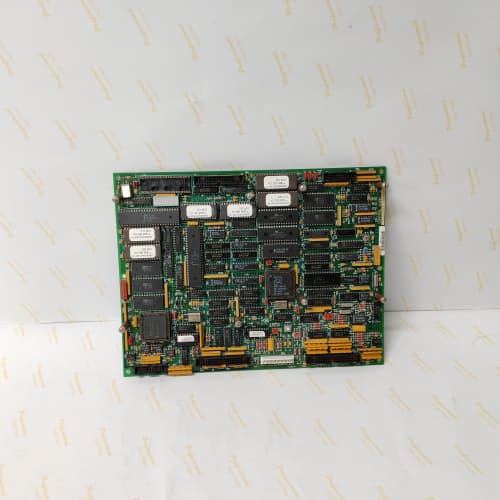
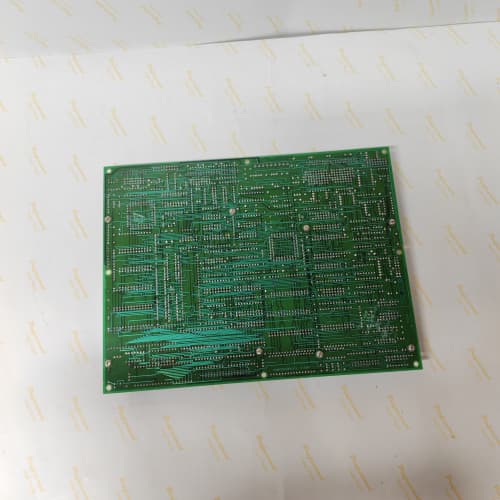
This GE 531X305NTBACG1 is a network communication board for the DC-300 and AC-300 drive families. The “NTB” designation identifies it as a network interface board designed for high-speed data exchange between multiple drives or between drives and a host controller. This board supports real-time communication at speeds up to 10 Mbps, significantly faster than the serial-based IBD series.
The board features dual communication ports—either Ethernet or a proprietary fiber-optic interface—and includes its own co-processor for network management. This offloads the main drive CPU from network overhead, making it suitable for coordinated motion applications like flying shears, cut-to-length lines, and multi-axis synchronization. The board also includes 16 configurable digital I/O points for handshaking and status signaling. It is the preferred board when you need deterministic communication with sub-millisecond update times.
Key Technical Specifications
| Parameter | Value |
|---|---|
| Manufacturer | GE (General Electric) |
| Model Number | 531X305NTBACG1 |
| Product Type | Network Interface / Communication Board |
| Communication Speed | 10 Mbps (Ethernet) or 10 Mbps (proprietary fiber-optic) |
| Ports | 2 independent network ports |
| Physical Layer | Ethernet (10Base-T) or GE proprietary fiber-optic (jumper selectable) |
| Protocol Support | GE Genius, Ethernet/IP, Modbus TCP (select variants) |
| Co-Processor | Dedicated network processor (Intel 80960 or equivalent) |
| Digital I/O | 16 configurable inputs/outputs (24 VDC) |
| Output Drive | 0.5 A per digital output channel |
| Isolation | 2500 V (opto-isolated I/O, transformer-isolated network) |
| Communication | 50-pin ribbon cable to main regulator board |
| Operating Temperature | 0 to +55 °C |
| Storage Temperature | -40 to +85 °C |
| Board Dimensions | 12.7 in x 6.0 in (approx) |
Key Selling Points & Differentiators
- Real-Time Network Communication: Supports 10 Mbps data transfer with deterministic timing. This is critical for multi-axis synchronization where all drives must update their speed or torque references simultaneously.
- Dual Network Ports: Two independent ports allow daisy-chaining or redundant network connections. The board can act as a network switch, passing data from one port to the other without using the main drive CPU.
- Fiber-Optic Option: The board can be configured for fiber-optic media, which provides electrical isolation and noise immunity for long-distance installations. This is standard in high-EMI environments like welding lines and steel mills.
- Quantified Testing Protocol: We test the board on a two-drive network with continuous 1 kHz data exchange. We verify that each message is delivered within 1 ms. We also test the fiber-optic transceivers for signal integrity. Each board runs for 12 hours under full network load.
- Warranty & Support: 2-year functional warranty. We include a network topology guide and termination instructions for fiber-optic installations. Fiber-optic polarity errors are a common field issue—our guide prevents them.
Frequently Asked Questions (FAQ)
Q1: What is the difference between the NTBACG1 and the IBD series communication boards?
A: The IBD series uses serial communication (RS-232, RS-422/485) at speeds up to 38.4 kbps. The NTB series uses high-speed network communication at 10 Mbps—over 250 times faster. The NTB is designed for real-time, deterministic communication between multiple drives or between a drive and a motion controller. The IBD is for slower, less time-critical communication like PLC data exchange or operator panel connections. If you need sub-millisecond synchronization, you need the NTB.
Q2: Does this board support Ethernet/IP or Modbus TCP?
A: It depends on the EPROM firmware. Some NTBACG1 boards were configured for GE’s proprietary Genius protocol. Others were built for Ethernet/IP or Modbus TCP. We verify the firmware version during QC and note the protocol support. The hardware is identical—the protocol is determined by the firmware. If you need a specific protocol, let us know, and we will confirm the firmware on the available units. We cannot change the firmware in the field.
Q3: Can I use the fiber-optic ports for long-distance communication?
A: Yes, the fiber-optic interface supports cable runs up to 2 kilometers (1.2 miles) with multimode fiber. This is useful in large plants where drives are physically separated. The fiber-optic connection also provides galvanic isolation, eliminating ground loop issues. The board uses standard ST or SC connectors depending on the transceiver module. We recommend using 62.5/125 µm multimode fiber. Single-mode fiber is not supported. Do not exceed 2 km—the signal attenuation becomes critical beyond that.
Q4: How do I daisy-chain multiple drives with this board?
A: The board has two ports. You connect Port 1 to the previous drive in the network, and Port 2 to the next drive. The board’s internal switch passes data from one port to the other without using the main CPU. This reduces network cabling compared to a star topology. The maximum number of drives in a daisy chain is 32. For fiber-optic daisy-chaining, each drive regenerates the signal, so there is no distance limit between drives beyond the 2 km fiber specification.
Q5: What is the network update rate for a 16-drive system?
A: With 16 drives on the network, each drive receives a status update every 5 ms at 10 Mbps. The GE proprietary protocol is deterministic—every drive gets a fixed time slot. This is far faster than Modbus, which would take 150-200 ms for 16 drives at 38.4 kbps. The NTB board is designed for motion applications where every millisecond matters. In our tests, a 16-drive network maintained 5 ms update rates with zero dropped frames over 24 hours.
Q6: Can I use this board as a standalone network switch?
A: No, the board requires the main drive regulator to configure the network parameters. It does not function as a standalone switch. It only passes network traffic when the drive is powered and initialized. If you need a standalone network switch for the GE protocol, you need a separate network bridge module. The board acts as a node on the network, not as a network infrastructure device. This is a common misunderstanding.
Q7: How do you test the network communication during QC?
A: We set up two DC-300 regulators in our test lab, each with an NTBACG1 board, and configure them for the GE network protocol. We send 100-byte data packets from one drive to the other at 1 kHz (1,000 packets per second). We monitor packet loss, latency, and CRC errors. If we see any packet loss or latency above 2 ms, we reject the board. We also test the fiber-optic transceivers with a 500-meter spool of fiber. The test runs for 8 hours. This is a real-world test, not a simple power-on check.
Q8: What is the lifecycle status of the NTBACG1?
A: This board is discontinued. GE moved to Ethernet/IP and Profinet on newer drive platforms. The NTBACG1 was produced until approximately 2010. We have a limited batch of new surplus units from a decommissioned paper mill project. Once sold, availability will be limited to used pulls. If you have a multi-drive system running the GE proprietary network, we recommend securing a spare board. Field repairs on these boards are complex due to the fiber-optic components—most repair shops cannot calibrate the fiber transceivers. Our units are new and fully calibrated.
WOODWARD 9905-144
Ovation 5A26458G05
NI PCIE-6351
ABB 07AC91D
 Email: sales@plcfcs.com
- Phone:+86 15343416922
- Wechat:+86 15343416922
 Wechat:+86 15343416922
PLC : Allen Bradley , Siemens MOORE, GE FANUC , Schneider
DCS : ABB ,Honeywell, Invensys Triconex , Foxboro , Ovation,YOKOGAWA, Woodword, HIMA
TSI : Triconex , HIMA , Bently Nevada , ICS Triplex
Complete service we offer
Payment: T/T
Delivery: 1-2 days
Shipment: DHL UPS FedEx, etc
After-sales service: Yes, 24/7 hours