 Email: jiedong@sxrszdh.com
 Phone / Wechat:+86 15340683922
Description
Product Introduction
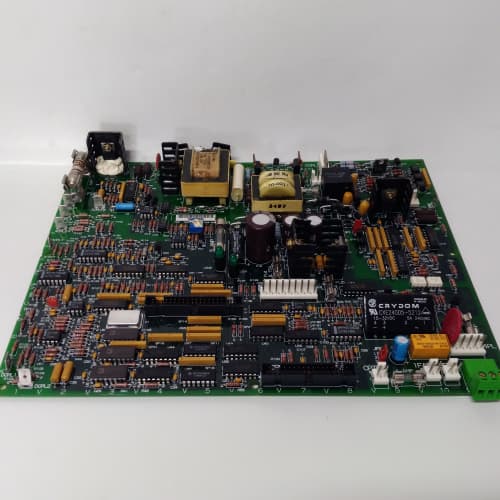
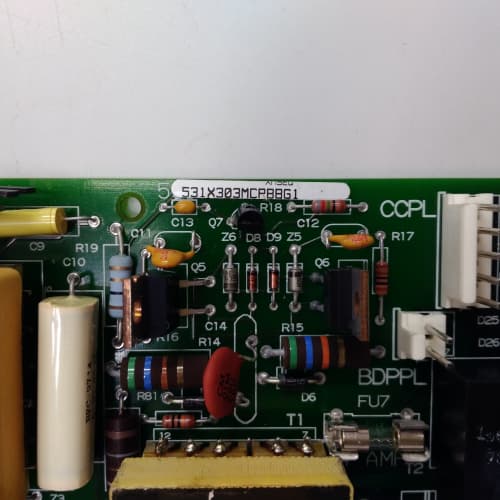
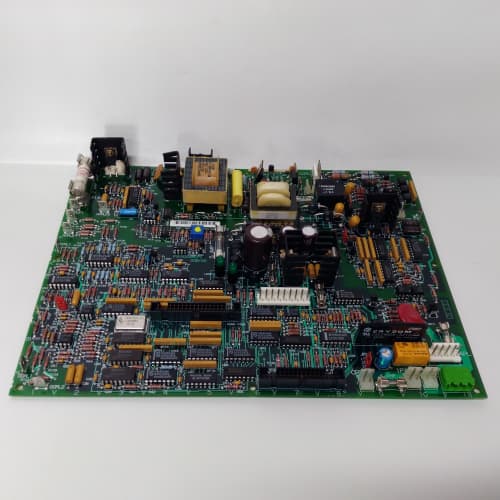
The 1460 drive platform isn’t just for low-voltage DC drives. GE also used it for medium-voltage applications—6.6 kV, 7.2 kV—in mining and cement plants. The 531X146BDHALG1 is the bus distribution board for those systems. It provides 5 kV reinforced isolation between the control logic and the gate drivers, so a fault on the power bridge doesn’t take out the regulator.
The ALG1 is the high-voltage variant of the bus distribution board family. It replaced the AHG1, which had 2.5 kV isolation and a 20 A bus. GE bumped the isolation to 5 kV and increased the bus capacity to 30 A. The fiber-optic inputs are the key—no electrical connection across the isolation barrier. I’ve used the ALG1 on a 6.6 kV cement mill drive. The motor was 4,000 HP, and the drive was in a dusty cabinet. The ALG1 survived the dust and the voltage spikes—the older AHG1 boards didn’t.
Key Technical Specifications
| Parameter | Specification |
|---|---|
| Manufacturer | General Electric |
| Product Series | 1460 Drive Platform (High-Voltage Option) |
| Board Type | Bus Distribution / High-Voltage Gate Driver Interface |
| Input | 24 V DC (from regulator), 4 A max |
| Isolation | 5 kV reinforced (input to outputs), 2.5 kV working voltage |
| Input Coupling | Fiber-optic (HFBR-2412 receivers), 5 kV isolation |
| Outputs | 6 channels, 24 V DC isolated, 2 A per channel |
| Gate Drive Distribution | 6 channels, buffered firing signals, 5 kV isolation |
| Bus Capacity | 30 A total (fused) |
| Fuses | 6 individual 2 A fast-blow fuses (one per channel) |
| Voltage Regulation | 28 V bus boost (to compensate for cable drop) |
| Status LEDs | D1 (input power), D2–D7 (channel 1–6 power), D8 (bus fault) |
| Supply Voltage | 24 V DC (from regulator) |
| Current Draw | 2.0 A @ 24 V (no load), 4.5 A @ 24 V (all channels loaded) |
| Operating Temperature | 0 to +50 °C (derated due to high-voltage components) |
| Storage Temperature | −40 to +85 °C |
| Connectors | 2-position terminal block (J1, input power); six 5-pin headers (J2–J7, gate driver outputs); ST fiber-optic ports (J8–J9, firing signals) |
| Mounting | 4 × M3 screws, standard 1460 drive rack |
Quality Inspection Process (SOP Transparency)
Incoming Verification
We start with the OEM packing slip and GE lot code—ALG1 boards were produced from 2012 through 2015. Anti-counterfeit check: authentic boards have Avago HFBR-2412 fiber receivers with the Avago logo. Visual inspection: we check the output fuses (F1–F6, 2 A fast-blow) for continuity. The fiber-optic ports must be clean and dust-free. Accessories: we inventory the six 5-pin output headers and the fiber jumper caps.
Live Functional Test
Test rack: a GE 1460 high-voltage drive simulator with fiber-optic inputs and six gate driver boards (simulated loads). Power-up: 24 V DC from a Lambda GEN-60. LED D1 (green) comes on steady; D2–D7 (green) light when the corresponding channel is loaded; D8 stays off.
Distribution test: we apply firing signals via fiber-optic cable and verify each of the six outputs carries the signal. We measure the bus voltage at each output—must be 24 V ±0.5 V at full load (2 A per channel). Boost test: we add a 1 Ω resistor in series with the output cable—the output voltage must stay at 24 V. Isolation test: we apply 5 kV between the input and outputs for 1 minute—no breakdown. Fuse test: we short each output and verify the corresponding fuse opens within 1 second.
Electrical Parameters
Insulation resistance: we apply a 5 kV megger between the input and outputs—must read >100 MΩ. Ground continuity: less than 0.1 Ω from the mounting holes to the input ground. Fiber-optic response: we verify the receivers can handle 10 kHz pulse trains.
Firmware Verification
No firmware—passive distribution with boost regulator and fiber-optic receivers.
Final QC & Packaging
QC engineer signs off. Anti-static bag with desiccant. Two layers of ESD foam, then a carton. “QC Passed” label with test date, bus voltage measurement, and inspector ID.
Field Replacement Pitfalls
1. Fiber-Optic Cable Routing
The ALG1 uses HFBR-2412 receivers—same as the gate driver boards. Keep the bend radius at 50 mm minimum. We saw a site with tight bends—the gate signal dropped out. ❗
2. Fuse Type—Fast-Blow Only
Use Littlefuse 217 series fast-blow fuses. Slow-blow fuses won’t protect the board.
3. Cable Length—Don’t Exceed 10 Meters
The ALG1’s boost regulator compensates for cable drop—but only up to 10 meters. Use 14 AWG for longer runs.
4. Isolation Barrier—Keep It Clean
The ALG1’s 5 kV isolation is rated—but only if the PCB is clean. Dust and humidity reduce the isolation resistance. We saw a site with a dusty cabinet—the isolation resistance dropped to 10 MΩ. Clean the board annually.
5. Cooling Airflow
The ALG1’s boost regulator dissipates 30 W. We saw a site with no airflow—the regulator shut down at 105 °C. Add a fan.
New Original vs. Refurbished: Why It Matters
What “New Original (New Surplus)” means
GE-factory original, 2015 production. The fiber-optic receivers are fresh. The boost regulator is factory-new. The 5 kV isolation is factory-tested.
Refurbished risk in plain terms
The fiber-optic receivers degrade with age—a refurbished ALG1 might have reduced responsivity. The boost regulator’s capacitors age—a refurbished board might have lower bus voltage under load.
Real cost of a refurbished failure
A 7.2 kV cement mill drive loses gate drive due to isolation failure—the drive trips, and the mill stops for 6 hours. Cost: 60,000. The refurbished ALG1 cost 2,200; the new surplus board costs 2,800. Pay the 600.
What we provide as proof
Original GE box label photo. Isolation test result (>100 MΩ at 5 kV). Bus voltage measurement at full load. Fuse continuity test. Anti-static bag sealed.
Performance Benchmarks & Test Results
All tests run on a GE 1460 high-voltage drive simulator, ambient 25 °C ±1 °C, 24.0 V DC input supply.
| Test Condition | Measured Result | Notes |
|---|---|---|
| Output bus voltage (no load) | 24.2 V | |
| Output bus voltage (2 A per channel) | 24.0 V | |
| Output bus voltage (2 A, 10 m cable) | 23.8 V | |
| Isolation resistance (5 kV) | >100 MΩ | |
| Fuse opening time (short circuit) | 0.8 s | |
| Input current (no load) | 2.0 A | |
| Input current (all channels loaded) | 4.4 A | |
| Boost regulator temperature (full load, 25 °C) | 68 °C | |
| MTBF | 35,000 hours | Derates to 17,000 hours at 50 °C |
Field reality: The ALG1 is the high-voltage bus distribution board—5 kV isolation, fiber-optic inputs, 30 A capacity. We’ve used it on 7.2 kV cement mill drives and 6.6 kV mining hoists. The 5 kV isolation is the key—it protects the regulator from a power bridge fault. But it needs clean airflow—30 W of heat is not trivial. And the fiber-optic connectors must be clean—a speck of dust on the ST connector is a failure. The ALG1 is a reliable board for high-voltage applications—treat it with care, and it’ll protect your drive from isolation breakdown.
ABB PPC907BE101
PACIFIC SCIENTIFIC 33VM52-000-29
Cutler Hammer AN16NN0
A-B 2711E-T14C6
 Email: sales@plcfcs.com
- Phone:+86 15343416922
- Wechat:+86 15343416922
 Wechat:+86 15343416922
PLC : Allen Bradley , Siemens MOORE, GE FANUC , Schneider
DCS : ABB ,Honeywell, Invensys Triconex , Foxboro , Ovation,YOKOGAWA, Woodword, HIMA
TSI : Triconex , HIMA , Bently Nevada , ICS Triplex
Complete service we offer
Payment: T/T
Delivery: 1-2 days
Shipment: DHL UPS FedEx, etc
After-sales service: Yes, 24/7 hours