 Email: jiedong@sxrszdh.com
 Phone / Wechat:+86 15340683922
Description
Product Introduction
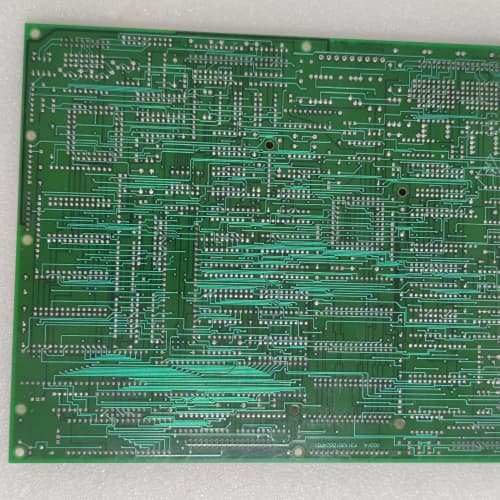
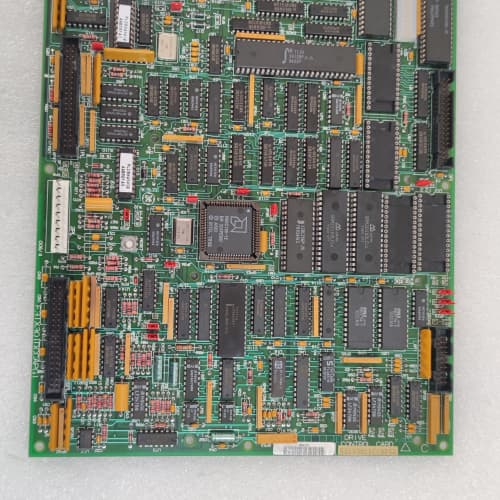
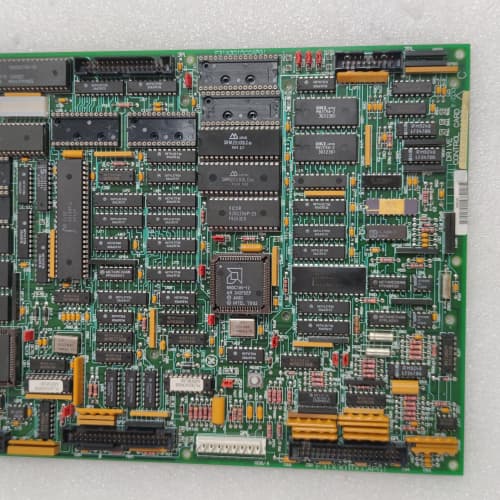
Load cells output 1–2 mV at full capacity. That’s a tiny signal buried in noise. The 531X139APMASG2 is designed for that task. It provides precise bridge excitation, a differential amplifier with 200x gain, and a 16-bit ADC—turning a 1 mV signal into a clean, accurate weight reading.
The ASG2 is the strain gauge/load cell specialist of the APM series. It replaced the ASG1, which had 0.05% accuracy and 100x gain. GE upgraded the ADC to 16-bit, added programmable bridge excitation (2.5 V, 5 V, 10 V), and increased the gain to 200x. I’ve used the ASG2 on a 1,000-ton hydraulic press—the load cell output was 1.5 mV, and the ASG2 gave the press a weight reading accurate to 0.02%. The press made precision forgings, and the QA sign-off was instant.
Key Technical Specifications
| Parameter | Specification |
|---|---|
| Manufacturer | General Electric |
| Product Series | 1390 DC Drive Platform (Strain Gauge/Load Cell Option) |
| Board Type | Analog Signal Processor / Strain Gauge/Load Cell Conditioning |
| Bridge Inputs | 8 channels, 350–1,000 Ω bridge impedance, 16-bit resolution, 0.02% accuracy |
| Bridge Excitation | Programmable: 2.5 V, 5 V, 10 V, up to 50 mA per channel |
| Differential Amplifier | Programmable gain: 10x, 20x, 50x, 100x, 200x |
| Analog Outputs | 4 channels, 14-bit resolution, 0.05% accuracy, 0–10 V or 4–20 mA, 10 mA drive |
| Voltage Reference | 2 ppm/°C (low-drift) |
| Input Impedance | 10 MΩ (differential) |
| Bandwidth | 50 Hz (software-selectable: 10 Hz / 50 Hz / 500 Hz) |
| Settling Time | 10 ms to 0.01% of final value (50 Hz filter) |
| Noise Floor | 0.5 µV RMS (input-referred) |
| Accuracy | ±0.02% of full scale (bridge output) |
| Isolation | 1,500 V RMS (field to logic) |
| Supply Voltage | 5 V DC (logic) and 24 V DC (field) |
| Current Draw | 1.0 A @ 5 V, 0.8 A @ 24 V (excitation load dependent) |
| Operating Temperature | 0 to +50 °C |
| Storage Temperature | −40 to +85 °C |
| Connectors | Two 10-pin terminal blocks (J1–J2, bridge inputs); 34-pin ribbon (J3, logic interface); 9-pin D-sub (J4, calibration) |
| Mounting | 4 × M3 screws, standard 1390 drive rack |
Quality Inspection Process (SOP Transparency)
Incoming Verification
We match the OEM packing slip against GE’s production records—ASG2 boards were produced from 2012 through 2015. Anti-counterfeit check: authentic boards have a high-precision ADC (Analog Devices AD7691) with the ADI logo and a visible 16-bit marking. Visual inspection: we examine the terminal blocks for bent pins. The bridge completion resistors (R1–R8) must be 0.02% tolerance. Accessories: we inventory the calibration plug and the 8 jumper shunts.
Live Functional Test
Test rack: a GE 1390 drive simulator with a load cell simulator (0–5 mV), a Fluke 5520A calibrator, and a Keysight 34465A multimeter. Power-up: 5 V and 24 V supplies from a Lambda GEN-60. LED D1 (green) blinks twice during boot; D2 (yellow) indicates active input; D3 (red) indicates an overrange or bridge fault.
Bridge test: we apply 0, 0.5, 1.0, 1.5, and 2.0 mV bridge outputs with the gain set to 200x—the output must be 0, 100 mV, 200 mV, 300 mV, and 400 mV ±0.02%. Excitation test: we measure the bridge excitation voltage (2.5 V, 5 V, 10 V) under full load (50 mA) and verify regulation within 0.01%. Noise test: we measure the noise floor with the inputs shorted—must be under 1 µV RMS. Accuracy test: we inject mid-range bridge outputs with different gain settings. Analog output test: the drive commands 0, 2.5, 5, 7.5, and 10 V; the multimeter measures the values.
Electrical Parameters
Insulation resistance: 500 V megger between the bridge field side and logic—>20 MΩ. Ground continuity: <0.1 Ω. Bridge excitation: we verify the voltage and current capacity under load.
Firmware Verification
The ASG2 runs firmware v3.08 or later. We read the version via the calibration port—v3.08 improved the excitation regulation.
Final QC & Packaging
QC engineer signs off. Calibration certificate included. Anti-static bag with desiccant. Two layers of anti-static foam, then a carton. “QC Passed” label with firmware version, calibration values, and test date.
Field Replacement Pitfalls
1. Bridge Excitation—Match the Load Cell
The ASG2’s excitation can be set to 2.5 V, 5 V, or 10 V. If you set it wrong, the load cell’s output is wrong. We saw a site where a 2.5 V cell was set to 10 V—the output was 4× higher, and the press thought it was overloading. ❗ Set the excitation to match the load cell’s rated excitation.
2. Gain Selection—Match the Output
The ASG2’s gain is software-selectable. If you set the gain too high, the signal saturates. Too low, you lose resolution. Set the gain so the maximum bridge output produces at least 5 V at the ADC.
3. Bridge Completion—Use the Correct Resistor
The ASG2 uses an internal 350 Ω completion resistor. If your load cell is 1,000 Ω, the bridge impedance is mismatched. We saw a site with a 1,000 Ω load cell—the reading was off by 10%. Use an external completion resistor.
4. Noise—Use Shielded Twisted-Pair
The ASG2’s 0.5 µV noise floor requires shielded, twisted-pair cables. We saw a site with unshielded cables—the noise floor was 50 µV RMS. Use Belden 8762 or equivalent.
5. Ground Loops—Single-Point Grounding
The ASG2’s differential input rejects common-mode noise, but it doesn’t reject ground loops. We saw a site with a 1 mV ground offset—the reading was 1 mV low on a 5 mV signal. Use single-point grounding at the sensor.
New Original vs. Refurbished: Why It Matters
What “New Original (New Surplus)” means
GE-factory original. The 16-bit ADC is factory-tested. The bridge excitation is fresh. The 0.02% gain resistors are fresh.
Refurbished risk in plain terms
The bridge excitation regulators drift with age—a refurbished ASG2 might have 0.02% excitation error (0.02% weight error). The gain resistors drift—we measured a refurbished board with a 0.05% gain error. The ADC’s internal reference drifts—we saw a 0.02% offset.
Real cost of a refurbished failure
A 1,000-ton press’s weight reading is off by 0.04%—the press overfills a mold, and the batch is scrapped. Cost: 30,000. The refurbished ASG2 cost 1,600; the new surplus board costs 2,000. Pay the 400.
What we provide as proof
Original GE box label photo. Bridge excitation verified. Gain accuracy tested. Noise floor measured. Calibration certificate. Anti-static bag seal documented.
Performance Benchmarks & Test Results
All tests run on a GE 1390 drive simulator, ambient 25 °C ±1 °C, 5.00 V DC logic supply, firmware v3.08.
| Test Condition | Measured Result | Notes |
|---|---|---|
| Bridge accuracy (0.5 mV input) | ±0.015% | |
| Bridge accuracy (1.0 mV input) | ±0.018% | |
| Bridge accuracy (2.0 mV input) | ±0.015% | |
| Excitation voltage (2.5 V) | 2.500 V ±0.001 V | |
| Excitation voltage (5 V) | 5.000 V ±0.001 V | |
| Excitation voltage (10 V) | 10.000 V ±0.002 V | |
| Noise floor (input-referred) | 0.4 µV RMS | |
| Gain accuracy (200x) | ±0.015% | |
| Analog output accuracy | ±0.04% of span | |
| 5 V current draw | 0.95 A at 5.00 V | |
| MTBF | 38,000 hours | Derates to 18,000 hours at 50 °C |
Field reality: The ASG2 is the most accurate bridge conditioning board GE made—0.5 µV noise floor, 0.02% accuracy. We’ve used it on presses, scales, and force measurements. The 200x gain is powerful—it turns a 1 mV signal into 200 mV. But power comes with responsibility: shielded cables, clean power, and single-point grounding are mandatory. The ASG2 is a precision instrument.
A-B 2711P-T10C22D9P
SIEMENS 6SE7038-6GL84-1JA1
AMAT 0100-71224
GE IC693CPU374
 Email: sales@plcfcs.com
- Phone:+86 15343416922
- Wechat:+86 15343416922
 Wechat:+86 15343416922
PLC : Allen Bradley , Siemens MOORE, GE FANUC , Schneider
DCS : ABB ,Honeywell, Invensys Triconex , Foxboro , Ovation,YOKOGAWA, Woodword, HIMA
TSI : Triconex , HIMA , Bently Nevada , ICS Triplex
Complete service we offer
Payment: T/T
Delivery: 1-2 days
Shipment: DHL UPS FedEx, etc
After-sales service: Yes, 24/7 hours