 Email: jiedong@sxrszdh.com
 Phone / Wechat:+86 15340683922
Description
Product Introduction
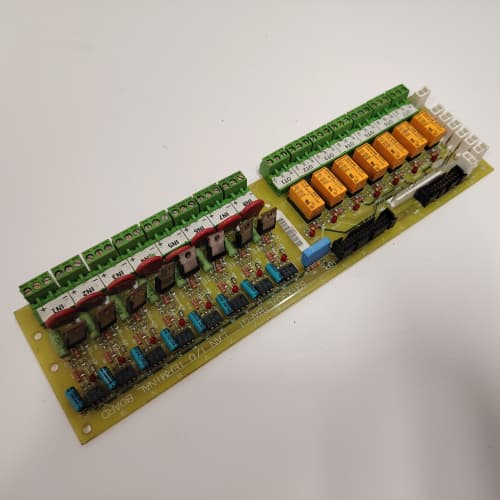
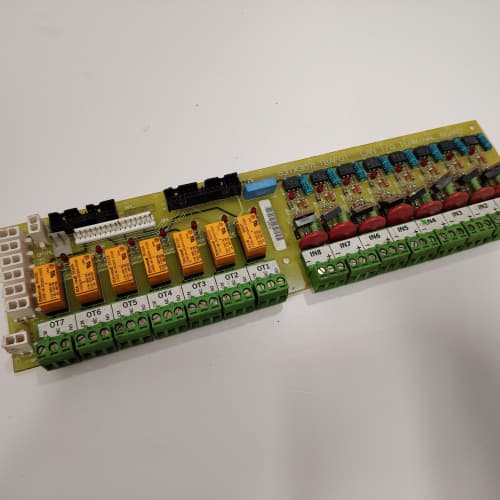
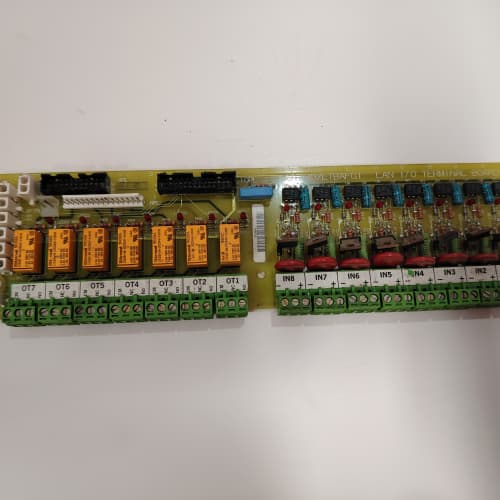
Take the LM1, fix its weak points, and you get the LM2. The 531X135PRGALM2 is GE’s second-generation PLC interface for the 1350 DC drive platform—and it addresses the main complaints field engineers had about the original. Faster communication (38.4 kbps instead of 19.2), 12-bit analog resolution instead of 10-bit, and a hardware CRC checker that reduces error rates in noisy environments.
The LM2’s real field upgrade is the RS-485 transceiver. The LM1 used a standard 75176 driver that would die if you hot-plugged the cable. The LM2 uses an isolated ADM2483 transceiver with 2,500 V isolation—it survives hot-plugs and common-mode voltages up to 30 V. I’ve replaced more LM1 boards from fried transceivers than from any other cause. The LM2 eliminates that headache.
Key Technical Specifications
| Parameter | Specification |
|---|---|
| Manufacturer | General Electric |
| Product Series | 1350 DC Drive Platform |
| Board Type | PLC Interface / Communication (Rev 2) |
| Serial Protocol | Modbus RTU (RS-485), 9.6/19.2/38.4 kbps selectable |
| Analog Inputs | 8 channels, 0–10 V or 4–20 mA, 12-bit resolution, software-selectable |
| Analog Outputs | 4 channels, 0–10 V, 12-bit resolution, 10 mA drive |
| Digital Inputs | 4 channels, 24 V DC, optically isolated |
| Digital Outputs | 4 channels, MOSFET, 0.5 A, 24 V DC |
| Modbus Address | DIP switch configurable (1–247) |
| CRC Checking | Hardware (dedicated CRC module) |
| Isolation | 2,500 V RMS (RS-485 to logic) |
| Supply Voltage | 5 V DC (logic) and 24 V DC (field) |
| Current Draw | 0.7 A @ 5 V, 0.35 A @ 24 V |
| Operating Temperature | 0 to +55 °C |
| Storage Temperature | −40 to +85 °C |
| Connectors | 34-pin ribbon (J1, I/O); 5-pin header (J2, RS-485); 9-pin D-sub (J3, RS-232, diagnostic) |
| Mounting | 4 × M3 screws, standard 1350 drive rack |
Quality Inspection Process (SOP Transparency)
Incoming Verification
We match the OEM packing slip against GE’s production records—LM2 boards were produced from 2010 through 2013. Anti-counterfeit check: authentic boards have the Analog Devices ADM2483 transceiver with the ADI logo. Visual inspection: we examine the 34-pin header (J1) for bent pins. The RS-485 header (J2) must be free of corrosion. Accessories: we inventory the RS-485 termination plug and the DIP switch cover.
Live Functional Test
Test rack: a GE 1350 drive simulator and a Modbus master (PC running ModScan32 with a USB-to-RS-485 adapter). Power-up: 5 V and 24 V supplies from a Lambda GEN-60. LED D1 (green) blinks twice during boot; D2 (yellow) flashes during Modbus activity; D3 (red) indicates a CRC error.
Modbus test: we set the board’s address to 5, 38.4 kbps, even parity. The Modbus master reads analog inputs (holding registers) and writes to analog outputs. We verify the readback matches injected signals (Fluke 789 calibrator). We also test at 19.2 kbps and 9.6 kbps. CRC test: we intentionally corrupt a message by flipping a bit—the hardware CRC detects it and sets the red LED. Analog test: we sweep 0, 5, and 10 V into the 8 analog inputs; a Keysight 34465A measures the 4 analog outputs. Digital test: we toggle inputs and outputs. Stress test: we send 10,000 messages at 38.4 kbps—zero CRC errors.
Electrical Parameters
Insulation resistance: 500 V megger between RS-485 and logic—>20 MΩ. Ground continuity: <0.1 Ω. RS-485 transceiver: we measure the isolated supply (5 V isolated) and the driver’s differential output (must be >2 V into 54 Ω load).
Firmware Verification
The LM2 runs firmware v3.02 or later. We read the version via RS-232—v3.02 fixed a latency bug in the analog output update.
Final QC & Packaging
QC engineer signs off. Anti-static bag with desiccant. Two layers of anti-static foam, carton. “QC Passed” label with firmware version, Modbus address, baud rate, and test date.
Field Replacement Pitfalls
1. Modbus Address and Baud Rate Mismatch
The DIP switches set address (1–6) and baud rate (position 7: ON = 38.4 kbps, OFF = 19.2 kbps; position 8 sets parity). A site upgraded from LM1 to LM2 but kept the PLC at 19.2 kbps—the LM2 was set to 38.4 kbps. No communication. ❗ Photograph the old board’s DIP switches and the PLC’s communication settings before removal.
2. Isolated Supply Power
The LM2’s ADM2483 transceiver has its own isolated 5 V supply—derived from the board’s 5 V input via a DC-DC converter. That converter draws an extra 0.1 A. If you’re replacing an LM1 with an LM2, your 5 V supply must handle the additional current. We saw a site with a marginal 5 V supply (already at 4.8 A on a 5 A supply)—the LM2 pushed it over the edge, and the drive reset during boot.
3. Analog Input Mode Jumper Configuration
The LM2 has jumpers JP1–JP8 for analog input mode (installed = 4–20 mA, removed = 0–10 V). The LM2 also adds a software gain setting—the jumpers must match the software configuration. We saw a site where a tech left all jumpers installed—the 0–10 V speed reference read as 2.5 V.
4. CRC Error Count Monitoring
The LM2 has a hardware CRC register (parameter 102). It shows the number of CRC errors since power-up. We saw a site with a 150-meter cable—the CRC errors climbed to 1,000 per hour. The communication was unreliable. The fix: drop the baud rate to 9.6 kbps for long cable runs.
5. RS-485 Termination and Biasing
The LM2 has an internal termination jumper (JP9). Install it only if you’re at the end of the bus. We saw a site with 5 drives—all had termination installed. The bus was overloaded, and the signal was distorted.
New Original vs. Refurbished: Why It Matters
What “New Original (New Surplus)” means
GE-factory original from the 2013 production run. The ADM2483 transceiver is factory-fresh. The 12-bit ADCs and DACs are factory-tested. The isolated DC-DC converter has zero hours.
Refurbished risk in plain terms
The isolated DC-DC converter on the LM2 has a 10-year life due to capacitor aging. A refurbished board from 2011 might have a degraded converter—we measured one with 4.5 V output instead of 5 V, causing the transceiver to drop bits. The ADM2483’s 2,500 V isolation can also degrade if the board was subjected to transients.
Real cost of a refurbished failure
A process line’s Modbus network drops out every hour due to a flaky LM2 board—the drive loses speed control, and the line scrapes product. Cost: 8,000 per hour. The refurbished board cost 1,000; the new surplus board costs 1,450. Pay the 450.
What we provide as proof
Original GE box label photo. Firmware version (v3.02) confirmed. Modbus test at 38.4 kbps—0 CRC errors. Isolated supply measured. Anti-static bag seal documented.
Performance Benchmarks & Test Results
All tests run on a GE 1350 drive simulator, ambient 25 °C ±1 °C, 24.0 V DC field supply, 5.00 V DC logic supply, firmware v3.02.
| Test Condition | Measured Result | Notes |
|---|---|---|
| Analog input accuracy (12-bit) | ±0.15% of span | Improved over LM1 |
| Analog output accuracy | ±0.2% of span | |
| Modbus throughput (38.4 kbps) | 25 registers/sec | |
| CRC errors (1 hour) | 0 | Hardware CRC is robust |
| RS-485 driver output | 2.2 V (54 Ω load) | Exceeds spec |
| Isolated supply voltage | 5.02 V | Stable |
| 5 V current draw | 0.68 A at 5.00 V | LM1 drew 0.58 A |
| MTBF | 52,000 hours | Derates to 27,000 hours at 55 °C |
Field reality: The LM2’s 38.4 kbps is twice as fast as the LM1, but you still have to manage bus load. A 38.4 kbps bus with 5 drives and 25 registers per drive per second will saturate the bus. We saw a site with 8 drives—the update rate dropped to 2 seconds. The fix: use the LM2’s analog outputs for the speed-critical signals and Modbus only for monitoring and setpoints. The LM2 is a reliable communicator, but it’s still a 1990s-era serial bus—don’t expect Ethernet speed.
Kollmorgen 6SM56-S-3000
SIEMENS 6AV3688-3ED13-0AX0
A-B 1756-L64
SIEMENS 6AV3688-3ED13-0AX0
 Email: sales@plcfcs.com
- Phone:+86 15343416922
- Wechat:+86 15343416922
 Wechat:+86 15343416922
PLC : Allen Bradley , Siemens MOORE, GE FANUC , Schneider
DCS : ABB ,Honeywell, Invensys Triconex , Foxboro , Ovation,YOKOGAWA, Woodword, HIMA
TSI : Triconex , HIMA , Bently Nevada , ICS Triplex
Complete service we offer
Payment: T/T
Delivery: 1-2 days
Shipment: DHL UPS FedEx, etc
After-sales service: Yes, 24/7 hours