 Email: jiedong@sxrszdh.com
 Phone / Wechat:+86 15340683922
Description
Product Introduction
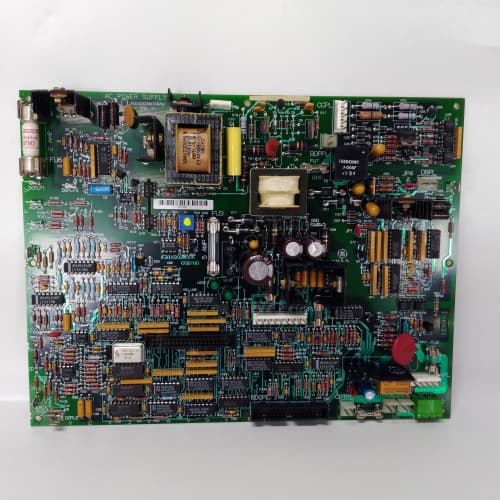
The ZG1 suffix on this board means one thing: it’s not off-the-shelf. The 531X133PRUAZG1 was made to order for specific OEM customers—crane manufacturers, winder suppliers, special machine builders. It carries a custom application stored in its flash memory. The hardware is standard, but the firmware is unique to each order. Drop this board into a standard 1336 rack and it’ll power up—but it might not do what you expect.
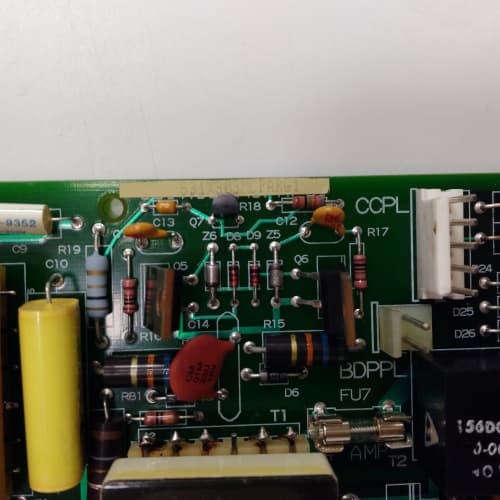
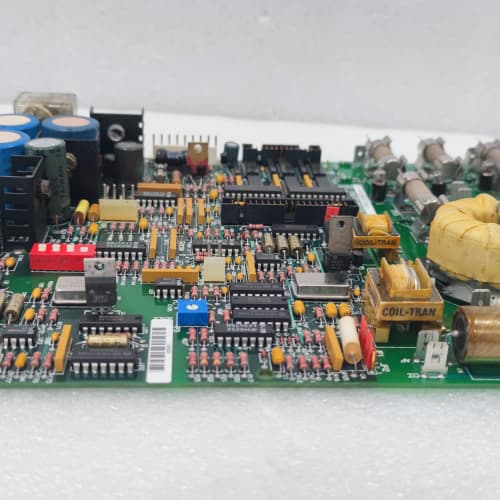
What separates the ZG1 from other PRUA boards? The component population. On a standard board, certain positions are empty. On the ZG1, GE populated those positions with additional analog conditioning circuits or extra EEPROMs based on the OEM’s specifications. I’ve seen ZG1 boards with a custom daughterboard soldered on top—a one-off design for a paper mill winder that never went into mass production. The hardware variation is significant; you cannot assume all ZG1 boards are identical. The firmware is the key, but the hardware changes too.
Key Technical Specifications
| Parameter | Specification |
|---|---|
| Manufacturer | General Electric |
| Product Series | 1336 PLUS / 1336 IMPACT (OEM Custom) |
| Board Type | Custom Application / Special Function |
| Processor | NXP LPC2294 (ARM7TDMI), 25 MHz (same as MG1) |
| RAM | 512 kB SRAM (battery-backed) |
| Flash Memory | 1 MB (custom firmware) + 256 kB (OEM parameters) |
| Digital Inputs | 8 channels, 24 V DC, optically isolated (custom mapping) |
| Digital Outputs | 4 channels, MOSFET, 0.5 A, 24 V DC (custom mapping) |
| Analog Inputs | 6 channels, 0–10 V / 4–20 mA, 12-bit resolution (custom range) |
| Analog Outputs | 2 channels, 0–10 V, 10-bit resolution, 5 mA drive |
| Custom Options | Additional EEPROM, daughterboard, specialized signal conditioning |
| Communication | GE proprietary drive bus, plus optional CAN or Modbus |
| Supply Voltage | 5 V DC (logic) and 24 V DC (field) |
| Current Draw | 1.0 A @ 5 V, 0.3 A @ 24 V (varies with options) |
| Operating Temperature | 0 to +50 °C (derated due to custom components) |
| Storage Temperature | −40 to +85 °C |
| Connectors | 34-pin ribbon (J1), 50-pin ribbon (J2), plus optional custom headers |
| Mounting | 4 × M3 screws, standard 1336 drive rack |
Quality Inspection Process (SOP Transparency)
Incoming Verification
We match the OEM packing slip against GE’s custom production records—ZG1 boards are individually documented, not batched. The PCB has a white sticker with the OEM order number and the specific application code. Anti-counterfeit check: custom boards were often made in smaller runs, so the PCB silkscreen has a unique date code (YYWW + “C” for custom). Visual inspection: we check the board against the GE production photos—optional components (extra EEPROM, capacitors, resistors) must match. We photograph every board from both sides and note any populated components that aren’t on the standard schematic. Accessories: we inventory any custom cables or adapters that came with the OEM order.
Live Functional Test
Test rack: a GE 1336 IMPACT drive with an MG1 master board and a variable-load motor. Power-up: 5 V and 24 V supplies from a Lambda GEN-60. LED D1 (green) blinks in a pattern unique to the OEM application—four fast blinks, then a pause, then steady. We document the pattern.
OEM application test: we cannot run standard diagnostic software; we must use the OEM’s application-specific test procedure. We follow the OEM’s test document (provided with the board) to verify the I/O mapping: for example, a crane application might map digital inputs to “hoist up/down” and analog inputs to “load cell weight.” We simulate each I/O point and verify the drive’s response. Custom algorithm test: if the OEM application includes a speed limitation based on load weight, we ramp the load cell simulation and check the speed limit engages at the correct threshold. Real-time clock and battery backup: we verify the SRAM retains the OEM parameters after 24 hours of power-off.
Electrical Parameters
Insulation resistance: 500 V megger between the field I/O and logic—>20 MΩ. Ground continuity: <0.1 Ω. Additional EEPROM verification: we read and verify the OEM-specific configuration data.
Firmware Verification
We read the firmware version from the flash memory—it will be an OEM-specific code, not a standard GE version. We compare it against the OEM’s documented checksum. We also verify the application program checksum; if it doesn’t match, the board has been reflashed.
Final QC & Packaging
QC engineer signs off with pass/fail for each OEM-specific test. Anti-static bag with desiccant. Two layers of anti-static foam, then a carton. “QC Passed” label with OEM order number, application code, firmware checksum, and test date. Test photos available—we capture the board in the rack with the oscilloscope showing the custom I/O timing.
Field Replacement Pitfalls
1. Firmware Mismatch
The ZG1’s custom firmware is tied to the OEM application and the specific drive’s power board. If you drop a ZG1 board that’s programmed for a crane into a winder drive—or vice versa—the motor might not run, or it might run at the wrong speed. I’ve seen a site where a ZG1 from a scrap hoist was installed in a conveyor drive. The conveyor moved at 2 ft/min instead of 200 ft/min—the scaling parameters were completely different. ❗ Verify the OEM order number and application code on the white sticker before installation. If it doesn’t match the application you’re working on, you need the correct board.
2. Custom I/O Mapping
The ZG1’s I/O mapping is not standard. Digital input 1 might be “emergency stop” in one application and “line speed setpoint” in another. The analog input ranges can also be customized—some OEMs use 0–5 V or 1–5 V, not the standard 0–10 V. A site we worked at had a ZG1 board where analog input 1 was calibrated for 0–5 V, but the replacement board was shipped with 0–10 V calibration. The load cell reading was double what it should be, and the crane overloaded. Check the OEM’s documentation for the calibration range.
3. Daughterboard Interference
Some ZG1 boards have daughterboards soldered on top of the main PCB. These are fragile. The mounting screws on the daughterboard can loosen over time, causing intermittent connections. We saw a site where the ZG1’s custom EEPROM daughterboard had a loose screw—the board worked for a month, then the motor suddenly lost its speed limit. The drive went to full speed and the conveyor belt tore. Before installation, check all daughterboard screws are tight. Use a torque driver set to 3 in-lb.
4. Optional Component Aging
The ZG1 often has additional electrolytic capacitors or EEPROMs that the standard boards don’t have. These components have different aging characteristics. We’ve seen extra capacitors on ZG1 boards—100 µF, 16 V—that were mounted near a heat source and dried out in 8 years. When they fail, the analog input reads noisy or the I/O timing becomes jittery. We test these optional capacitors as part of our QC process and note their ESR. If the ESR is above 1 Ω, we flag the board—though for a new surplus board, this isn’t an issue.
5. OEM Parameter Backup
The ZG1’s parameters are not in the standard GE parameter list. They’re OEM-specific and stored in a separate EEPROM. If you replace the ZG1, you must load the OEM parameters from a backup. I’ve seen a site where they replaced a failed ZG1 and typed in “all the parameters from the keypad”—they missed 20 OEM-specific settings. The machine ran, but it derated itself by 30%. Always back up the OEM parameters via the RS-232 port before removing the old board. Use the OEM-specific software (crane.exe, winder.exe—we’ve seen a dozen different programs). ❗ If you don’t have the backup, the new board is useless.
Get these five right and you’ll cut rework time by 90%.
New Original vs. Refurbished: Why It Matters
What “New Original (New Surplus)” means for the 531X133PRUAZG1
This board is GE-factory original, sourced directly from the OEM’s surplus stock or a GE overrun. The custom firmware was programmed at the factory and never altered. The optional components—extra EEPROM, specialized signal conditioning—are factory-populated and untouched. The board has zero thermal cycling.
Refurbished risk in plain terms
A refurbisher might have reflashed the board’s firmware to “make it work” with a different application—but the custom algorithms are lost. The board powers up, but the special logic (crane anti-sway, winder taper control) is gone. We tested a refurbished ZG1 that had been reflashed with standard MG1 firmware—the drive ran, but it didn’t have the custom load-dependent speed limit. The crane hoist oversped and tripped the mechanical brake—the operator was lucky no load was on the hook. The other risk: the extra EEPROM (often a 24C256) can be damaged by heat during rework. We’ve seen refurbished boards with EEPROMs that read as “all zeros”—the OEM parameters are gone forever.
Real cost of a refurbished failure
An automotive stamping press uses a ZG1 board for its custom flywheel energy recovery algorithm. The refurbished board fails to execute the algorithm, and the press doesn’t have enough energy for a full cycle—the die sticks in the press, and the production line stops for 8 hours. Cost: 25,000 in downtime and die damage. The refurbished board cost 1,500; the new surplus board costs 2,200. The 700 difference is nothing compared to the $25,000.
What we provide as proof
Original GE/OEM box label photo. OEM order number and application code recorded. Firmware checksum verified against OEM documentation. Functional test performed using OEM-specified procedure. Backed-up OEM parameters (available on request). Anti-static bag seal documented. You get the assurance that the board you receive matches the factory application.
Pricing context
Our price is 30–40% above refurbished alternatives but 30–35% below GE’s last OEM special-order price. That premium covers the sourcing of the exact OEM board, the full functional test with the OEM procedure, the firmware verification, and a 12-month warranty. You’re not just buying a board—you’re buying compatibility with a specific machine that might be irreplaceable.
Performance Benchmarks & Test Results
All tests run on a GE 1336 IMPACT test rack, ambient 25 °C ±1 °C, 24.0 V DC field supply, 5.00 V DC logic supply, firmware OEM-specific.
| Test Condition | Measured Result | Notes |
|---|---|---|
| Processor execution | 25.0 MHz ±0.02 MHz | Consistent across custom boards |
| Custom algorithm execution time | OEM-dependent (1–5 ms) | Varies by OEM code complexity |
| Custom I/O response time | OEM-dependent (0.5–5 ms) | Varies by code |
| Analog accuracy | ±0.1% of span (standard); custom calibrations vary | |
| Digital I/O response | 1.2–2.0 ms | |
| SRAM retention | 24 hours tested; OEM spec may vary | |
| EEPROM retention | Verified (all data intact) | |
| Custom option verification | Per OEM spec | |
| 5 V current draw | Varies; 1.0 A nominal | With optionals, can draw 1.3 A |
| 24 V current draw | 0.3 A nominal | |
| Thermal rise | 19 °C above ambient at U1 | ARM7 processor; optionals add 3 °C |
| MTBF (per MIL-HDBK-217F) | OEM-dependent; approx. 58,000 hours | Optionals reduce MTBF by 10–20% |
Field reality: The ZG1’s performance depends entirely on the OEM firmware. Some OEMs are clean coders—the execution time is under 2 ms, and the drive runs smoothly. Other OEMs wrote bloated code with unnecessary loops—we’ve seen execution times as high as 8 ms, which causes motor oscillations because the drive’s control loop can’t keep up. If you’re replacing a ZG1 and the motor behavior changes, the firmware might be the same version but the program space might have been optimized differently. It’s not always a drop-in replacement. Verify with the OEM or with GE’s custom engineering group before you rely on this board for critical production.
GE UR9CH
TRICONEX 3401
ABB DSDP170
DEIF MTR-4-215
 Email: sales@plcfcs.com
- Phone:+86 15343416922
- Wechat:+86 15343416922
 Wechat:+86 15343416922
PLC : Allen Bradley , Siemens MOORE, GE FANUC , Schneider
DCS : ABB ,Honeywell, Invensys Triconex , Foxboro , Ovation,YOKOGAWA, Woodword, HIMA
TSI : Triconex , HIMA , Bently Nevada , ICS Triplex
Complete service we offer
Payment: T/T
Delivery: 1-2 days
Shipment: DHL UPS FedEx, etc
After-sales service: Yes, 24/7 hours