 Email: jiedong@sxrszdh.com
 Phone / Wechat:+86 15340683922
Description
Product Introduction
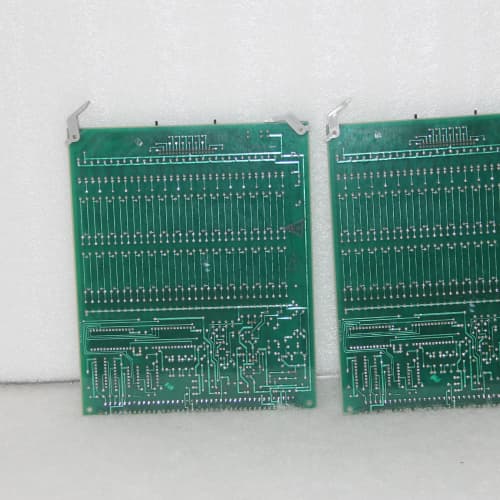
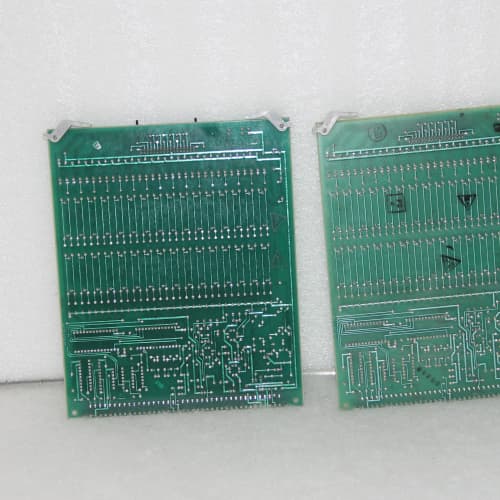
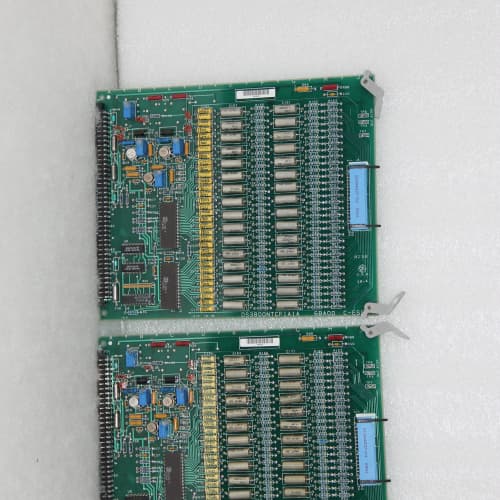
The DS4815COMD is the latest evolution of GE’s Mark V communications engine. It builds on the COMC’s capabilities with a faster processor, more memory, and a hardware encryption engine for secure communications. If you’re modernizing your plant network or adding cybersecurity layers, this board is the one to get. It handles the same protocols—Modbus, DNP3, SRTP—but with more headroom for data logging, security certificates, and simultaneous connections.
Compared to the DS4815COMC, the “D” revision brings several major upgrades: the processor jumps from 266 MHz to 400 MHz, RAM doubles to 32 MB, and the serial ports now support baud rates up to 460.8 kbps. The most significant addition is a hardware AES-128 encryption engine, allowing secure Modbus/TCP and DNP3/IP communications without loading the main CPU. The Ethernet PHY was also upgraded for better noise immunity, and the board now supports jumbo frames (up to 9k MTU). Terminal assignment is identical to the COMC, so it’s a direct drop-in. However, the firmware and configuration are not compatible with the COMC—you’ll need to rebuild your communication configuration.
Key Technical Specifications
| Parameter | Value / Range |
|---|---|
| Ethernet Ports | 2 x 10/100Base-TX, auto-negotiating, auto-MDIX, jumbo frames (9k MTU) |
| Ethernet Protocols | TCP/IP, UDP, Modbus/TCP, DNP3/IP, GE SRTP, OPC UA (via external gateway) |
| Serial Ports | 4 x RS-232/RS-485 (software-selectable per port) |
| Serial Baud Rates | 300 bps to 460.8 kbps |
| Serial Protocols | Modbus RTU, DNP3 serial, GE proprietary, ASCII, custom |
| Serial Termination | 4 x 9-pin D-sub (female) on front panel |
| Ethernet Termination | 2 x RJ-45 (shielded) |
| Processor | 400 MHz PowerPC (upgraded from 266 MHz) |
| RAM | 32 MB SDRAM (2x the COMC) |
| Flash Memory | 16 MB (firmware + configuration storage) |
| Hardware Encryption | AES-128, AES-256 (for secure Modbus/DNP3) |
| Watchdog Timer | Hardware-implemented, 0.5s to 5.0s (user-configurable) |
| Backplane Interface | VME-style 128-pin connector |
| Status LEDs | Power (green), Fault (red), Ethernet Link (green per port), Serial TX/RX (amber per port), Security (blue, when encryption active), Watchdog (flashing) |
| Power Consumption | 7 W typical, 11 W max |
| Coating | Conformal-coated |
| Operating Temp | 0°C to +65°C (extended range) |
| Dimensions (W x H x D) | 280 x 120 x 40 mm (11.0 x 4.7 x 1.6 in) |
Compatible Replacement Models
| Model | Classification | Notes & Labor Estimate |
|---|---|---|
| DS4815COMD | ✅ Drop-in Replacement | Target model. Same form factor and terminal block. No hardware changes. |
| DS4815COMC | ⚠️ Software Compatible | Earlier revision—same pinout, but firmware/config not compatible. You’ll need to rebuild the comm config and re-flash firmware. Budget 3-5 hours for migration. |
| DS4815COM | ⚠️ Software Compatible | Original revision—different serial pinout and lower specs. Requires re-termination, firmware update, and full config rebuild. Budget 4-6 hours. |
| DS4815COMD-ENC | ✅ Drop-in Replacement | Variant with FIPS 140-2 certified encryption—functionally identical. |
| IS420UCSBH4A | ❌ Hardware Incompatible | Mark VIe universal controller—different architecture. Not a replacement. |
Frequently Asked Questions (FAQ)
Q: What’s the main advantage of the COMD over the COMC?
Security and throughput. The hardware encryption engine lets you run Modbus/TCP or DNP3/IP over encrypted links without slowing down the CPU. The processor upgrade (400 MHz vs. 266 MHz) and doubled RAM (32 MB vs. 16 MB) mean the COMD can handle more concurrent connections, larger data tables, and more complex protocol stacks. The extended temperature range (65°C vs. 60°C) is a nice bonus for hot cabinets. If you’re not using encryption or pushing the connection limits, the COMC may be sufficient—but the COMD future-proofs your system.
Q: Does the COMD support OPC UA?
Not directly. The board doesn’t run an OPC UA server—that would require a Windows-based gateway or a separate hardware module. However, the COMD can serve Modbus/TCP and DNP3/IP to an OPC UA gateway (e.g., a Kepware server) running on a plant PC. Some newer plants use the Mark VIe’s built-in OPC UA, but for Mark V, the COMD is your best bridge.
Q: Can I use the encryption feature with older HMIs that don’t support encryption?
Yes—the COMD supports mixed security modes. You can run encrypted communication on one Ethernet port and unencrypted on the other port. For example, connect your DCS via encrypted Modbus/TCP on port 1 and your legacy HMI via unencrypted SRTP on port 2. This lets you upgrade security gradually without breaking existing systems. The encryption settings are per-port and per-protocol.
Q: The Security LED is blue, but the communication is slow. Is there a performance hit with encryption?
The hardware encryption engine offloads AES processing from the CPU, so the performance hit is minimal—about 5-10% throughput reduction, compared to 50-70% if done in software. If you’re seeing significant slowdowns, check if the encryption is set to AES-256 (which is slower) vs. AES-128. AES-128 is sufficient for most plant networks and about 20% faster. Also, ensure the Ethernet cable and switch are rated for 100 Mbps—encrypted traffic is more sensitive to packet loss.
Q: The serial baud rate goes up to 460.8 kbps. What’s the practical use for that speed?
High-speed serial is used for connecting to fast PLCs, high-speed data loggers, or custom devices that support higher baud rates. Most legacy devices use 9600-19200 baud, but some newer RTUs and protection relays support 115.2 kbps and above. The 460.8 kbps option is useful for applications that need to transfer large data blocks quickly—e.g., sequence-of-events logs from a protection relay. However, the cable length at 460.8 kbps is limited to about 15 meters (50 ft) for RS-232 and 100 meters for RS-485.
Q: The firmware/config from my COMC doesn’t work on the COMD. How do I migrate?
The COMD uses a different configuration file format (XML-based) compared to the COMC’s binary format. You’ll need to use GE’s Configuration Studio tool (v5.0 or higher) to export your COMC config and import it into a new COMD project. The tool will convert most settings automatically, but you’ll need to re-enter the encryption settings and some advanced protocol parameters. We recommend having a GE-certified engineer or a system integrator do this migration—it’s not a DIY task for a plant electrician.
Q: The watchdog timer keeps resetting the board during bootup. What’s the likely cause?
This is often a firmware corruption issue. The COMD’s bootloader checks the firmware CRC at startup. If the CRC fails, the watchdog may trip repeatedly. Try re-flashing the firmware via TFTP over the Ethernet port (or serial console). If that doesn’t work, the flash memory may be failing—we’ve seen this on boards that were stored in high-temperature environments. Contact us for a replacement or repair.
Q: Can the COMD support redundant Ethernet networks (e.g., dual-switch topologies)?
Yes—the board can be configured for network redundancy using protocols like PRP (Parallel Redundancy Protocol) or RSTP (Rapid Spanning Tree Protocol). However, these protocols are implemented in software, not hardware—you’ll need to enable them in the firmware configuration. The COMD’s dual Ethernet ports can be set up in active/standby mode (port 1 active, port 2 failover) or active/active with load balancing. The failover time is typically 100-200ms, depending on the network. For critical applications, use PRP for zero-loss failover (requires two independent networks).
Q: Does the COMD support time synchronization via PTP (Precision Time Protocol)?
No—the board uses SNTP only. For microsecond-level synchronization (e.g., for power quality monitoring), you’ll need a separate time server with IRIG-B or PTP output connected to a dedicated time module. The COMD’s internal clock has a 2-3 ppm drift, which is fine for sequence-of-events logging (10ms accuracy), but not for phasor measurement units (PMUs). Use the dedicated time modules for those applications.
Q: What’s the lead time for a surplus COMD?
We keep 3-5 units in stock. Domestic: 2-3 business days ground, overnight if ordered by 2 PM EST. International: 5-7 days via DHL, with customs potentially adding 1-3 days. This board is subject to ITAR regulations and export restrictions due to the encryption hardware—we’ll need an end-user certificate for international shipments. For domestic orders, no license is required. We include a GE certificate of origin, commercial invoice, and a signed encryption compliance statement with every shipment. If you need the board urgently, we can arrange expedited shipping—contact us for options.
A-B 2711-K10G8L1
“BENTLY
” 3500/62-04-00
Fanuc/ ǿ A06B-6140-H026 A
NI PCI-6250
 Email: sales@plcfcs.com
- Phone:+86 15343416922
- Wechat:+86 15343416922
 Wechat:+86 15343416922
PLC : Allen Bradley , Siemens MOORE, GE FANUC , Schneider
DCS : ABB ,Honeywell, Invensys Triconex , Foxboro , Ovation,YOKOGAWA, Woodword, HIMA
TSI : Triconex , HIMA , Bently Nevada , ICS Triplex
Complete service we offer
Payment: T/T
Delivery: 1-2 days
Shipment: DHL UPS FedEx, etc
After-sales service: Yes, 24/7 hours