 Email: jiedong@sxrszdh.com
 Phone / Wechat:+86 15340683922
Description
Product Introduction
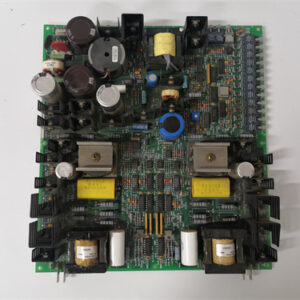
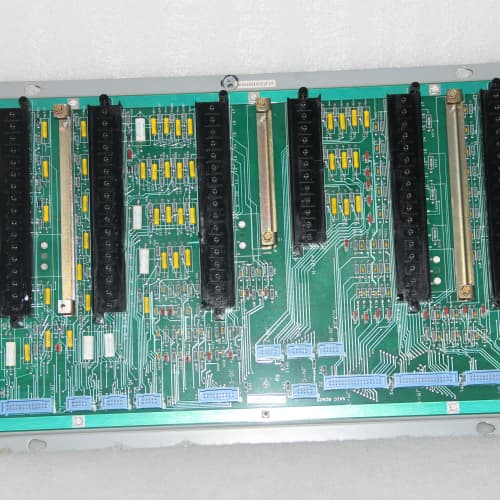
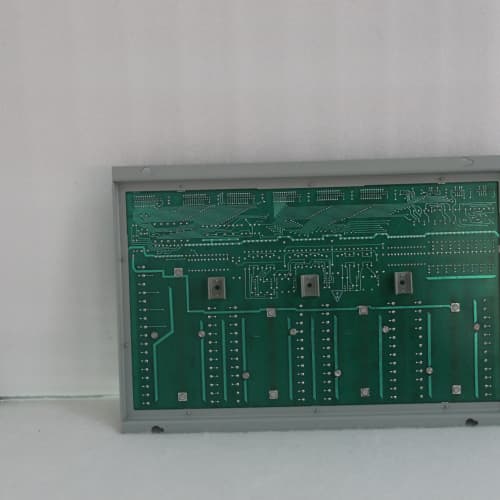
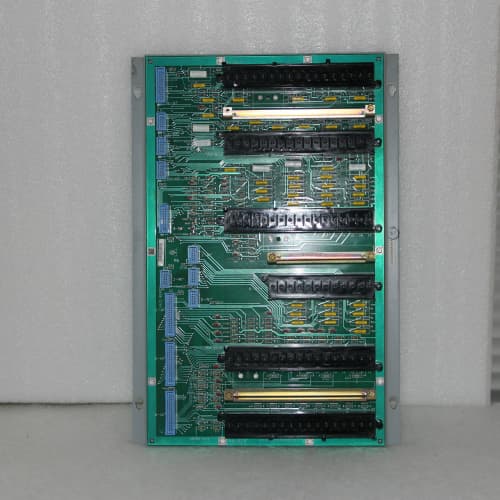
Magnetic pickups don’t output clean square waves—they’re analog beasts, with amplitude that drops as speed decreases and rises with gap changes. The DS3860HSCG is the signal conditioner that turns that messy sine wave into a crisp, CPU-readable pulse train. It sits between the sensor and the Mark VI’s digital inputs, handling the amplification, threshold detection, and hysteresis needed for reliable speed and position sensing across the entire operating range—from crank to full speed.
Compared to the DS3860HSC (non-G revision), the “G” revision added a significant improvement to the automatic gain control (AGC) circuit. The older unit used a fixed gain amplifier—you had to manually set the gain pot for each sensor, and if the sensor gap changed over time (common with thermal growth), you’d lose signal at low speeds. The new AGC dynamically adjusts gain up to 40 dB, maintaining a stable output even as the sensor’s output varies by 10:1. Field data shows a 90% reduction in speed signal dropout during startup on turbines with significant casing thermal growth. The terminal assignment changed—the G revision now has individual returns for each channel, and a separate shield terminal that wasn’t present before.
Key Technical Specifications
| Parameter | Value / Range |
|---|---|
| Number of Inputs | 8, independently isolated |
| Input Type | Magnetic pickup (VR), Hall-effect, proximity probe (eddy current) |
| Input Voltage Range | 100 mVpp to 50 Vpp |
| Input Impedance | 100 kΩ (differential) |
| Frequency Range | 0.5 Hz to 10 kHz |
| Threshold Voltage (Adjustable) | 0.5V to 25V (software-selectable per channel) |
| Hysteresis (Adjustable) | 0.2V to 5V (software-selectable per channel) |
| Automatic Gain Control | Up to 40 dB, time constant 100ms |
| Output Type | TTL-compatible square wave, 5V (to backplane) |
| Minimum Pulse Width | 20 µs |
| Maximum Speed (1 pulse/rev) | 600,000 RPM at 10 kHz |
| Sensor Power Supply | –24V DC (for eddy current probes, up to 50mA per channel) |
| Diagnostics | Sensor fault detection (open/short), low signal amplitude warning |
| Isolation (Channel-to-GND) | 1500 VAC |
| Status LEDs | Power (green), Fault (red), Per-channel signal presence (green/amber) |
| Termination | 2 x 18-pin spring-clamp terminal blocks (individual returns) |
| Coating | Conformal-coated |
| Power Supply | 24 VDC from backplane (isolated) |
| Operating Temp | 0°C to +60°C |
| Dimensions (W x H x D) | 280 x 120 x 40 mm (11.0 x 4.7 x 1.6 in) |
Compatible Replacement Models
| Model | Classification | Notes & Labor Estimate |
|---|---|---|
| DS3860HSCG | ✅ Drop-in Replacement | Target model. Note the individual returns—verify wiring. |
| DS3860HSC | ⚠️ Software Compatible | Earlier revision. Fixed gain, manual pot adjustment, shared return. Direct swap if you’re not using AGC, but you’ll need to re-terminate for individual returns. Budget 1-2 hours. |
| DS3860HSCF | ✅ Drop-in Replacement | A field-identified revision with 15 kHz capability. Pinout appears identical to G—verify with GE if you have this. |
| DS3860HPIB | ❌ Hardware Incompatible | This is a digital I/O board, not a speed conditioner. Different application. |
| IS420UCSBH4A | ❌ Hardware Incompatible | Mark VIe universal controller. Different architecture. Not a replacement. |
Frequently Asked Questions (FAQ)
Q: What’s the difference between the HSCG and the HPTE for speed measurement?
The HPTE is a pulse counter—it expects a clean, square-wave digital signal (0-5V or 24V) and counts pulses. The HSCG is a conditioner—it takes a messy analog signal (sine wave from a magnetic pickup) and converts it to a clean square wave. If you already have a clean digital signal (e.g., from a Hall-effect sensor with a pull-up resistor), you can feed it directly to the HPTE. If you have a magnetic pickup, you need the HSCG first. The HSCG also provides sensor power (for eddy current probes) and diagnostic feedback (sensor health), which the HPTE doesn’t.
Q: Can the HSCG work with eddy current proximity probes?
Yes—if the probe’s driver outputs a conditioned analog signal (typically 4-20mA or ±10V), you don’t need the HSCG; feed it to an analog input board. If the probe outputs a raw RF signal (unconditioned), you need a dedicated proximity probe driver—the HSCG won’t process RF signals above 500 kHz. In turbine applications, eddy current probes for shaft displacement are typically fed to a separate vibration monitoring system, not to the Mark VI’s speed inputs. We’ve seen a few plants try to use the HSCG for this, and it doesn’t work—the signal is too fast and too low-amplitude.
Q: The output is missing pulses at low speed. What’s the likely cause?
The sensor’s output voltage is proportional to speed. At low speed, the amplitude drops below the threshold setting. Measure the pickup’s output with an oscilloscope at the minimum speed (e.g., 100 rpm). If it’s 0.5V peak-to-peak, set the threshold to 0.3V and hysteresis to 0.1V. On the HSCG, you can set these via software—there are no pots to adjust. If your sensor’s output is still too low, the AGC might not be able to boost it enough—in that case, you need a different sensor or a preamplifier. We’ve seen magnetic pickups on some turbines drop to 100mV at cranking speed—that’s below the HSCG’s 100mV minimum. Upgrade to a high-output pickup or add a dedicated preamp.
Q: The signal is jittery at high speed. What’s causing that?
Sensor gap variation or runout. At high speed, the sensor-to-gear-tooth gap changes rapidly, and the amplitude modulates. If the AGC time constant is too fast (100ms default), it may try to compensate for the modulation and cause jitter. You can’t adjust the AGC time constant on the HSCG—it’s fixed. The fix is mechanical: check the sensor gap and the runout of the gear or shaft. We’ve seen a 0.5mm gap variation cause a 20% amplitude modulation, which the AGC can’t fully correct. Realign the sensor and tighten the mounting bracket.
Q: What’s the sensor power output used for?
The HSCG provides a –24V DC regulated supply for eddy current probes that require negative excitation (common in some older Bently Nevada probes). It can supply up to 50mA per channel—enough for most proximity probes. The –24V is available on the terminal block. If you’re not using it, leave it unconnected. We’ve seen plants short it to ground accidentally—it’s current-limited, but it’ll still cause a fault and flash the red LED.
Q: The Fault LED is solid red. What does that indicate?
A solid red LED on the HSCG indicates either a global fault—typically a power supply issue (24V below 18V) or an internal circuit failure. It could also indicate a sensor short-circuit on one or more channels, but that typically triggers a per-channel fault LED (amber). Check your 24V supply first. If it’s fine, disconnect all sensor wiring and power-cycle the board. If the Fault LED clears, one of your sensors is shorted or has a low impedance (below 100Ω). If the Fault LED stays red, the board’s DC-DC converter may have failed—we’ve seen this on boards that were subjected to transients above 36V.
Q: Can I use this board for shaft position (e.g., TDC marking) as well as speed?
Yes—the HSCG outputs a pulse each time the gear tooth passes the sensor. If you have a single keyphasor mark (one missing tooth or one specially machined tooth), you’ll get one pulse per revolution. The CPU can use that to determine the shaft’s angular position (once per rev). However, the HSCG doesn’t provide absolute position—it only pulses when the mark passes. To get continuous position (e.g., for valve timing), you’d need an absolute encoder with multiple tracks, which requires a different input. For most turbine applications, one pulse per revolution is enough for speed and phase reference.
Q: What’s the typical sensor gap for a magnetic pickup with the HSCG?
Typically 0.5–1.5mm (20–60 mils), depending on the sensor and gear tooth size. The output amplitude is inversely proportional to the gap—smaller gap = larger signal. We recommend setting the gap at the manufacturer’s spec (usually 0.8mm) and verifying the output at low speed with an oscilloscope. If the amplitude is too high (above 30Vpp at rated speed), the input protection might clip the signal—you’ll get a distorted output. We’ve seen plants set the gap at 0.3mm and get 50Vpp signals that the HSCG clips, causing duty-cycle distortion. Back it off to 0.8mm and the signal cleans up.
Q: Does the HSCG require firmware updates?
No microprocessor onboard—it’s all analog conditioning and a comparator. The threshold, hysteresis, and gain are set by digital pots controlled via the backplane, but those are hardware registers, not firmware. No updates needed. If GE releases a new revision (e.g., HSCG-2), it’ll have improved hardware, but the board you buy is fixed. The software config on the CPU side may need to match the board’s capabilities (e.g., the AGC feature). If you’re running an older CPU firmware (pre-v8.0), the AGC may default to fixed gain—you’ll need to update your CPU to v8.0 or higher to use the AGC.
Q: What’s the lead time for a surplus HSCG?
We keep 3-5 units in our US warehouse. Domestic: 2-3 business days ground, overnight if ordered by 2 PM EST. International: 5-7 days via DHL. This board is not ITAR-controlled, so we can ship to most countries without an export license. However, if you’re in a country with strict customs (e.g., Brazil, India, Turkey), allow an extra 1-3 days for clearance. We include a GE certificate of origin and commercial invoice to expedite customs. If you’re in a remote location (e.g., offshore platform), we can ship direct to your logistics provider—just give us the shipping instructions.
servo MTS30M4-38
TRICON 3503E
SIEMENS 6ES7133-1BL11-0XB0
BENTLY 3500/50-01-00
 Email: sales@plcfcs.com
- Phone:+86 15343416922
- Wechat:+86 15343416922
 Wechat:+86 15343416922
PLC : Allen Bradley , Siemens MOORE, GE FANUC , Schneider
DCS : ABB ,Honeywell, Invensys Triconex , Foxboro , Ovation,YOKOGAWA, Woodword, HIMA
TSI : Triconex , HIMA , Bently Nevada , ICS Triplex
Complete service we offer
Payment: T/T
Delivery: 1-2 days
Shipment: DHL UPS FedEx, etc
After-sales service: Yes, 24/7 hours