 Email: jiedong@sxrszdh.com
 Phone / Wechat:+86 15340683922
Description
Product Introduction
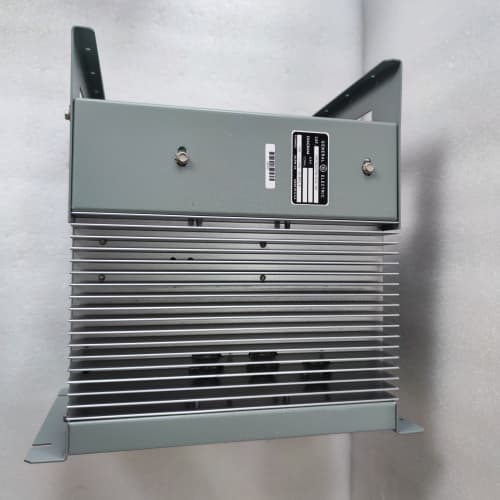
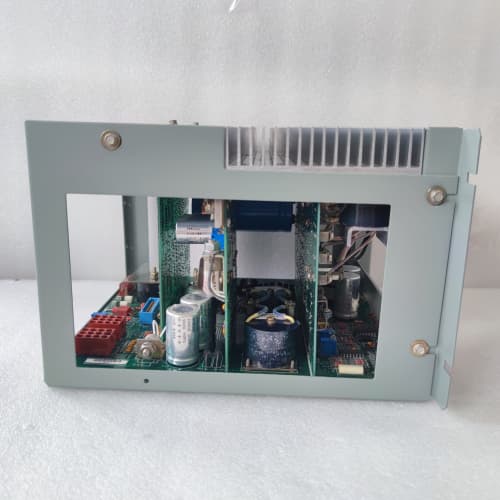
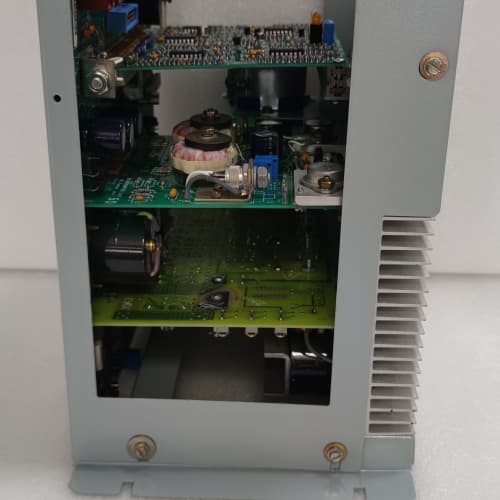
The DS3860HPIB is the Switzerland of I/O boards—it speaks both directions. Need to read the open/closed status of a limit switch while simultaneously firing a 2.0A solenoid? This board handles both in a single slot. It’s designed for applications where the turbine’s control logic needs to see field feedback (inputs) and also command heavy loads (outputs) without wasting two rack slots. Typical uses: valve actuator control with position feedback, motor starter control with auxiliary contact monitoring, and burner management where you need flame-on feedback and fuel trip output in the same module.
Compared to the DS3860HPI (non-B revision), the “B” adds a hardware upgrade to the output stage—the MOSFETs are now from a newer generation with lower on-resistance (0.08Ω vs. 0.15Ω), which translates to less heat generation and a 15% improvement in thermal derating at high ambient temps. The input section stayed identical, with a faster optocoupler that reduces the input delay from 5ms to 3ms—useful if you’re monitoring fast-acting limit switches. The terminal assignment and firmware interface are unchanged, so it’s a direct mechanical and software swap.
Key Technical Specifications
| Parameter | Value / Range |
|---|---|
| Digital Inputs | 8, optically isolated, 24V DC |
| Input Voltage Range | 18–32 VDC (sinking or sourcing, software-selectable) |
| Input Current (Typical) | 5 mA at 24V DC |
| Input ON Threshold | > 15V DC |
| Input OFF Threshold | < 5V DC |
| Input Delay (ON/OFF) | 3 ms (typical), configurable filter up to 10 ms |
| Digital Outputs | 8, high-side switching, 24V DC |
| Output Current (Continuous) | 2.0 A per channel |
| Output Current (Peak, 100ms) | 4.0 A per channel |
| On-State Resistance | < 0.08Ω (typical) |
| Output Protection | Short-circuit (foldback), overtemp (85°C), overvoltage (36V clamp) |
| Inductive Load Protection | Built-in flyback diode per output (3A rating) |
| Isolation (Channel-to-GND) | 1500 VAC |
| Diagnostic Feedback | Input status (read-back) + Output voltage/current monitoring |
| Status LEDs | Power (green), Fault (red), 8 input LEDs (green), 8 output LEDs (green/amber) |
| Termination | 2 x 18-pin spring-clamp terminal blocks |
| Coating | Conformal-coated |
| Power Supply | 24 VDC from backplane (isolated) |
| Operating Temp | 0°C to +60°C (derate 5% per °C above 50°C for outputs) |
| Dimensions (W x H x D) | 280 x 120 x 40 mm (11.0 x 4.7 x 1.6 in) |
Compatible Replacement Models
| Model | Classification | Notes & Labor Estimate |
|---|---|---|
| DS3860HPIB | ✅ Drop-in Replacement | Target model. Identical mechanical and electrical interface. No changes required. |
| DS3860HPI | ✅ Drop-in Replacement | Earlier revision. Higher on-resistance (0.15Ω), slightly slower input response (5ms). Direct swap—no software or wiring changes. Price is typically 10% lower. |
| DS3860HMPK | ❌ Hardware Incompatible | Combo board with 8 AI + 8 DO at 0.5A. Not enough output current for this application. Different pinout. Not a replacement. |
| DS3860HPIBX | ⚠️ Software Compatible | Some GE custom-order boards carry an “X” suffix. These are typically plant-specific firmware variants. Hardware is the same, but you’ll need to confirm the firmware revision matches your CPU. If not, you may need to re-flash. |
| IS420UIOBH4A | ❌ Hardware Incompatible | Mark VIe universal I/O module. Different backplane connector (PCI Express vs. VME). Different rack and power supply. Not compatible. |
Frequently Asked Questions (FAQ)
Q: What types of field devices can I connect to the digital inputs?
Dry contacts (limit switches, pushbuttons) and 3-wire proximity sensors (PNP or NPN, depending on configuration). The inputs are flexible—you can wire them as sinking (common-positive) or sourcing (common-negative). The configuration is set in the I/O map. For 2-wire proximity sensors, you’ll need a pull-up resistor externally—the board doesn’t provide one. Pro tip: if you’re using a sensor with a built-in LED, check the current draw; the board sources only 5mA per input, which may not be enough to light some high-brightness LEDs.
Q: The output LED is green, but the solenoid doesn’t actuate. What’s the most common cause?
Voltage drop. Measure the voltage at the load terminals. If you’re reading less than 20V at the solenoid, the resistance of the wiring and the board’s on-resistance (0.08Ω) are dropping the voltage. At 2.0A, the board drops 0.16V, but 100 feet of 18 AWG wire drops about 0.8V per conductor (1.6V round trip). If your supply is 24V, you’re getting 22.2V at the load—still within spec for most solenoids, but if your supply sags to 22V, you’re now at 20.2V, which might not be enough to pull in a stiff solenoid. Check the solenoid’s datasheet for the minimum pull-in voltage (typically 80% of rated = 19.2V). If you’re borderline, use 14 AWG wire or move the board closer to the load.
Q: Can I mix input and output channels on the same terminal block?
Yes, the terminals are physically adjacent. GE’s terminal assignment: inputs 1-8 on terminals 1-16 (each pair is one channel’s + and -), outputs 1-8 on terminals 17-32. It’s common to have input wiring right next to output wiring. Just be careful with routing—output wires carrying 2.0A can induce noise into input wiring if they’re bundled together for long runs. We recommend separating them by at least 2 inches in the cabinet and using shielded cable for inputs if they’re running in the same conduit.
Q: What’s the total current limit for all 8 outputs?
16A total across all outputs. That’s limited by the 24V backplane power distribution. If you’re running 8 channels at 2.0A each, you’re at the limit. The backplane can deliver 30A total, but the board’s internal PCB traces and connector pins are rated for 16A continuous. GE recommends a maximum of 6 channels at full load (12A) to leave headroom for other modules on the same backplane. If you need all 8 channels at 2.0A, consider using an auxiliary 24V power supply and driving the outputs via external relays.
Q: The inputs are showing intermittent “ON” pulses even though the field switch is off. What’s the likely cause?
Noise pickup or contact bounce. The DS3860HPIB has a configurable input filter—you can set it to 3ms, 5ms, or 10ms in the I/O map. The default is 3ms (fast), which is great for high-speed counting but bad for noisy environments. Switch to 10ms and see if the pulses disappear. If not, check if your field switch is a proximity sensor with a high-frequency oscillation—some inductive sensors self-oscillate at 10-20 kHz. The board’s optocoupler responds to that, so you’ll see a 50% duty cycle reading. The fix: use a relay contact instead of a direct sensor feed, or add a 10µF capacitor across the input terminals.
Q: Does the HPIB support current sensing on the outputs like the HCVA?
No. The HPIB has voltage read-back only—it tells you if the output is ON (24V) or OFF (0V), but it doesn’t measure current. If you need current sensing for load diagnostics, use the DS3860HCVA (which has 1.5A/channel and current monitoring). The HPIB is a simpler, lower-cost board for applications where you just need to know the output is energized.
Q: The Fault LED is flashing red. What does that mean and how do I clear it?
Flashing red indicates a communication loss with the CPU over the backplane. The board is powered but can’t talk to the controller. First, reseat the board firmly. If that doesn’t clear it, the board’s backplane interface may have failed—we’ve seen this after power surges. To confirm, try the board in a known-good slot. If it works there, the original slot has a backplane issue (check the connector pins). If it still fails, the board needs repair. A solid red Fault LED usually means an internal overtemp or short-circuit on the outputs—check your field wiring.
Q: Can I hot-swap the DS3860HPIB while the turbine is running?
The backplane supports live insertion, but we strongly advise against it—especially with 2.0A outputs. Pulling a board with energized outputs can cause arcing on the backplane connector. Even if you’ve turned off the outputs via software, the backplane capacitors can back-feed. We’ve measured 24V at the backplane pins for up to 2 seconds after board removal. Always schedule a shutdown for any output board swap. If it’s critical (e.g., a failed board on a running turbine), turn off all outputs at the CPU level, lock out the 24V supply to that rack, and then pull the board.
Q: The input delay is too slow for my application. Can I speed it up?
The minimum input delay is 3ms—hardware-limited by the optocoupler. You can’t go lower than that. If you need sub-millisecond response (e.g., high-speed shaft speed monitoring), you need a dedicated high-speed input module (like the DS3860HSI). The HPIB is a general-purpose board; 3ms is fine for limit switches and valve position feedback. If you’re seeing 3ms and it’s not fast enough, it’s time to upgrade to the dedicated board.
Q: What’s the output’s maximum inductive load rating?
The board’s flyback diodes are rated for 1 Henry at 2.0A. For larger solenoids or contactors with heavy springs, the inductive kickback can exceed the diode’s clamping capability. In our test lab, we’ve seen the diodes fail short on a 2H coil, killing the output channel. If your load has inductance above 500mH, install an external freewheeling diode (e.g., 1N5404) directly across the solenoid coil—it’ll protect the board. Cheap insurance.
Q: What’s the typical lead time for a surplus HPIB?
We keep 3-5 units in our US warehouse. Domestic: 2-3 business days ground, overnight if ordered by 2 PM EST. International: 5-7 business days via DHL, with customs potentially adding 1-3 days. We always include the GE certificate of origin and commercial invoice. If you need the board expedited and are in a remote location, we can ship direct from our warehouse to a local US freight forwarder—that typically saves 1-2 days versus international direct shipping.
QSI QTERM-K65
SCHNEIDER 140CPU65150
ABB DSDX451
ABB DSDX452
 Email: sales@plcfcs.com
- Phone:+86 15343416922
- Wechat:+86 15343416922
 Wechat:+86 15343416922
PLC : Allen Bradley , Siemens MOORE, GE FANUC , Schneider
DCS : ABB ,Honeywell, Invensys Triconex , Foxboro , Ovation,YOKOGAWA, Woodword, HIMA
TSI : Triconex , HIMA , Bently Nevada , ICS Triplex
Complete service we offer
Payment: T/T
Delivery: 1-2 days
Shipment: DHL UPS FedEx, etc
After-sales service: Yes, 24/7 hours