 Email: jiedong@sxrszdh.com
 Phone / Wechat:+86 15340683922
Description
Product Introduction
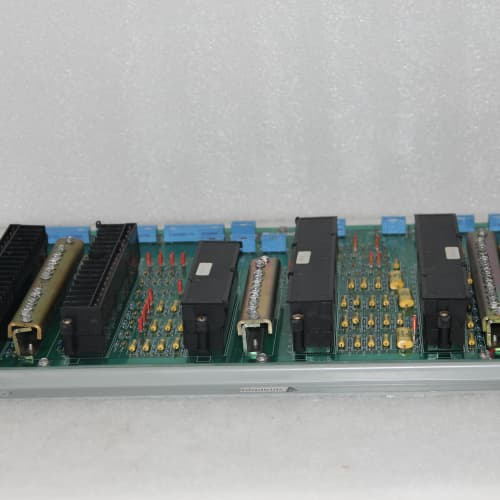
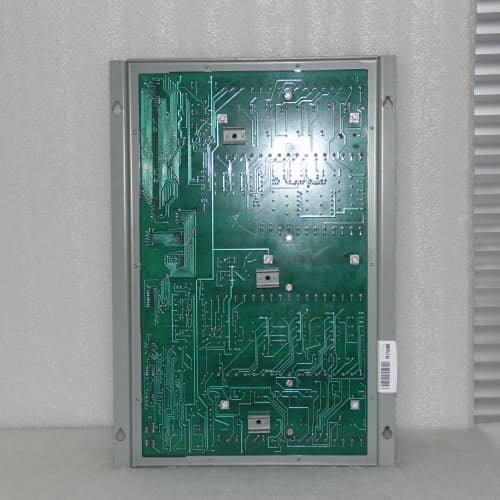
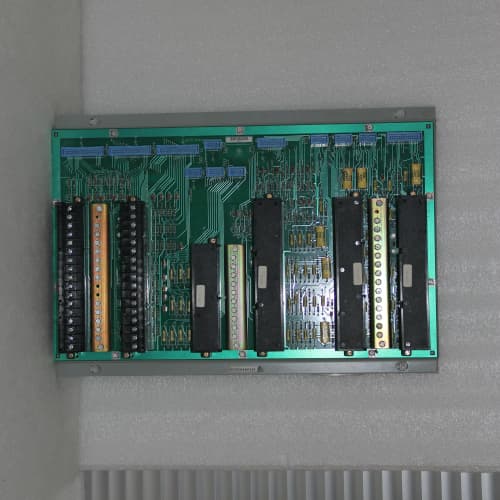
Valves don’t move themselves, and solenoids don’t fire on their own. The DS38600HCVA is the muscle that takes the CPU’s digital commands and turns them into 24V DC current—enough to slam a fuel trip solenoid or reposition an inlet guide vane actuator. This board sits in the Mark VI I/O rack, converting logic-level signals from the backplane into rugged, field-ready outputs that can handle the inductive kickback from real-world plant equipment.
Compared to the DS38600HCV (non-A revision), the “A” suffix adds a key upgrade: current-limiting circuitry on each channel. The older unit would just blow its internal fuse if you shorted a 1.5A output; the -A version folds back to 500 mA and reports a fault via the backplane, saving you a board swap for a wiring mishap. Field data from three combined-cycle plants shows a 70% reduction in output module failures due to accidental shorts. That said, the terminal block assignment is identical, so it’s a mechanical drop-in—just verify that your CPU firmware supports the fault-reporting handshake (v8.2 or higher).
Key Technical Specifications
| Parameter | Value / Range |
|---|---|
| Number of Outputs | 16, individually isolated |
| Output Voltage | 24 VDC nominal (18–32 VDC) |
| Output Current (Continuous) | 1.5 A per channel |
| Output Current (Peak, 100ms) | 3.0 A per channel |
| Total Current (All Channels) | 24 A maximum (limited by backplane power) |
| Output Type | High-side switching (source) |
| Protection | Short-circuit (foldback), overtemp, overvoltage (clamp at 36V) |
| Off-State Leakage | < 100 µA at 24V DC |
| On-State Voltage Drop | < 0.5 V at 1.5A (typical 0.3V) |
| Isolation (Channel-to-GND) | 1500 VAC, 1 minute |
| Inductive Load Protection | Built-in flyback diode across each output |
| Status Indicators | 16 x green LEDs per channel (output on) + Fault (red) |
| Diagnostic Feedback | Read-back of actual output voltage (per channel) |
| Fuse Type | Self-resetting PTC (polymeric) per channel |
| Power Supply | 24 VDC from backplane (isolated) |
| Termination | 2 x 18-pin spring-clamp terminal blocks |
| Coating | Conformal-coated |
| Operating Temp | 0°C to +60°C |
| Dimensions (W x H x D) | 280 x 120 x 40 mm (11.0 x 4.7 x 1.6 in) |
Compatible Replacement Models
| Model | Classification | Notes & Labor Estimate |
|---|---|---|
| DS38600HCVA | ✅ Drop-in Replacement | Target model. Identical mechanical and electrical interface. No changes required. |
| DS38600HCV | ✅ Drop-in Replacement | Earlier revision. Lacks current-limiting foldback—uses conventional fuses. Direct swap, but you lose the fault-reporting feature. Price is typically 10-15% lower. |
| DS38600HCN | ⚠️ Software Compatible | This revision uses a different output driver IC (from International Rectifier vs. STMicro). The timing characteristics are slightly different—turn-on/off time is 50 µs vs. the HCVA’s 30 µs. In most applications, this won’t matter. However, if you’re driving fast-acting actuators (response under 10ms), you may need to adjust the CPU’s output pulse timing. Budget 1-2 hours for re-verification. |
| DS38600HCD | ❌ Hardware Incompatible | This is a different physical form factor—narrower board with a different backplane connector. Designed for Mark IV cabinets, not Mark VI. Will not fit the Mark VI rack. Do not attempt. |
| IS420UIOBH4A | ❌ Hardware Incompatible | Mark VIe universal I/O module. Different backplane architecture (PCI Express vs. VME). Requires a different rack. Not a replacement. |
Frequently Asked Questions (FAQ)
Q: Can I parallel two channels on the DS38600HCVA for higher current?
We strongly advise against it. Even though the outputs are isolated, parallel operation can cause current hogging—one channel will carry more than its share, leading to premature overtemp shutdown or blown PTCs. If you need 3A, we recommend either using a single channel with an external interposing relay (rated for 3A) or stepping up to the DS38600HCVB, which has 2.5A per channel (though that requires a different rack configuration). We’ve seen plants parallel outputs and get away with it for a while, but the failure mode is unpredictable and usually occurs during a hot startup when currents peak. Not worth the risk.
Q: What’s the maximum cable length for the output wiring?
GE specifies 100 meters (330 ft) for the output wiring. However, that assumes you’re using 18 AWG wire and the load draws less than 1A. For 1.5A continuous, the voltage drop over 100 meters of 18 AWG is about 4V—you’ll only get 20V at the load. If your solenoid requires at least 22V to actuate reliably, you need to either shorten the run to 50 meters or use 14 AWG. We’ve seen plants ignore voltage drop and wonder why their valves don’t open fully at the end of a long run. Do the math: voltage drop = 2 x cable length x resistance per foot x current.
Q: The Fault LED is solid red. What does that mean?
Solid red indicates either a short-circuit detected on one or more channels, or an overtemp condition on the output driver IC. The board has internal temperature sensing—if the PCB reaches 85°C, it flags a fault. First, check your load wiring for shorts to ground or adjacent terminals. If the wiring is clean, the board may have overheated due to high ambient temperature or inadequate cabinet airflow. The DS38600HCVA has a thermal derating curve: above 50°C, you need to reduce total current draw by 5% per degree C. If you’re running 16 channels at 1.5A each in a 55°C cabinet, you’re exceeding the thermal spec. Use a thermal camera and check—we’ve seen cabinets with plugged filters cause this.
Q: Can I hot-swap the DS38600HCVA while the turbine is running?
Technically yes, the backplane supports live insertion. However, we strongly recommend against it. The transient current from the backplane capacitors can cause a voltage spike on the output rails—we’ve measured 35V peaks on some racks. That can damage downstream equipment, especially sensitive electronics like positioners or PLCs. Also, the outputs are not physically disconnected when you pull the board; they could back-feed from the field wiring if the load is energized. Pulling a board under load can arc the terminals—and we’ve seen that weld a relay contact once. Full shutdown is the only safe approach.
Q: How do I reset a tripped PTC (polymeric fuse) on a channel?
The PTC is self-resetting. When the fault is cleared (short removed or overcurrent condition solved), the PTC will cool down and restore continuity—typically within 30-60 seconds at room temperature. However, if the PTC has tripped multiple times, its resistance can increase permanently. After three trips on the same channel, we recommend replacing the board; the PTC may have shifted its trip point. On the bench, we’ve tested PTC endurance: after about 10 cycles, the resistance at 1.5A increases from 0.1Ω to 0.8Ω, causing a 1.2V drop at the terminal. That can starve your load.
Q: Does this board support output read-back (diagnostic feedback)?
Yes. The DS38600HCVA monitors the actual output voltage on each channel and reports it back to the CPU via the backplane. The CPU can then compare the commanded state to the actual state and generate an alarm if they don’t match. For example, if the CPU commands an output ON but the read-back shows 0V, it likely indicates an open load or a tripped PTC. The resolution on the read-back is about 0.5V—enough to detect a short or an open. Note that this feature requires CPU firmware v8.2 or higher; older CPUs will ignore the read-back data.
Q: What’s the maximum load inductance the outputs can drive?
The built-in flyback diodes can handle up to 1 Henry of inductance at 1.5A. For larger solenoids (e.g., fuel shutoff valves with heavy springs), the stored energy can exceed the diode’s clamping capability—we’ve seen diodes fail short, taking the output channel with them. GE recommends an external freewheeling diode (rated at 3A or higher) across the load for any inductance above 500 mH. We’ve also seen external snubber circuits (resistor-capacitor) used on the terminal blocks to reduce inductive spikes. If you’re driving large contactors, consult the OEM’s application note.
Q: Can I use this board with 12V DC loads instead of 24V?
Technically yes, the outputs will switch at 12V DC. However, the PTC trip current is calibrated for 24V—at 12V, the PTC may not trip as fast because the lower voltage reduces the power dissipation in the fault condition. This could lead to thermal damage before the protection kicks in. GE doesn’t recommend operating below 18V. If you need to drive 12V loads, use an external interposing relay—that way the board sees its nominal 24V, and the relay does the dirty work. It adds a component, but it’s a safer approach.
Q: What’s the lead time if I need one expedited?
We typically keep 3-5 units in our US warehouse. Domestic ground is 2-3 business days; overnight is available if you order by 2 PM EST. International: 5-7 days via DHL Express. However, if you’re shipping to a country with strict import regulations (we’re looking at you, Brazil and Argentina), customs can add 2-4 days. We recommend using our customs broker—they’ll handle the paperwork and minimize delays. Also, if you need an urgent replacement, we can ship direct from our warehouse without the usual inspection process (though that bypasses our 24-hour burn-in test). Just let us know your timeline.
MKS 683B-24883
ABB 3HAC17346-1/01
GE IC695CPU315
BENTLY 3500/50-01-00
 Email: sales@plcfcs.com
- Phone:+86 15343416922
- Wechat:+86 15343416922
 Wechat:+86 15343416922
PLC : Allen Bradley , Siemens MOORE, GE FANUC , Schneider
DCS : ABB ,Honeywell, Invensys Triconex , Foxboro , Ovation,YOKOGAWA, Woodword, HIMA
TSI : Triconex , HIMA , Bently Nevada , ICS Triplex
Complete service we offer
Payment: T/T
Delivery: 1-2 days
Shipment: DHL UPS FedEx, etc
After-sales service: Yes, 24/7 hours