 Email: jiedong@sxrszdh.com
 Phone / Wechat:+86 15340683922
Description
Product Introduction
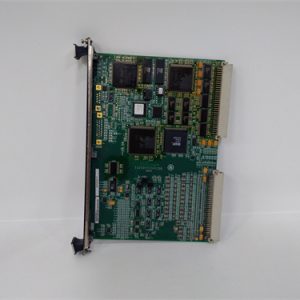
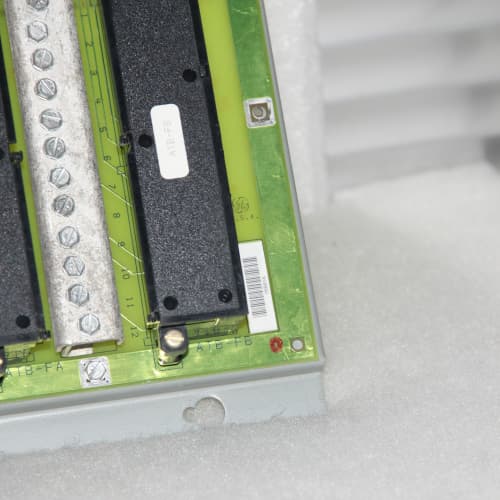
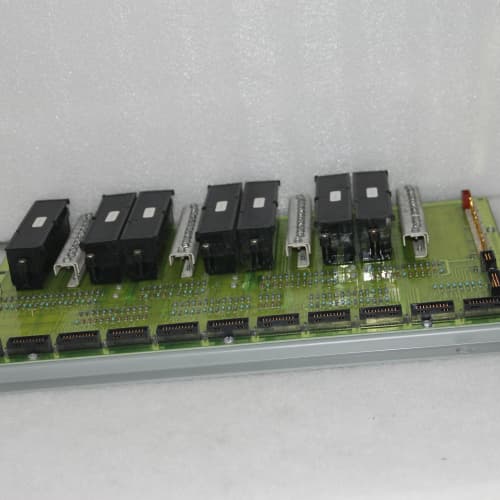
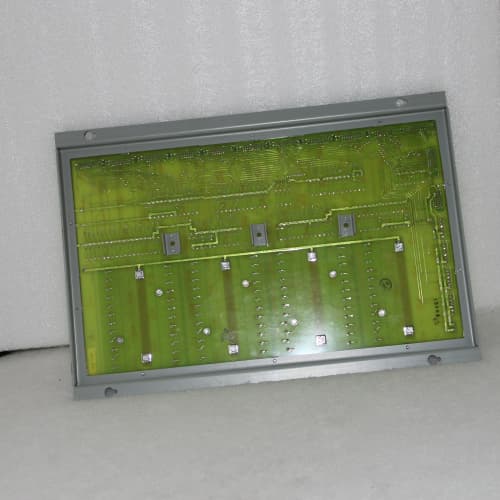
The GE DS3820RTDD is a high-performance RTD input module for the Speedtronic Mark V turbine control system, providing eight isolated channels for precise temperature measurement from resistance temperature detectors. This board mounts directly into the Mark V rack and interfaces with the backplane, converting RTD resistance values into digital temperature readings for the CPU.
The “RTDD” designation indicates a revision with enhanced noise filtering and extended common-mode input range compared to the base RTDB model. This variant was developed for applications with high electrical noise environments—large variable frequency drives, generators with high stray capacitance, or plants with poor grounding—where standard RTD modules exhibit measurement instability. The RTDD offers improved normal-mode rejection at 50/60 Hz and extended common-mode voltage tolerance (±10V versus ±5V on the RTDB). For turbine installations with known electrical noise issues, this variant provides stable, drift-free temperature readings that prevent nuisance alarms and spurious trips.
Key Technical Specifications
| Parameter | Value |
|---|---|
| Manufacturer | GE (General Electric) |
| Model Number | DS3820RTDD |
| Series | Speedtronic Mark V |
| Number of Channels | 8 (isolated) |
| Supported RTD Types | Pt100 (α=0.00385), Ni120, Cu10 (user-configurable per channel) |
| Temperature Range | -200°C to +850°C (Pt100) |
| Resolution | 16-bit (0.1°C typical) |
| Accuracy | ±0.25°C (±0.1% of reading) |
| Lead Wire Compensation | Automatic (2-wire, 3-wire, and 4-wire support) |
| Excitation Current | 1 mA constant current (selectable 0.5 mA) |
| Common Mode Input Range | ±10V (extended, versus ±5V on RTDB) |
| Common Mode Rejection | 130 dB at 50/60 Hz (enhanced) |
| Normal Mode Rejection | 100 dB at 50/60 Hz (enhanced) |
| Input Resistance | >10 MΩ (common mode) |
| Digital Filter | Two-stage averaging (configurable per channel) |
| Isolation Voltage | 2500 VDC (channel-to-backplane) |
| Update Rate | 8 Hz (all channels scanned, 125ms per scan) |
| Status Indicators | 8 green LEDs (valid measurement), 1 yellow LED (noise/overrange warning) |
| Operating Temperature | 0 to +60°C (ambient, forced air required) |
| Storage Temperature | -40 to +85°C |
| Dimensions | 8.5″ x 4.2″ x 1.5″ (standard Mark V 1-slot width) |
| Connector | 96-pin DIN 41612 (Type C, male) + external terminal block |
Key Selling Points & Differentiators
- Enhanced 130 dB common-mode rejection. The RTDD provides 130 dB CMRR at 50/60 Hz versus 120 dB on the RTDB. This 10 dB improvement means substantially better rejection of ground-loop noise in large industrial installations with distributed RTD sensors.
- Extended ±10V common-mode input range. Handles larger ground potential differences between sensors and the Mark V cabinet. If your RTD sensors are grounded at the field device (motor housing, bearing pedestal) and that ground is not at the same potential as the cabinet ground, the RTDD tolerates up to ±10V difference without accuracy degradation.
- Two-stage digital filtering. The RTDD includes configurable averaging filters that reduce noise from high-frequency interference (VFDs, variable speed drives, welding equipment). You can set filtering per channel from 2 to 64 samples, trading response time for stability.
- Dedicated noise/overrange warning LED. A yellow LED illuminates if any channel detects excessive common-mode voltage, high-frequency noise, or an open-circuit condition. This diagnostic helps you identify problematic sensors or wiring before they cause nuisance alarms.
- Support for 2-, 3-, and 4-wire RTDs. Automatic lead compensation works with all configurations, with enhanced accuracy on 3-wire sensors due to better current matching on the excitation leads.
- 48-hour burn-in with accuracy and noise rejection testing. Every RTDD unit runs a full 48-hour test cycle: accuracy verified with precision decade boxes, CMRR measured with injected common-mode noise (10V, 50Hz), and normal-mode rejection verified with injected AC signals. We log all test results and provide them with the shipment.
- 18-month warranty covering accuracy and noise rejection specifications. If the board fails to meet its 130 dB CMRR or ±0.25°C accuracy under specified conditions, we replace it. This is a more rigorous warranty than we offer on standard RTDB boards.
Frequently Asked Questions (FAQ)
Q: What is the difference between the RTDB and the RTDD?
A: Three main differences: (1) Common-mode input range—RTDD is ±10V, RTDB is ±5V. (2) CMRR—RTDD is 130 dB, RTDB is 120 dB. (3) Normal-mode rejection—RTDD is 100 dB, RTDB is 80 dB. The RTDD also has a two-stage digital filter versus single-stage on the RTDB, and includes a yellow noise/overrange LED that the RTDB lacks. Essentially, the RTDD is the “noise-hardened” version of the RTDB, designed for electrically noisy environments.
Q: I’m in a plant with variable frequency drives that cause noise on my RTD readings. Will the RTDD solve this?
A: Likely yes—this is exactly the situation the RTDD was designed for. The enhanced normal-mode rejection (100 dB versus 80 dB) means it’s ten times more effective at rejecting 50/60 Hz noise from VFDs, and the two-stage digital filter provides additional attenuation of high-frequency switching noise. We’ve seen plants where VFDs caused RTD readings to fluctuate by ±5°C on standard RTDB boards; the RTDD reduced fluctuation to less than ±0.3°C in the same installation. The key is proper wiring—use shielded twisted-pair cable and ground the shield at the cabinet end.
Q: Can I mix RTDB and RTDD boards in the same Mark V chassis?
A: Yes—they are fully compatible. The backplane interface and software configuration are identical. You can place RTDB boards on channels that don’t have noise issues and RTDD boards on noisy channels. The Mark V CPU treats both boards identically; there’s no firmware or configuration conflict. We’ve supported customers who upgraded only the problem channels to RTDD while leaving the rest as RTDB.
Q: The yellow LED on the RTDD indicates noise/overrange. What exactly does it mean when it illuminates?
A: The yellow LED illuminates under three conditions: (1) Common-mode voltage exceeds ±10V—your RTD sensor ground is too far from the cabinet ground. (2) High-frequency noise above 1V peak-to-peak is detected on the input—typically from VFDs, welding equipment, or radio transmitters. (3) The RTD sensor is open-circuit (broken wire)—the board detects infinite resistance. In normal operation, the yellow LED should be off. If it illuminates, check that channel’s wiring, grounding, and sensor continuity. If the LED stays on with a good sensor and proper wiring, the board channel may be faulty—replace the board.
Q: The RTDD has selectable 0.5 mA or 1 mA excitation current. When should I use 0.5 mA?
A: Use 0.5 mA for small RTD sensors that can self-heat—typically miniature bearing sensors, thin-film sensors, or sensors in low-conductivity media where the temperature rise from 1 mA is significant. Self-heating at 1 mA is normally 0.1-0.2°C in air, 0.05°C in oil, and up to 0.5°C in air with still conditions. At 0.5 mA, the self-heating is quartered. If you’re measuring bearing temperatures where a 0.5°C error matters, select 0.5 mA. For exhaust gas or ambient temperatures, 1 mA provides better signal-to-noise ratio.
Q: The RTDD has configurable digital filtering per channel. How do I set the filter level?
A: Filtering is configured in the Mark V software through a parameter called “Average Count.” The range is 2 to 64 samples. At 2 samples, the response time is approximately 250ms (2 × 125ms scan time). At 64 samples, the response time is 8 seconds. Higher filter settings give more stable readings but slower response. For bearing temperatures (slow-changing), use 16-32 samples. For exhaust temperatures (fast-changing), use 2-8 samples. We recommend starting at 8 samples (1-second response) and increasing only if you see persistent noise. The RTDD’s filter is linear-phase (no group delay distortion), so it won’t introduce ringing or overshoot like some digital filters.
Q: What is the update rate of the RTDD, and why is it slower than the RTDB?
A: The RTDD updates at 8 Hz (125ms per full scan) versus 10 Hz (100ms) on the RTDB. The slightly slower rate is due to the enhanced two-stage filtering and noise rejection circuitry. The RTDD spends more time integrating the input signal to achieve the higher CMRR and NMR figures. For most process temperature monitoring applications (bearings, windings, exhaust), 8 Hz is more than sufficient. If you need faster sampling (for transient temperature monitoring), use the RTDB or a dedicated high-speed analog input module.
Q: Can I use the RTDD with 120V AC sensors or thermocouples?
A: No—the RTDD is strictly for RTD sensors (resistance-based). Do not connect thermocouples (they produce millivolt signals) or any AC-powered sensor—the input is not rated for AC voltage. If you need thermocouple inputs, use the DS3820TCBA module. The RTDD inputs are DC resistance only, and the isolation is rated for 2500V DC but not continuous AC. Applying 120V AC to an RTD input will damage the board. We’ve seen this happen when technicians mistakenly used the RTD terminal block for thermocouple wiring. Check your sensor type before installing.
Q: I have 4-wire RTD sensors in my system. Does the RTDD offer any advantage over the RTDB for these?
A: The RTDD’s extended common-mode range and enhanced noise rejection are beneficial even with 4-wire sensors, which are inherently more accurate than 3-wire or 2-wire. 4-wire sensors eliminate lead resistance effects, but they don’t eliminate common-mode noise or ground loops—the RTDD’s ±10V common-mode range and 130 dB CMRR help here. In noisy environments, the RTDD provides more stable readings even with 4-wire sensors than the RTDB would. The accuracy specification is essentially the same (±0.25°C versus ±0.2°C on RTDB) due to the noise handling trade-off.
Q: How do I test the RTDD’s CMRR and noise rejection if I suspect a channel is failing?
A: You’ll need a precision signal source with common-mode injection capability—most plant shops don’t have this. Our bench test rig can measure CMRR directly. If you suspect a failing channel, run a simple test: disconnect the RTD sensor and install a precision resistor (100Ω, 200Ω, 400Ω) across the channel. If the board reads the correct resistance (temperature) and the yellow LED stays off, the channel is likely fine and the problem is in the field wiring or sensor. If the reading fluctuates wildly with the known resistor, the channel is faulty—contact us for a replacement.
Q: What is the lead compensation accuracy on the RTDD versus the RTDB?
A: The RTDD’s lead compensation is slightly better due to tighter matching of the two excitation current sources (the circuit that drives current through the RTD leads). For 3-wire sensors, the RTDD corrects lead resistance to within ±0.02Ω (approximately ±0.05°C for Pt100) versus ±0.05Ω (±0.13°C) on the RTDB. For 4-wire sensors, there’s no difference—both are essentially perfect. For long cable runs (>100 meters), the RTDD’s better lead compensation is noticeable.
Q: The RTDD is more expensive than the RTDB. Is the extra cost justified?
A: It depends on your environment. In clean, low-noise environments (well-grounded plant with no VFDs, no welding, no radio transmitters), the RTDB is sufficient and the RTDD offers little benefit. In high-noise environments—which is most power plants and industrial facilities—the RTDD’s enhanced noise rejection and common-mode range provide real value. The extra cost is typically 20-30%, which is a small fraction of the cost of a turbine trip caused by spurious temperature alarms. We recommend the RTDD for any installation with variable speed drives, welding equipment, or known grounding issues. For clean indoor control rooms, the RTDB is fine.
TRICONEX 3503E
GE IC695CPE310
BENTLY 3500/33-01-00
FOXBORO FBM07B
 Email: sales@plcfcs.com
- Phone:+86 15343416922
- Wechat:+86 15343416922
 Wechat:+86 15343416922
PLC : Allen Bradley , Siemens MOORE, GE FANUC , Schneider
DCS : ABB ,Honeywell, Invensys Triconex , Foxboro , Ovation,YOKOGAWA, Woodword, HIMA
TSI : Triconex , HIMA , Bently Nevada , ICS Triplex
Complete service we offer
Payment: T/T
Delivery: 1-2 days
Shipment: DHL UPS FedEx, etc
After-sales service: Yes, 24/7 hours