 Email: jiedong@sxrszdh.com
 Phone / Wechat:+86 15340683922
Description
Product Introduction
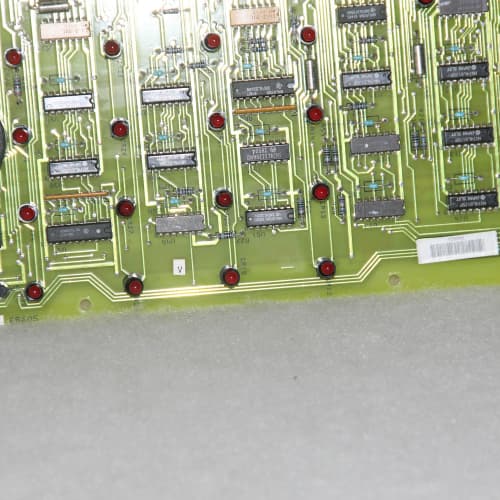
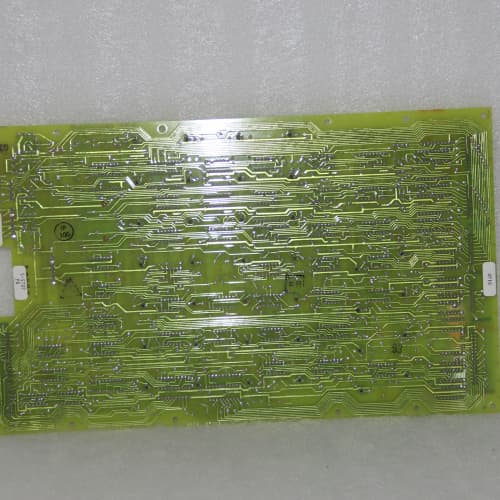
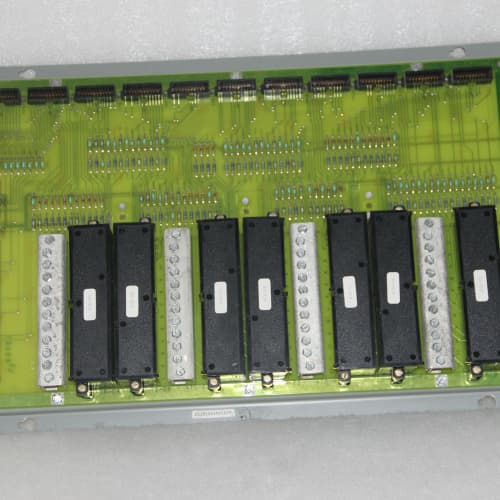
The GE DS3820RTDB is a dedicated RTD input module for the Speedtronic Mark V turbine control system, providing eight isolated channels for accurate temperature measurement from resistance temperature detectors. This board mounts directly into the Mark V rack, interfacing with the backplane and converting RTD resistance values into digital temperature readings for the CPU.
The RTDB is designed specifically for high-accuracy temperature sensing applications: bearing temperatures, winding temperatures, exhaust gas monitoring, and inlet air measurements. Each channel supports 2-wire, 3-wire, and 4-wire RTD configurations, with automatic lead-wire compensation that eliminates measurement errors caused by lead resistance. The 16-bit resolution gives you 0.1°C accuracy over the full industrial temperature range. This module is widely used in GE Mark V systems for turbine temperature monitoring, with proven reliability in power generation and industrial processing.
Key Technical Specifications
| Parameter | Value |
|---|---|
| Manufacturer | GE (General Electric) |
| Model Number | DS3820RTDB |
| Series | Speedtronic Mark V |
| Number of Channels | 8 (isolated) |
| Supported RTD Types | Pt100 (α=0.00385), Ni120, Cu10 (user-configurable per channel) |
| Temperature Range | -200°C to +850°C (Pt100) |
| Resolution | 16-bit (0.1°C typical) |
| Accuracy | ±0.2°C (±0.1% of reading) |
| Lead Wire Compensation | Automatic (2-wire, 3-wire, and 4-wire support) |
| Excitation Current | 1 mA constant current (selectable 0.5 mA for self-heating reduction) |
| Input Resistance | >10 MΩ (common mode) |
| Isolation Voltage | 2500 VDC (channel-to-backplane) |
| Common Mode Rejection | 120 dB at 50/60 Hz |
| Normal Mode Rejection | 80 dB at 50/60 Hz |
| Update Rate | 10 Hz (all channels scanned) |
| Status Indicators | 8 green LEDs (valid measurement per channel), 1 red LED (system fault) |
| Operating Temperature | 0 to +60°C (ambient, forced air required) |
| Storage Temperature | -40 to +85°C |
| Dimensions | 8.5″ x 4.2″ x 1.5″ (standard Mark V 1-slot width) |
| Connector | 96-pin DIN 41612 (Type C, male) + external terminal block for RTD wiring |
Key Selling Points & Differentiators
- 8 isolated RTD channels in a single slot. Dedicated isolation per channel eliminates ground-loop errors in large industrial installations with distributed sensors.
- Support for multiple RTD types. Software-configurable per channel for Pt100, Ni120, or Cu10 sensors. No hardware jumpers or component changes required.
- Automatic lead-wire compensation. For 3-wire and 4-wire configurations, the board automatically subtracts lead resistance to provide accurate readings regardless of wire gauge or distance to the sensor.
- Selectable excitation current. Use 1 mA for most applications, or 0.5 mA to minimize self-heating in small sensors or high-accuracy applications.
- 16-bit resolution with digital filtering. Internal digital filter provides 80 dB normal mode rejection at 50/60 Hz, eliminating power-line noise from temperature readings.
- 48-hour burn-in with accuracy verification. Every unit is tested with precision decade boxes to verify accuracy across the entire temperature range (simulated -200°C to +850°C). We log the deviation at 100°C intervals and reject boards exceeding ±0.2°C.
- 18-month warranty covering accuracy and channel integrity. If any channel drifts more than ±0.5°C from calibration, we replace the board.
Frequently Asked Questions (FAQ)
Q: What RTD types does the DS3820RTDB support, and how do I configure each channel?
A: The RTDB supports three common RTD types: Pt100 (100Ω at 0°C, α=0.00385), Ni120 (120Ω at 0°C), and Cu10 (10Ω at 0°C). Configuration is done through the Mark V software—no jumpers or dip switches on the board. Each channel can be independently configured for a different RTD type, which is useful if you have mixed sensor types in the same cabinet. The configuration is stored in the CPU’s non-volatile memory and applied at power-up.
Q: Can I use 2-wire RTDs with this board, or do I need 3-wire or 4-wire sensors?
A: You can use 2-wire, 3-wire, or 4-wire RTDs. For 2-wire sensors, the board measures the total resistance including the lead wire, which adds an error of approximately 0.4°C per ohm of lead resistance. For high accuracy, we recommend 3-wire or 4-wire sensors—the RTDB automatically compensates for lead resistance in these configurations. Most turbine applications use 3-wire PT100 sensors, which are supported.
Q: What is the maximum cable length from the RTD sensor to the RTDB?
A: The board can handle cable lengths up to 300 meters (1,000 feet) with 3-wire or 4-wire configurations. The limiting factor is cable resistance—for 3-wire, the lead resistance must be balanced (within 0.1Ω of each other). For longer runs, use 4-wire sensors to eliminate the lead resistance effect entirely. We recommend shielded twisted-pair cable with the shield grounded at the Mark V cabinet end.
Q: How accurate is the RTDB, and does it drift over time?
A: The RTDB is specified at ±0.2°C or ±0.1% of reading, whichever is greater. In our field experience, these boards maintain accuracy within ±0.3°C for at least 5-7 years before any drift. The drift mechanism is primarily in the reference resistor used for the constant current excitation—GE specified a low-drift resistor that degrades at less than 5ppm/year. We recommend recalibration every 5 years if your plant requires high accuracy (e.g., warranty monitoring). We offer recalibration services where we test every channel against certified reference RTDs.
Q: The RTDB has a red fault LED. What does it indicate?
A: The red LED indicates a system fault on the board: either a failure in the analog-to-digital converter, a reference voltage issue, or a communication error with the backplane. If the red LED is lit, the board is not providing valid temperature readings to the CPU. In our experience, a lit red LED on an RTDB is rare—they’re very reliable. The most common cause is a physical problem like a bent connector pin, not board failure. Check seating, power cycle, and if the LED remains lit, replace the board.
Q: I have a PT100 sensor with a 4-wire configuration. How do I wire it to the RTDB?
A: The RTDB terminal block has four terminals per channel: A, B, C, and D. For 4-wire sensors: connect the two excitation leads to A and D (using constant current), and the two sense leads to B and C (measuring voltage). For 3-wire: connect one excitation lead to A, one sense lead to B, and the common (one wire serves both functions) to C and D jumpered together. The user manual has a detailed wiring diagram—we can provide a copy with your board. For 2-wire: connect A and B together (jumpers) to one lead, and C and D together to the other.
Q: Can I use thermocouples with this board?
A: No—the RTDB is specifically for RTD sensors (resistance-based). Thermocouples produce millivolt signals and require a different input module—specifically the DS3820TCBA (Thermocouple Input Board). Do not connect thermocouples to the RTDB; they will not read correctly and the board may be damaged by the thermocouple’s low-level voltage (not a safety issue, but the readings will be completely wrong). If you have thermocouples in your system, order the TCBA module.
Q: What is the update rate of the RTDB? How fast does it sample each channel?
A: The RTDB scans all 8 channels sequentially at a rate of 10 Hz (100ms per full scan). Each channel is sampled and converted to temperature every 100ms. If you need faster sampling for dynamic temperature monitoring, this board may not be suitable—the RTDB is designed for process temperature monitoring (bearing, exhaust, winding) where response times of 100ms are sufficient. For high-speed thermal transients, you’d need a dedicated high-speed analog input module.
Q: The RTDB has a selectable excitation current of 1mA or 0.5mA. Which one should I use?
A: Use 1mA for most applications—it provides the best signal-to-noise ratio. Use 0.5mA if the RTD sensor is small or has a thin film element that could self-heat significantly at 1mA. Self-heating is the temperature rise in the sensor caused by the excitation current power dissipation—typically less than 0.1°C at 1mA, but in small sensors (e.g., miniature bearing sensors), it can be 0.5°C or more. GE’s default setting is 1mA, but if you’re measuring tight bearing clearances, select 0.5mA per channel. The configuration is software-selectable.
Q: I have an RTD sensor that’s reading erratic values. Could the RTDB be at fault?
A: Possibly, but we see three more common issues in the field: (1) loose wiring connections at the terminal block—temperature readings fluctuate when wires are loose and the contact resistance changes; (2) moisture in the RTD junction causing intermittent shorts; (3) a failing sensor that’s reaching end-of-life (RTDs typically drift over 15-20 years). To diagnose, swap the sensor with a known-good spare. If the problem follows the sensor, it’s the sensor. If the problem stays on the same channel, the RTDB channel is suspect. We can test individual channels on our bench if you send the board in.
Q: What is the warranty on this board, and what does it cover?
A: Our standard warranty is 18 months from date of shipment. It covers manufacturing defects, calibration drift exceeding ±0.5°C, and channel failures. It does not cover damage from miswiring, overvoltage (e.g., connecting 120V AC to RTD inputs), or physical damage. We don’t cover normal aging drift—if your board is 10 years old and drifts 0.3°C, that’s within spec and not a warranty issue. For recalibration needs, we offer a separate calibration service.
OPHIR NOVA II OPHIR
GE IC693CPU374
A-B 1756-RM
PROSOFT MVI56-MNET
 Email: sales@plcfcs.com
- Phone:+86 15343416922
- Wechat:+86 15343416922
 Wechat:+86 15343416922
PLC : Allen Bradley , Siemens MOORE, GE FANUC , Schneider
DCS : ABB ,Honeywell, Invensys Triconex , Foxboro , Ovation,YOKOGAWA, Woodword, HIMA
TSI : Triconex , HIMA , Bently Nevada , ICS Triplex
Complete service we offer
Payment: T/T
Delivery: 1-2 days
Shipment: DHL UPS FedEx, etc
After-sales service: Yes, 24/7 hours