 Email: jiedong@sxrszdh.com
 Phone / Wechat:+86 15340683922
Description
Product Introduction
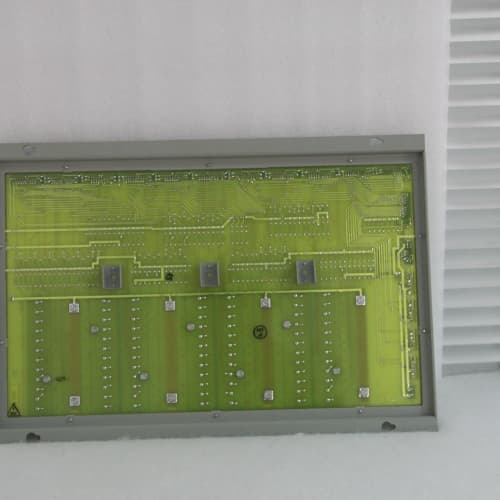
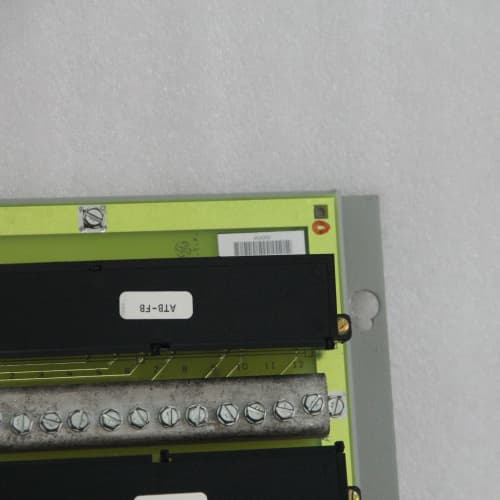
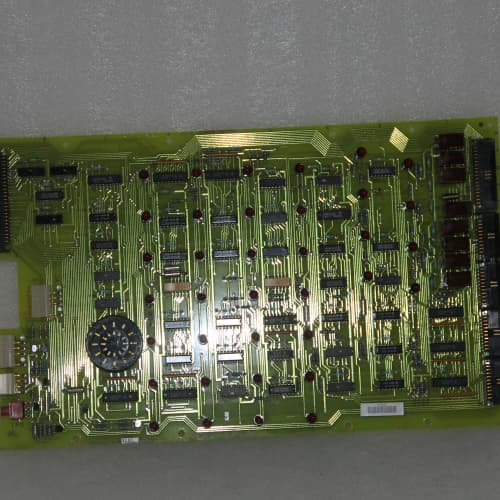
The GE DS3820RPSA is a specialized relay output module for the Speedtronic Mark V turbine control system, designed for applications requiring periodic pulse-testing of output circuits to verify wiring integrity without actually operating the field device. This board mounts into a standard Mark V rack slot and provides eight isolated Form A (SPST-NO) relay outputs, each with a dedicated feedback input to monitor the field circuit continuity.
The “RPSA” designation indicates “Relay Pulse Special Application” — the critical differentiator being the ability to pulse the relay coil for short intervals (typically 20-50ms) while monitoring feedback through separate sense inputs. This allows the Mark V CPU to verify that field wiring, fuses, and solenoids are intact without actually energizing the solenoid long enough to cause valve movement. This feature is essential for safety-critical systems (e.g., fuel shutoff valves, emergency trip solenoids) where you need to prove the circuit is ready to operate but cannot perform a full functional test during normal operation. The module is commonly used in turbine overspeed protection, emergency stop systems, and critical solenoid monitoring applications.
Key Technical Specifications
| Parameter | Value |
|---|---|
| Manufacturer | GE (General Electric) |
| Model Number | DS3820RPSA |
| Series | Speedtronic Mark V |
| Number of Output Channels | 8 (Form A, SPST-NO) |
| Number of Feedback Inputs | 8 (one per output channel, dedicated) |
| Contact Rating | 2A at 125 VDC / 250 VAC (resistive load) |
| Contact Material | Silver-alloy with gold flash |
| Coil Voltage | 24 VDC (derived from field supply) |
| Field Supply Inputs | Two independent terminals (one per bank of 4 channels) |
| Field Supply Range | 20-30 VDC |
| Coil Current per Relay | 30 mA typical |
| Pulse Test Duration | 20-50 ms (software configurable in Mark V logic) |
| Feedback Input Type | Opto-isolated, 24 VDC sense (field wired) |
| Feedback Input Range | 18-30 VDC (accepts dry contact closure to field supply common) |
| Isolation Voltage | 2500 VDC (field-to-backplane) |
| Response Time | 10 ms typical (energize), 8 ms typical (de-energize) |
| Mechanical Life | 5 million operations |
| Electrical Life | 100,000 operations at rated load |
| Status Indicators | 8 green LEDs (output energized), 8 yellow LEDs (feedback detected) |
| Operating Temperature | 0 to +60°C (ambient, forced air required) |
| Storage Temperature | -40 to +85°C |
| Dimensions | 8.5″ x 4.2″ x 1.5″ (standard Mark V 1-slot width) |
| Connector | 96-pin DIN 41612 (Type C, male) + external terminal block for field wiring |
Key Selling Points & Differentiators
- Integrated pulse-test capability. The RPSA supports 20-50ms pulse outputs that allow the Mark V CPU to verify field circuit continuity without actuating the final control element. This prevents nuisance trips and reduces maintenance downtime.
- Dedicated feedback inputs per channel. Each relay output has a separate opto-isolated input that monitors the field circuit common side. The CPU can confirm the field device (solenoid, valve) is connected and wired correctly by detecting current flow during the pulse.
- Independent field supply banks. Two banks of four channels with separate field supply inputs allow mixing isolation and redundancy for critical trip circuits versus less critical outputs.
- Fail-safe design for safety circuits. The RPSA supports the Mark V’s safety logic architecture: outputs can be configured as “pulsed” for proof-testing without causing process disturbances.
- 48-hour burn-in with pulse-test functional verification. Every unit cycles all outputs 500 times at pulse duration (25ms) with feedback verification, simulating actual field conditions. Contact resistance measured before and after.
- 18-month warranty covering relay contacts, coil, and pulse-test circuitry. If pulse-test functionality degrades or feedback inputs fail, we replace the board.
Frequently Asked Questions (FAQ)
Q: What exactly is “pulse-testing” and why would I need it?
A: Pulse-testing is a technique used in safety-critical systems to verify the integrity of a solenoid or valve circuit without actually operating the valve. The CPU sends a short 20-50ms pulse to the relay coil — long enough for the relay to close and for current to flow through the field wiring and solenoid, but short enough that the solenoid doesn’t physically move (the armature doesn’t have time to fully stroke). A dedicated feedback input on the RPSA detects whether current flowed in the field circuit. If the feedback is absent during the pulse, the CPU flags a wiring fault or open coil, allowing you to repair the circuit before a real trip demand occurs. This is standard practice in SIL-rated turbine overspeed and emergency shutdown systems.
Q: Can I use this RPSA board as a standard relay output module without the pulse-test feature?
A: Yes, absolutely. You can configure the Mark V to not use the pulse-test or feedback inputs, and simply use the RPSA as an eight-channel Form A output module. The feedback inputs will remain unconnected in that case, and the board functions identically to a standard RDMA (2A output). You gain the optional pulse-test capability if you need it. There’s no penalty for not using the feature.
Q: The RPSA has 8 outputs and 8 feedback inputs. How are the feedback inputs wired?
A: Each feedback input is an opto-isolated 24V DC input. You wire the field device’s common (return) side back to the RPSA’s feedback terminal. During a pulse test, the relay closes, sending 24V from the field supply through the solenoid coil, through the field wiring, and back through the feedback input to the field supply common. The feedback input detects current flow (typically 5-10mA) and signals the CPU. The wiring topology is essentially a closed loop: supply → relay contact → solenoid → feedback input → supply common. If you’re not using pulse test, you simply leave the feedback terminals unconnected.
Q: I have a standard RDMA in my rack. Can I replace it directly with this RPSA?
A: Yes, as a direct drop-in replacement. The form factor, 96-pin DIN connector, pinout, and output mapping are identical to the RDMA. The RPSA adds the feedback input terminals on the field wiring block, but these are additional terminals — they don’t change the backplane interface. No configuration changes in the Mark V software are required unless you want to use the pulse-test feature. If you just need standard outputs, swap the board and it works.
Q: What is the pulse duration and can I adjust it?
A: The RPSA is designed for pulses between 20ms and 50ms. The exact pulse duration is controlled by the Mark V logic software — you configure it in the CPU’s application code. GE’s standard safety logic uses 25ms pulses for most solenoid circuits. You should not exceed 50ms, as the solenoid may start to stroke. We recommend starting at 25ms and testing with a high-speed oscilloscope on the field wiring to confirm the solenoid does not move. We’ve seen field technicians set 100ms pulses and wonder why the valve starts to actuate — that’s too long.
Q: Does the pulse-test feature work with AC solenoids or only DC?
A: The RPSA outputs are relay contacts — they’re voltage-independent. The relay can switch AC or DC at the contact rating (2A at 250V AC / 125V DC). However, the feedback input is a 24V DC circuit. If you’re switching an AC solenoid, you’ll need to use an auxiliary 24V DC interposing relay for the feedback loop, or use an external current transformer to detect AC current flow. In most Mark V installations, critical trip solenoids are DC (24V or 125V DC), so this isn’t an issue. For AC loads, you’ll need a custom solution — contact us for a wiring diagram.
Q: The RPSA has individual feedback inputs. What if I have multiple solenoids in series or parallel on one output?
A: The RPSA is designed for one solenoid per output, one feedback per output. If you wire multiple solenoids in parallel on a single output, the feedback input will still detect current (it sums the parallel branches), but you won’t know which individual solenoid has an open circuit. If multiple solenoids in series, the feedback works normally — current flows through all series elements, and an open in any one breaks the loop. GE’s safety standard is one critical solenoid per output for SIL compliance. If you need multiple circuits, add more RPSA boards.
Q: Is this board SIL-rated or certified for functional safety applications?
A: The RPSA was designed for GE’s Speedtronic Mark V system, which is not SIL-rated as a complete system (Mark V predates SIL certification standards). However, the RPSA was widely used in applications meeting IEC 61508 requirements through the overall system architecture. We do not provide SIL certification paperwork — that was GE’s responsibility and varies by installation. For new systems requiring SIL-rated hardware, you should look at GE’s Mark VIe platform. For legacy Mark V systems, the RPSA is the standard safety output module and is accepted by most regulatory bodies based on industry practice.
Q: What happens if the feedback input fails during a pulse test?
A: The Mark V CPU will detect the absence of feedback and will flag a diagnostic alarm. Depending on your configuration, the CPU may either: (a) alarm only, allowing continued operation with a warning, or (b) force a trip if the circuit is critical and you’re operating in SIL mode. In our experience, most plants configure these as alarms only and schedule maintenance at the next outage. The RPSA has built-in diagnostics for the feedback input itself — if the optocoupler on the feedback input fails, the board will report a fault to the CPU, and you’ll need to replace the board. We’ve seen feedback input failures in about 2-3% of RPSA boards after 10+ years of service, which is excellent reliability.
Q: I need to switch 125V DC loads at 1.5A. Can the RPSA handle this?
A: Yes — the contact rating is 2A at 125V DC. However, DC arcs are more difficult to extinguish than AC arcs, so you must install a suppression diode across the load (inductive) or a resistor-capacitor snubber (if the load is not purely inductive). GE’s standard practice is to use a 1N4007 diode in reverse parallel across the solenoid coil for DC loads. Without suppression, the arc across the relay contacts will erode the silver contacts quickly, reducing electrical life from 100,000 cycles to under 10,000. We include a diode selection guide with every RPSA shipment. Use it.
Q: The RPSA has yellow LEDs for feedback. Do they indicate anything else?
A: The yellow LEDs illuminate when the feedback input detects current flow (typically 5-10mA). In normal operation, if the output relay is energized and the field circuit is intact, the yellow LED will be on. If the relay is energized and the yellow LED is off, you have an open circuit in the field wiring or solenoid. If the relay is de-energized and the yellow LED is on, you have a wiring fault (short circuit or leakage). In pulse-test mode, the yellow LED flashes briefly for each 25ms pulse. Use the LEDs for quick field diagnosis — they save you a multimeter.
Q: Do you have a lot of RPSA boards in stock? I need four for a turbine upgrade.
A: The RPSA is a lower-production variant than the standard RDMA, so we typically keep 8-12 units in stock. For four boards, we’ll test all units together, provide a combined QC report, and ensure they’re from the same production batch for consistency. If you need more than five, contact us directly — we can source additional units from our network. Be aware that the RPSA is discontinued, so stock is finite. We recommend securing your requirements now.
Q: Does the RPSA have conformal coating or extended temperature range?
A: Not in the standard version. The RPSA uses the standard 0°C to +60°C rating with no conformal coating. If you need extended temperature or coating for harsh environments, you would need a variant like DS3820RPSA1A1A (coated with gold contacts) or DS3820RPSA1C1A (extended temperature plus coating). These variants exist but are extremely rare — we’d need to check availability. For most indoor turbine control rooms, the standard RPSA is sufficient. For coastal or outdoor installations, consider the coated variant or climate control.
PROSOFT MVI56-MNET
A-B 22C-D088A103
A-B 22C-D088A103
ABB PFEA111-20
 Email: sales@plcfcs.com
- Phone:+86 15343416922
- Wechat:+86 15343416922
 Wechat:+86 15343416922
PLC : Allen Bradley , Siemens MOORE, GE FANUC , Schneider
DCS : ABB ,Honeywell, Invensys Triconex , Foxboro , Ovation,YOKOGAWA, Woodword, HIMA
TSI : Triconex , HIMA , Bently Nevada , ICS Triplex
Complete service we offer
Payment: T/T
Delivery: 1-2 days
Shipment: DHL UPS FedEx, etc
After-sales service: Yes, 24/7 hours