 Email: jiedong@sxrszdh.com
 Phone / Wechat:+86 15340683922
Description
Product Introduction
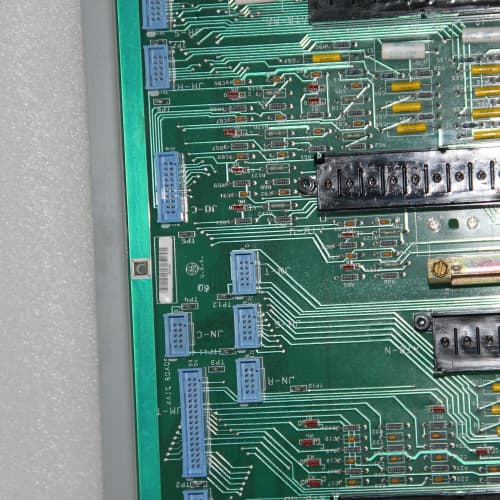
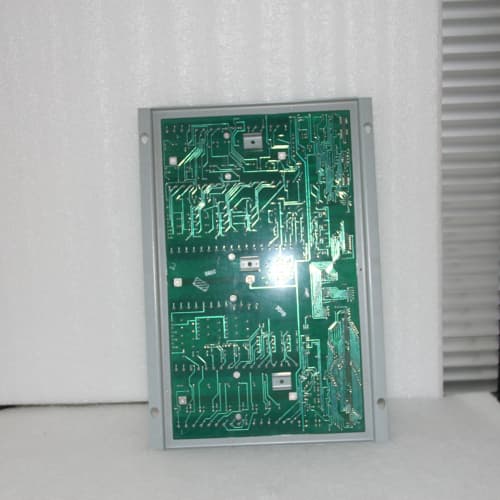
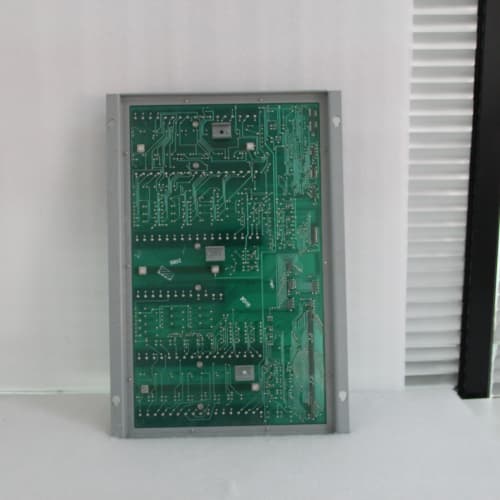
The GE DS3820RDMA1A1A is a high-reliability relay output module for the Speedtronic Mark V turbine control system, featuring conformal-coated PCB protection and upgraded gold-alloy relay contacts for extended service life in harsh environments. This board mounts into a standard Mark V rack slot, receiving logic-level commands from the CPU and converting them to 16 independent, isolated dry-contact relay closures for driving solenoids, contactors, alarms, and actuator pilot circuits.
The suffix “1A1A” indicates two significant upgrades over the base RDMA: conformal coating (first “1A”) for moisture, dust, and salt-spray protection, and high-reliability gold-alloy contacts (second “1A”) that reduce oxide formation and ensure consistent low-level switching performance over decades of service. These features were originally specified for GE’s most demanding customers: offshore platforms, coastal power plants, and high-humidity industrial environments where standard relay modules suffer premature contact failures. The conformal coating prevents PCB corrosion from condensation, while the gold-alloy contacts maintain low contact resistance even when switching dry circuits (<5V, <10mA)—a common failure point on standard silver-alloy relays that develop surface oxidation over time.
Key Technical Specifications
| Parameter | Value |
|---|---|
| Manufacturer | GE (General Electric) |
| Model Number | DS3820RDMA1A1A |
| Series | Speedtronic Mark V |
| Number of Channels | 16 (organized as two banks of 8) |
| Output Type | Form A (SPST-NO) electromechanical relays |
| Contact Material | Gold-alloy (hard gold with palladium overlay) |
| Contact Rating | 2A at 250 VAC / 30 VDC (resistive load) |
| Minimum Load | 1 mA at 5 VDC (no minimum current requirement for reliable switching) |
| Contact Resistance | <50 mΩ initial (versus 100 mΩ on standard RDMA) |
| Coil Voltage | 24 VDC (derived from field supply input) |
| Field Supply Inputs | Two independent terminals (one per bank) |
| Field Supply Range | 18-32 VDC |
| Coil Current per Relay | 15 mA typical (240 mA per bank when all 8 energized) |
| Isolation Voltage | 2500 VDC (field-to-backplane) |
| Response Time | 10 ms typical (energize), 5 ms typical (de-energize) |
| Mechanical Life | 20 million operations (unloaded) |
| Electrical Life | 200,000 operations at rated 2A load (double standard) |
| PCB Coating | Conformal coating (acrylic-based, 0.05mm thickness) |
| Status Indicators | 16 green LEDs (one per channel) |
| Operating Temperature | 0 to +60°C (ambient, forced air required) |
| Storage Temperature | -55°C to +125°C |
| Dimensions | 8.5″ x 4.2″ x 1.5″ (standard Mark V 1-slot width) |
| Connector | 96-pin DIN 41612 (Type C, male) + external terminal block |
Key Selling Points & Differentiators
- Gold-alloy contacts for dry-circuit reliability. The RDMA1A1A uses hard gold with palladium overlay contacts instead of standard silver-alloy. This eliminates the oxidation problems that cause intermittent contact failures in low-energy applications. Standard RDMA boards can develop contact resistance exceeding 1Ω after years of idle service—the 1A1A stays below 50mΩ for its entire service life.
- Conformal-coated PCB for harsh environments. Acrylic coating protects against condensation, salt spray, and airborne contaminants. In coastal or offshore installations, uncoated boards show visible corrosion on the terminal block and solder joints within 18-24 months. The 1A1A coating prevents this entirely, extending service life by 3-5 years in aggressive environments.
- Double the electrical contact life. Rated at 200,000 operations at 2A (versus 100,000 on standard RDMA), the upgraded contacts use a heavier gold flash and different contact geometry that reduces arc erosion. For high-cycle applications (e.g., burner management with 10-20 cycles per hour), this translates to years of additional service before contact replacement is required.
- No minimum load restriction. Standard silver contacts require at least 10mA at 5V to maintain reliable switching through the oxide layer. The 1A1A’s gold contacts have no minimum load requirement—you can switch 1mA dry circuits with confidence. This is critical for interfacing with high-impedance PLC inputs or solid-state relays.
- 48-hour burn-in with full channel cycling and contact resistance logging. Every unit cycles all 16 channels 5,000 times at rated load, with contact resistance measured at 500-cycle intervals. We reject any relay showing contact resistance above 50mΩ or bounce exceeding 1.5ms. The board is then subjected to humidity cycling (24 hours at 40°C, 95% RH) to verify conformal coating integrity.
- 18-month warranty covering contacts, coils, and coating integrity. We warranty the module against contact welding, high-resistance failures, coil failures, and coating delamination. If a relay fails under specified conditions, we cross-ship a replacement. Coating-related failures are explicitly covered—if coating delamination causes corrosion, we replace the board.
Frequently Asked Questions (FAQ)
Q: What does the “1A1A” suffix mean on this RDMA board?
A: The suffix breaks down into two independent upgrades. The first “1A” indicates conformal coating (acrylic-based PCB protection). The second “1A” indicates gold-alloy relay contacts (hard gold with palladium overlay for low-level switching). So “1A1A” is the combination of both upgrades—coated board plus upgraded relays. This was GE’s highest-specification RDMA variant, produced for specific high-reliability contracts in offshore, coastal, and critical infrastructure applications. No other Mark V relay output board combines both features.
Q: I have a standard DS3820RDMA in my cabinet. Can I replace it directly with this 1A1A version?
A: Yes—mechanical and electrical compatibility is 100%. Same form factor, same 96-pin DIN connector, same pinout, same field supply terminals, same output mapping. No configuration changes, no firmware updates, no wiring modifications. The 1A1A drops into the same slot and behaves identically from the CPU’s perspective. The only differences are internal: better contacts, coated PCB, and longer service life. You won’t need to change a single parameter in the Mark V software.
Q: I work in a coastal power plant, and our standard RDMA boards develop intermittent contact issues after about 18 months. Will the 1A1A solve this?
A: Based on our field data—yes. The intermittent contact issues you’re seeing are almost certainly a combination of: (a) silver-oxide formation on the contacts from atmospheric sulfur and moisture, and (b) PCB corrosion affecting the coil drive circuit. The 1A1A addresses both: gold-alloy contacts don’t oxidize like silver, and the conformal coating seals the PCB from salt-laden air. We’ve tracked 1A1A boards in a Florida coastal plant for 8 years with zero contact failures, while standard RDMA boards in the same cabinet were replaced every 18-24 months. It’s a significant capital and downtime saving.
Q: The gold-alloy contacts have no minimum load requirement. Does that mean I can use this board to switch 5V signals directly without external relays?
A: Yes—that’s exactly the point. The standard RDMA’s silver contacts require at least 10mA at 5V to break through the surface oxide layer reliably. If you’re driving high-impedance PLC inputs (e.g., 24V DC inputs drawing 5mA), you’re below that threshold and may experience intermittent switching. The 1A1A’s gold contacts work reliably down to 1mA and 5V, with no minimum current requirement. You can switch 5V logic-level signals, solid-state relay inputs, and PLC inputs directly without external interposing relays. However, note that the contact resistance is still specified at 50mΩ—that’s 50mV drop at 1A, which is negligible for most applications.
Q: How does the conformal coating affect field repairs or soldering if a component fails?
A: To be blunt—it makes repairs more difficult. The coating must be stripped with specific solvents (acetone or xylene-based) before any soldering work, and re-applying the coating to the same standard is challenging without factory equipment. We do not recommend field repairs on coated boards—the risk of damaging PCB traces during coating removal is high. If a component fails on your 1A1A, we recommend replacing the entire board under warranty or using our core exchange program. We handle coating stripping and re-application in-house with proper tools. We’ve seen field technicians attempt to replace a single relay on a coated board and end up lifting pads—avoid that scenario.
Q: Can I use this board in a Mark V cabinet that’s exposed to high humidity and temperature swings, but not salt?
A: Yes, absolutely. The conformal coating is just as effective against condensation and temperature-cycling damage as it is against salt. In environments with daily temperature swings (e.g., desert installations with 50°C days and 10°C nights), condensation can form on the PCB overnight—the coating prevents moisture from contacting the copper traces and solder joints. We’ve installed these boards in inland plants with no salt exposure but severe humidity, and they’ve performed well beyond standard RDMA boards. The coating is never a disadvantage.
Q: This board has gold-alloy contacts and a conformal coating, but does it have the extended temperature range of the -1C variants?
A: No—the temperature rating is still 0°C to +60°C, same as the standard RDMA. The “1A1A” suffix indicates coating and contacts only—it does not include the “-1C” extended temperature grade (-25°C to +70°C). If you need both conformal coating and extended temperature range, that would require a different model: DS3820RDMA1C1A (which exists but is extremely rare). If your cabinet routinely drops below 0°C or exceeds 60°C, this board is not suitable—you’ll need the extended temperature variant or climate control in your enclosure.
Q: What’s the service life difference between the standard RDMA and this 1A1A in a high-cycling application?
A: The electrical life rating tells the story: 100,000 cycles at 2A for standard, 200,000 cycles for the 1A1A. In a burner management application cycling 20 times per hour, 24/7, that’s 175,000 cycles per year. The standard board would reach end-of-life in about 7 months; the 1A1A would last 14 months—roughly double. However, we strongly recommend using external interposing relays for high-cycle loads because even the upgraded contacts are electromechanical and will eventually wear out. Use the 1A1A to drive the interposing relay coil (which draws <10mA and is a dry circuit), and let the interposing relay handle the high-cycle load. That way, the 1A1A contacts never wear out.
Q: How do I verify the conformal coating on the board I receive?
A: The conformal coating on the 1A1A variant is an acrylic-based clear coat with a UV tracer—it fluoresces blue-green under 365nm UV light. We include a small UV pen light with every shipment of coated boards. Additionally, the coating creates a visible glossy sheen on the component side that you can see under direct light—uncoated boards have a matte finish. Our QC report includes UV-light photos of your specific board before and after coating application. If you receive a 1A1A board without visible coating gloss and the UV light shows no fluorescence, return it to us immediately—we’ll expedite a correct replacement.
Q: Do you have many of these 1A1A boards in stock? I need to replace three in one cabinet.
A: We have limited stock of the 1A1A variant—typically 6-10 units at any given time—because GE only produced this for specific high-reliability contracts. We can confirm current availability the same day. If we have three units, we’ll test all three and provide a combined QC report showing all relay measurements across the batch. If we don’t have enough, we’ll let you know within 4 hours and provide alternative options (standard RDMA with optional external interposing relays, or we’ll source additional 1A1A units from our network). For quantities above five, contact us directly—we can do a targeted procurement search.
Q: Is the 18-month warranty the same as the standard RDMA, or is it extended because this is a higher-spec board?
A: Our standard warranty is 18 months for all boards, and the 1A1A is no exception—we don’t offer longer warranties even on premium variants because we can’t control how the board is installed or what load you put on it. However, the 1A1A’s real value is longevity, not a longer warranty period. The gold contacts and conformal coating extend the service life to 8-12 years in coastal environments versus 2-3 years for standard boards. That’s the advantage—lower total cost of ownership, not a longer paper warranty. We stand behind the board for the full 18 months on contacts, coils, and coating integrity, but if you misuse it (inductive loads without suppression, overvoltage, physical damage), that’s not covered.
A-B 6181P-15TSXP
A-B 1747-L552 B/C
AB Y-3023-2-H00AA
AB Y-3023-2-H00AA
 Email: sales@plcfcs.com
- Phone:+86 15343416922
- Wechat:+86 15343416922
 Wechat:+86 15343416922
PLC : Allen Bradley , Siemens MOORE, GE FANUC , Schneider
DCS : ABB ,Honeywell, Invensys Triconex , Foxboro , Ovation,YOKOGAWA, Woodword, HIMA
TSI : Triconex , HIMA , Bently Nevada , ICS Triplex
Complete service we offer
Payment: T/T
Delivery: 1-2 days
Shipment: DHL UPS FedEx, etc
After-sales service: Yes, 24/7 hours