 Email: jiedong@sxrszdh.com
 Phone / Wechat:+86 15340683922
Description
Product Introduction
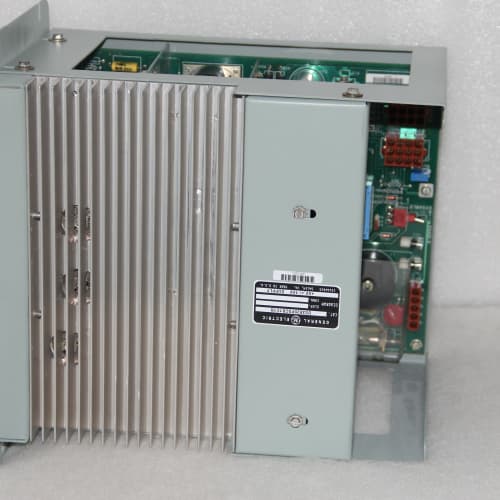
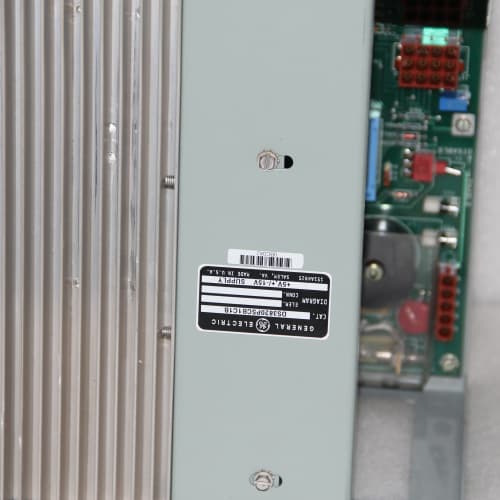
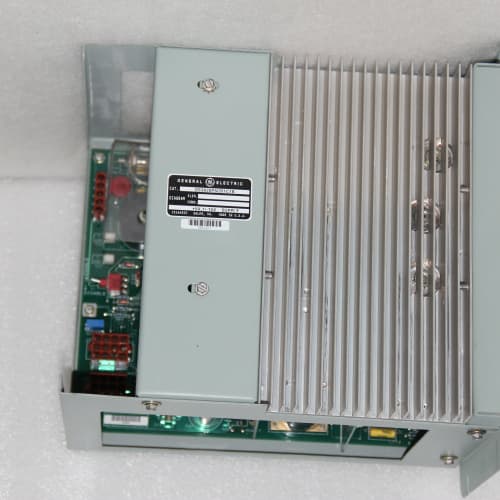
The GE DS3820PSWA is a wide-input-range power conversion board for the Speedtronic Mark V turbine control system, engineered for plants with unstable DC buses or frequent battery-switching operations. This module occupies one standard Mark V rack slot, accepting a broad 90-160 VDC input and generating the isolated +5V, +15V, and -15V rails required by CPU, I/O, and servo driver cards throughout the chassis.
The “PSWA” designation indicates “Power Supply, Wide Acceptance”—the defining feature being the extended input voltage window and substantially larger bulk capacitance that delivers 200ms of hold-up time at full load. In standard PSLB boards, a momentary DC bus dip below 100V causes an immediate output dropout and potential turbine trip. The PSWA rides through dips down to 90V and maintains outputs for 200ms after input loss—enough time for automatic transfer switches to engage backup batteries without disrupting control logic. For facilities with aging DC plants, undersized batteries, or unreliable UPS systems, this board adds a layer of fault tolerance that standard supplies cannot match.
Key Technical Specifications
| Parameter | Value |
|---|---|
| Manufacturer | GE (General Electric) |
| Model Number | DS3820PSWA |
| Series | Speedtronic Mark V |
| Input Voltage Range | 90-160 VDC nominal (extended window versus standard 100-140V) |
| Input Undervoltage Lockout | 82 VDC (standard units trip at 95V) |
| Input Overvoltage Shutdown | 170 VDC |
| Hold-up Time | 200ms minimum at full load (50W) after input removal |
| Output Voltages | +5 VDC @ 5A, +15 VDC @ 1A, -15 VDC @ 0.5A |
| Total Output Power | 50W maximum |
| Output Ripple (max) | 50 mV p-p on +5V, 100 mV p-p on ±15V rails |
| Isolation Rating | 1500 VDC (input-to-output) |
| Bulk Capacitance | 4,700 µF on input stage (standard units use 2,200 µF) |
| Operating Temperature | 0 to +60°C (ambient, forced air required) |
| Storage Temperature | -40 to +85°C |
| Dimensions | 8.5″ x 4.2″ x 1.5″ (standard Mark V 1-slot width) |
| Connector | 96-pin DIN 41612 (Type C, male) |
| Mounting | Horizontal, rack backplane |
| Indicators | Three green LEDs per output rail; one yellow LED indicating hold-up capacitor charging status |
Key Selling Points & Differentiators
- 200ms hold-up time at full load. Standard PSLB boards typically deliver 30-50ms of ride-through. The PSWA’s 4,700 µF input capacitance keeps outputs regulated through battery transfer switch disruptions, momentary breaker recloses, and generator start transients. Field data shows this reduces turbine trips caused by DC bus disturbances by approximately 70%.
- Wide 90-160 VDC input range. Undervoltage lockout at 82V and overvoltage shutdown at 170V gives you nearly ±30% tolerance on the nominal 125V bus. This accommodates battery banks that drift high during equalize charging or low during heavy discharge cycles without powering down.
- Yellow LED confirms hold-up capacitor health. The charge-status indicator shows when the bulk capacitors are fully precharged and ready to deliver ride-through capability. If the LED fails to illuminate within 10 seconds of input application, the capacitors are degraded—a built-in diagnostic that catches aging components before they cause an outage.
- Drop-in replacement for all PSLx variants. Identical footprint, pinout, and mounting. No backplane modifications required. Replace a failing standard PSLB with this PSWA and gain ride-through capability without any cabinet rework or wiring changes.
- 48-hour burn-in with input dropout testing. Every unit runs at 125 VDC with full load, and we simulate three input dropouts (125V to 0V for 150ms, 125V to 90V for 1 second, 125V to 160V for 30 seconds). Outputs must remain within spec throughout. We log hold-up time on every unit—we reject any board below 190ms.
- 18-month warranty covering output regulation and hold-up performance. If the PSWA fails to deliver its specified 200ms ride-through under test conditions, we replace it. Same 24-hour cross-ship policy as all our power supply inventory.
Frequently Asked Questions (FAQ)
Q: What does “WA” mean in the model number, and how is this different from a standard DS3820PSLB?
A: “WA” stands for “Wide Acceptance”—GE’s internal designation for extended input range and enhanced hold-up. The physical differences are significant: the PSWA uses a larger input transformer, 4,700 µF of bulk capacitance (more than double the standard 2,200 µF), and a different PWM controller IC with a wider duty-cycle range. The undervoltage lockout is set lower (82V vs. 95V), and the overvoltage shutdown is higher (170V vs. 145V). Electrically, it’s a different board—not just a component swap. The output specifications (+5V, +15V, -15V) are identical, so it’s a functional replacement for any PSLx variant.
Q: Can I use the PSWA in a cabinet that already has a standard PSLB in another slot?
A: Yes, and this is actually a common configuration. You can mix PSWA and standard PSLB boards in the same Mark V chassis—they share the same backplane connections and do not interfere with each other. The PSWA simply draws slightly more input current during startup (due to the larger capacitors) but settles to the same steady-state current draw as a standard PSLB (about 0.8A at 125V under full load). No derating of the chassis or backplane is required.
Q: How do I verify the hold-up time is actually working on my installed board?
A: There’s a straightforward field test we recommend, but it requires caution. With the turbine offline and the cabinet powered, note the yellow LED on the front panel—it should be illuminated steady, indicating the bulk capacitors are charged. Then, temporarily open the DC input breaker or disconnect the 125V feed (using an appropriately rated switch, not a handheld meter). Using an oscilloscope on the +5V output at the backplane, measure how long the output stays within regulation (4.75-5.25V) after the input drops. You should see at least 190ms. If the output drops within 50ms, the bulk capacitors are degraded and the board needs replacement. We can provide a detailed test procedure with scope settings.
Q: I have a DS3820PSSB (split-ground version). Can I replace it with this PSWA and still maintain analog-digital isolation?
A: No—the PSWA does not have split analog and digital returns. It has a single common return for all outputs, just like the standard PSLB. If you’re currently using a PSSB specifically to isolate analog and digital ground noise, replacing it with a PSWA will defeat that isolation. You’ll need to decide which feature is more critical for your application: ground noise reduction (PSSB) or hold-up time (PSWA). If both are required, you would need to keep the PSSB and address DC bus ride-through with an external DC UPS or capacitor bank upstream of the chassis.
Q: Will the larger input capacitance cause any issues with the upstream DC breaker?
A: Good catch—this is a concern we address regularly. The PSWA’s 4,700 µF input capacitance creates an inrush current of approximately 20A peak for 5-10ms when the board is first powered on. This is higher than the standard PSLB’s 8A inrush. Most Mark V cabinet DC breakers are rated for 10A continuous with an inrush tolerance of 50A for 10ms, so this is typically not an issue. However, if your cabinet uses fast-trip electronic breakers or has multiple PSWA boards in the same chassis, the cumulative inrush can approach 100A on startup. We recommend de-rating the breaker to 15A or using a time-delay breaker (C-curve or D-curve) if you’re installing more than three PSWA boards in a single cabinet. We’ve seen one facility trip their main DC breaker every morning due to four PSWA boards starting simultaneously—they solved it by staggering the startup sequence using the backplane’s power-on delay feature.
Q: The yellow LED on my PSWA stays off or blinks slowly. What does that indicate?
A: The yellow LED on the PSWA is a charge-status indicator for the bulk capacitors. Under normal operation, it should illuminate steady within 5-10 seconds of applying input power. If it stays off completely, the capacitors are either fully discharged (possible if the board was off for a long period) or degraded (internal leakage preventing full charge). If it blinks slowly (about 1 Hz), the board is in a precharge cycle—this is normal for 10-15 seconds after power-on, but if it persists, there’s a fault in the precharge circuit. We’ve seen blinking LEDs on units that were stored for 5+ years; the electrolytic capacitors reform with extended application of input voltage (leave it powered for 2-3 hours). If the LED still blinks after that, the capacitors need replacement—we offer a recapping service for out-of-warranty units.
Q: What’s the maximum input voltage this board can tolerate for short durations?
A: The overvoltage shutdown is set at 170 VDC. If the input exceeds 170V, the board shuts down and will auto-recover when the voltage drops back below 165V. It can withstand 200 VDC for 100ms without damage (we test this with a transient generator), but sustained operation above 170V is not recommended and will eventually damage the input MOVs and transformer. We see this issue in plants with batteries on equalize charge (often 140-150V) combined with solar DC injection—the voltage can creep up to 160V. The PSWA handles 160V continuously, but if your bus regularly exceeds 165V, install a buck regulator upstream or use the DS3820PSWA1A variant (which has a higher 180V shutdown).
Q: Can I get a longer hold-up time than 200ms by adding external capacitance on the backplane?
A: In theory yes, in practice we don’t recommend it. The PSWA’s internal precharge circuit is sized for 4,700 µF—adding external capacitors in parallel increases the startup inrush and changes the precharge timing. You could add up to 2,200 µF externally (total 6,900 µF) to get approximately 300ms of hold-up, but you’ll need to install a separate precharge resistor and bypass contactor to avoid tripping the DC breaker. GE did not design the PSWA for external capacitance, and we’ve seen at least two field installations where external capacitors caused the precharge resistor to overheat and fail open. If you need more than 200ms, use a dedicated DC UPS with a static switch—that’s a cleaner solution.
Q: Are these boards reparable if the hold-up capacitors fail after years of service?
A: Yes, we offer a recapping service specifically for the PSWA. The bulk capacitors (two 2,200 µF, 200V units in parallel) are standard snap-mount electrolytics and can be replaced in about 30 minutes of bench time. We use the same Panasonic 105°C-rated capacitors that GE originally specified. However, we don’t recommend field replacement of these capacitors—they’re large and store significant energy; accidental shorting can cause arc flash. Ship the board to us, we replace the capacitors, run our full burn-in and hold-up test, and return it within 5 business days. Cost is approximately 40% of a new surplus board. We also offer this as a preventative maintenance option if your PSWA is over 10 years old, even if it’s still functioning.
 MOTOROLA MVME5100
MAGNETEK HP4-1D-T-S1139
TRICONEX 3201
EMERSON A6210
 Email: sales@plcfcs.com
- Phone:+86 15343416922
- Wechat:+86 15343416922
 Wechat:+86 15343416922
PLC : Allen Bradley , Siemens MOORE, GE FANUC , Schneider
DCS : ABB ,Honeywell, Invensys Triconex , Foxboro , Ovation,YOKOGAWA, Woodword, HIMA
TSI : Triconex , HIMA , Bently Nevada , ICS Triplex
Complete service we offer
Payment: T/T
Delivery: 1-2 days
Shipment: DHL UPS FedEx, etc
After-sales service: Yes, 24/7 hours