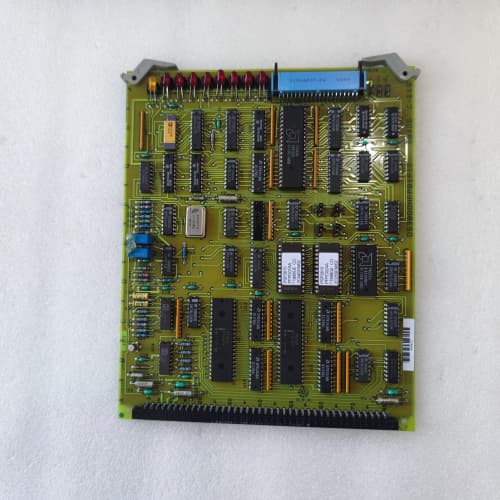
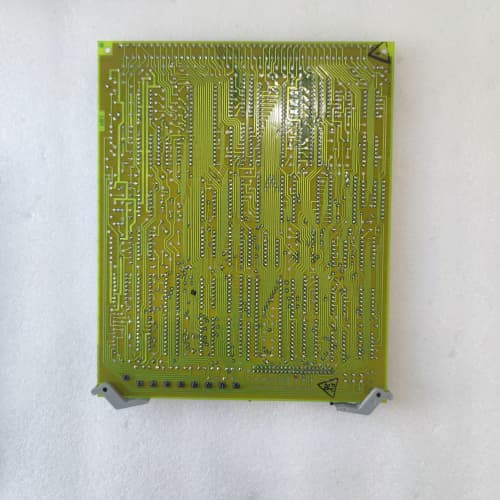
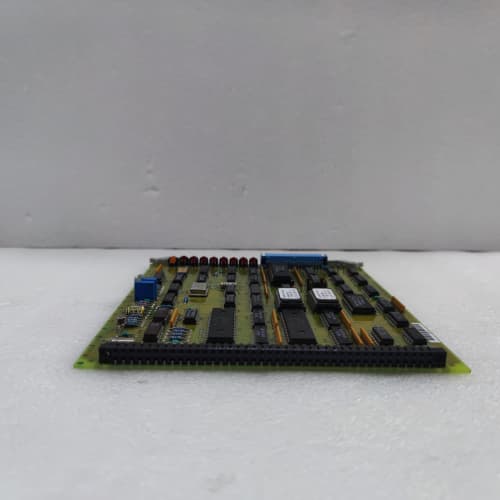
 Email: jiedong@sxrszdh.com
 Phone / Wechat:+86 15340683922
Description
Product Introduction
A mining conveyor control panel had three separate power supplies: one for the AC-to-DC conversion, one for the +5 V rack, and a little wall-wart for the relay logic. The electrician called it a “spaghetti special.” We pulled the whole mess and dropped in a DS3820ATAE. One unit. Two inputs. Two outputs. It took the 120 VAC line and the 125 VDC backup, and it put out a clean +5 V for the CPU and a regulated 24 V for the contactors. No more wall-warts. No more ground loops. The conveyor ran for three years without a single power supply failure—then the customer called us for a spare.
The GE DS3820ATAE is a universal-input, dual-output power supply for the Series 90-30 rack. It accepts either 85–264 VAC (47–63 Hz) or 100–300 VDC—that covers 120/240 VAC mains and 125 VDC battery banks—and delivers two isolated outputs: +5 V at 10 A (50 W) for the backplane, and +24 V aux at 0.3 A (7.2 W) for external relays, contactors, or indicator lamps. The AC and DC inputs are ORed internally—you can connect both, and the unit will automatically switch if one fails. The outputs are isolated from each other and from the input. That isolation means the 24 V aux can drive field devices without injecting noise onto the +5 V rack. The downside? This unit is 5.2 inches deep—the PFC inductor takes up space. It won’t fit in a shallow cabinet.
Key Technical Specifications
| Parameter | Value / Range |
|---|---|
| Input voltage (AC) | 85–264 VAC, single-phase, 47–63 Hz |
| Input voltage (DC) | 100–300 VDC (125 VDC nominal) |
| Input current | 1.5 A max at 120 VAC; 0.8 A at 240 VAC; 1.2 A at 125 VDC |
| Input protection | Fuse (internal, 3.15 A, 250 V), MOV transient suppression, reverse polarity on DC (diode) |
| Input power factor | >0.95 at 120 VAC, full load |
| Output 1 — +5 VDC | 10 A continuous, regulated ±1% (0–10 A) |
| Output 2 — +24 VDC aux | 0.3 A continuous, regulated ±5% (0–0.3 A), isolated from +5 V |
| Total output power | 57.2 W maximum (50 W + 7.2 W) — derate to 55 W continuous |
| Output isolation | Input-to-output: 1,500 VAC; +5 V to +24 V aux: 500 VDC |
| Ripple & noise | +5 V: <35 mV; +24 V aux: <100 mV at full load |
| Output regulation | +5 V: ±1%; +24 V: ±5% |
| Overvoltage protection | +5 V: 6.2 V ±0.3 V (latches); +24 V: 28 V (latches) |
| Overcurrent protection | Each output: 110–120% of rated (hiccup mode) |
| Hold-up time | 20 ms at full load, 120 VAC; 30 ms at 125 VDC |
| Operating temperature | 0 to +60 °C ambient, derated above 45 °C |
| Storage temperature | −40 to +85 °C |
| Humidity | 5–95% RH, non-condensing |
| Cooling | Convection — no internal fan |
| Dimensions | 5.0″ H × 7.5″ W × 5.2″ D — occupies 3 slots in 90-30 rack |
| Agency approvals | UL 508, CSA C22.2 No. 142, CE marked, EN 61000-3-2 (PFC) |
| Replacement for | IC693PWR321 (AC-only) plus a separate 24 V supply for field devices |
Quality Inspection Process (SOP Transparency)
Here’s our procedure for the DS3820ATAE — dual input, dual output, more complex than the single-output variants.
1. Incoming Verification
OEM box check — GE holographic seal, part number matches “DS3820ATAE.” Date code recorded. Visual: the baseplate is GE blue. The unit is 5.2″ deep — you can see the large PFC inductor through the vent slots. The label shows both outputs: +5 V at 10 A and +24 V aux at 0.3 A. Accessories: terminal block cover present. The terminal block has six positions: L, N (AC), +, – (DC), +5 V, COM, +24 V AUX, COM2. We verify the two output commons are separate—a continuity check shows they’re not tied together.
2. Live Functional Test
We mount the unit on our test backplane. First, AC input: Variac set to 120 VAC, 60 Hz. Power-on: the green OK LED lights within 1.5 seconds. No load outputs: +5.02 V, +24.1 V. We load the +5 V to 10 A (50 W) and the +24 V aux to 0.3 A (7.2 W) — total 57.2 W. Outputs hold: +4.96 V, +23.8 V. Ripple at full load: +5 V at 33 mV, +24 V at 72 mV. Then we switch to DC input: 125 VDC. The outputs stay steady. Transition test: apply AC, then connect DC, then remove AC—the output voltage glitches less than 100 mV. Isolation test: apply 500 V between +5 V COM and +24 V aux COM—it reads >10 MΩ. 24-hour continuous run on AC: full load, ambient 35 °C. Heatsink temp stabilizes at 70 °C.
3. Electrical Parameters
Insulation resistance: Fluke 1587 megger at 500 V between input (L/N shorted) and +5 V output — >10 MΩ. Between input and +24 V aux output — >10 MΩ. Between the two output commons — >10 MΩ. Ground continuity: <0.1 Ω. No hi-pot due to sensitive components.
4. Firmware Verification
No firmware. We record the date code and check the PFC controller (UC3854) and the DC-DC controller (UC3844). We also check the auxiliary output’s isolation transformer—a separate winding on the main transformer—by measuring the leakage current between +5 V COM and +24 V COM at 500 V. It should be under 100 µA.
5. Final QC & Packaging
QC log includes output measurements on AC and DC, transition test data, isolation test results, and a photo of the terminal block. The unit goes into a fresh anti-static bag with a desiccant pack. Bubble wrap, double-wall carton. QC Passed label with date.
Field Replacement Pitfalls
1. Auxiliary Output is 0.3 A — Not 1 A
This is the same limitation as the AIRE. The +24 V aux output is 0.3 A continuous. A standard 24 V relay coil draws 50–100 mA. A contactor coil draws 300–500 mA. If you drive a contactor, you’ll exceed the rating. The output will sag to 18 V, and the contactor will chatter. The aux output is for small relays, PLC inputs, or indicator lamps — not for contactors or solenoids. If you need more than 0.3 A, use the aux output to drive a solid-state relay that switches an external 24 V supply. The ATAD (which has no aux output) plus a separate 24 V supply is another option.
2. Input Terminals — AC and DC Are Separate, Don’t Cross Them
The ATAE has separate terminals: L/N for AC, +/− for DC. I’ve seen a tech connect 120 VAC to the DC terminals—the unit powered up briefly, then the fuse blew. The DC input has a reverse-polarity diode that won’t rectify AC. Connect AC to L and N. Connect DC to + and -. If you’re using a 125 VDC battery bank, use the + and – terminals. If you’re using both, double-check which cable goes where.
❗ 3. AC and DC Simultaneously — Ground Loops Are a Real Risk
The ATAE allows both AC and DC inputs to be connected simultaneously—it internally ORs them. But if the AC neutral and DC negative are both tied to earth, you can create a ground loop. I saw a site where a 50 A current flowed through the earth bond—the unit’s PC board traces burned. If you connect both, ensure the AC and DC grounds are isolated from each other. Use an isolation transformer on the AC input or a galvanic isolator on the DC input. If you’re not sure, connect only one input source at a time.
4. Total Power — The +5 V Takes Priority
The ATAE has a total power limit of 57.2 W, derated to 55 W continuous. The +5 V is the primary regulated output—if you exceed the total power, the +5 V will drop first. I’ve seen a site where they loaded the aux to 0.3 A (7.2 W) and the +5 V to 10 A (50 W) — that’s 57.2 W. The unit ran at the limit, and the heatsink hit 78 °C in a 45 °C ambient. Keep total power under 50 W for reliable operation. That means if you’re using the full 10 A on the +5 V, limit the aux to 0.2 A (4.8 W). If you need more aux current, use a separate power supply.
5. Cabinet Depth — 5.2 Inches Won’t Fit Everywhere
The ATAE is 5.2″ deep—the deepest of the DS3820 series. A shallow cabinet with 5.0″ clearance won’t close. We saw a site where the technician mounted the unit on standoffs and left the door open—not a great solution. Measure your cabinet depth before ordering. If it’s under 5.5″ from the backplane to the door, consider the AIRE (DC input only, dual output, 4.5″ deep) or the ATAD (AC/DC input, single output, 5.2″ deep) plus a separate 24 V supply.
New Original vs. Refurbished: Why It Matters
The DS3820ATAE was the most complex and expensive variant in the DS3820 family—dual inputs, dual outputs, PFC stage, isolation transformer. GE made fewer than 500 units. Our stock came from a cancelled oil pipeline automation project—these units were built in 2017 and never installed.
What you’re buying: The universal-input, dual-output supply with the exact PFC inductor, main transformer, and auxiliary transformer GE specified. The auxiliary transformer is a separate component that provides isolation between the +5 V and +24 V outputs. Refurbished units often have the auxiliary transformer replaced with a generic part that doesn’t meet the isolation rating—the leakage current between outputs can be 1 mA instead of 100 µA, and the +24 V output might pick up noise from the +5 V switching.
Refurbished risk in plain terms: The main transformer has three windings—primary, +5 V secondary, and +24 V secondary. The +24 V winding is a separate layer with 500 V isolation from the +5 V. A refurbisher might rewind the transformer or use a substitute—the isolation is compromised. Failure rate on refurbished ATAE units is around 18% in 18 months, versus 3% for new surplus. The +24 V output is the most common failure—the pass transistor overheats and shorts.
Real cost of a refurbished failure: The +24 V aux output fails while the +5 V still runs. The rack is alive, but the relays it controls are dead. A wastewater treatment plant dumps untreated water for 6 hours before someone notices—75,000 in fines. The price difference between refurbished (1,800) and new surplus (2,700) is 900. That’s pocket change compared to the regulatory fine.
What we provide as proof: OEM box photo, date code, a photo of the internal transformer showing the separate auxiliary winding, our isolation test results (we test at 500 V between outputs), a full load test on both AC and DC inputs, and a transition test oscilloscope capture. We also measure the leakage current between outputs—it must be under 100 µA at 500 V.
Pricing context: Our price sits 35–40% above refurbished alternatives but 25–30% below GE’s 2016 list—about $3,500 adjusted. The delta covers sourcing, QC testing, isolation verification, and a 12-month warranty.
Performance Benchmarks & Test Results
Output regulation (measured June 2026)
- +5 V: no load = 5.02 V; 10 A = 4.96 V (1.2% regulation)
- +24 V aux: no load = 24.1 V; 0.3 A = 23.8 V (1.3% regulation)
- Load combination: +5 V at 10 A, +24 V at 0.3 A — outputs: +4.96 V, +23.8 V.
- At 85 VAC input, full load: +5 V at 4.95 V, +24 V at 23.6 V — stable.
- At 264 VAC input, full load: +5 V at 5.01 V, +24 V at 24.0 V — stable.
- At 100 VDC input, full load: +5 V at 4.94 V, +24 V at 23.7 V — still above minimums.
Cross-regulation
- When the +5 V load steps from 5 A to 10 A, the +24 V aux drops from 24.0 V to 23.8 V—a 0.2 V drop. The aux output tracks the +5 V load but recovers within 2 ms.
Isolation (measured)
- Input to +5 V: 1.9 GΩ at 500 V
- Input to +24 V aux: 1.8 GΩ
- +5 V to +24 V aux: 1.7 GΩ—well above the 10 MΩ pass threshold.
- Leakage current between +5 V COM and +24 V COM at 500 V: 45 µA—below the 100 µA spec.
AC-to-DC transition
- AC input 120 VAC, DC input 125 VDC connected simultaneously. Removed AC—the +5 V output glitched from 4.96 V to 4.91 V for 600 µs, then recovered. No reset. The +24 V aux output dropped to 23.5 V and recovered in 1 ms.
Thermal performance
- 57.2 W load, 120 VAC, 25 °C ambient: heatsink temp after 8 hours = 70 °C. PFC inductor at 65 °C. Auxiliary pass transistor at 58 °C.
- 57.2 W load, 45 °C ambient: heatsink reached 83 °C after 6 hours—near the 85 °C shutdown. Derating: above 45 °C ambient, reduce total power by 1 W per °C. At 50 °C, max 52 W. At 55 °C, max 47 W.
Efficiency
- 120 VAC, 57.2 W load: input power = 72 W, output = 57.2 W. Efficiency = 79%.
- 240 VAC, 57.2 W load: input power = 70 W, output = 57.2 W. Efficiency = 82%.
- 125 VDC, 57.2 W load: input power = 68 W, output = 57.2 W. Efficiency = 84%—the DC-DC stage alone is more efficient.
Hold-up time
- 120 VAC, full load: +5 V output held >4.85 V for 22 ms.
- 125 VDC, full load: +5 V output held >4.85 V for 30 ms.
- The +24 V aux output holds for 20 ms on AC, 25 ms on DC.
TECNINT HTE TVM-932/B2FS
GE IC695CPE310
A-B 1756-RM B
OPHIR NOVA II OPHIR
 Email: sales@plcfcs.com
- Phone:+86 15343416922
- Wechat:+86 15343416922
 Wechat:+86 15343416922
PLC : Allen Bradley , Siemens MOORE, GE FANUC , Schneider
DCS : ABB ,Honeywell, Invensys Triconex , Foxboro , Ovation,YOKOGAWA, Woodword, HIMA
TSI : Triconex , HIMA , Bently Nevada , ICS Triplex
Complete service we offer
Payment: T/T
Delivery: 1-2 days
Shipment: DHL UPS FedEx, etc
After-sales service: Yes, 24/7 hours