 Email: jiedong@sxrszdh.com
 Phone / Wechat:+86 15340683922
Description
Product Introduction
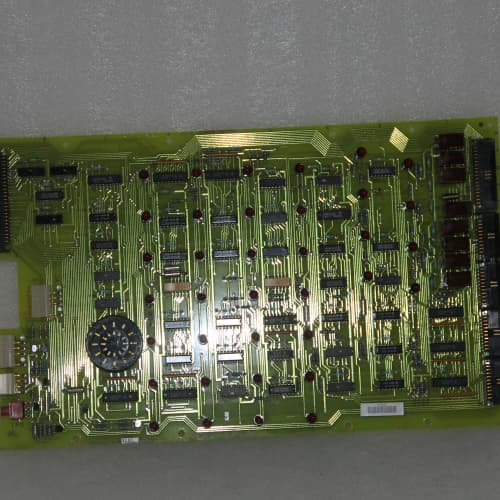
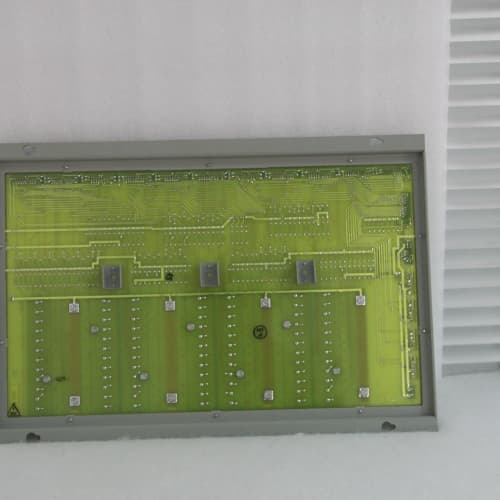
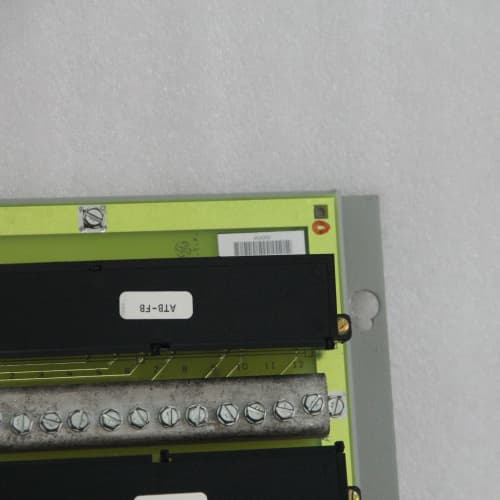
The GE DS3815RVTA is a dedicated vibration monitoring I/O module from the Mark VI Speedtronic series, designed for turbine shaft and bearing vibration measurement. This IS200-series termination board interfaces directly with accelerometers and velocity probes, providing signal conditioning, integration (velocity to displacement), and peak detection before passing data to the main turbine controller for protection and monitoring functions.
The critical advantage here is turbine-specific signal processing. The DS3815RVTA includes per-channel programmable filtering, integration, and alarm detection with 0.1 µm resolution. For gas and steam turbines, where vibration monitoring is essential for bearing health and early fault detection, this precision matters. These boards are direct replacements for original Mark VI installations—no recalibration needed if you match the probe type. The module includes the same backplane-specific connector as all Mark VI I/O modules, communicating directly with the CPU via the IS200 backplane.
Key Technical Specifications
| Parameter | Value |
|---|---|
| Manufacturer | GE (General Electric) |
| Series | Mark VI / IS200 Speedtronic |
| Model | DS3815RVTA |
| Power Supply Voltage | 24 VDC ±10% (from backplane) |
| Vibration Input Channels | 8 channels (differential) |
| Input Types | Accelerometer (ICP/IEPE) or Velocity probe |
| Input Range | ±10 V or ±25 V (selectable per channel) |
| Frequency Response | 0.5 Hz to 10 kHz |
| Resolution | 0.1 µm (displacement) / 0.1 mm/s (velocity) |
| Accuracy | ±1% of reading |
| Signal Processing | Programmable filtering, integration (velocity to displacement), peak detection |
| Alarm Detection | Per-channel alert and danger thresholds |
| Filter Options | Low-pass, high-pass, band-pass (software configurable) |
| Input Impedance | >1 MΩ |
| Isolation | 1500 VAC (field-to-logic) |
| Operating Temperature | -40 to +70°C |
| Storage Temperature | -40 to +85°C |
| Connector Type | 2 x 50-pin D-sub (field wiring) |
Key Selling Points & Differentiators
- Turbine-Specific Vibration Processing: Per-channel programmable filtering and integration. Converts raw accelerometer signals to velocity or displacement—directly usable for bearing monitoring without external signal conditioners.
- 0.1 µm Resolution: Provides fine detail for early fault detection—bearing wear, imbalance, and misalignment can be detected before they become critical.
- Per-Channel Alarm Thresholds: Each of the 8 channels has independent alert and danger trip settings. Protects the turbine by triggering shutdown or warning before damage occurs.
- Full 24-Hour Functional Test: Every unit runs a live simulation test with precision vibration generators across all 8 channels. We verify frequency response, accuracy, and alarm logic before shipping.
- Surplus/Refurbished with Full Traceability: Units are either new surplus (unused, original GE packing) or professionally refurbished. Every board includes our QC Pass tag with test data logged. 1-year warranty, 30-day return.
Frequently Asked Questions (FAQ)
Q: Can I mix accelerometers and velocity probes on the same board?
Yes—each channel can be independently configured for accelerometer (ICP/IEPE) or velocity probe inputs. The onboard signal conditioning handles the different bias voltages and sensitivities. Just set the configuration in ToolboxST. We’ve seen customers run accelerometers on channels 1-4 and velocity probes on 5-8 in the same turbine.
Q: Does this board provide 4-20mA outputs for vibration?
No—the DS3815RVTA is a pure input module. It provides raw and processed vibration data to the CPU via the backplane. The CPU then communicates via Modbus or other protocols to the DCS or historian. If you need 4-20mA outputs, you’d use a separate analog output module or the CPU’s communication ports.
Q: What probe types are compatible with this board?
The RVTA is compatible with:
- Accelerometers: ICP/IEPE type (constant current excitation, 2-10 mA)
- Velocity probes: Passive velocity pickups (moving coil or piezoelectric)
- Proximity probes: Not compatible—those use the DS3815PRA or DS3815PXA modules
Verify your probe sensitivity and bias voltage against the board’s input range before installation.
Q: Will I lose my vibration alarm settings if I replace this board?
No—the DS3815RVTA is a pure I/O termination board. All alarm thresholds, filter settings, and trip logic reside in the main Mark VI processor (the DS3815DMCB CPU). Swapping this module is like replacing a field terminal strip; the processor retains its configuration. That said, always backup your .CCT and .DAT files before any hardware change—standard best practice.
Q: How do you test these boards without a running turbine?
We built a Mark VI backplane simulator with precision vibration generators—shaker tables with calibrated accelerometers, and signal generators injecting known vibration frequencies and amplitudes. We sweep each channel from 0.5 Hz to 10 kHz, verifying the frequency response, integration accuracy, and alarm thresholds. Units run for minimum 24 hours. We’re checking for drift, thermal stability, and intermittent signal dropouts.
Q: What’s the difference between RVTA and RVT1A or other suffix variants?
Suffix matters. The DS3815RVTA uses specific filtering components and input impedance values. The RVT1A may have different input ranges or filtering characteristics. Cross-reference your original board’s full part number—we can verify compatibility before you buy. If you’re not sure, send us a photo of your board’s label and we’ll confirm.
Q: What’s the expected lifespan of the onboard signal conditioning components?
The signal conditioning components (op-amps, filters, ADC) are solid-state with no moving parts. In normal operation (clean environment, proper grounding), they’ll outlast the turbine—20+ years. The most common failure point is the D-sub connectors—vibration loosens them over time. Use thread-locking compound on the connector screws per GE’s installation manual (GEI-100529). And always use strain relief on the cable bundle; cable weight pulling on the D-sub connectors is the #1 failure point we see in the field.
Q: Can I hot-swap this module while the turbine is running?
No—do not attempt it. The DS3815RVTA is not rated for live insertion. The backplane connector carries 24V power and signal lines that will transient-spike on connection. We’ve seen customers fry both the module and adjacent I/O cards trying this. Always power down the rack, wait 30 seconds for caps to drain, then swap.
Q: What is the frequency response limitation?
The RVTA has a frequency response of 0.5 Hz to 10 kHz. That covers typical turbine vibration frequencies—bearing vibration (0.5-1 kHz), gear mesh harmonics (1-5 kHz), and blade pass frequencies (up to 10 kHz). If you need higher frequency response (e.g., for high-speed compressor monitoring above 10 kHz), you’d need a specialized vibration module—the RVTA is for standard turbine monitoring.
Q: Is this board compatible with Bently Nevada or other third-party vibration systems?
The DS3815RVTA is designed for GE Mark VI turbine control systems. It interfaces with the Mark VI CPU and uses GE’s proprietary signal processing. You cannot directly connect this board to a Bently Nevada system—they use different signal formats, connectors, and protocols. However, you can use the Mark VI CPU to send vibration data to a Bently Nevada system via Modbus or other communication protocols.
SCL055/30010/A/00/AA/AA/01/001
GE IC695CPU315
LENZE E84AHWMC1534V-V003
SIEMENS 1FT5066-0AC71-2-Z
 Email: sales@plcfcs.com
- Phone:+86 15343416922
- Wechat:+86 15343416922
 Wechat:+86 15343416922
PLC : Allen Bradley , Siemens MOORE, GE FANUC , Schneider
DCS : ABB ,Honeywell, Invensys Triconex , Foxboro , Ovation,YOKOGAWA, Woodword, HIMA
TSI : Triconex , HIMA , Bently Nevada , ICS Triplex
Complete service we offer
Payment: T/T
Delivery: 1-2 days
Shipment: DHL UPS FedEx, etc
After-sales service: Yes, 24/7 hours