 Email: jiedong@sxrszdh.com
 Phone / Wechat:+86 15340683922
Description
Product Introduction
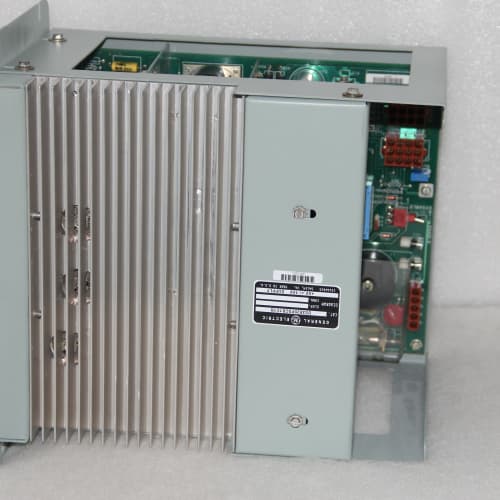
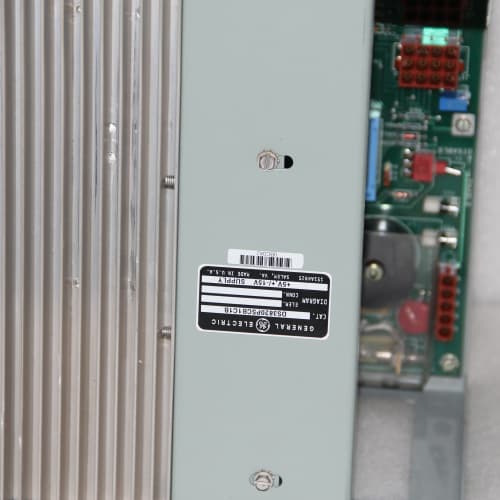
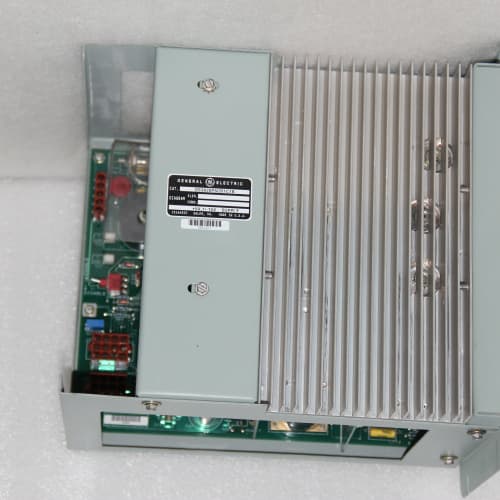
The GE DS3810RAMA is a relay output module from the Mark VI Speedtronic series, designed to drive turbine-critical actuators, solenoid valves, and annunciator circuits. This IS200-series termination board provides 8 isolated Form C (SPDT) relay outputs that switch field power directly—no intermediate interposing relays required for most applications.
What makes this module valuable is its rugged contact design. The relays are rated for 5A continuous at 250 VAC or 30 VDC, with gold-flashed contacts that handle both inductive loads (solenoids) and resistive loads (indicators) reliably. In turbine environments, where a stuck relay can mean an unplanned shutdown, the DS3810RAMA’s mechanical life rating of 100,000 operations at full load gives you genuine field-proven durability. Direct replacement for original GE installations—no wiring changes if you match the terminal layout.
Key Technical Specifications
| Parameter | Value |
|---|---|
| Manufacturer | GE (General Electric) |
| Series | Mark VI / IS200 Speedtronic |
| Model | DS3810RAMA |
| Power Supply Voltage | 24 VDC ±10% (coil supply from backplane) |
| Number of Outputs | 8 channels |
| Contact Configuration | Form C (SPDT) per channel |
| Contact Rating (Resistive) | 5A @ 250 VAC / 30 VDC |
| Contact Rating (Inductive) | 2A @ 250 VAC / 30 VDC (cosφ = 0.4) |
| Maximum Switching Voltage | 250 VAC / 125 VDC |
| Maximum Switching Current | 5A per contact |
| Coil Power per Relay | 0.5W (approx. 20 mA @ 24 VDC) |
| Mechanical Life | 100,000 operations at rated load |
| Isolation Voltage | 1500 VAC (coil-to-contact) |
| Operating Temperature | -40 to +70°C |
| Storage Temperature | -40 to +85°C |
| Connector Type | 2 x 50-pin D-sub (field wiring) + 1 x backplane connector |
Key Selling Points & Differentiators
- Form C Contacts on Every Channel: Each output gives you Normally Open, Normally Closed, and Common terminals. You can wire fail-safe circuits directly—no external NC contacts needed. Critical for turbine trip circuits where de-energization must open a valve.
- Gold-Flashed Contacts for Low-Level Switching: Handles both power loads (5A) and dry contact signals (10 mA at 5V) without oxidation issues. Many competitive boards use silver contacts that oxide over time, causing intermittent signals on low-current annunciator circuits.
- Individual Relay Status LEDs: Each channel has a dedicated LED indicator showing coil energization. Quick visual confirmation during commissioning and troubleshooting—saves a multimeter check on every channel.
- Full 100,000-Cycle Endurance Test: Every board we ship undergoes 1,000 test cycles on all 8 relays while switching a 2A inductive load. We verify contact resistance stays below 100 mΩ throughout. This screens out relays with marginal weld characteristics.
- Surplus/Refurbished with 1-Year Warranty: New surplus units (original GE packing) or professionally refurbished with fresh relays where needed. Full 1-year warranty, 30-day return. We log coil resistance and contact resistance before shipping.
Frequently Asked Questions (FAQ)
Q: Can I switch 120 VAC directly with this board?
Yes—the relays are rated for 250 VAC at 5A resistive. You can switch 120 VAC control circuits directly. However, for inductive loads like motor starters or large solenoids, derate to 2A and install a suppression diode (for DC) or RC snubber (for AC) across the load. Without suppression, the back-EMF will eventually weld your contacts. We’ve seen boards fail within 6 months on unsuppressed 120 VAC solenoid circuits.
Q: Is this a solid-state output or mechanical relay board?
Mechanical relays—all 8 channels are electromechanical SPDT. This is actually desirable for turbine trip circuits because mechanical relays fail in a predictable manner (contacts stick or open) versus solid-state devices that can fail shorted. The Mark VI controller expects mechanical relay behavior. If you need solid-state, you’re looking at a different board variant.
Q: What happens if the 24V coil supply drops out?
De-energized. All relays return to their de-energized state (NC contacts closed, NO contacts open). This is why you design your fail-safe logic using the NC contacts—when power fails, the turbine trips to a safe state. We always recommend wiring critical trip solenoids through the NC contacts for exactly this reason. Never design a safety circuit relying on energized relays.
Q: My existing board has the same model but different terminal labels—are they interchangeable?
The DS3810RAMA is a standard terminal layout, but we’ve seen GE release minor PCB revisions with different terminal numbering. Always compare your existing board’s silkscreen against ours. The function is identical, but if the field wiring terminal positions shifted, you’ll need to re-land your wires. Take a high-res photo of your old board’s terminal block before removing it—that saves endless confusion during reinstallation.
Q: How do I test this board without connecting actual field loads?
You can bench-test by applying 24V to the backplane connector and checking continuity between COM-NO and COM-NC as you toggle outputs via the controller or a manual test fixture. But the real test is under load. In our QC process, we run all 8 relays simultaneously with a 2A inductive load (simulating a solenoid) and verify contact resistance stays below 100 mΩ after cycling. Without load testing, you won’t catch a relay with pitted contacts from previous service life.
Q: What’s the expected lifespan of these relays in continuous service?
At full 5A resistive load, GE specifies 100,000 operations. In real turbine service, most outputs cycle infrequently—valve positioners may cycle dozens of times per day, while trip solenoids may sit for months and only actuate during startups or shutdowns. The bigger threat is contact oxidation from inactivity. We recommend exercising each relay (toggling it) during annual maintenance to wipe the contacts clean. We’ve seen 20-year-old boards still functioning perfectly with annual exercise.
Q: Can I replace individual relays on this board if one fails?
Technically yes—they’re standard through-hole relays (typically Omron G2R or equivalent). But we strongly advise against field soldering on a Mark VI board unless you have professional desoldering equipment. The PCB has plated-through holes and multi-layer traces; heat damage can delaminate the board. It’s cheaper and safer to buy a tested replacement board. If you’re determined to repair, we can identify the exact relay part number and provide soldering guidelines—but you assume the risk.
GE VMIVME-7750
GE IC693DNM200
A-B 140G-N5H3-E12
AMETEK 90P18X6D1C6D
 Email: sales@plcfcs.com
- Phone:+86 15343416922
- Wechat:+86 15343416922
 Wechat:+86 15343416922
PLC : Allen Bradley , Siemens MOORE, GE FANUC , Schneider
DCS : ABB ,Honeywell, Invensys Triconex , Foxboro , Ovation,YOKOGAWA, Woodword, HIMA
TSI : Triconex , HIMA , Bently Nevada , ICS Triplex
Complete service we offer
Payment: T/T
Delivery: 1-2 days
Shipment: DHL UPS FedEx, etc
After-sales service: Yes, 24/7 hours