 Email: jiedong@sxrszdh.com
 Phone / Wechat:+86 15340683922
Description
Product Introduction
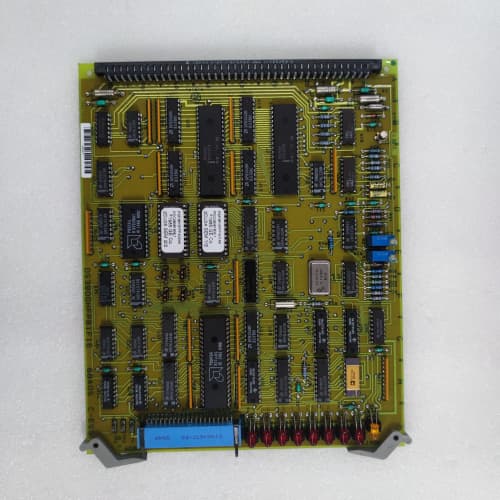
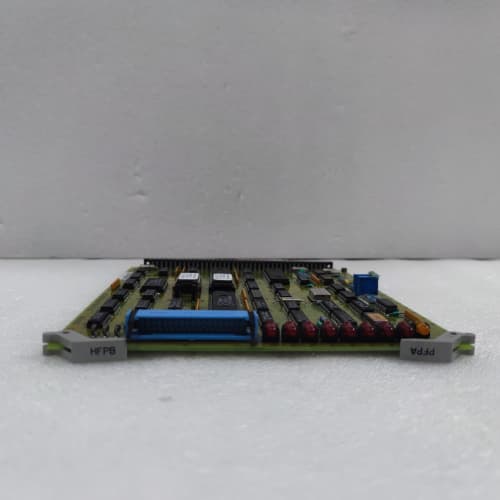
The DS3810EEPB is the high-performance, ruggedized variant of GE’s pulse output module—8 channels, 100 kHz output (twice the frequency of the EEPA), 18-bit resolution (four times finer control), and a thick epoxy conformal coating. The “B” in the suffix indicates a hardware revision with higher frequency capability and improved timing accuracy (typically ±0.02% vs ±0.05% on the EEPA), and the final “B” indicates the epoxy coating—the same salt-spray-resistant layer you’d spec for offshore or chemical plant equipment.
You’ll find this board in Mark VIe cabinets where you need precise, high-frequency pulse control. The 100 kHz rate handles faster stepper drives and higher-resolution proportional valve control, while the 18-bit resolution gives you finer control over pulse width and duty cycle—about 4x the precision of the 16-bit EEPA. The epoxy coating protects against salt spray, chemical vapors, and extreme humidity, making it suitable for the harshest environments. The board includes short-circuit protection per channel, thermal shutdown, and diagnostics to detect output faults. Typical buyers are plant engineers needing high-speed, high-precision pulse control in corrosive environments.
Key Technical Specifications
| Parameter | Value / Specification |
|---|---|
| Part Number | DS3810EEPB |
| Product Type | Pulse Output Terminal Board |
| Output Channels | 8 (isolated) |
| Frequency Range | 0 to 100 kHz (per channel) |
| Output Voltage | 24V DC nominal (logic level) |
| Output Current | 0.5A max per channel |
| Pulse Width | Programmable (0.5 µs to 1 s) |
| Duty Cycle | 0-100% (programmable) |
| Resolution | 18 bits (frequency/period) |
| Frequency Accuracy | ±0.02% of programmed value |
| Output Type | High-side switching (sourcing) |
| Protection | Short-circuit protection, overcurrent protection, thermal shutdown |
| Isolation | 2.5 kV (Channel to Backplane) |
| Bus Interface | VME (Proprietary GE Mark VIe backplane) |
| Termination | 37-pin D-Sub female (Field side) |
| Power Draw | +5V DC @ 1.2A (typical), +24V DC @ 1.5A (field power at full load) |
| Operating Temp | 0°C to 60°C |
| Conformal Coating | Thick epoxy (salt spray resistant, per “B” suffix) |
| LED Indicators | Green per channel (output active), Red (fault) |
Compatible Replacement Models
| Model | Compatibility | Notes |
|---|---|---|
| DS3810EEPA | ⚠️ Software Compatible | Lower frequency (50 kHz), 16-bit resolution, acrylic coating. Direct drop-in if your application doesn’t need 100 kHz. |
| DS3810EEP | ⚠️ Software Compatible | Earlier revision with lower frequency and no coating. Not recommended for high-speed applications. |
| DS3810EEPB1A1A | ⚠️ Software Compatible | Same board with acrylic coating (lighter). Direct swap for less corrosive environments. |
| DS3810DDDA | ❌ Hardware Incompatible | Relay output board. Not suitable for high-speed pulse generation. |
Frequently Asked Questions (FAQ)
Q: Can I hot-swap this board?
No. The Mark VIe backplane does not support live insertion. Power down the entire I/O pack before removal. The output drivers can latch if hot-swapped.
Q: How is the EEPB different from the EEPA?
Three upgrades:
- Frequency: 100 kHz vs 50 kHz—double the output speed.
- Resolution: 18-bit vs 16-bit—four times finer control over pulse width and duty cycle.
- Accuracy: ±0.02% vs ±0.05%—better frequency stability over temperature.
- Coating: The final “B” indicates thick epoxy coating. The EEPA has acrylic coating.
The output current (0.5A) and number of channels (8) are the same.
Q: What can I control with this board?
The board generates pulse trains for:
- Stepper motor drivers: Step and direction signals (100 kHz max) for faster positioning.
- Proportional solenoid valves: PWM signals with finer resolution for smoother control.
- Heating/cooling control: High-resolution duty cycle control for SSR-driven heaters.
- High-speed frequency-based field devices: Many industrial sensors and actuators accept frequency input.
Q: What’s the difference between 16-bit and 18-bit resolution?
At 100 kHz, the period is 10 µs. With 16-bit resolution, you can adjust the pulse width in steps of 10 µs / 65,536 = 0.15 ns. With 18-bit, it’s 10 µs / 262,144 = 0.038 ns. That’s 4x finer control—useful for proportional valve control where tiny changes in duty cycle affect flow.
Q: How do you test this board before shipping?
We run a 6-step test with a precision oscilloscope and load:
- Visual inspection: Check for cracked connectors, burnt traces, swollen capacitors. Verify the epoxy coating is uniform.
- Power-up: Apply +5V DC and +24V field power. Measure current draw.
- Communication handshake: Simulate backplane connection, verify board ID.
- Frequency accuracy test: Set each channel to 1 kHz, 10 kHz, 50 kHz, and 100 kHz. Measure with an oscilloscope—verify frequency accuracy within ±0.02%.
- Pulse width test: Set pulse width to 1 µs, 10 µs, 100 µs, 1 ms. Verify actual pulse width within ±2%.
- 24-hour soak: Run at 50°C ambient with all channels at 50 kHz, 50% duty cycle, loaded with 0.5A. Log frequency and pulse width every hour—failure threshold is >0.05% deviation or overcurrent fault.
We reject about 2% of these boards—the timing circuit is solid, but the high frequency pushes the output drivers.
Q: What’s the most common failure on this board?
Three things:
- Output driver burnout: If the output is shorted to ground or overvolted, the driver can fail. The board’s protection usually saves it, but repeated faults can wear it out.
- Timing crystal drift: The 100 kHz timing crystal can drift with temperature. We recalibrate during refurbishment.
- Coating-related heat: The epoxy coating traps a little heat—about 2-3°C at the output drivers. The board’s design accounts for this, but if your cabinet exceeds 55°C, keep an eye on it.
Q: Can I use this to drive a 24V DC stepper motor directly?
No. The board provides 0.5A of output current—too low for a stepper motor. Use the board to provide step and direction pulses to a stepper motor driver, which then powers the motor. The 100 kHz rate supports high-speed stepper drives.
Q: What is the maximum cable length?
For 100 kHz, keep cable runs under 30 meters to prevent signal degradation. Use shielded twisted-pair cable. For longer runs, reduce the frequency or use line drivers.
Q: Are there counterfeit versions of this board?
Yes. Look for:
- Output driver ICs: Genuine boards use specific high-speed driver ICs. Counterfeits use slower drivers that can’t reach 100 kHz.
- Timing crystal: Genuine boards use a precision crystal (±50 ppm). Counterfeits use standard crystals—frequency accuracy will be poor.
- Coating: Genuine epoxy coating is thick, uniform, and slightly yellowish. Fakes use thinner coatings.
- Label: Genuine—matte finish, greenish barcode. Fakes—glossy.
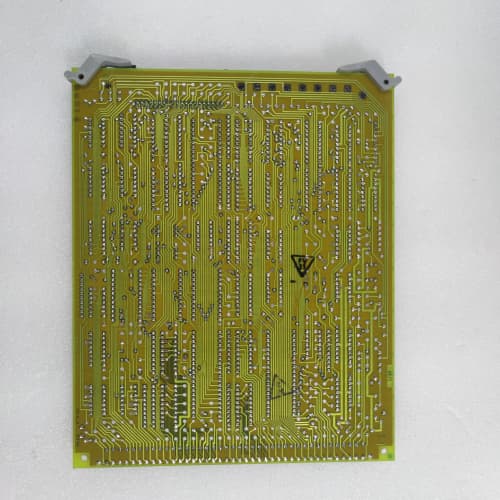
We trace stock to decommissioned assets. If buying elsewhere, demand photos of the component side and serial sticker.
Q: What’s your warranty?
1-year against functional defects. For pulse output boards, we guarantee the frequency accuracy for the warranty period—if it drifts out of spec, we’ll recalibrate or replace it.
Q: What’s the lead time?
We typically carry 2-4 units. Orders before 2 PM EST ship within 1-2 business days after testing. The 24-hour soak is mandatory—we won’t skip it. Expedited shipping available with waiver. For high-speed applications, we recommend waiting for the full test cycle—the timing crystal only shows drift after hours of thermal stress, especially with the heat-trapping epoxy coating.
GE IS420UCSBH4A
ABB DSSR122 48990001-NK
A-B 1756-RM2
ABB PPC905AE101
 Email: sales@plcfcs.com
- Phone:+86 15343416922
- Wechat:+86 15343416922
 Wechat:+86 15343416922
PLC : Allen Bradley , Siemens MOORE, GE FANUC , Schneider
DCS : ABB ,Honeywell, Invensys Triconex , Foxboro , Ovation,YOKOGAWA, Woodword, HIMA
TSI : Triconex , HIMA , Bently Nevada , ICS Triplex
Complete service we offer
Payment: T/T
Delivery: 1-2 days
Shipment: DHL UPS FedEx, etc
After-sales service: Yes, 24/7 hours