 Email: jiedong@sxrszdh.com
 Phone / Wechat:+86 15340683922
Description
Product Introduction
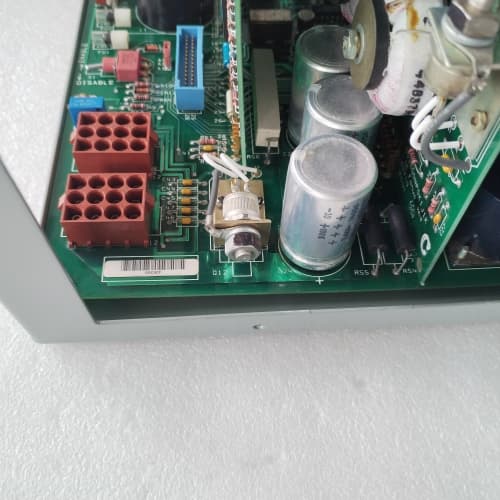
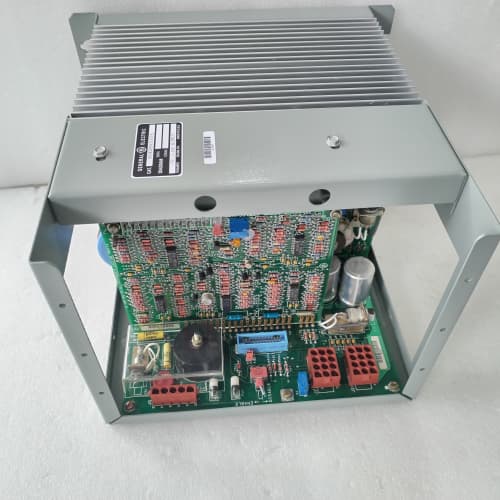
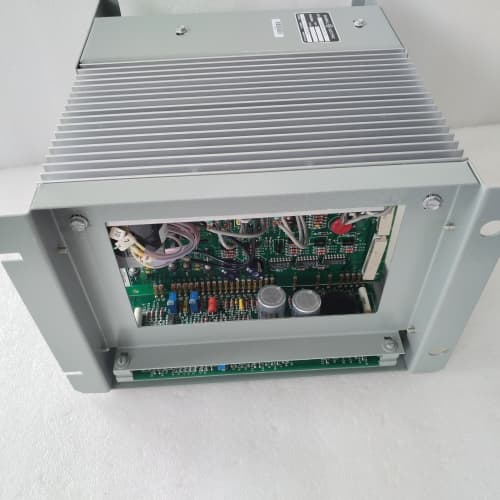
The DS3800XVIB is a specialized variant of GE’s vibration monitor input board—optimized for passive velocity sensors rather than IEPE accelerometers. The “B” suffix indicates a different front-end configuration: no excitation current source (since velocity sensors are passive), a lower frequency range (0.1-1 kHz vs. 10 kHz), and a different high-pass filter knee optimized for velocity and displacement measurements.
Where this board shines is on large slow-speed turbines and hydroelectric units where bearing velocity and shaft displacement are the primary vibration metrics. Velocity sensors are simpler and more robust than accelerometers—no electronics in the sensor head, no excitation power needed—and they’re often preferred in high-temperature or hazardous areas. The XVIB’s 24-bit ADC and programmable filters give you the same dynamic range and accuracy as the XVIA, but tailored to the frequency content of velocity signals. You don’t need the 10 kHz bandwidth of the XVIA; the 1 kHz bandwidth gives you better low-frequency noise performance. Typical buyers are plant engineers upgrading from standalone velocity monitors or retrofitting older turbines where velocity sensors are already installed.
Key Technical Specifications
| Parameter | Value / Specification |
|---|---|
| Part Number | DS3800XVIB |
| Product Type | Vibration Input Terminal Board (Velocity Optimized) |
| Input Channels | 4 (Differential, isolated) |
| Sensor Support | Passive Velocity Sensors (no excitation required), Geophones, Seismic Sensors |
| Excitation Current | None (passive sensors only) |
| Input Voltage Range | ±10V DC (differential) |
| ADC Resolution | 24 bits (delta-sigma) |
| Effective Resolution | 20 bits (noise-free) |
| Frequency Range | 0.1 Hz to 1 kHz (programmable filters) |
| High-Pass Filter | 0.1-20 Hz (fixed for velocity/displacement) |
| Low-Pass Filter | 100 Hz-1 kHz (programmable) |
| Measurement Modes | True RMS, Peak, Peak-to-Peak, DC Offset, Velocity (mm/s), Displacement (µm) |
| Accuracy | ±0.05% of reading ±0.2 mV |
| Input Impedance | 1 MΩ |
| Isolation | 250 V RMS (Channel to Backplane) |
| Bus Interface | VME (Proprietary GE Mark VIe backplane) |
| Termination | 37-pin D-Sub female (Field side) |
| Power Draw | +5V DC @ 1.1A (typical) |
| Operating Temp | 0°C to 60°C |
| Diagnostics | Open-circuit detection, short-circuit detection, sensor bias check |
Compatible Replacement Models
| Model | Compatibility | Notes |
|---|---|---|
| DS3800XVIA | ⚠️ Software Compatible | IEPE/accelerometer version with 10 kHz bandwidth and excitation current. Physical drop-in but has different frequency response. |
| DS3800XVIB1A1A | ⚠️ Software Compatible | Enhanced revision with conformal coating. Direct electrical drop-in. |
| DS3800XVI | ⚠️ Software Compatible | Earlier 16-bit version. Physical fit but lower dynamic range—not recommended. |
| DS3800XJBA | ❌ Hardware Incompatible | Thermocouple board—no dynamic range. Not compatible. |
Frequently Asked Questions (FAQ)
Q: Can I hot-swap this board?
No. The Mark VIe backplane does not support live insertion. Power down the entire I/O pack before removal. The ADC calibration can drift if you hot-plug.
Q: How is the XVIB different from the XVIA?
Three key differences:
- Excitation current: The XVIB has none. It’s designed for passive velocity sensors that generate their own voltage. The XVIA provides 4mA for IEPE accelerometers.
- Frequency range: The XVIB is optimized for 0.1 Hz to 1 kHz—the typical frequency content of velocity and displacement signals. The XVIA goes up to 10 kHz for accelerometer signals.
- High-pass filter: The XVIB has a fixed low-frequency high-pass filter (0.1-20 Hz) to remove DC drift. The XVIA has a programmable high-pass filter.
The ADC, accuracy, and measurement modes are the same.
Q: What sensors does this board support?
- Passive velocity sensors: Typically moving-coil or magnet-and-coil designs. They generate a voltage proportional to velocity (mm/s). No power required.
- Geophones: Similar to velocity sensors, used for seismic measurements.
- LVDT-based displacement sensors: In some applications, though these are less common.
It does not support IEPE accelerometers or 4-20mA vibration transmitters.
Q: How does the lower frequency range help?
The 1 kHz bandwidth gives you better low-frequency noise performance than the 10 kHz XVIA. The ADC’s noise is spread over a narrower band, so the noise floor is about 5dB lower in the 0.1-1 kHz range. That’s important for slow-speed turbines (like hydro units at 100-300 RPM) where the vibration frequencies are below 10 Hz.
Q: How do you test this board before shipping?
We run a 7-step test with precision DC and AC sources:
- Visual inspection: Check for cracked connectors, burnt traces, swollen capacitors.
- ESD check: Insulation resistance between channels and chassis ground >10MΩ.
- Power-up: Apply +5V DC, measure current draw (1.1A ±10%).
- Communication handshake: Simulate backplane connection, verify board ID.
- DC bias test: Connect a known DC voltage (0-10V) to each channel and verify the ADC reads within ±0.05%.
- AC signal test: Inject a 10 Hz, 1V RMS sine wave and verify the RMS reading within ±0.05%. Also test at 100 Hz, 500 Hz, and 1 kHz.
- High-pass filter test: Inject a 0.1 Hz signal and a 10 Hz signal. Verify the 0.1 Hz is attenuated by at least 20dB while the 10 Hz passes with <0.1% error.
- 24-hour soak: Run at 50°C ambient with all channels reading a 10 Hz signal. Log readings every hour—failure threshold is >0.15% deviation.
We reject about 2% of these boards—the design is simple and reliable.
Q: What’s the most common failure on this board?
Two things, since there’s no excitation current source:
- ADC reference drift: The 24-bit ADC uses an internal voltage reference. If it drifts, all readings shift. We recalibrate the ADC during refurbishment.
- Input protection diode burnout: If a sensor gets shorted to 24V, the input protection can fail. We replace input protection on about 5% of units.
Q: How do I set the filters?
The board has programmable filters per channel. In ToolboxST, you set:
- High-pass cutoff: Fixed range 0.1-20 Hz (optimized for velocity sensors). The filter removes DC offset and thermal drift.
- Low-pass cutoff: 100 Hz to 1 kHz (programmable). For typical velocity monitoring on slow turbines, use 100-200 Hz. For faster machines, use 500 Hz.
The filters are digital (IIR) with a 24 dB/octave roll-off.
Q: Can I use this board for accelerometers?
No. Accelerometers need excitation current (4mA). The XVIB doesn’t provide it—the sensor won’t power up. Use the XVIA for accelerometers.
Q: What’s the difference between velocity and displacement measurements?
- Velocity (mm/s): Direct measurement from the sensor. Good for machine condition monitoring—ISO standards use velocity for vibration severity.
- Displacement (µm): Calculated by integrating the velocity signal. The XVIB includes a digital integrator to convert velocity to displacement, which is useful for slow-speed shaft motion analysis.
You can select either mode in ToolboxST.
Q: Are there counterfeit versions of this board?
Yes. Look for:
- ADC IC: Genuine boards use a specific 24-bit delta-sigma ADC. Counterfeits use 16-bit ADCs and fake the resolution.
- Input protection: Genuine boards have robust TVS protection. Counterfeits often omit these components.
- Label: Genuine—matte finish, greenish barcode. Fakes—glossy.
We trace stock to decommissioned assets. If buying elsewhere, demand photos of the component side and serial sticker.
Q: What’s your warranty?
1-year against functional defects. For vibration boards, we guarantee the ADC accuracy for the warranty period—if it drifts out of spec, we’ll recalibrate or replace it.
Q: What’s the lead time?
We typically carry 2-4 units. Orders before 2 PM EST ship within 1-2 business days after testing. The 24-hour soak is mandatory—we won’t skip it. Expedited shipping available with waiver. For vibration monitoring applications, we recommend waiting for the full test cycle—the ADC reference only shows thermal drift after hours of operation.
GE IS420UCSBH4A
GE 369-HI-R-M-0-E-0
TRICONEX 3301
Prosoft MVI56E-MCMR
 Email: sales@plcfcs.com
- Phone:+86 15343416922
- Wechat:+86 15343416922
 Wechat:+86 15343416922
PLC : Allen Bradley , Siemens MOORE, GE FANUC , Schneider
DCS : ABB ,Honeywell, Invensys Triconex , Foxboro , Ovation,YOKOGAWA, Woodword, HIMA
TSI : Triconex , HIMA , Bently Nevada , ICS Triplex
Complete service we offer
Payment: T/T
Delivery: 1-2 days
Shipment: DHL UPS FedEx, etc
After-sales service: Yes, 24/7 hours