 Email: jiedong@sxrszdh.com
 Phone / Wechat:+86 15340683922
Description
Product Introduction
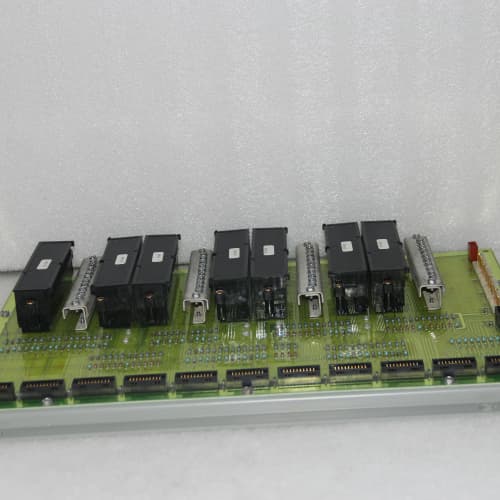
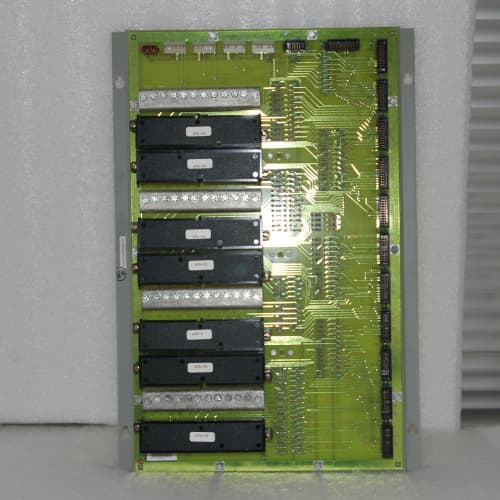
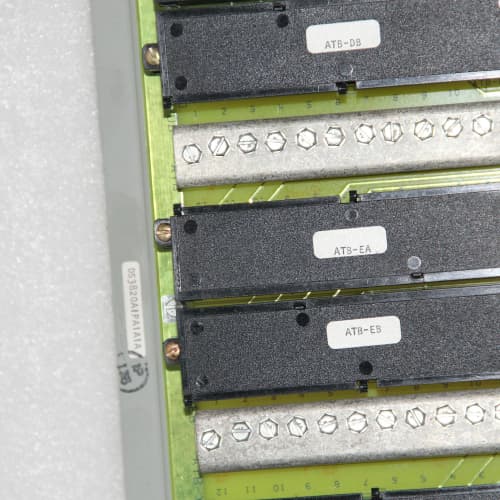
The DS3800XTFS is the high-performance frequency input board in GE’s Mark VIe line—the “S” suffix likely stands for Speed or Superior, and it delivers a broader frequency range and higher resolution than the standard XTFP. Where the XTFP tops out at 10 kHz with 16-bit counters, the XTFS handles 25 kHz per channel with 32-bit counters, making it suitable for higher-speed applications like turbine overspeed monitoring, high-speed shaft speed measurement, or precision flow totalization on large fuel lines.
The board’s front-end is more sophisticated than the XTFP—it uses a programmable threshold comparator (0.5V to 24V) with independent hysteresis control per channel, similar to the XTFP, but with a faster response time and better noise rejection. The 32-bit counter means you can measure down to fractions of a Hertz without overflowing, even at high frequencies. The board also includes configurable input filters to reject noise on long cable runs. Typical users are plant engineers working with high-speed turbines, precision flow meters, or position encoders where the 10 kHz limit of the XTFP isn’t sufficient.
Key Technical Specifications
| Parameter | Value / Specification |
|---|---|
| Part Number | DS3800XTFS |
| Product Type | High-Speed Frequency/Pulse Input Terminal Board |
| Input Channels | 8 (Isolated) |
| Input Frequency Range | 0 to 25 kHz (per channel) |
| Input Voltage Range | ±30V DC peak (programmable trigger thresholds) |
| Trigger Threshold | 0.5V to 24V (software-configurable per channel) |
| Hysteresis | Programmable (0.1V to 5V per channel) |
| Input Impedance | 10 kΩ (typical) |
| Counter Resolution | 32 bits (4,294,967,295 counts) |
| Measurement Modes | Frequency (Hz), Period (µs), Pulse Count, Duty Cycle, Pulse Width |
| Input Filtering | Programmable digital filter (noise rejection) |
| Isolation | 250 V RMS (Channel to Backplane) |
| Bus Interface | VME (Proprietary GE Mark VIe backplane) |
| Termination | 37-pin D-Sub female (Field side) |
| Power Draw | +5V DC @ 1.5A (typical) |
| Operating Temp | 0°C to 60°C |
| Diagnostics | Open-circuit detection, over-voltage detection, input stuck detection, frequency out-of-range |
Compatible Replacement Models
| Model | Compatibility | Notes |
|---|---|---|
| DS3800XTFP | ⚠️ Software Compatible | Lower frequency range (10 kHz), 16-bit counter. Physical drop-in but limited if you need higher speed. |
| DS3800XTF | ⚠️ Software Compatible | Fixed threshold version without programmability. Not recommended if you need flexible triggering. |
| DS3800XTFS1A1A | ⚠️ Software Compatible | Enhanced revision with conformal coating. Direct electrical drop-in. |
| DS3800XJBA | ❌ Hardware Incompatible | Thermocouple input board. Not compatible. |
Frequently Asked Questions (FAQ)
Q: Can I hot-swap this board?
No. The Mark VIe backplane does not support live insertion for frequency input boards. Power down the entire I/O pack before removal. The 32-bit counters are sensitive—we’ve seen hot-swap attempts corrupt the high-order bits.
Q: How is the XTFS different from the XTFP?
Three upgrades:
- Frequency range: 25 kHz vs. 10 kHz. That’s 2.5x higher, suitable for high-speed applications.
- Counter resolution: 32-bit vs. 16-bit. At 25 kHz, a 16-bit counter overflows in 2.6 seconds. The 32-bit counter gives you 47 hours of counting before overflow—so you can measure low frequencies over long periods without losing counts.
- Input filtering: The XTFS has a programmable digital filter to reject noise. The XTFP has analog filtering only.
The trigger thresholds and hysteresis are similarly programmable (0.5V to 24V).
Q: What’s the maximum frequency I can measure?
25 kHz per channel. For turbine applications:
- 60-tooth speed gear: 25,000 Hz / 60 = 416.7 revolutions per second = 25,000 RPM
- 1-tooth pulse per revolution: 25,000 RPM = 416.7 Hz (well within range)
For flow meters with 1000 pulses per gallon: 25,000 Hz = 25,000 pulses per second = 1.5 million pulses per minute—plenty for high-flow applications.
Q: How does the 32-bit counter help?
With a 16-bit counter, at 25 kHz you overflow in 2.6 seconds. The XTFS’s 32-bit counter gives you 4.29 billion counts—at 25 kHz, that’s 47 hours of counting before overflow. This matters if you’re measuring:
- Totalized flow: Long-term accumulation without losing counts.
- Low-frequency signals: Measuring a 1 Hz signal over 10 seconds gives 10 counts. With 16-bit, you can also handle 10 counts, but the 32-bit allows you to accumulate without worrying about overflow during gate time adjustments.
Q: How do you test this board before shipping?
We run a 7-step test with a precision pulse generator up to 25 kHz:
- Visual inspection: Check for cracked connectors, burnt traces, swollen capacitors.
- ESD check: Insulation resistance between channels and chassis ground >10MΩ.
- Power-up: Apply +5V DC, measure current draw (1.5A ±10%).
- Communication handshake: Simulate backplane connection, verify board ID.
- Trigger threshold verification: For each channel, inject a 1 kHz pulse train and sweep the threshold from 0.5V to 24V. Verify the board triggers at the correct voltage.
- Frequency accuracy test: Inject known frequencies (1 Hz, 100 Hz, 1 kHz, 10 kHz, 20 kHz, 25 kHz) and verify accuracy within ±0.05%.
- 24-hour soak: Run at 50°C ambient with all channels at 10 kHz. Log frequency readings every hour—failure threshold is ±0.1% deviation.
We reject about 4% of these boards—the high-speed comparator is more sensitive to thermal drift.
Q: What’s the most common failure on this board?
Three things specific to the high-speed design:
- Comparator speed degradation: The programmable comparator can slow down with age, affecting accuracy at higher frequencies. We test at 25 kHz and replace comparators that show jitter.
- Optocoupler aging: The isolation optocouplers degrade over time, especially with high-frequency signals. We replace them on about 15% of refurbished units.
- Power supply noise: The 32-bit counter is sensitive to power supply ripple. If your backplane power is noisy, the counter can increment incorrectly. We test with a clean supply.
Q: What input signals can I connect?
Any pulse or frequency signal up to 25 kHz:
- Magnetic pickups: AC voltage (1-20V peak). Set threshold to 1V.
- Proximity sensors: 5V or 24V DC. Set threshold to half the voltage.
- Encoder outputs: TTL (5V) or 24V. Single-ended only—ground the negative side.
- Flow meter pulses: Square or sine wave up to 25 kHz.
It does not accept AC signals above 30V peak—use a voltage divider if needed.
Q: Can I use this for overspeed protection?
The XTFS has a faster response than the XTFP (minimum gate time is 50ms vs. 100ms), but that’s still too slow for primary overspeed protection, which typically requires <20ms response with hardware interlock. Use this board for speed monitoring and backup overspeed alarms, but keep the dedicated overspeed trip system.
Q: How does the digital filter work?
The XTFS includes a software-configurable digital filter that rejects noise pulses shorter than a user-specified minimum pulse width. For example:
- Filter off: Counts every pulse (fastest response, most noise).
- Filter 1µs: Rejects pulses shorter than 1µs.
- Filter 10µs: Rejects pulses shorter than 10µs (good for noisy environments).
We recommend starting with a 1µs filter for most applications—it removes high-frequency noise without affecting the signal.
Q: Are there counterfeit versions of this board?
Yes. Look for:
- Optocouplers: Genuine boards use high-speed optocouplers (10 MHz bandwidth). Counterfeits use slower optocouplers that can’t handle 25 kHz.
- Comparator IC: Genuine boards use a precision high-speed comparator (e.g., Linear Tech LT1719). Counterfeits use generic comparators with slower response.
- Label: Genuine—matte finish, greenish barcode. Fakes—glossy.
We trace stock to decommissioned assets. If buying elsewhere, demand photos of the component side and serial sticker, especially close-ups of the optocouplers and comparator IC.
Q: What’s your warranty?
1-year against functional defects. For high-speed boards, we guarantee the frequency accuracy for the warranty period—if it drifts out of spec, we’ll recalibrate or replace it.
Q: What’s the lead time?
We typically carry 2-4 units. Orders before 2 PM EST ship within 1-2 business days after testing. The 24-hour soak is mandatory—we won’t skip it. Expedited shipping available with waiver. For speed monitoring applications, we recommend waiting for the full test cycle—the high-speed comparator only shows thermal drift after hours of operation.
GE 369-HI-R-M-0-E-0
A-B 1756-L71
SCHUBERT ECM-19T CXB-1
 Email: sales@plcfcs.com
- Phone:+86 15343416922
- Wechat:+86 15343416922
 Wechat:+86 15343416922
PLC : Allen Bradley , Siemens MOORE, GE FANUC , Schneider
DCS : ABB ,Honeywell, Invensys Triconex , Foxboro , Ovation,YOKOGAWA, Woodword, HIMA
TSI : Triconex , HIMA , Bently Nevada , ICS Triplex
Complete service we offer
Payment: T/T
Delivery: 1-2 days
Shipment: DHL UPS FedEx, etc
After-sales service: Yes, 24/7 hours