 Email: jiedong@sxrszdh.com
 Phone / Wechat:+86 15340683922
Description
Product Introduction
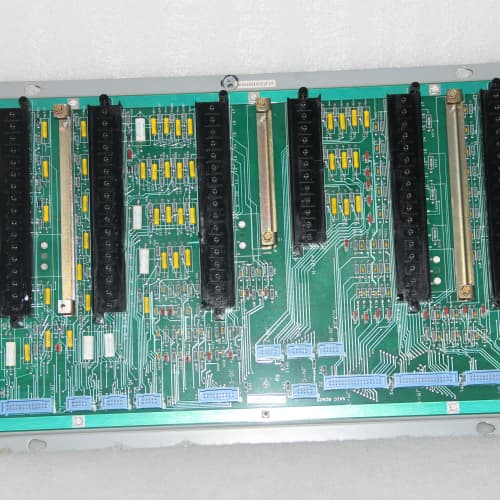
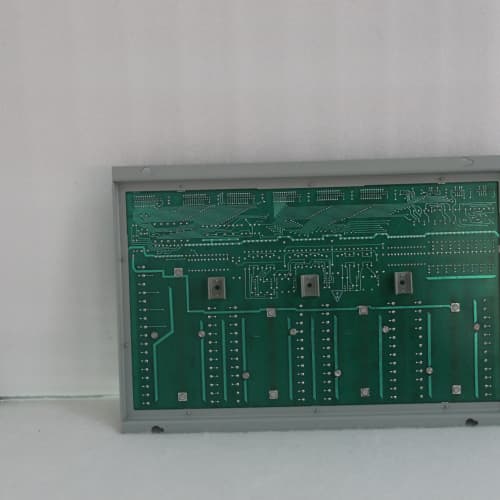
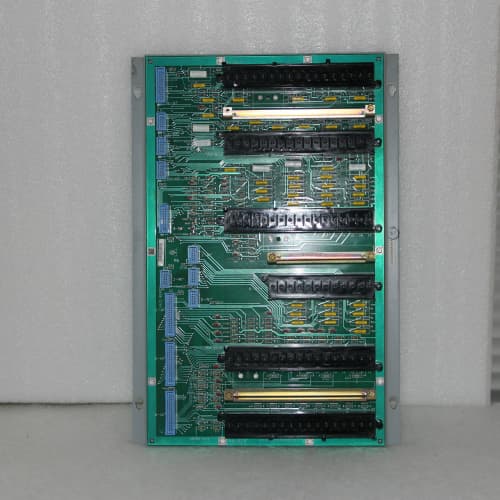
The DS3800XTFP is the frequency input board in GE’s Mark VIe line—the one that counts pulses from speed sensors, flow meters, and position encoders. The “XTF” designation tells you it’s a frequency input board, and the “P” suffix likely indicates enhanced performance with programmable trigger levels. If you’re measuring turbine shaft speed (via magnetic pickups), gas flow (via turbine meters), or valve position (via LVDT or encoder signals), this is the board you’re using.
Where this board differs from standard digital input boards is the front-end conditioning. Frequency inputs are analog signals that need to be squared up and counted—the XTFP includes programmable trigger thresholds (adjustable from 0.5V to 24V), hysteresis to prevent noise triggering, and a 16-bit counter per channel. That means you can connect directly to magnetic pickups (which output AC voltage) or to logic-level pulse trains (5V/24V DC) without external signal conditioners. Typical users are plant engineers doing turbine speed monitoring, flow totalization, or high-speed position feedback applications.
Key Technical Specifications
| Parameter | Value / Specification |
|---|---|
| Part Number | DS3800XTFP |
| Product Type | Frequency/Pulse Input Terminal Board |
| Input Channels | 8 (Isolated) |
| Input Frequency Range | 0 to 10 kHz (per channel) |
| Input Voltage Range | ±30V DC peak (programmable trigger thresholds) |
| Trigger Threshold | 0.5V to 24V (software-configurable per channel) |
| Hysteresis | Programmable (0.1V to 5V) |
| Input Impedance | 10 kΩ (typical) |
| Counter Resolution | 16 bits (65,535 counts) |
| Measurement Modes | Frequency (Hz), Period (µs), Pulse Count, Duty Cycle |
| Isolation | 250 V RMS (Channel to Backplane) |
| Bus Interface | VME (Proprietary GE Mark VIe backplane) |
| Termination | 37-pin D-Sub female (Field side) |
| Power Draw | +5V DC @ 1.3A (typical) |
| Operating Temp | 0°C to 60°C |
| Diagnostics | Open-circuit detection, over-voltage detection, input stuck detection |
Compatible Replacement Models
| Model | Compatibility | Notes |
|---|---|---|
| DS3800XTF | ⚠️ Software Compatible | Earlier revision with fixed trigger thresholds. Physical drop-in, but lacks programmable hysteresis. |
| DS3800XTFP1A1A | ⚠️ Software Compatible | Enhanced revision with conformal coating. Direct electrical drop-in. |
| DS3800XJBA | ❌ Hardware Incompatible | Thermocouple input board. Different front-end design—not compatible. |
| DS3800XDIO | ❌ Hardware Incompatible | Digital I/O board. No frequency counting capability. |
Frequently Asked Questions (FAQ)
Q: Can I hot-swap this board?
No. The Mark VIe backplane does not support live insertion for frequency input boards. Power down the entire I/O pack before removal. The counter registers can corrupt if you hot-plug—you’ll get garbage frequency readings until a power cycle.
Q: How is the XTFP different from the XTF?
The base XTF has fixed trigger thresholds (typically 2.5V for TTL or 10V for 24V logic). The XTFP has programmable thresholds per channel, plus adjustable hysteresis. That means:
- Lower-level signals: You can set the threshold to 0.5V to pick up weak magnetic pickup signals (common on older turbines).
- Noise immunity: You can set hysteresis to ignore small voltage fluctuations.
- Mixed signals: You can use the same board for 5V and 24V inputs on different channels.
Q: What input signals can I connect to this board?
Virtually any pulse or frequency signal:
- Magnetic pickups: AC voltage (typically 1-20V peak at speed). Set the threshold to 1V and it’s fine.
- Proximity sensors: DC voltage (5V or 24V). Set the threshold to half the voltage.
- Encoder outputs: TTL (5V) or differential. The board accepts single-ended inputs only, so you’ll need to ground the negative side.
- Flow meters: Square wave or sine wave (0-10 kHz). The board accepts both.
It does not accept AC signals above 30V peak—use a voltage divider if your sensor outputs more.
Q: How does the frequency measurement work?
The board has a 16-bit counter per channel. It counts input pulses over a user-selectable gate time (typically 100ms to 1 second). The frequency is calculated as:
- Frequency (Hz) = Count / Gate Time
The counter overflows at 65,535 counts—at 10 kHz with a 1-second gate time, you’d be at 10,000 counts, well within range. At higher frequencies or longer gate times, you’d need to adjust the gate time to avoid overflow.
Q: How do you test this board before shipping?
We run a 7-step test with a precision pulse generator:
- Visual inspection: Check for cracked connectors, burnt traces, swollen capacitors.
- ESD check: Insulation resistance between channels and chassis ground >10MΩ.
- Power-up: Apply +5V DC, measure current draw (1.3A ±10%).
- Communication handshake: Simulate backplane connection, verify board ID.
- Trigger threshold verification: For each channel, inject a 1 kHz pulse train and sweep the threshold from 0.5V to 24V. Verify the board triggers at the correct voltage.
- Frequency accuracy test: Inject known frequencies (1 Hz, 100 Hz, 1 kHz, 5 kHz, 10 kHz) and verify the board’s reading is within ±0.1% of the input.
- 24-hour soak: Run at 50°C ambient with all channels at 1 kHz. Log frequency readings every hour—failure threshold is ±0.2% deviation.
We reject about 3% of these boards—typically due to trigger threshold drift on one or more channels.
Q: What’s the most common failure on this board?
Three things:
- Input comparator drift: The programmable threshold comparator can drift with temperature. We recalibrate during refurbishment.
- Isolation optocoupler failure: The channel isolation uses optocouplers—these can degrade over time, especially if subjected to over-voltage. We replace them on about 10% of refurbished units.
- Counter register corruption: If power is interrupted during a count cycle, the register can freeze. We test by power-cycling during active counting.
Q: What’s the maximum frequency I can measure?
10 kHz per channel. That’s sufficient for turbine speed (typically 50-60 Hz at synchronous speed, but up to 3600 RPM on overspeed tests—that’s 60 Hz on a 60-tooth gear, well within range). For high-speed applications (over 10 kHz), you’d need a different board.
Q: Can I use this for overspeed protection?
Yes and no. The board can measure speed and flag an alarm, but overspeed protection typically uses dedicated hardware with faster response times. The XTFP has a 100ms minimum gate time, so it’s not fast enough for primary overspeed protection (which requires <20ms response). Use it for monitoring and backup, but keep the dedicated overspeed trip system.
Q: Are there counterfeit versions of this board?
Yes. Look for:
- Input optocouplers: Genuine boards use high-speed optocouplers (10 MHz bandwidth). Counterfeits use slower optocouplers—they’ll miss high-frequency pulses.
- Trigger comparator IC: Genuine boards use a precision comparator. Counterfeits use generic comparators with wider tolerance.
- Label: Genuine—matte finish, greenish barcode. Fakes—glossy.
We trace stock to decommissioned assets. If buying elsewhere, demand photos of the component side and serial sticker.
Q: What’s your warranty?
1-year against functional defects. For frequency boards, we guarantee the trigger threshold accuracy for the warranty period—if it drifts out of spec, we’ll recalibrate or replace it.
Q: What’s the lead time?
We typically carry 3-5 units. Orders before 2 PM EST ship within 1-2 business days after testing. The 24-hour soak is mandatory—we won’t skip it. Expedited shipping available with waiver. For speed monitoring applications, we recommend waiting for the full test cycle—the trigger comparator only shows thermal drift after hours of operation.
ABB 3BHE035301R1002
ABB REF615C-D
ABB 3BDH000741R1
 Email: sales@plcfcs.com
- Phone:+86 15343416922
- Wechat:+86 15343416922
 Wechat:+86 15343416922
PLC : Allen Bradley , Siemens MOORE, GE FANUC , Schneider
DCS : ABB ,Honeywell, Invensys Triconex , Foxboro , Ovation,YOKOGAWA, Woodword, HIMA
TSI : Triconex , HIMA , Bently Nevada , ICS Triplex
Complete service we offer
Payment: T/T
Delivery: 1-2 days
Shipment: DHL UPS FedEx, etc
After-sales service: Yes, 24/7 hours