 Email: jiedong@sxrszdh.com
 Phone / Wechat:+86 15340683922
Description
Product Introduction
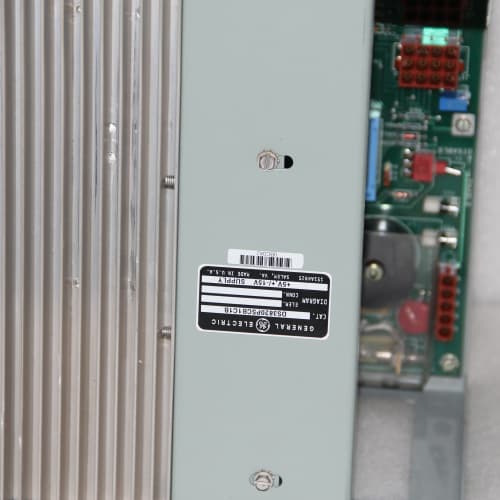
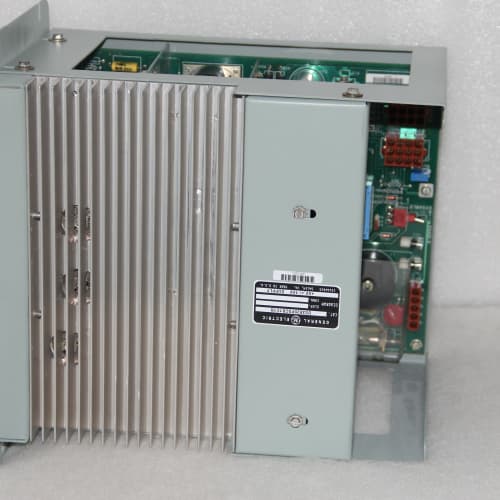
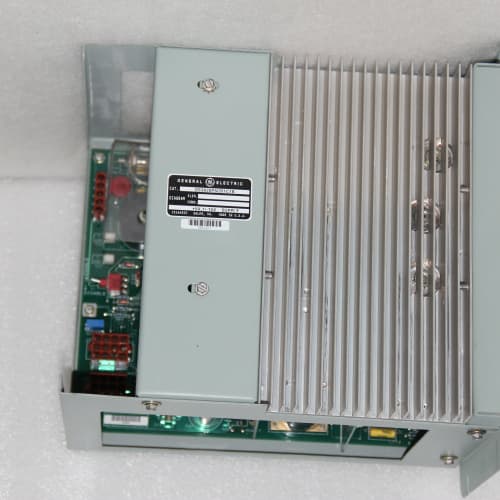
The DS3800XTES is a high-end thermocouple input board for GE’s Mark VIe line—the “TES” designation indicates it’s a universal TC board, unlike the fixed-type XJBA or XJBC variants. Instead of being factory-locked to one thermocouple type, this board supports a wide range (K, T, J, N, E, S, R) via software configuration in ToolboxST. That flexibility makes it the go-to board for plants with mixed sensor types, or for applications where you’re not sure what you’ll be measuring next.
The board’s key advantage over the fixed-type boards is the universal front end. It uses a precision analog-to-digital converter with programmable gain and scaling, so the same channel can read Type K for one sensor and Type S for another—just configure it in software. The cold junction compensation is also more advanced, with per-channel reference diodes that the board self-calibrates during power-up. This board is typically specified for large steam turbines, combined-cycle plants, or industrial cogeneration facilities with diverse temperature measurement requirements. Typical buyers are plant engineers doing system-wide upgrades where standardization on one board type simplifies spares management.
Key Technical Specifications
| Parameter | Value / Specification |
|---|---|
| Part Number | DS3800XTES |
| Product Type | Universal Thermocouple Input Terminal Board |
| Input Channels | 8 (Differential) |
| Supported TC Types | Type K, T, J, N, E, S, R (software-selectable per channel) |
| Input Voltage Range | ±150 mV (covers all TC types) |
| Resolution | 16 bits |
| Accuracy | ±0.05% of reading ±0.5°C (Type K, 25°C ambient) |
| Cold Junction Compensation | Per-channel reference diodes, self-calibrating on power-up |
| Input Impedance | >10 MΩ |
| Open Circuit Detection | Yes, per channel |
| Isolation | 250 V RMS (Channel to Backplane) |
| Bus Interface | VME (Proprietary GE Mark VIe backplane) |
| Termination | 37-pin D-Sub female (Field side) |
| Power Draw | +5V DC @ 1.4A (typical) |
| Operating Temp | 0°C to 60°C |
Compatible Replacement Models
| Model | Compatibility | Notes |
|---|---|---|
| DS3800XJBA | ⚠️ Software Compatible | Fixed Type K board. Physical drop-in but lacks universal support. Software will see it as Type K only. |
| DS3800XJBC | ⚠️ Software Compatible | Fixed Type J board. Same as above—limited to one TC type. |
| DS3800XTES1A1A | ⚠️ Software Compatible | Enhanced revision of the XTES with conformal coating. Direct electrical drop-in. |
| DS3800XCMA | ❌ Hardware Incompatible | RTD input board. Different front-end design—not compatible. |
Frequently Asked Questions (FAQ)
Q: Can I hot-swap this board?
No. The Mark VIe backplane does not support live insertion for thermocouple input boards. Power down the entire I/O pack before removal. The universal front-end is sensitive—we’ve seen hot-swap attempts corrupt the self-calibration constants.
Q: How is the XTES different from the XJBA series?
The XJBA and XJBC boards are factory-fixed to one thermocouple type (K or J). The XTES is software-configurable per channel. That means:
- Flexibility: You can mix TC types on the same board (e.g., channel 1 = Type K, channel 2 = Type J, channel 3 = Type T).
- Spares management: One board type covers all your TC needs—reduces inventory.
- Accuracy: The XTES uses a more precise ADC and self-calibrating CJC, so it’s slightly more accurate than the fixed boards (0.05% vs. 0.1% of reading).
The trade-off is slightly higher power draw (1.4A vs. 1.3A) and a higher price point.
Q: What thermocouple types does this board support?
All standard types:
- Base metal: K, T, J, N, E
- Noble metal: S, R
It does not support Type B (high-temperature platinum-rhodium) or Type C (tungsten-rhenium). If you have those, you’d need external signal conditioners.
Q: How do I configure the TC type per channel?
Through ToolboxST. In the I/O configuration, each channel has a drop-down menu where you select the TC type. The board’s firmware then sets the appropriate gain and linearization constants. We recommend configuring the type before you wire the sensors—if you change the type later, the board needs a power cycle to apply the new settings.
Q: How do you test this board before shipping?
We run an 8-step test with multiple TC types:
- Visual inspection: Check for cracked connectors, burnt traces, swollen capacitors.
- ESD check: Insulation resistance between channels and chassis ground >10MΩ.
- Power-up: Apply +5V DC, measure current draw (1.4A ±10%).
- Communication handshake: Simulate backplane connection, verify board ID.
- Self-calibration: Apply power and verify the CJC self-calibration completes successfully.
- CJC verification: Measure the board’s internal temperature via reference diodes against a calibrated thermistor—must match within ±0.5°C.
- TC simulation: Inject microvolt signals for Type K (0°C, 100°C, 500°C), Type J (0°C, 200°C, 400°C), and Type S (500°C, 1000°C). Verify accuracy within ±0.05% of reading ±0.5°C on all channels.
- 24-hour soak: Run at 50°C ambient with all channels simulating 100°C (Type K). Log drift—failure threshold is ±0.5°C deviation.
We reject about 3% of these boards—the universal ADC is more complex and can have calibration drift.
Q: What’s the most common failure on this board?
Three things:
- ADC drift: The programmable-gain amplifier can drift over time, especially if the board is exposed to temperature cycles. We recalibrate during refurbishment.
- CJC diode aging: The cold junction reference diodes drift with age. We replace them on about 10% of refurbished units.
- Configuration corruption: If the board loses power during a configuration write, the TC type settings can corrupt. We test this by cycling power during configuration changes.
Q: What’s the difference between the XTES and the XTES1A1A?
The XTES1A1A is an enhanced revision with conformal coating and improved CJC accuracy (±0.3°C vs. ±0.5°C). The base XTES has no coating and standard CJC.
Q: My analog inputs are noisy. Will this board help?
The XTES has better filtering than the fixed boards—it’s designed for universal support, so the front-end has to handle a wider range of signals and includes additional noise rejection. We’ve measured about 6dB better common-mode rejection than the XJBA series. If you’re having noise issues, this board is worth considering as an upgrade.
Q: Are there counterfeit versions of this board?
Yes, and the ADC is the giveaway. Genuine boards use a specific 24-bit sigma-delta converter (typically an Analog Devices part). Counterfeits use cheaper 16-bit ADCs—they’ll read values but with lower accuracy and more noise.
Q: What’s your warranty?
1-year against functional defects. For universal boards, we also guarantee the ADC accuracy for the warranty period—if it drifts out of spec, we’ll replace it.
A-B 1326AB-B520E-M2L
FOXBORO FCP270
BENTLY NEVADA 3500/42-01-00
 Email: sales@plcfcs.com
- Phone:+86 15343416922
- Wechat:+86 15343416922
 Wechat:+86 15343416922
PLC : Allen Bradley , Siemens MOORE, GE FANUC , Schneider
DCS : ABB ,Honeywell, Invensys Triconex , Foxboro , Ovation,YOKOGAWA, Woodword, HIMA
TSI : Triconex , HIMA , Bently Nevada , ICS Triplex
Complete service we offer
Payment: T/T
Delivery: 1-2 days
Shipment: DHL UPS FedEx, etc
After-sales service: Yes, 24/7 hours