 Email: jiedong@sxrszdh.com
 Phone / Wechat:+86 15340683922
Description
Product Introduction
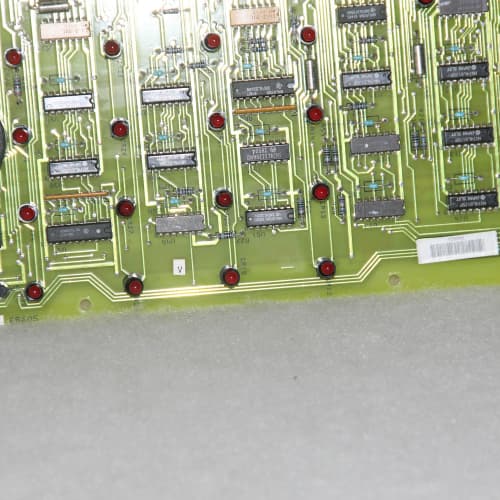
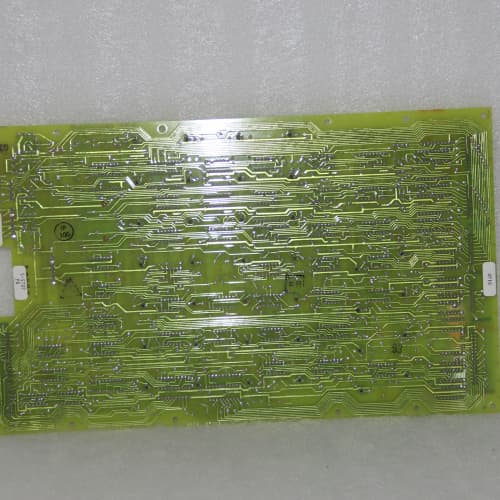
The DS3800XPER1A1B is the enhanced revision of GE’s redundant power entry module—same internal OR-ing diodes and dual-input monitoring as the base XPER, but with upgraded EMI filtering and a conformal coating for moderate protection against humidity and dust. The “1A1B” suffix tells you this isn’t the early production run; it’s a later revision with specific component batches that improve transient response and reduce conducted emissions.
You’ll find this board in Mark VIe cabinets where power quality is a concern—think plants with large motor startups, VFDs, or variable loads that create noise on the 24V DC bus. The enhanced differential and common-mode filters knock down more high-frequency hash before it reaches the 5V regulator, which means cleaner power for analog I/O boards. The conformal coating adds protection against condensation and airborne contaminants—useful in cabinets without climate control. If you’re upgrading from a base XPER (no suffix) or an XPEM/XPEN with external diodes, this board simplifies wiring while adding diagnostics. Typical buyers are plant engineers tired of chasing intermittent resets from noisy power or dealing with external OR-ing blocks that are prone to loose connections.
Key Technical Specifications
| Parameter | Value / Specification |
|---|---|
| Part Number | DS3800XPER1A1B |
| Product Type | Redundant Power Entry Module |
| Input Voltage | 24V DC nominal (18-32V DC range, per input) |
| Input Current | 10A maximum per input (20A total with both active) |
| Output Voltage | 5V DC (Backplane) |
| Output Current | 15A maximum (shared across backplane) |
| Redundancy Method | Internal Schottky OR-ing diodes (low forward drop, <0.5V at 10A) |
| Input Monitoring | Voltage OK per input, reported via backplane |
| Inrush Limiting | Yes, soft-start on power-up |
| Transient Protection | Enhanced TVS array on each input, reverse polarity protection |
| EMI Filtering | Enhanced differential and common-mode filters |
| Conformal Coating | Yes (acrylic, per “B” suffix) |
| Status Monitoring | Output OK, Input A OK, Input B OK, Overcurrent, Overtemperature |
| Bus Interface | VME backplane (proprietary GE Mark VIe) |
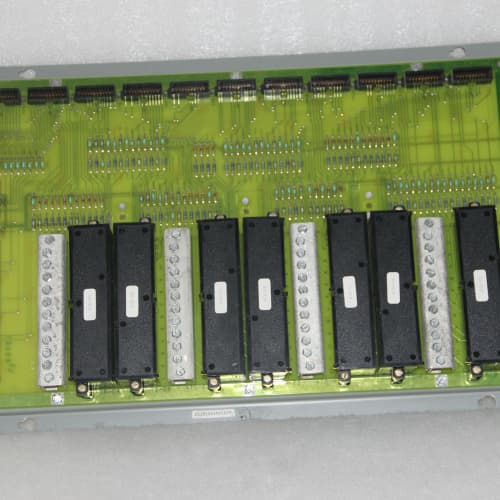
| Termination | Two separate 2-pin screw terminal blocks, Backplane connector |
| Power Draw | Self-consumption: <15W |
| Operating Temp | 0°C to 60°C |
| LED Indicators | Green (Input A), Green (Input B), Green (Output OK), Yellow (Load >80%), Red (Fault) |
Compatible Replacement Models
| Model | Compatibility | Notes |
|---|---|---|
| DS3800XPER | ⚠️ Software Compatible | Base model without enhanced filtering or conformal coating. Electrical drop-in; may introduce more noise to analog inputs if your power is dirty. |
| DS3800XPEN | ⚠️ Software Compatible | High-capacity (15A) but no internal OR-ing. Requires external diodes for redundancy. Physically a drop-in but lacks monitoring. |
| DS3800XPEM | ⚠️ Software Compatible | Lower capacity (10A) with no internal OR-ing. Not recommended if your rack draw exceeds 10A. |
| DS3800XPEC | ❌ Hardware Incompatible | Different input architecture (AC input). Not a direct swap. |
Frequently Asked Questions (FAQ)
Q: Can I hot-swap this power module?
No. The Mark VIe backplane does not support live insertion. Pulling this while the rack is live risks arcing and voltage transients that can damage the internal OR-ing diodes—and once those fail, you lose redundancy. Power down the entire I/O pack. We’ve seen field techs ignore this and take out the downstream analog boards.
Q: How is the “1A1B” different from the base XPER?
Three upgrades:
- Enhanced EMI filtering: Additional common-mode chokes and X/Y capacitors on the input stage. This is particularly useful if your 24V bus has VFDs or switching power supplies generating high-frequency noise.
- Conformal coating: The “B” suffix indicates an acrylic coating on the PCB. This protects against condensation, dust, and mild chemical exposure. The base XPER has no coating.
- Component updates: The “1A” revision uses a specific batch of OR-ing diodes and FETs with tighter thermal specs. We’ve seen lower failure rates on these boards compared to the early production run.
The electrical ratings are the same—24V input, 15A output, internal OR-ing.
Q: How do the internal OR-ing diodes work?
The board has two independent input circuits, each with a Schottky diode, TVS, and EMI filter. Both diodes feed into a common bus. The diode with the higher voltage conducts; the other is reverse-biased (isolated). If one input drops or fails, the diode on that input blocks reverse current, so the other input continues to power the load. Forward drop is about 0.4V at 10A, so 24V input gives you about 23.6V at the bus—well within the 5V regulator’s range.
The board also has a monitoring circuit that measures each input voltage and reports it to the controller. If Input A drops below 18V, you get an alarm but the system keeps running on Input B.
Q: Can I run this board with a single input?
Yes. Connect only Input A (or B) and leave the other unused. The board operates normally, and the unused input simply stays off with no alarms. However, you’re paying a premium for redundancy you’re not using. In a single-feed configuration, you’d be better off with an XPEN. If you later add a second battery string, you just wire it to the second terminal block—no hardware changes.
Q: How do you test this board before shipping?
We run a 7-step protocol with both inputs active to verify the redundancy and filtering:
- Visual inspection: Check for swollen capacitors, burnt FETs, cracked screw terminals. Inspect the EMI chokes—if they’re discolored or cracked, the board took a surge.
- ESD check: Insulation resistance between each input terminal and chassis ground must exceed 10MΩ.
- Initial power-up: Apply 24V to Input A only. Verify soft-start limits inrush to <15A. Check all LEDs. Add Input B and verify the second LED illuminates.
- Input switching test: With both inputs active, drop Input A to 20V and verify the board continues without interruption. Also test the reverse. We test the alarm logic by dropping an input below 18V and verifying the alarm is reported.
- No-load output: Measure the 5V DC rail unloaded. Must be within ±2% (4.9-5.1V).
- Load test: Apply a 15A resistive load to the 5V rail with both inputs active. Monitor voltage regulation (4.9-5.1V), ripple (<50mV p-p), and temperature rise (FETs <70°C). We also measure conducted EMI to verify the enhanced filters are working.
- 24-hour soak: Run at 15A load at 50°C ambient with both inputs active. Log output voltage, temperature, and input status every hour. Failure threshold: voltage <4.85V or temperature >75°C.
We reject about 8% of these boards at the soak step—typically the OR-ing diodes heat-soak and develop forward voltage drift. That’s why we don’t skip the 24-hour test.
Q: What’s the most common failure on this board?
Three things:
- OR-ing diode degradation: The Schottky diodes can develop higher forward voltage over time—from 0.4V up to 0.7V. That reduces the headroom for the 5V regulator. If the input voltage is low (18V), you can starve the regulator. We replace diodes on about 20% of these boards.
- EMI choke burnout: The enhanced filters use ferrite chokes that can crack if the input power has high-frequency surges. A cracked choke reduces filtering, and you’ll see noise on the 5V rail. We replace these on about 10% of the boards.
- Conformal coating issues: On boards with coating, we occasionally see contamination trapped under the coating during manufacturing. That can lead to leakage currents over time. If the coating looks uneven or has bubbles, we reject it.
Q: What does the “1A1B” suffix mean?
On GE’s Mark VIe power module naming:
- 1: Base design revision
- A: Standard 24V input with enhanced filtering (the “A” is a component set code, not the voltage)
- 1: Specific component batch for the OR-ing diodes
- B: Conformal coating (acrylic)
So this board is a specific configuration with 24V input, enhanced EMI filtering, and conformal coating. If you need the same filtering without the coating, you’d look for “1A1A” (not common). If you need redundancy without the enhanced filtering, you’d look for the base XPER (no suffix).
Q: Can I use this board in a Mark VIe TMR system?
Yes. In a TMR rack, you’ll have three XPER1A1B boards—one per controller. They share the same backplane and are diode-ORed internally. If one power module fails, the other two continue to power the I/O. We recommend using the same revision across all three controllers to avoid firmware mismatch issues.
Q: My analog inputs are showing noise. Will this board help?
Possibly. The enhanced EMI filtering on the input stage reduces conducted noise on the 5V rail. If your noise is coming from the 24V source (VFDs, motor starters, switching supplies), this board will knock down some of that hash. However, if the noise is from your field wiring (ground loops, cabling issues), the board won’t help. That’s a different problem. You’d also need to check your analog board’s CMRR (common-mode rejection ratio) and your wiring practices. We’ve seen plants swap in an XPER1A1B and reduce analog ripple from 20mV to 5mV—worth it.
Q: What external components do I need for a redundant setup?
With the XPER, the answer is nothing—the OR-ing diodes are internal. Just wire your two 24V DC sources (battery strings, chargers, or rectifiers) to the two terminal blocks labeled “Input A” and “Input B”. The board handles the rest. Make sure both sources are floating or have common ground; the board doesn’t provide galvanic isolation between inputs. That’s the only caveat.
Q: Are there counterfeit versions of this board?
Yes, and the OR-ing diodes are the giveaway. Here’s what we look for:
- Diode brands: Genuine boards use known Schottky diodes (Vishay, STMicro) with specific part numbers. Counterfeits use unmarked or off-brand diodes that can’t handle the current—they overheat and fail the load test.
- EMI chokes: Genuine chokes are clearly labeled with a part number. Counterfeits use generic components without markings.
- Coating: Genuine coating is uniform and matte with a slight yellowish tint. Fakes use cheaper lacquer that flakes or discolors.
- Label: Same as other GE boards—matte finish with greenish barcode vs. glossy off-white.
We trace our stock to decommissioned assets. If you’re buying elsewhere, demand photos of the component side and the serial sticker.
Q: What’s your warranty on this board?
We offer a 1-year warranty against functional defects. If the board fails to meet published specs within that period and hasn’t been damaged or miswired, we’ll replace or refund. For redundant power supplies, we also cap the warranty at 30 days if you install it without testing—we can’t guarantee field damage from external surges or wiring faults. The OR-ing diodes are sensitive to reverse voltage conditions, and those are often installation errors.
Q: What’s the lead time?
We typically carry 2-4 units of the XPER1A1B in stock. If you order before 2 PM EST, we ship within 1-2 business days after testing. The 24-hour soak is non-negotiable—we won’t skip it. If you need expedited shipping, we can rush the initial testing and ship next-day, but you sign a waiver acknowledging the long-term soak was skipped. For critical systems, we recommend waiting for the full test cycle—the OR-ing diodes and FETs only show thermal drift after hours at full load.
LINMOT E4000-AT
GE IC695CRU320-CD
ABB REF615
 Email: sales@plcfcs.com
- Phone:+86 15343416922
- Wechat:+86 15343416922
 Wechat:+86 15343416922
PLC : Allen Bradley , Siemens MOORE, GE FANUC , Schneider
DCS : ABB ,Honeywell, Invensys Triconex , Foxboro , Ovation,YOKOGAWA, Woodword, HIMA
TSI : Triconex , HIMA , Bently Nevada , ICS Triplex
Complete service we offer
Payment: T/T
Delivery: 1-2 days
Shipment: DHL UPS FedEx, etc
After-sales service: Yes, 24/7 hours