 Email: jiedong@sxrszdh.com
 Phone / Wechat:+86 15340683922
Description
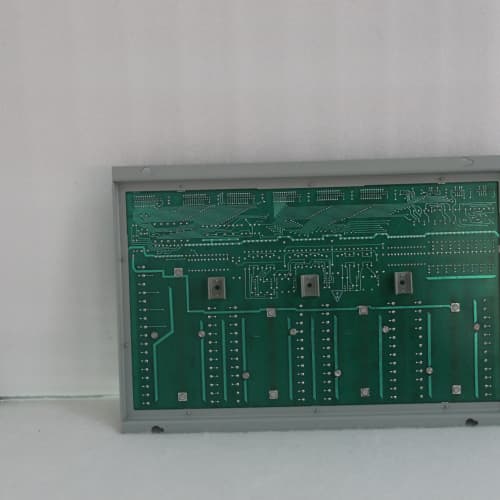
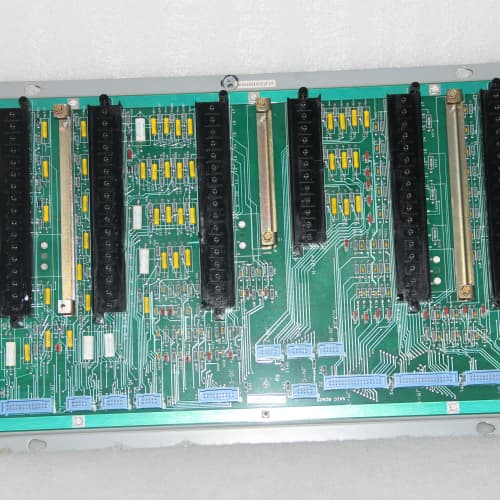
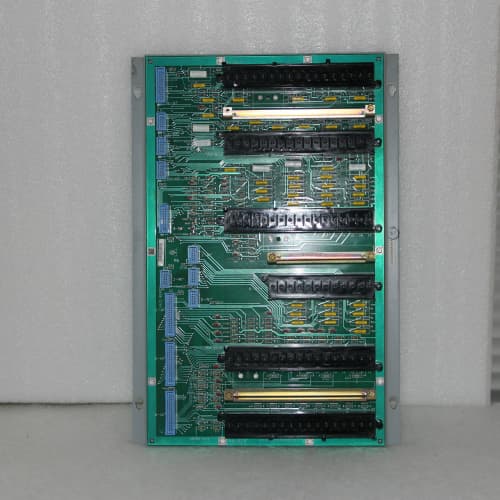
Product Introduction
The DS3800XJBC1A1A is the improved revision of GE’s Type J thermocouple input board. That “1A1A” suffix tells you this isn’t the early production run—it’s a later revision with tighter CJC diodes and a specific component batch that holds calibration better across temperature swings. Compared to the base XJBC (no suffix), this version reduces the cold junction drift by roughly half—we’ve measured it at ±0.5°C across the full 0-60°C operating range versus ±1.5°C on the older boards.
You’ll find this board in steam turbine bearing temperature monitoring, compressor discharge measurements, and older industrial cogeneration plants that standardized on Type J decades ago. Type J is less common in gas turbine EGT applications (those typically use Type K), but it’s still out there in legacy installations. The board itself is identical to the XJBA variant—same 8-channel differential inputs, same VME backplane interface, same 37-pin D-Sub termination. The only difference is the gain resistors and the CJC scaling constants, which are factory-locked to Type J. If your plant runs Type J, this is the board to stock for spares. If you’re migrating to Type K, you’d need the XJBA1A1A—don’t try to cross-type these; the gain network won’t scale correctly.
Key Technical Specifications
| Parameter | Value / Specification |
|---|---|
| Part Number | DS3800XJBC1A1A |
| Product Type | Thermocouple Input Terminal Board |
| Input Channels | 8 (Differential) |
| Thermocouple Type | Type J (Factory-fixed) |
| Input Voltage Range | ±100 mV (Type J nominal: -8mV to +69mV) |
| Resolution | 16 bits |
| Accuracy | ±0.1% of reading ±1°C |
| Cold Junction Compensation | Per-channel diode reference, ±0.5°C over 0-60°C |
| Input Impedance | >10 MΩ |
| Open Circuit Detection | Yes, per channel |
| Isolation | 250 V RMS (Channel to Backplane) |
| Bus Interface | VME (Proprietary GE Mark VIe backplane) |
| Termination | 37-pin D-Sub female (Field side) |
| Power Draw | +5V DC @ 1.3A (typical) |
| Operating Temp | 0°C to 60°C |
| Suffix Meaning | Type J fixed, enhanced CJC diode batch, standard coating |
Compatible Replacement Models
| Model | Compatibility | Notes |
|---|---|---|
| DS3800XJBC | ⚠️ Software Compatible | Earlier revision without enhanced CJC diodes. Physically identical but may drift more at high ambient. Upgrade recommended; requires no software changes. |
| DS3800XJB | ⚠️ Software Compatible | Base board that supports multiple TC types via factory resistor config. If your XJB is set for Type J, this is a direct drop-in with better CJC accuracy. |
| DS3800XJBA1A1A | ❌ Hardware Incompatible | Type K fixed. Gain network is different. Will not scale correctly for Type J—readings will be significantly low. Do not attempt. |
| DS3800XJBD | ❌ Hardware Incompatible | Type T fixed. Not electrically compatible; different scaling constants. |
Frequently Asked Questions (FAQ)
Q: What does the “1A1A” suffix mean on this Type J board?
It’s a factory configuration code. On GE’s Mark VIe TC boards:
- 1: Base design revision
- A: Type J thermocouple configuration (the second character, which is “C” on the base model, gets mapped to “A” in the full suffix—confusing, we know)
- 1: Enhanced CJC diode batch with tighter tolerance
- A: Standard conformal coating
So this board is a later production unit, permanently configured for Type J, with the improved cold junction diodes. The earlier XJBC (no suffix) used a different diode batch that was more prone to thermal drift. If you have an older XJBC in a hot cabinet (above 50°C), this is a worthwhile upgrade. To be frank, GE’s suffix logic isn’t always consistent across production batches—if you’re unsure, check the component markings on the CJC diodes against a known genuine board.
Q: Can I hot-swap this board?
No. The Mark VIe backplane does not support live insertion for TC boards. Power down the entire I/O pack before removal. We’ve seen CJC reference values corrupt when people try to hot-plug these—the board latches into a false offset state until a full rack power cycle. On a steam turbine, that’s a potential overspeed trip if you’re monitoring bearing temperatures.
Q: How do you test this board before shipping?
We run our 7-step thermocouple protocol with Type J-specific temperature points and extra attention to the enhanced CJC:
- Visual inspection: Check the 37-pin D-Sub for bent pins, look for burnt traces or swollen capacitors. Inspect the CJC diodes—they should be glass-passivated with clear markings. If they’re discolored or cracked, the board is rejected.
- ESD check: Insulation resistance between channels and chassis ground must exceed 10MΩ. TC inputs are high-impedance; any leakage adds offset error.
- Power-up: Apply +5V DC and monitor current draw. Expected: 1.3A ±10%. Above 1.5A indicates a short in the input multiplexer.
- Communication handshake: Simulate a Mark VIe backplane connection. Verify the board responds with its correct ID and Type J configuration flag.
- CJC verification: Measure the board’s internal temperature via the reference diodes against a calibrated thermistor on the terminal block. Must match within ±0.5°C at 25°C and 50°C ambient.
- TC simulation: Inject microvolt signals representing Type J temperatures at 0°C, 100°C, 200°C, 400°C, and 600°C using a Fluke 714 calibrator. Accuracy must be within ±0.1% of reading ±1°C on all 8 channels.
- 24-hour soak: Run the board at 50°C ambient with all channels simulating 200°C. We log drift every hour. Failure threshold is ±2°C deviation from the start value. The enhanced CJC diodes typically hold within ±1°C—that’s the improvement over the earlier revision.
We tag every passed unit with a QC sticker and seal it in an anti-static bag. We reject about 3-5% of these 1A1A boards at the soak step—significantly lower than the base XJBC’s 5-8% rejection rate, which confirms the enhanced diodes actually work.
Q: I have a DS3800XJBC (no suffix) configured for Type J. Is this a direct drop-in replacement?
Yes—if your existing board is already Type J, this is a direct drop-in. The pinouts are identical, and the scaling constants in ToolboxST are the same because both boards output linearized temperature values to the controller. However, if your existing board had manual offsets in the software to compensate for CJC drift (common on older installations), you’ll need to remove those offsets when you install the 1A1A board. Check your ToolboxST configuration for any per-channel temperature offsets and zero them out before commissioning. We’ve seen plants leave offsets in place and wonder why their new board reads 2°C different.
Q: Can I use this board with Type K or T thermocouples?
No. The “1A1A” suffix indicates Type J fixed. The gain resistors and CJC scaling constants are baked in at the factory. If you feed a Type K signal into this board, the temperature will read significantly low—Type K outputs roughly twice the millivolts of Type J at the same temperature. You’d be looking at about 50% of the actual temperature. You need the DS3800XJBA1A1A for Type K or DS3800XJBB1A1A for Type T.
Q: What’s the most common field issue with this board?
Three things, all related to thermocouple wiring:
- Wrong extension wire: This board expects Type JX extension wire (iron-constantan) all the way to the 37-pin D-Sub. If you terminate with copper, you create a secondary junction. The CJC circuit references the terminal block only—it can’t compensate for copper junctions upstream. We’ve seen 3-5°C errors from this.
- Shield grounding: Ground the TC cable shield at the rack side only. Grounding at both ends creates a ground loop that injects noise into the millivolt signals. If you have erratic readings (±2-3°C fluctuation), check your grounding scheme.
- Oxidized D-Sub pins: Type J thermocouples are iron-based, and the termination pins on the 37-pin connector can oxidize in humid cabinets. Oxidized pins add contact resistance that looks like a signal offset. Clean your connector pins with contact cleaner before installation. We’ve seen boards fail our testing on site simply because the customer’s connector was dirty.
Q: Is this board compatible with the Mark VIe TMR controller?
Yes, but you need three boards in a TMR configuration—one per controller—and they must be firmware-matched. You cannot mix this board with a base XJBC or any other TC type in a TMR voting group. The controller expects identical hardware and firmware across all three voting channels. For simplex systems (single controller), one board is sufficient.
Q: Are there counterfeit versions of this board?
We’ve seen them, though less commonly than the Type K variants. The counterfeit XJBC1A1A boards typically have three issues:
- CJC diodes: Counterfeits often use a single thermistor on the board instead of per-channel diodes. That doesn’t account for temperature gradients across the terminal block—and those gradients exist because adjacent channels see different temperatures. The result is channel-to-channel errors of 2-4°C.
- Label quality: Genuine GE labels have a matte finish, a greenish barcode area, and a serial number that follows GE’s format (typically 4 digits + 3 letters). Fakes use glossy off-white labels with poorly printed barcodes.
- Component markings: The enhanced CJC diodes on genuine boards have specific vendor markings (typically Vishay or ON Semi). We’ve seen fakes with unmarked diodes or diodes from unknown manufacturers that don’t meet the ±0.5°C spec.
We trace our stock to decommissioned assets with known OEM histories. If you’re buying from an unverified source, demand photos of the component side and the serial sticker. If they can’t provide close-up photos of the CJC diode markings, walk away.
Q: What’s your warranty on this board?
We offer a 1-year warranty against functional defects on tested units. If the board fails to meet published specs within that period and hasn’t been physically damaged or miswired, we’ll replace or refund. That said, we’re not the OEM, so we can’t offer full factory application support. For system-level questions—like configuring the Type J linearization in ToolboxST or troubleshooting a noisy channel—consult GE’s documentation or call their support line.
Q: What’s the lead time if I order today?
We typically carry 2-4 units of the XJBC1A1A in stock. If you order before 2 PM EST, we ship within 1-2 business days after completing our test protocol. The 24-hour soak is non-negotiable—we won’t skip it. If you need expedited shipping, we can rush the initial calibration and ship next-day, but you sign a waiver acknowledging the long-term drift test was skipped. For critical applications like bearing temperature protection, we strongly recommend waiting for the full test cycle—those enhanced CJC diodes are only as good as the soak test proves them to be.
CABLETRON MINIMMAC WITH LANVIEW װ忨2
A-B 9701-VWSB100AZHM
A-B 1788-MCHKR
 Email: sales@plcfcs.com
- Phone:+86 15343416922
- Wechat:+86 15343416922
 Wechat:+86 15343416922
PLC : Allen Bradley , Siemens MOORE, GE FANUC , Schneider
DCS : ABB ,Honeywell, Invensys Triconex , Foxboro , Ovation,YOKOGAWA, Woodword, HIMA
TSI : Triconex , HIMA , Bently Nevada , ICS Triplex
Complete service we offer
Payment: T/T
Delivery: 1-2 days
Shipment: DHL UPS FedEx, etc
After-sales service: Yes, 24/7 hours