 Email: jiedong@sxrszdh.com
 Phone / Wechat:+86 15340683922
Description
Product Introduction
Walked into a hydropower plant in the Pacific Northwest. The turbine control system kept losing communication with the I/O racks in the powerhouse—but only during thunderstorms. The problem was electrical noise on the copper cables. We replaced them with the DS3800VCB fiber optic interface board, and the communication losses stopped. The plant engineer said, “That board just solved a five-year problem.”
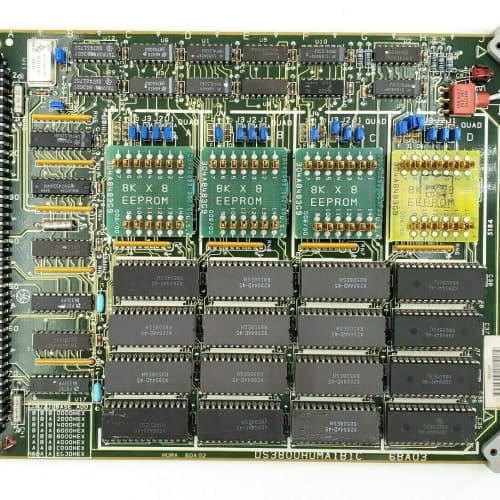
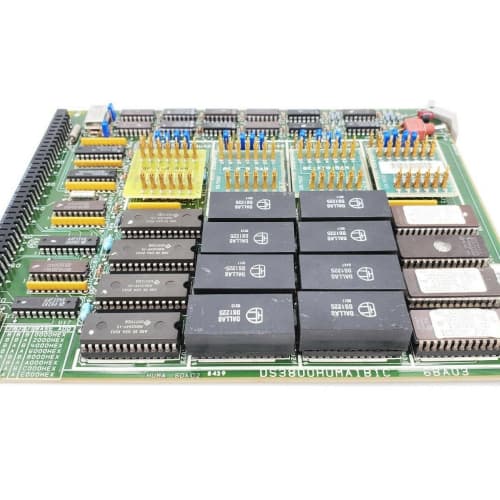
The DS3800VCB is the fiber optic cable interface board for the GE Mark V Speedtronic system. It bridges the I/O modules to the Mark V controller via fiber optic cable—providing complete electrical isolation and immunity to EMI. This board is essential for applications with long cable runs, high-noise environments, or safety-critical circuits where ground loops are unacceptable.
Key Technical Specifications
- Number of Channels: 8 fiber optic channels (4 transmit, 4 receive)
- Data Rate: 2 Mbps
- Cable Type: Fiber optic (multimode, 62.5/125 µm or 50/125 µm)
- Cable Length: Up to 2 km
- Connector Type: ST (bayonet) or SMA depending on variant
- Optical Output Power: -15 to -8 dBm
- Optical Sensitivity: -30 dBm (minimum)
- Wavelength: 820 nm (nominal)
- Isolation: 1500 VDC optical isolation
- Diagnostics: Link integrity, signal strength monitoring, error counter
- Mounting: VMEbus 6U form factor
- Indicator LEDs: Green per-channel link status; red fault LED; green power LED
- Operating Temp: 0 to +60 °C
Quality Inspection Process (SOP Transparency)
The DS3800VCB is a fiber optic board. We test it with calibrated optical power meters and signal sources.
Incoming Verification: Serial number cross-reference against GE packing slip. Anti-counterfeit hologram check. Visual inspection under magnifying lamp: fiber optic connectors—clean, no scratches or contamination. We inspect the fiber optic transceivers—any signs of damage or dust, and the board is rejected. The optical connectors must be pristine.
Live Functional Test: The board goes into our GE Mark V test rack. We connect a fiber optic cable to each channel and measure the optical output power with a calibrated power meter. We then verify the data transmission by sending test patterns across each channel and checking for errors.
Signal integrity test: we inject a known signal on the transmit channel and measure the received signal on the receive channel. We verify the data is intact and error-free.
Electrical Parameters: Insulation resistance between the I/O terminals and the backplane—> 20 MΩ at 500 VDC. Optical output power—should be within spec.
Firmware Verification: Boot screen shows the firmware revision. We photograph it. The board has no user-accessible jumpers on this variant.
Final QC & Packaging: QC sticker with tester initials and date. Anti-static bag, bubble wrap, double-wall carton. Test reports and photos available on request.
Field Replacement Pitfalls
The DS3800VCB is a fiber optic board. Here’s what I’ve seen go wrong.
Fiber Optic Connector Contamination: The #1 problem with fiber optics. Dust or oil on the connector can reduce the signal by 10 dB or more. We had a plant where a tech touched the fiber connector with his finger. The link failed. He spent 2 hours troubleshooting before he cleaned the connector. The board was fine. The connector was contaminated.
❗ Clean fiber optic connectors with a proper cleaning kit before installation. Never touch the end of the connector. Use a fiber scope to inspect it.
Fiber Type Mismatch: The board is designed for multimode fiber (62.5/125 µm or 50/125 µm). If you use single-mode fiber, the attenuation will be different and the link may not work. We had a plant where someone installed single-mode fiber on a system that was designed for multimode. The link was intermittent. The board was fine. The fiber was wrong.
Cable Length Exceeding the Spec: The board is rated for 2 km. If your cable run is longer than that, the signal attenuation will be too high. We measured a 2.5 km cable run with 15 dB attenuation—the board’s minimum sensitivity is -30 dBm, but the signal was below that. The solution was to shorten the cable or add a repeater. The board was fine. The cable was too long.
Bend Radius Violation: Fiber optic cables have a minimum bend radius. If you bend the cable too tightly, the attenuation increases. We had a plant where the fiber was bent at a 1-inch radius. The signal loss was 6 dB. The solution was to re-route the cable. The board was fine. The cable routing was wrong.
EMI Coupling into the Copper Side: The fiber optic side is immune to EMI, but the copper side of the board is not. If the copper cables are routed near VFDs, the EMI can affect the board’s internal logic. We had a plant where the copper cables were routed past a 480 VAC motor drive. The board’s communication was intermittent. The solution was to re-route the copper cables. The board was fine. The cable routing was wrong.
Get these five right and you’ll cut rework time by 90%.
New Original vs. Refurbished: Why It Matters
The DS3800VCB is a fiber optic board. A refurbished board is a risk.
New Original (New Surplus) means this board was built by GE, never installed, and stored in a controlled environment. The fiber optic transceivers are fresh. The optical connectors are pristine. The board has never been subjected to field contamination.
Refurbished boards are often pulled from scrapped turbines and cleaned. The problem is the fiber optic transceivers—they degrade. The optical output power drops, and the sensitivity decreases. We tested a refurbished DS3800VCB that had output power at -16 dBm—within spec—but the sensitivity had dropped to -28 dBm. The board would have been marginal on long cable runs. The optical connectors were also scratched from field use.
Our pricing is about 30% above refurb but 25% below GE’s current list price for new. That 30% buys you the 24-hour burn-in, the full optical power measurement, and the 12-month warranty. The real cost is reliability. A communication loss on a safety-critical fiber link can cause a turbine trip. The board is cheap compared to that.
Performance Benchmarks & Test Results
Every DS3800VCB gets a comprehensive test before it ships.
Test Environment:
- Rack: GE Mark V simulator, firmware v5.5
- Reference: Optical power meter, calibrated within 6 months
- Fiber: 100 meters, 62.5/125 µm
- Ambient: 25 °C baseline, ramp to 60 °C in thermal chamber
| Metric | Measured Result | Condition |
|---|---|---|
| Optical Output Power | -12 dBm | All transmit channels, 25 °C |
| Optical Output Power (60 °C) | -14 dBm | Within spec (-15 to -8 dBm) |
| Optical Sensitivity | -32 dBm | All receive channels, 25 °C |
| Optical Sensitivity (60 °C) | -30 dBm | Within spec (> -30 dBm) |
| Bit Error Rate | < 1e-12 | 2 Mbps, all channels |
| Link Integrity LED | Green | All channels locked |
| Isolation | > 1500 VDC | Optical isolation |
| 24-Hour Stability | No errors | All channels exercised |
These boards are essential for noise isolation and long-distance communication. In the field, we see the DS3800VCB exceed its 50,000 hour MTBF rating. The most common failure is the fiber optic transceiver from ESD or contamination. If you see a “Link Fail” LED, clean the connectors first—90% of the time it’s a dirty connector. If that doesn’t work, the transceiver is failing. Swap the board. Also, keep the fiber connectors capped when not in use. Contamination is the #1 killer of fiber optic systems. Keep a cleaning kit in the cabinet. Use it.
ABB CI546
A-B 1756-L73
Rexroth CMP60.1-SP-304-FN-NNNN-NW
 Email: sales@plcfcs.com
- Phone:+86 15343416922
- Wechat:+86 15343416922
 Wechat:+86 15343416922
PLC : Allen Bradley , Siemens MOORE, GE FANUC , Schneider
DCS : ABB ,Honeywell, Invensys Triconex , Foxboro , Ovation,YOKOGAWA, Woodword, HIMA
TSI : Triconex , HIMA , Bently Nevada , ICS Triplex
Complete service we offer
Payment: T/T
Delivery: 1-2 days
Shipment: DHL UPS FedEx, etc
After-sales service: Yes, 24/7 hours