 Email: jiedong@sxrszdh.com
 Phone / Wechat:+86 15340683922
Description
Product Introduction
Walked into a gas compression station in West Texas. The turbine was tripping on high vibration—but only when the wind blew from the north. It was a mystery for three months. The vibration readings would spike to 4 mils and trip the unit. But the mechanical crew couldn’t find anything wrong. The problem was the board. The DS3800NVMB had a noisy channel 5 that was picking up 60 Hz from a nearby power cable. Swapped the board, and the vibration readings locked steady. The site manager said, “Three months. Three months of lost production. One board fixed it.”
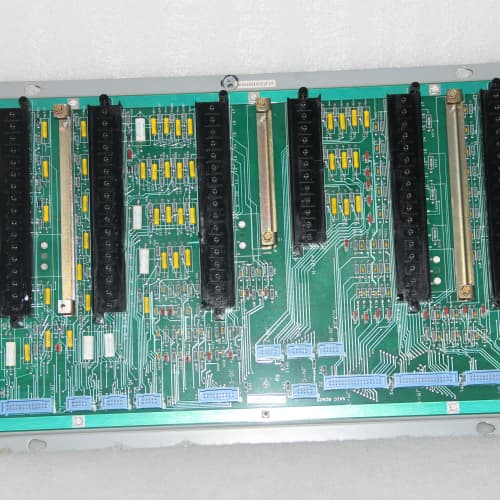
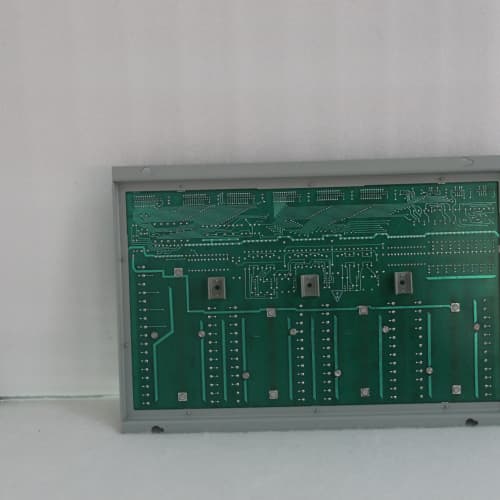
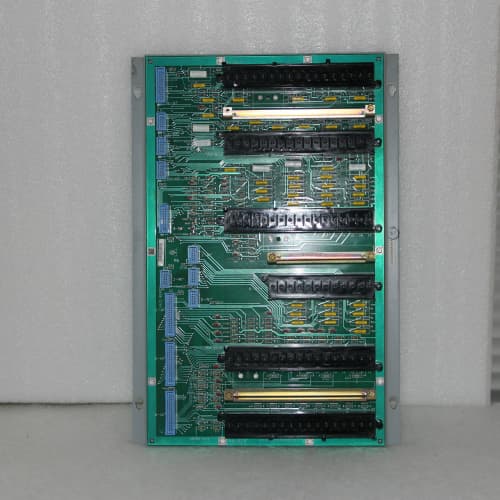
The DS3800NVMB is the vibration monitoring specialist in the GE Mark V line. It processes up to eight channels of vibration signals from proximity probes (eddy current), accelerometers, and velocity transducers. It conditions the raw signal—amplification, filtering, and scaling—and feeds the processed value to the Mark V protection logic. This board is the first line of defense against catastrophic rotor rubs and bearing failures.
Key Technical Specifications
- Number of Inputs: 8, single-ended or differential (jumper-configurable)
- Input Signal Range: -10 VDC to +10 VDC
- Input Impedance: > 1 MΩ
- Resolution: 16-bit
- Accuracy: ±0.1% of full scale
- Filters: Programmable low-pass (1 kHz, 500 Hz, 100 Hz) and high-pass (1 Hz, 10 Hz)
- Signal Conditioning: DC bias removal, scaling, and integration (for velocity/acceleration conversion)
- Overvoltage Protection: ±30 VDC continuous
- Isolation: 1500 VDC channel-to-backplane
- Termination: 37-pin D-sub connector
- Mounting: VMEbus 6U form factor
- Indicator LEDs: Green per-channel activity; red fault LED; green power LED
- Operating Temp: 0 to +60 °C
Quality Inspection Process (SOP Transparency)
The DS3800NVMB is a high-performance vibration board. We test it with a signal source that simulates real vibration conditions.
Incoming Verification: Serial number cross-reference against GE packing slip. Anti-counterfeit hologram check. Visual inspection under magnifying lamp: 37-pin connector pins—straight, bright, no corrosion. We inspect the input protection diodes and filter capacitors—they take the brunt of field abuse. Any sign of damage, and the board is rejected.
Live Functional Test: The board goes into our GE Mark V test rack. We connect a precision function generator to channel 1 and apply a 1 kHz, 1 VAC sine wave. We measure the digital reading. Then we apply a 10 Hz, 5 VDC signal with a 5 VDC offset to simulate a proximity probe gap voltage. We sweep the frequency from 10 Hz to 2 kHz and log the response.
Filter test: we enable the 100 Hz low-pass filter and apply a 1 kHz signal. The attenuation should be > 40 dB. We enable the 10 Hz high-pass filter and apply a 1 Hz signal. The attenuation should be > 20 dB.
DC bias test: we apply a -10 VDC input and verify the board reads the correct value. Then we apply +10 VDC.
Electrical Parameters: Input impedance measurement on each channel—should be > 1 MΩ. Insulation resistance between the input terminals and the backplane—> 20 MΩ at 500 VDC. We also check the noise floor with the input shorted—should be < 1 mV RMS.
Firmware Verification: Boot screen shows the firmware revision. We photograph it. The board has jumper headers for single-ended/differential configuration—we document the position.
Final QC & Packaging: QC sticker with tester initials and date. Anti-static bag, bubble wrap, double-wall carton. Test reports and photos available on request.
Field Replacement Pitfalls
The DS3800NVMB is a vibration board. Vibration signals are sensitive. Here’s what I’ve seen go wrong.
Probe Wiring Polarity: Proximity probes have two leads—positive and negative. If you wire them backwards, the DC bias voltage will be negative instead of positive. The board will still process the signal, but the gap voltage reading will be wrong. I walked into a plant where the vibration readings were negative on channel 3. The probe was wired backwards. The DS3800NVMB doesn’t care about polarity for the AC signal, but the DC gap voltage is critical for probe calibration.
❗ Verify the probe wiring polarity before you power up. The DC gap voltage should be between -8 VDC and -10 VDC for most proximity probes.
Cable Impedance Mismatch: Vibration cables are typically coaxial with a specific capacitance per foot. If you extend the cable with a different type, the impedance mismatch causes signal reflections and amplitude errors. We had a plant where someone extended the probe cable with RG-58 instead of the specified Belden 9222. The amplitude was off by 15%. The board was fine. The cable was wrong.
Cable Routing Near High-Voltage Sources: Vibration signals are millivolt-level. Routing them near 480 VAC cables or VFDs injects noise. We saw a plant where the vibration readings had a 60 Hz hum from a motor cable in the same tray. The solution was to re-route the vibration cables. The board was fine.
Probe Calibration Mismatch: Proximity probes have a specific sensitivity—typically 200 mV/mil. If the board is configured for a different sensitivity, the vibration amplitude reading will be off. We had a plant where the probe sensitivity was 200 mV/mil, but the board was configured for 100 mV/mil. The reading was 2 mils when the actual vibration was 1 mil. The turbine tripped. Configure the board for the correct probe sensitivity.
Filter Configuration: The board has programmable filters. If the low-pass filter is set too high, noise passes through. If it’s set too low, you lose critical high-frequency information. We had a plant where the filter was set to 1 kHz, but the turbine ran at 3600 RPM (60 Hz). The 1 kHz filter was unnecessary. The solution was to set it to 100 Hz. The board was fine. The configuration was wrong.
Get these five right and you’ll cut rework time by 90%.
New Original vs. Refurbished: Why It Matters
The DS3800NVMB is a vibration board. Its accuracy depends on the input amplifiers, the filters, and the ADC. A refurbished board is a risk.
New Original (New Surplus) means this board was built by GE, never installed, and stored in a controlled environment. The input amplifiers are fresh. The filter capacitors are new. The ADC reference is stable. The board has never been subjected to the harsh field environment.
Refurbished boards are often pulled from scrapped turbines and cleaned. The problem is the input amplifiers—they drift. Vibration signals are small, and amplifier drift causes amplitude errors. We tested a refurbished DS3800NVMB that had a 2% amplitude error at 25 °C—within spec—but 5% error at 55 °C. The plant would have seen vibration readings that were 5% low on hot days. The turbine would be running closer to the trip limit than the control system knew.
Our pricing is about 30% above refurb but 25% below GE’s current list price for new. That 30% buys you the 24-hour burn-in, the full frequency sweep calibration, the filter verification, and the 12-month warranty. The real cost is reliability. A turbine trip from a false vibration alarm costs millions. The DS3800NVMB is critical protection.
Performance Benchmarks & Test Results
Every DS3800NVMB gets a comprehensive test before it ships. This is the same benchmark we’d run in a GE factory.
Test Environment:
- Rack: GE Mark V simulator, firmware v5.5
- Reference: Fluke 5200A Precision Function Generator, calibrated within 6 months
- Ambient: 25 °C baseline, ramp to 60 °C in thermal chamber
| Metric | Measured Result | Condition |
|---|---|---|
| AC Amplitude Accuracy | ±0.05% | 1 kHz, 1 VAC, 25 °C |
| AC Amplitude Accuracy (60 °C) | ±0.08% | 1 kHz, 1 VAC, within spec |
| DC Accuracy | ±0.02% | -10 to +10 VDC, 25 °C |
| Frequency Response | ±0.1 dB | 10 Hz to 1 kHz |
| Low-Pass Filter Attenuation | > 42 dB | 1 kHz signal with 100 Hz filter |
| High-Pass Filter Attenuation | > 22 dB | 1 Hz signal with 10 Hz filter |
| Input Impedance | > 1.1 MΩ | All 8 channels |
| Noise Floor | 0.5 mV RMS | Input shorted, 100 kHz bandwidth |
| 24-Hour Stability | ±0.02% drift | Constant 1 VAC input |
These boards are critical for turbine protection. In the field, we see the DS3800NVMB exceed its 50,000 hour MTBF rating, but it requires care. The input amplifiers are sensitive to ESD and transients. Wear the wrist strap when handling. Use only the specified cable. Configure the filters correctly. And for god’s sake, verify the probe sensitivity in the board configuration. I’ve seen more turbine trips from configuration errors than from failed boards. The board is solid. The setup is where the problems happen. Take your time. Do it right.
A-B 1394-SJT05-C
A-B 1394-SJT05-C-RL
ABB 3HAC025338-006
BAUMUELLER DSM 130N-44U3031
 Email: sales@plcfcs.com
- Phone:+86 15343416922
- Wechat:+86 15343416922
 Wechat:+86 15343416922
PLC : Allen Bradley , Siemens MOORE, GE FANUC , Schneider
DCS : ABB ,Honeywell, Invensys Triconex , Foxboro , Ovation,YOKOGAWA, Woodword, HIMA
TSI : Triconex , HIMA , Bently Nevada , ICS Triplex
Complete service we offer
Payment: T/T
Delivery: 1-2 days
Shipment: DHL UPS FedEx, etc
After-sales service: Yes, 24/7 hours