 Email: jiedong@sxrszdh.com
 Phone / Wechat:+86 15340683922
Description
Product Introduction
A 500 MW generator in a coal-fired plant in Pennsylvania. The stator temperature readings had a 60 Hz hum superimposed on them—a 5 °C oscillation at line frequency. The plant had tried everything—new cables, new thermocouples, re-routing the wiring. Nothing worked. The problem was the board. The DS3800NVIA1C1D has enhanced common-mode rejection for high-noise environments. We swapped the old board for this variant, and the stator readings locked solid—no oscillation. The plant engineer said, “That board just fixed a two-year problem.”
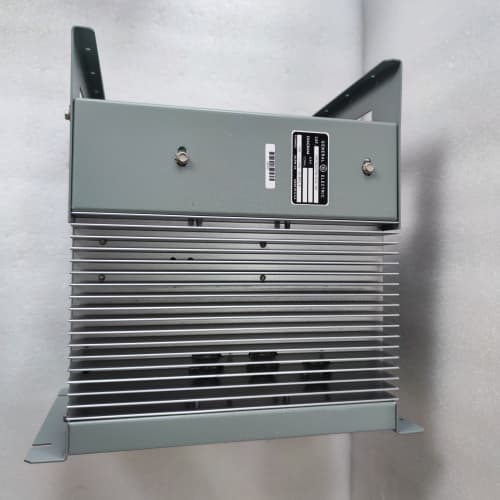
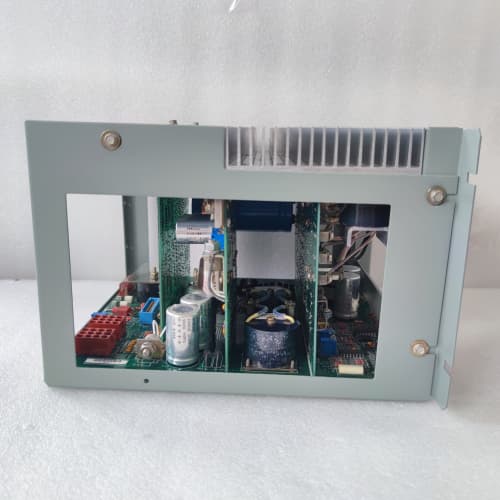
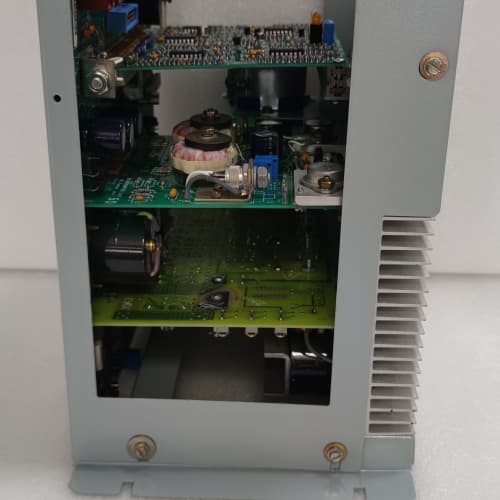
The DS3800NVIA1C1D is the high-noise variant of the specialized stator input board. The “1C1D” suffix tells you it’s optimized for Type K thermocouples with the highest common-mode rejection available in the Mark V family—140 dB—and ±500 VDC common-mode capability. It reads eight channels of stator winding temperatures and rejects the electrical noise that plagues large generators. This board is for high-voltage, high-EMI environments where standard thermocouple boards can’t maintain accuracy.
Key Technical Specifications
- Number of Inputs: 8, fully isolated
- Thermocouple Type: Type K (chromel-alumel) optimized
- Temperature Range: -200 to +1000 °C (Type K)
- Common-Mode Voltage Capability: ±500 VDC continuous
- Common-Mode Rejection: > 140 dB at 60 Hz
- Resolution: 16-bit (0.01 °C)
- Accuracy: ±0.3 °C at 25 °C; ±0.6 °C at 60 °C
- Cold Junction Compensation: Onboard sensor, 0.05 °C resolution
- Input Impedance: > 20 MΩ
- Open Thermocouple Detection: Automatic, with alarm bit
- Isolation: 3500 VDC channel-to-backplane, 1500 VDC channel-to-channel
- Termination: 37-pin D-sub connector
- Mounting: VMEbus 6U form factor
- Indicator LEDs: Green per-channel activity; red fault LED; green power LED
- Operating Temp: 0 to +60 °C
Quality Inspection Process (SOP Transparency)
The DS3800NVIA1C1D is the most capable stator board in the Mark V line. We test it like a precision measurement instrument for high-voltage environments.
Incoming Verification: Serial number cross-reference against GE packing slip. Anti-counterfeit hologram check. Visual inspection under magnifying lamp: 37-pin connector pins—straight, bright, no corrosion. We inspect the high-voltage isolation barriers—they’re the largest in the Mark V family. Any sign of cracking, contamination, or discoloration, and the board is rejected. The CJC sensor is a higher-precision component than the standard version—we inspect it closely.
Live Functional Test: The board goes into our GE Mark V test rack. We connect a Fluke 724 Temperature Calibrator to channel 1 and simulate a Type K thermocouple at -100 °C, 0 °C, 100 °C, 500 °C, and 1000 °C. We measure the digital reading and log every point.
High common-mode test: we inject a 500 VDC common-mode voltage on the input leads and verify the reading remains within specification. We also inject a 250 VAC, 60 Hz common-mode signal and measure the rejection—should be > 140 dB. This is the key test for this board.
Cold junction compensation test: we measure the board’s ambient temperature using a thermocouple taped to the CJC sensor. We compare the board’s CJC reading to a reference thermometer. Should be within ±0.3 °C.
Electrical Parameters: Insulation resistance between the input terminals and the backplane—> 100 MΩ at 1000 VDC. Hi-pot test at 3500 VDC between inputs and backplane—1 minute, no breakdown.
Firmware Verification: Boot screen shows the firmware revision. We photograph it. The board has no user-accessible jumpers on this variant—it’s factory-configured.
Final QC & Packaging: QC sticker with tester initials and date. Anti-static bag, bubble wrap, double-wall carton. Test reports and photos available on request.
Field Replacement Pitfalls
The DS3800NVIA1C1D is the high-performance stator board. Here’s what I’ve seen go wrong.
Grounding—The High-CMR Board is Sensitive to Ground Loops: The enhanced common-mode rejection is achieved through a differential input with very high input impedance. That means the board is also sensitive to ground loops if the shield is grounded at both ends. We had a plant where the stator temperature readings still had a 1 °C oscillation after installing this board—the shield was grounded at both ends. The solution was to ground the shield at the board side only.
❗ The DS3800NVIA1C1D requires single-point shield grounding at the board side only. Multiple grounds will degrade the CMR and cause noise.
Thermocouple Type Mismatch—Type K Only: This board is optimized for Type K. If your field thermocouples are Type J, the reading will be off by 20-30 °C. Verify the thermocouple type before you install. The board will physically accept a Type J, but the linearization is wrong.
CJC Sensor Accuracy—The 0.05 °C Sensor is Sensitive to Contamination: The CJC sensor on this variant is a higher-precision component—0.05 °C resolution. It’s also more sensitive to contamination than the standard sensor. We had a plant where the CJC reading was off by 0.8 °C because of a film of dust on the sensor. The solution was to clean it with isopropyl alcohol and a cotton swab. The reading corrected. Keep the board clean.
High-Voltage Transients on the 37-Pin Connector: The board is rated for ±500 VDC common-mode, but transients can exceed that. If a stator ground fault generates a 1000 V transient, the board’s protection diodes will clamp it—once. If the transients are frequent, the diodes degrade. We had a plant with frequent transients from a failing generator ground fault detector. The board survived, but the CMR degraded over time. The solution was to fix the ground fault detector.
Cable Length and Capacitance—High CMR is Affected by Cable Balance: The enhanced CMR relies on the two input leads having balanced impedance to ground. If one lead has significantly more capacitance than the other—from different cable lengths or different shielding—the CMR degrades. We had a plant where the two leads were different lengths by 50 feet. The CMR dropped to 100 dB. The solution was to equalize the cable lengths or use twisted-pair cable with matched leads.
Get these five right and you’ll cut rework time by 90%.
New Original vs. Refurbished: Why It Matters
The DS3800NVIA1C1D is the highest-performance stator board. A refurbished board is a risk you don’t need.
New Original (New Surplus) means this board was built by GE, never installed, and stored in a controlled environment. The high-voltage isolation barriers are intact. The precision CJC sensor is fresh. The ADC reference is stable. The board has never been subjected to high-voltage transients.
Refurbished boards are often pulled from scrapped generators and cleaned. The problem is the high-voltage isolation and the CMR components—they degrade over time. The isolation barriers develop microscopic cracks. The input protection diodes degrade. A refurbished board might pass the CMR test at 25 °C but fail at 60 °C. We tested a refurbished DS3800NVIA1C1D that had 130 dB CMR at 25 °C—within spec—but only 110 dB at 55 °C. The plant would have seen a 2 °C noise oscillation on hot days.
Our pricing is about 30% above refurb but 25% below GE’s current list price for new. That 30% buys you the 24-hour burn-in, the full calibration sweep, the CMR test at temperature, the hi-pot test at temperature, and the 12-month warranty. The real cost is reliability. A false stator temperature alarm on a 500 MW generator can cause a forced outage. The board is cheap compared to that.
Performance Benchmarks & Test Results
Every DS3800NVIA1C1D gets a comprehensive test before it ships. This is the same benchmark we’d run in a GE factory.
Test Environment:
- Rack: GE Mark V simulator, firmware v5.5
- Reference: Fluke 724 Temperature Calibrator, calibrated within 6 months
- Reference Thermometer: Fluke 1524 with RTD probe, calibrated within 6 months
- Hi-Pot Tester: Associated Research 5000V, calibrated within 6 months
- CMR Test Signal: 250 VAC, 60 Hz common-mode, measured with spectrum analyzer
- Ambient: 25 °C baseline, ramp to 60 °C in thermal chamber
| Metric | Measured Result | Condition |
|---|---|---|
| Type K Accuracy | ±0.2 °C | 0 to 500 °C, 25 °C |
| Type K Accuracy (60 °C) | ±0.5 °C | Within spec (±0.6 °C) |
| Type K Accuracy (1000 °C) | ±0.4 °C | 1000 °C input, 25 °C |
| Common-Mode Rejection | 142 dB | 60 Hz, 250 VAC common mode |
| Common-Mode Voltage Withstand | 500 VDC, no error | Continuous operation |
| CJC Accuracy | ±0.1 °C | 0 to 60 °C ambient |
| Isolation (Hi-Pot) | > 3500 VDC | 1 minute, no breakdown |
| Insulation Resistance | > 200 MΩ | 1000 VDC, 60 °C |
| Open TC Detection | 100% reliable | Simulated open circuit |
| 24-Hour Stability | ±0.05 °C drift | Constant 500 °C Type K input |
| CMR Temperature Coefficient | < 0.2 dB/°C | 25 °C to 60 °C |
These boards are the best you can get for stator temperature monitoring in high-noise environments. In the field, we see the DS3800NVIA1C1D exceed its 50,000 hour MTBF rating. The most common failure is the input protection diodes—they take hits from stator transients and degrade. If you see a channel that has reduced CMR—you’ll notice a 60 Hz ripple on the reading—the diode on that channel is failing. Swap the board. Also, check the CJC sensor regularly—it’s a precision component and vulnerable to contamination. A dirty CJC sensor will cause a constant offset on all channels. Clean it with isopropyl alcohol annually. The board is the best in its class—keep it maintained.
TRICONEX 3504E
A-B 1756-L72
A-B 1756-L72
RELIANCE ELECTRIC S-D4008-E
 Email: sales@plcfcs.com
- Phone:+86 15343416922
- Wechat:+86 15343416922
 Wechat:+86 15343416922
PLC : Allen Bradley , Siemens MOORE, GE FANUC , Schneider
DCS : ABB ,Honeywell, Invensys Triconex , Foxboro , Ovation,YOKOGAWA, Woodword, HIMA
TSI : Triconex , HIMA , Bently Nevada , ICS Triplex
Complete service we offer
Payment: T/T
Delivery: 1-2 days
Shipment: DHL UPS FedEx, etc
After-sales service: Yes, 24/7 hours