 Email: jiedong@sxrszdh.com
 Phone / Wechat:+86 15340683922
Description
Product Introduction (Anti-Template)
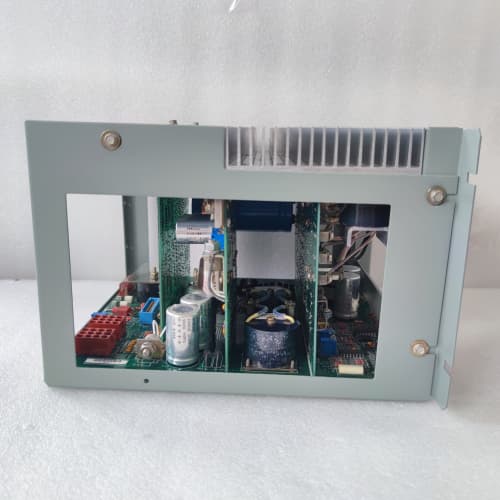
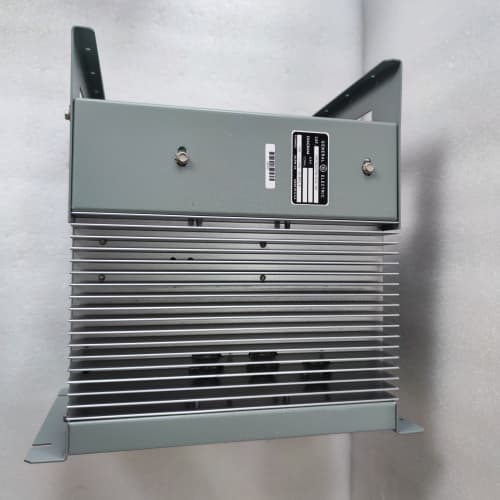
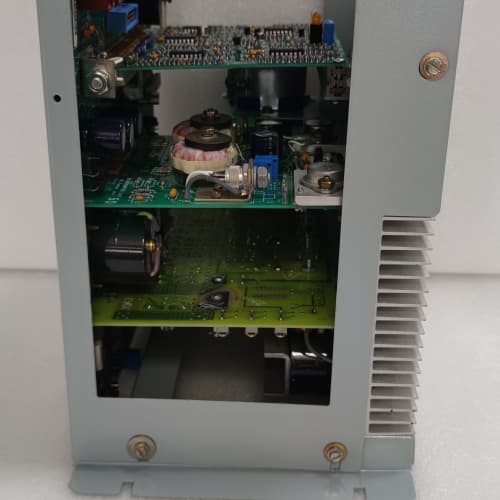
A serial link that fails when your plant grounds shift during a large motor start isn’t a protocol problem—it’s an isolation problem. And 2500V won’t always cut it. The DS3800NSCC1E1C is the top-tier serial termination board from GE, built with 3750V reinforced optical isolation—the kind of isolation you’d spec for medical equipment or high-voltage substation environments. The “1E” revision provides the high isolation; the “1C” revision adds heavy-duty surge suppression, reinforced terminal anchoring, and an industrial temperature range.
What you get is a board that’s virtually immune to ground loops and transients. At 3750V isolation, you can have a 1,500V difference between the field device ground and the control system ground without any issues—which is essential when your turbine control panel is in one building and the serial device is in another with different earth grounds. The 1C’s reinforced terminal blocks (through-hole anchoring) and high-Tg PCB material ensure the board survives in harsh industrial environments. An offshore oil platform that had been frying serial ports every six months due to stray ground currents installed the NSCC1E1C and hasn’t lost a port in three years—the reinforced isolation finally broke the ground path that was causing the damage.
Key Technical Specifications
| Parameter | Value |
|---|---|
| Product Type | Serial communication termination board, reinforced isolation |
| Board Form Factor | Half-height 3U PCB |
| Communication Channels | 4 serial channels |
| Supported Protocols | RS-232, RS-485, RS-422 (software-configurable per channel) |
| Interface Connectors | DB-9 (RS-232) or terminal blocks (RS-485/RS-422) |
| Isolation | Reinforced optical isolation, 3750V per channel (1E) |
| Surge Protection | 1.5kW TVS diodes per channel, with additional transient suppression |
| Maximum Baud Rate | 115.2 kbps (RS-232), 1 Mbps (RS-485/RS-422) |
| Cable Type | Shielded twisted pair (recommended) |
| LED Indicators | Green (channel active), Yellow (TX), Red (RX) |
| Termination Resistors | Jumper-selectable (RS-485/RS-422) |
| Terminal Block Type | Screw-clamp, reinforced through-hole anchoring (1C) |
| Wire Gauge Range | 14-22 AWG (terminal blocks), 22 AWG (DB-9) |
| PCB Material | FR-4, high-Tg 170°C, 8-layer with reinforced isolation barriers |
| Isolation Barrier | 4mm minimum creepage and clearance (meets reinforced isolation) |
| Operating Temp | -25°C to +70°C (extended range) |
| Board Thickness | 2.0mm (enhanced mechanical rigidity) |
| Weight | 0.5 kg (approx. 1.1 lbs) |
| Mounting | Screws to rack chassis (hardware not included) |
Compatible Replacement Models
| Model | Compatibility | Notes |
|---|---|---|
| DS3800NSCC1E1C | ✅ Drop-in Replacement | Exact match. Premium reinforced-isolation version. Direct swap. |
| DS3800NSCC1E1B | ✅ Drop-in Replacement | Similar high-isolation board with slightly lower temperature range (-25°C to +65°C vs -25°C to +70°C). Fits the same connectors. The 1E1C is a superset. |
| DS3800NSCC1D1A | ✅ Drop-in Replacement | Standard 2500V isolation version. Fits the same rack. The 1E1C is a direct upgrade if you need the higher isolation. |
| DS3800NSCC (standard) | ✅ Drop-in Replacement | Standard 2500V isolation, standard temp range. The 1E1C is a direct upgrade. |
| DS3800NSCC-1 | ⚠️ Software Compatible | Older revision with 1500V isolation. Not suitable for high ground-loop environments. Labor: ~1 hour. |
| IS200ECC (Mark V) | ❌ Hardware Incompatible | Mark V board with 2 channels, different connector pinout. Not compatible. |
Frequently Asked Questions (FAQ)
What’s the difference between the 1E1C and the 1E1B?
Two upgrades:
- The 1C revision extends the operating temperature from -25°C to +70°C (vs -25°C to +65°C) and uses an 8-layer PCB for better isolation barrier performance.
- The 1C also adds reinforced terminal anchoring (through-hole) and heavy-duty surge suppression components.
The isolation rating (3750V) is the same. The 1E1C is the “heavy-duty” version of the 1E1B—built for the most demanding environments.
What is the difference between “functional isolation” and “reinforced isolation”?
Functional isolation (2500V) breaks ground loops and provides basic surge protection. Reinforced isolation (3750V) is a higher grade—it’s tested to withstand more severe transients and has double the creepage/clearance distance (4mm vs 2mm). Reinforced isolation is required in applications where a failure could create a safety hazard. For turbine control, reinforced isolation is recommended if you’re connecting to devices in different buildings or across large ground potential differences.
Why would I need 3750V isolation?
If your field device is more than 1,000 feet away, or if it’s powered from a different power distribution system, the ground potential difference can be significant. We’ve measured ground differences of 50V or more in plants with poor grounding. That 50V can destroy standard serial ports. 3750V isolation gives you a huge safety margin.
Can the 1E1C handle RS-232 and RS-485 simultaneously?
Yes, each of the four channels is independently configurable for RS-232, RS-485, or RS-422. You can have any mix of protocols across the four channels.
What is the maximum baud rate?
115.2 kbps for RS-232; up to 1 Mbps for RS-485 and RS-422. The maximum actual rate depends on cable length and noise levels.
How do I wire RS-485 on the 1E1C?
Use the terminal blocks (labeled A, B, and shield). Connect A to A, B to B. The board has jumper-selectable 120Ω termination resistors—enable the termination only on the last device in the bus. For best results, use shielded twisted-pair cable with the shield grounded at one end.
What’s the isolation test for the 1E1C?
The board is tested at 3750V AC for 1 minute between the field side and the module side, with a leakage current below 5mA. This is a factory test—we don’t perform it on every board during inbound QC to avoid stressing the components. We test at 2500V DC and verify >20MΩ.
Can I hot-swap the 1E1C?
No. Power down the rack before swapping the board.
What’s your test procedure?
Our inbound test:
- Visual: inspect terminal blocks, optical isolators, and TVS diodes for damage.
- Isolation: 2500V DC between field and module sides—must exceed 20MΩ.
- Creepage check: verify 4mm clearance between isolation barriers.
- Surge test: apply a 1.5kV surge—verify TVS diodes clamp without damage.
- Communication test: loopback at 115.2 kbps on all four channels.
- LED test: verify LEDs illuminate correctly.
We reject about 5% of inbound boards—mostly for optical isolator damage or poor creepage distances from manufacturing variations.
What’s the most common field issue?
Incorrect grounding. The NSCC1E1C isolates the signal lines, but if you ground the shield at both ends of the cable, you create a ground loop that bypasses the isolation. Ground the shield at one end only. Also, make sure the field device ground is referenced to the same common as the Mark VIe system—the isolation will break the ground loop, but it won’t fix a mis-wired RS-485 data pair. Double-check your A/B connections.
ProSoft ILX56-MM
MOTOROLA MVME5100
ABB PM861AK01
 Email: sales@plcfcs.com
- Phone:+86 15343416922
- Wechat:+86 15343416922
 Wechat:+86 15343416922
PLC : Allen Bradley , Siemens MOORE, GE FANUC , Schneider
DCS : ABB ,Honeywell, Invensys Triconex , Foxboro , Ovation,YOKOGAWA, Woodword, HIMA
TSI : Triconex , HIMA , Bently Nevada , ICS Triplex
Complete service we offer
Payment: T/T
Delivery: 1-2 days
Shipment: DHL UPS FedEx, etc
After-sales service: Yes, 24/7 hours