 Email: jiedong@sxrszdh.com
 Phone / Wechat:+86 15340683922
Description
Product Introduction (Anti-Template)
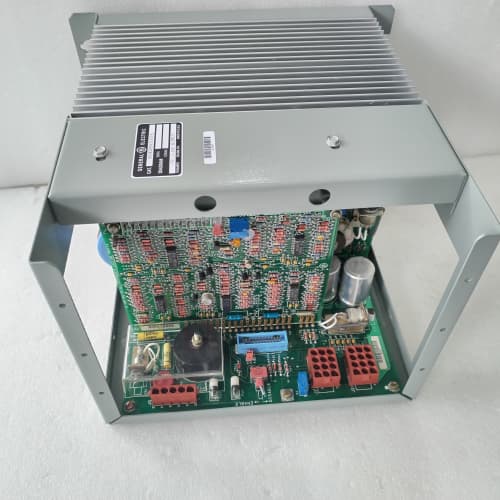
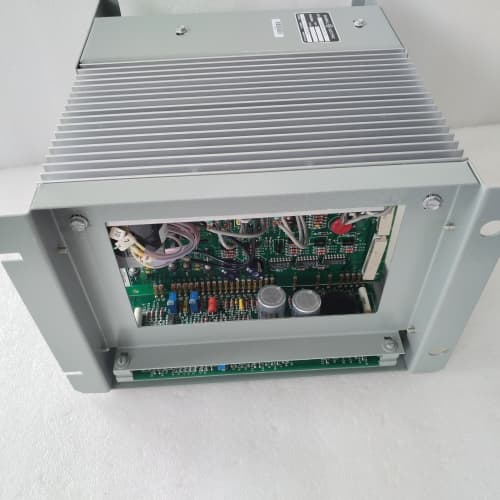
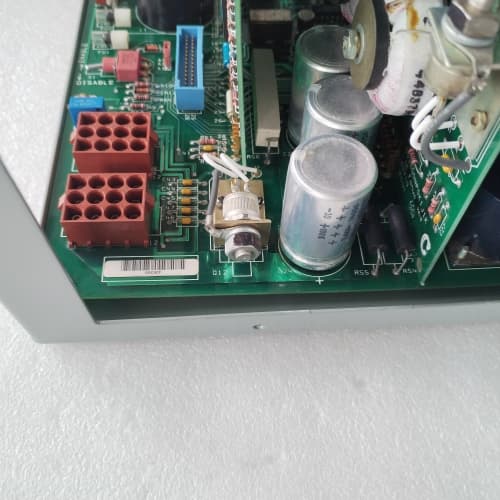
Ground-loop voltage that drifts with the phase of the moon is the kind of problem that drives engineers to replace perfectly good serial devices—when the real culprit is insufficient isolation. The DS3800NSCC1E1B takes GE’s serial termination board to the next level with 3750V optical isolation per channel, up from the standard 2500V. The “1E” revision bumps the isolation rating; the “1B” revision upgrades the PCB to high-Tg material for extended temperature operation.
What you get is a board that breaks ground loops in the worst-case scenarios—long cable runs, high-voltage switching, and dissimilar ground potentials. That 3750V isolation means you can have a 1000V difference between the field device ground and the Mark VIe ground without any issues. A utility with a hydroelectric plant where the turbine control was 1,500 feet from the control room had been fighting serial communication errors for years. They tried everything—optical converters, fiber modems, better cable. The NSCC1E1B with 3750V isolation solved it. The high isolation is what they needed all along.
Key Technical Specifications
| Parameter | Value |
|---|---|
| Product Type | Serial communication termination board, high-isolation |
| Board Form Factor | Half-height 3U PCB |
| Communication Channels | 4 serial channels |
| Supported Protocols | RS-232, RS-485, RS-422 (software-configurable per channel) |
| Interface Connectors | DB-9 (RS-232) or terminal blocks (RS-485/RS-422) |
| Isolation | Optical galvanic isolation, 3750V per channel (enhanced) |
| Surge Protection | 1.5kW TVS diodes per channel |
| Maximum Baud Rate | 115.2 kbps (RS-232), 1 Mbps (RS-485/RS-422) |
| Cable Type | Shielded twisted pair (recommended) |
| LED Indicators | Green (channel active), Yellow (TX), Red (RX) |
| Termination Resistors | Jumper-selectable (RS-485/RS-422) |
| Terminal Block Type | Screw-clamp, reinforced through-hole anchoring |
| Wire Gauge Range | 14-22 AWG (terminal blocks), 22 AWG (DB-9) |
| PCB Material | FR-4, high-Tg 170°C (1B) |
| PCB Layers | 6-layer with reinforced isolation barriers |
| Operating Temp | -25°C to +65°C (extended range) |
| Board Thickness | 1.6mm |
| Weight | 0.45 kg (approx. 1.0 lbs) |
| Mounting | Screws to rack chassis (hardware not included) |
Compatible Replacement Models
| Model | Compatibility | Notes |
|---|---|---|
| DS3800NSCC1E1B | ✅ Drop-in Replacement | Exact match. High-isolation, extended-temperature variant. Direct swap. |
| DS3800NSCC1D1A | ✅ Drop-in Replacement | Previous version with 2500V isolation and standard temp range. Fits the same connectors. The 1E1B is a superset—direct upgrade. |
| DS3800NSCC (standard) | ✅ Drop-in Replacement | Standard 2500V isolation, standard temp range. Fits the same rack. The 1E1B is a direct upgrade. |
| DS3800NSCC-1 | ⚠️ Software Compatible | Older revision with 1500V isolation. Not suitable for high ground-loop environments. Labor: ~1 hour to swap. |
| IS200ECC (Mark V) | ❌ Hardware Incompatible | Mark V board with 2 channels, different connector pinout. Not compatible. |
| Third-party serial isolators | ❌ Hardware Incompatible | Integrated into the board—not a separate component. You can’t replace the NSCC with an external isolator. |
Frequently Asked Questions (FAQ)
What’s the difference between the 1E1B and the standard NSCC?
Two upgrades:
- The “1E” revision increases the optical isolation from 2500V to 3750V—50% higher isolation rating for breaking severe ground loops.
- The “1B” revision upgrades the PCB to high-Tg (170°C) material for extended temperature range (-25°C to +65°C).
The channel count, protocol support, and surge protection are identical. The 1E1B is for harsh environments and systems with significant ground potential differences.
Why would I need 3750V isolation?
If you’re connecting to serial devices that are physically far away (over 1,000 feet) or located in a different building, the ground potential between the two locations can differ by tens or hundreds of volts. That ground potential difference can cause serial errors and even damage ports. 3750V isolation breaks that ground loop, allowing reliable communication even with large ground offsets.
What’s the practical maximum distance with the 1E1B?
The board itself doesn’t limit the distance—the communication protocol and cable type do. For RS-485 at 9600 baud, you can go up to 4,000 feet (1,200 meters) with shielded twisted-pair cable. The 3750V isolation ensures that the ground potential difference won’t cause errors or damage at those distances. For RS-232, the practical limit is 50 feet (15 meters), regardless of the isolation.
Can I use the 1E1B on a 24V system?
Yes, the board is system-voltage agnostic. It only handles communication signals (5V or 12V logic levels). The isolation and surge protection are independent of the Mark VIe’s power supply voltage.
Does the 1E1B support RS-232 and RS-485 on the same channel?
No, each channel is configured for one protocol at a time. You can set different protocols on different channels, but a single channel can’t do both simultaneously. The configuration is done in the I/O module software.
How do I wire RS-485 on the 1E1B?
The board uses terminal blocks for RS-485/RS-422 connections—A (non-inverting), B (inverting), and shield (GND). Connect A to A, B to B. Use shielded twisted-pair cable and ground the shield at one end only. The board has a 120Ω termination resistor that you can enable via jumper if this board is at the end of the bus.
What’s the isolation test procedure for the 1E1B?
At the factory, each board is tested with 3750V AC for 1 minute between the field wiring side and the module side. The insulation resistance must exceed 10MΩ at 3750V. This is a destructive test—it verifies the board’s isolation capability. We don’t test this on every board in our inbound procedure (it’s a stress test), but we spot-check boards from each batch.
What do the LED indicators show?
Green: channel active. Yellow: data transmission (TX). Red: data reception (RX). The LEDs are useful for quick diagnostics—you can see if data is actually flowing.
Can I hot-swap the 1E1B?
No. The board is connected to live serial devices. Pulling it while powered could cause voltage transients and damage the communication module or the field device. Power down the rack, swap the board, and power back up.
What’s your test procedure for the 1E1B?
Our inbound test:
- Visual: inspect terminal blocks, DB-9 connectors, and optical isolator components for damage.
- Isolation test: apply 2500V DC between field and module sides—must exceed 20MΩ (we don’t test at full 3750V to avoid stressing the board).
- Surge test: apply a 1.5kV, 1.2/50µs surge to each channel—verify the TVS diodes clamp without damage.
- Communication test: loopback at 115.2 kbps on all four channels.
- LED test: verify LEDs illuminate correctly with data activity.
We reject about 4% of inbound 1E1B boards—mostly for failed optical isolators or damaged TVS diodes. The optical isolators are the most sensitive component on the board.
What’s the most common field issue with the 1E1B?
Believe it or not: using the wrong connector. RS-232 uses the DB-9 connector; RS-485/RS-422 uses the terminal blocks. We’ve seen plants connect an RS-485 device to the DB-9 connector and wonder why it doesn’t work. Check your protocol and use the correct connector. Also, for RS-232, make sure you’re using a null-modem cable if you’re connecting DTE-to-DTE devices—the NSCC doesn’t include crossover wiring; that’s up to you.
YOKOGAWA CP451-10
A-B 1756-L72
EMERSON SLS1508
TRICONEX 3401
 Email: sales@plcfcs.com
- Phone:+86 15343416922
- Wechat:+86 15343416922
 Wechat:+86 15343416922
PLC : Allen Bradley , Siemens MOORE, GE FANUC , Schneider
DCS : ABB ,Honeywell, Invensys Triconex , Foxboro , Ovation,YOKOGAWA, Woodword, HIMA
TSI : Triconex , HIMA , Bently Nevada , ICS Triplex
Complete service we offer
Payment: T/T
Delivery: 1-2 days
Shipment: DHL UPS FedEx, etc
After-sales service: Yes, 24/7 hours