 Email: jiedong@sxrszdh.com
 Phone / Wechat:+86 15340683922
Description
Product Introduction (Anti-Template)
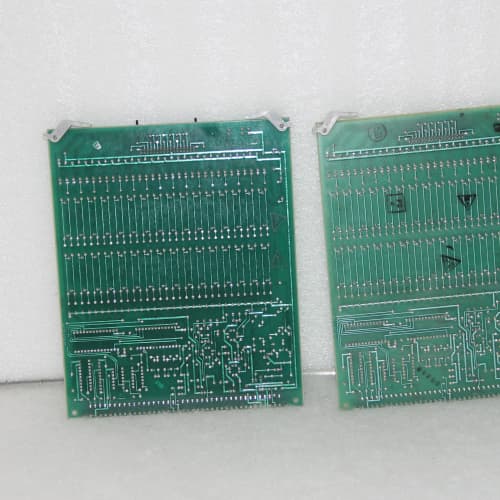
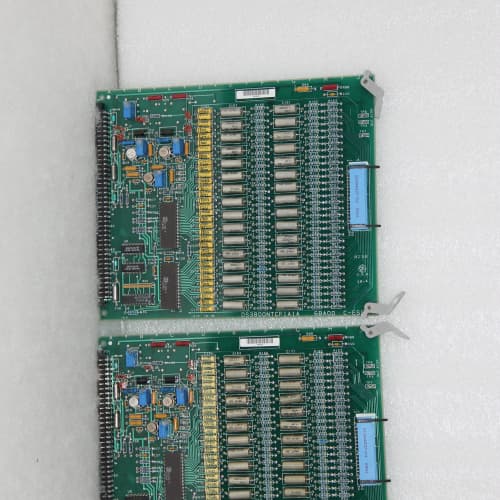
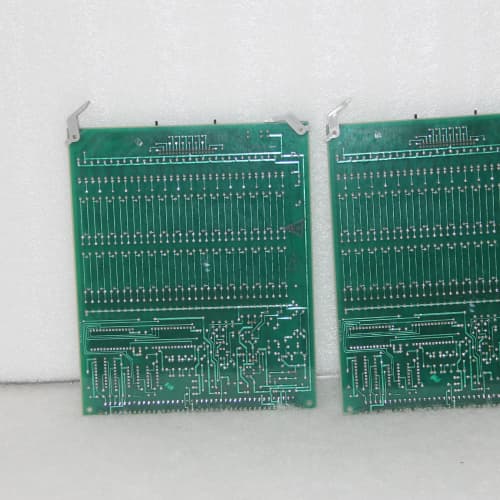
A lightning strike a mile away shouldn’t kill your turbine’s serial link—but without proper surge suppression, it can. The DS3800NSCC1D1A builds on the base NSCC with upgraded transient suppression: 1.5kW TVS diodes (versus 600W on the standard board), providing more than double the clamping capability for voltage spikes. The “1D” revision adds that extra protection; the “1A” revision reinforces the terminal block anchoring with through-hole pins so your field wiring doesn’t pull the connectors off the board.
What you get is a board that stands up to the nastiest electrical environments—plants with frequent lightning, high-voltage switching, or heavy VFD noise. The 1.5kW surge suppression means the board can absorb a 1.5kW transient for 1ms without failing. Compared to the standard NSCC (600W), this is a significant upgrade in protection. A water treatment plant in Florida—the lightning capital of the US—installed these boards on their Mark VIe turbine after losing three standard NSCC boards in a single storm season. The 1D1A boards have survived three consecutive storm seasons without a single failure.
Key Technical Specifications
| Parameter | Value |
|---|---|
| Product Type | Serial communication termination board, enhanced surge protection |
| Board Form Factor | Half-height 3U PCB |
| Communication Channels | 4 serial channels |
| Supported Protocols | RS-232, RS-485, RS-422 (software-configurable per channel) |
| Interface Connectors | DB-9 (RS-232) or terminal blocks (RS-485/RS-422) |
| Isolation | Optical galvanic isolation, 2500V per channel |
| Surge Protection | 1.5kW TVS diodes (enhanced over standard 600W) |
| Maximum Baud Rate | 115.2 kbps (RS-232), 1 Mbps (RS-485/RS-422) |
| Cable Type | Shielded twisted pair (recommended) |
| LED Indicators | Green (channel active), Yellow (data TX), Red (data RX) |
| Termination Resistors | Jumper-selectable (RS-485/RS-422) |
| Terminal Block Type | Screw-clamp, reinforced through-hole anchoring (1A) |
| Wire Gauge Range | 14-22 AWG (terminal blocks), 22 AWG (DB-9) |
| PCB Material | FR-4, 6-layer |
| Operating Temp | 0°C to +55°C |
| Board Thickness | 1.6mm |
| Weight | 0.45 kg (approx. 1.0 lbs) |
| Mounting | Screws to rack chassis (hardware not included) |
Compatible Replacement Models
| Model | Compatibility | Notes |
|---|---|---|
| DS3800NSCC1D1A | ✅ Drop-in Replacement | Exact match. Enhanced surge protection variant with reinforced terminals. Direct swap. |
| DS3800NSCC (standard) | ✅ Drop-in Replacement | Standard version with 600W surge protection. Fits the same connectors. The 1D1A is a direct upgrade. |
| DS3800NSCC1D | ⚠️ Hardware Difference | Has the enhanced surge protection but standard terminal anchoring. Fits the same rack. Labor: 1 hour. |
| DS3800NSCC-1 | ⚠️ Software Compatible | Older revision with 1500V isolation (vs 2500V). Requires firmware update if you need the higher isolation rating. Labor: ~1.5 hours. |
| IS200ECC (Mark V) | ❌ Hardware Incompatible | Mark V board with 2 channels, different connector pinout. Not compatible. |
Frequently Asked Questions (FAQ)
What’s the difference between the 1D1A and the standard NSCC?
Two upgrades:
- The “1D” revision upgrades the TVS diodes from 600W to 1.5kW—more than double the surge clamping capability.
- The “1A” revision adds through-hole anchoring to the terminal blocks, preventing them from lifting off the board when you torque down field wiring.
The electrical design is otherwise identical—4 channels, configurable protocols, 2500V isolation. The 1D1A is a superset of the standard NSCC.
What does 1.5kW surge protection mean in practical terms?
It means the board can absorb a 1.5kW transient (e.g., 1500V at 1A, or 1000V at 1.5A) for 1ms without damage. That’s enough to clamp most lightning-induced surges and switching transients. The standard NSCC (600W) is adequate for most plants; the 1D1A is for lightning-prone areas and heavy industrial environments where high-energy surges are common.
Can I use the 1D1A on a 24V system?
Yes, the board doesn’t care about the system voltage—it only handles communication signals (which are typically 5V or 12V logic levels). The isolation and surge protection are independent of the Mark VIe’s power supply voltage. The board works with both 24V and 48V systems.
What’s the maximum baud rate?
115.2 kbps for RS-232; up to 1 Mbps for RS-485 and RS-422. The board can handle higher speeds if your module supports it, but cable length is a factor—1 Mbps over 100 feet (30 meters) is the practical limit.
Can I mix protocols on the same board?
Yes, each of the four channels is independently configurable. You can have RS-232 on channel 1, RS-485 on channel 2, RS-422 on channel 3, and RS-232 on channel 4—mix and match as needed. The configuration is done in the I/O module software.
How do I terminate RS-485 networks?
The board has jumper-selectable 120Ω termination resistors. Install the termination resistor at the last device on the RS-485 bus. The jumpers are labeled on the PCB—refer to the manual for the specific location.
What do the LED indicators show?
Green: the channel is active. Yellow: data transmission (TX). Red: data reception (RX). The LEDs are powered by the I/O module and show the actual communication activity—useful for troubleshooting.
Can I hot-swap the 1D1A?
No. The board is connected to live serial devices. Pulling it while powered could damage the communication module or the connected device. Power down, swap, and power back up.
What’s your test procedure?
Our inbound test:
- Visual: inspect TVS diodes, terminal block solder joints, and connectors for damage.
- Isolation: 2500V DC between field and module sides—must exceed 10MΩ.
- Surge test: apply a 1.5kV, 1.2/50µs surge to each channel—verify the TVS diodes clamp the surge without damage.
- Communication test: loopback at 115.2 kbps on all four channels.
- LED test: verify LEDs illuminate correctly.
We reject about 4% of inbound boards—mostly for damaged TVS diodes (from previous surges) or poor terminal block soldering.
What’s the most common field issue?
Incorrect RS-485 wiring—mixing up A and B lines. Some manufacturers reverse the convention. Use a multimeter to verify the signals if you’re connecting to a non-GE device. Also, use shielded twisted-pair cable with the shield grounded at one end. The 1D1A’s enhanced surge protection won’t save you from continuous noise pickup due to unshielded cable.
ABB RET650
TRICONEX 3700A
SIEMENS 6FC5447-0AA00-0AA1
Triconex 3625A
 Email: sales@plcfcs.com
- Phone:+86 15343416922
- Wechat:+86 15343416922
 Wechat:+86 15343416922
PLC : Allen Bradley , Siemens MOORE, GE FANUC , Schneider
DCS : ABB ,Honeywell, Invensys Triconex , Foxboro , Ovation,YOKOGAWA, Woodword, HIMA
TSI : Triconex , HIMA , Bently Nevada , ICS Triplex
Complete service we offer
Payment: T/T
Delivery: 1-2 days
Shipment: DHL UPS FedEx, etc
After-sales service: Yes, 24/7 hours