 Email: jiedong@sxrszdh.com
 Phone / Wechat:+86 15340683922
Description
Product Introduction (Anti-Template)
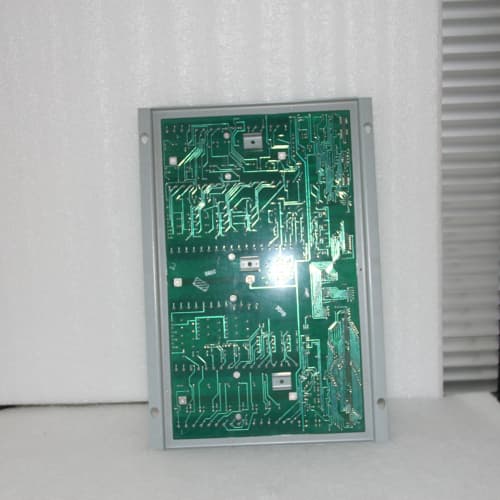
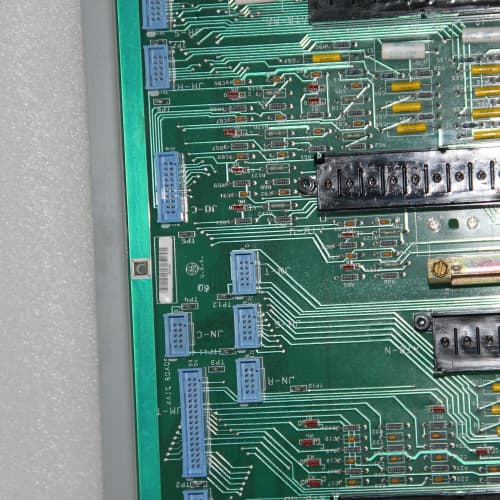
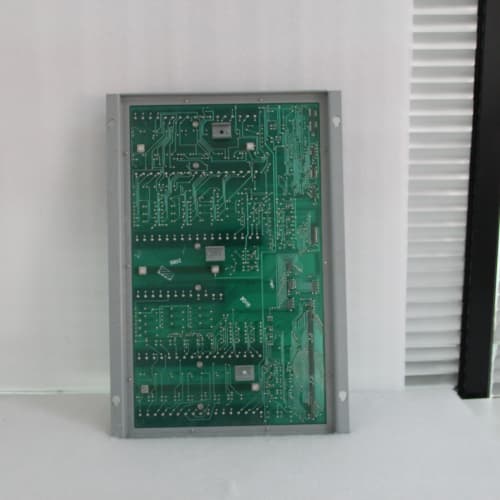
A digital input that intermittently reads “1” when it should read “0”—usually a grounding issue or a contact bounce problem that the termination board’s filtering should be handling. The DS3800NRRA is GE’s termination board for digital inputs in the Mark VIe system. It takes field contact signals—limit switches, pressure switches, pushbuttons, and auxiliary contacts—and routes them to the digital input module, with on-board debounce filtering and voltage level shifting.
What you get with the NRRA versus a simple terminal strip: programmable input filtering (you can set the debounce time via jumpers), LED status indicators per channel, and a robust terminal block layout that accepts 14 AWG field wiring. The filtering is the key feature—it rejects contact bounce, AC pickup, and noise transients that would otherwise cause nuisance trips. A power plant in Pennsylvania replaced an old NRRA board that had a failed filter circuit. The plant had been getting random “valve position open” alarms during lightning storms. The new board’s filtering knocked the alarms out completely.
Key Technical Specifications
| Parameter | Value |
|---|---|
| Product Type | Digital input termination board |
| Board Form Factor | Full-height 6U PCB |
| Input Channels | 32 digital input channels |
| Input Voltage | 24V DC nominal (module-dependent) |
| Input Type | Dry contact (switch), or 24V DC powered |
| Input Filtering | Programmable debounce (jumper-selectable: 1ms, 5ms, 10ms, 25ms) |
| Threshold Voltage | ON: >12V, OFF: <5V (24V logic) |
| Isolation | 250V AC channel-to-channel, 500V AC to ground |
| Current per Channel | 5mA typical (module-dependent) |
| LED Indicators | Green (input ON), Off (input OFF) |
| Terminal Block Type | Screw-clamp, accepts 14-22 AWG wire |
| Terminal Block Layout | 2 rows of 16 channels (top/bottom) |
| Connector Type | 50-pin header to digital input module |
| PCB Material | FR-4, 6-layer |
| Operating Temp | 0°C to +55°C |
| Board Thickness | 1.6mm |
| Weight | 0.7 kg (approx. 1.5 lbs) |
| Mounting | Screws to rack chassis (hardware not included) |
Compatible Replacement Models
| Model | Compatibility | Notes |
|---|---|---|
| DS3800NRRA | ✅ Drop-in Replacement | Exact match. 32-channel digital input termination board. Direct swap with no wiring changes. |
| DS3800NRRA-1 | ⚠️ Software Compatible | Older revision with a different input threshold (18V vs 12V). Requires recalibration in the I/O module configuration. Labor: ~1.5 hours. |
| DS3800NRRB | ✅ Drop-in Replacement | Similar board with slightly different terminal block layout (channel numbering differs). Verify your wiring diagram if swapping. Labor: ~1 hour to cross-reference. |
| DS3800NRRC | ⚠️ Hardware Difference | Digital input board with higher input voltage rating (48V DC instead of 24V). Check your system voltage before swapping. |
| IS200ERRA (Mark V) | ❌ Hardware Incompatible | Mark V digital input board with different connector pinout and mounting. Not compatible. |
| Generic terminal boards | ❌ Hardware Incompatible | Lacks input filtering and LED status indicators. Not a replacement. |
Frequently Asked Questions (FAQ)
What’s the difference between the NRRA and a standard terminal strip?
Input filtering. The NRRA has on-board debounce circuitry that rejects contact bounce, noise, and AC pickup. A standard terminal strip just connects wires—no filtering, no voltage level shifting. If you wire a limit switch directly to a digital input module without an NRRA, you’ll get false triggers from contact bounce and noise. The NRRA is essential for reliable digital input measurement.
What are the debounce time options on the NRRA?
The board has jumper-selectable debounce times: 1ms, 5ms, 10ms, and 25ms. The default is 10ms, which works for most mechanical switches. For limit switches on vibrating equipment, use 25ms to reject vibration-induced chatter. For fast-acting relays or electronic sensors, use 1ms or 5ms. The debounce time is set per channel or in groups—you need to check the jumper configuration on your board.
Can I use the NRRA with 48V DC digital inputs?
Only if the board is configured for it. The standard NRRA is designed for 24V DC logic. There’s a 48V version (the NRRC) that you should use instead. Using a 24V NRRA on a 48V system will damage the input circuitry. The components are rated for 24V only—the threshold voltage is set for 24V logic. If your plant uses 48V DC for digital inputs, order the NRRC.
What’s the input current draw per channel?
The NRRA sinks about 5mA per channel when the input is ON. That’s typical for 24V DC digital inputs. The current is drawn from the field device (limit switch, pushbutton, etc.). If you’re using a dry contact switch, the current comes from the module’s internal pull-up resistor—the switch doesn’t need to supply power. The 5mA current is enough to wet the contact (clean oxide off the switch contacts), which is important for reliability in industrial environments.
How do I connect a dry contact switch to the NRRA?
Each channel has two terminals: one for the field device (switch) and one for the common return. The module provides a voltage source (24V) through a pull-up resistor. When the switch is closed, the voltage is pulled to ground (or to the common terminal), and the module sees an ON signal. When the switch is open, the input is pulled high and reads OFF. Wire the switch between the input terminal and the common terminal—it’s that simple.
Can I hot-swap the NRRA while the rack is powered?
No. The NRRA is a passive board, but it’s connected to live field switches and the digital input module. Pulling it while powered could damage the module’s input stage or create a voltage transient. Power down the rack, swap the board, and power back up. It’s a 15-minute job. Don’t hot-swap.
What do the LED indicators on the NRRA mean?
- Green: input is ON (24V present).
- Off: input is OFF (0V or open circuit).
The LEDs are powered from the field side, so they work even if the I/O module is powered down—they show the actual state of the field contacts. This is a valuable diagnostic tool: you can walk the rack and see which switches are closed without using a meter.
What’s the difference between the NRRA and the NRRB?
The NRRA and NRRB are functionally identical—both are 32-channel digital input boards. The difference is in the terminal block layout. The NRRA has channels 1-16 on the top row and 17-32 on the bottom row. The NRRB has a different channel numbering arrangement. If your existing wiring diagram references the NRRA, don’t use an NRRB as a direct replacement unless you’re prepared to rewire. If the board itself has a part number that matches your existing board, you’re fine.
What’s your test procedure for the NRRA?
Our inbound test:
- Visual: inspect terminal blocks for cracks, bent pins, and burned or discolored areas.
- Input test: apply 24V DC to each input channel and verify the LED illuminates and the signal passes through to the 50-pin header.
- Debounce test: apply a 100ms pulse and verify the board’s debounce filter rejects it (if set to 10ms or higher).
- Isolation: 500V DC between adjacent channels—must exceed 10MΩ.
We reject about 4% of inbound NRRA boards—mostly for terminal block damage, cracked PCB traces, or debounce filter failures. The debounce filter circuit is relatively simple (RC network), but it can be damaged by overvoltage.
What’s the most common field issue with the NRRA?
Incorrect wiring of common returns. The NRRA has a common terminal for each group of inputs. If you wire a switch’s return to the wrong common terminal, the input won’t read correctly. The board’s labeling is clear, but it’s easy to mis-wire if you’re not paying attention. Use a multimeter to check continuity from the switch to the terminal block—it’s worth the 10 minutes it takes to verify. Also, contact bounce on old limit switches—the debounce filter handles it, but if the switch is bouncing for more than 25ms, you’ll still get spurious signals. Replace the switch.
GE IC695CPU315
Schneider TSXPBY100
A-B MPL-B540K-SJ24AA
 Email: sales@plcfcs.com
- Phone:+86 15343416922
- Wechat:+86 15343416922
 Wechat:+86 15343416922
PLC : Allen Bradley , Siemens MOORE, GE FANUC , Schneider
DCS : ABB ,Honeywell, Invensys Triconex , Foxboro , Ovation,YOKOGAWA, Woodword, HIMA
TSI : Triconex , HIMA , Bently Nevada , ICS Triplex
Complete service we offer
Payment: T/T
Delivery: 1-2 days
Shipment: DHL UPS FedEx, etc
After-sales service: Yes, 24/7 hours