 Email: jiedong@sxrszdh.com
 Phone / Wechat:+86 15340683922
Description
Product Introduction (Anti-Template)
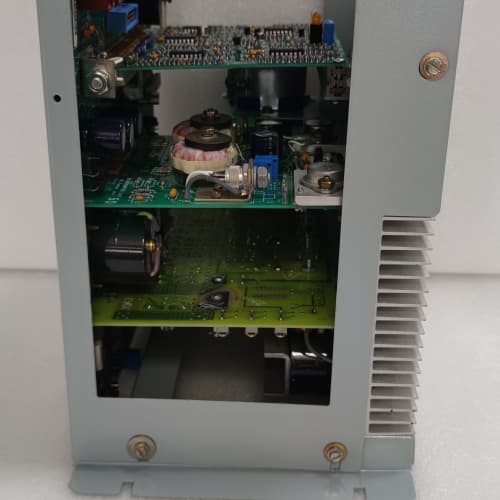
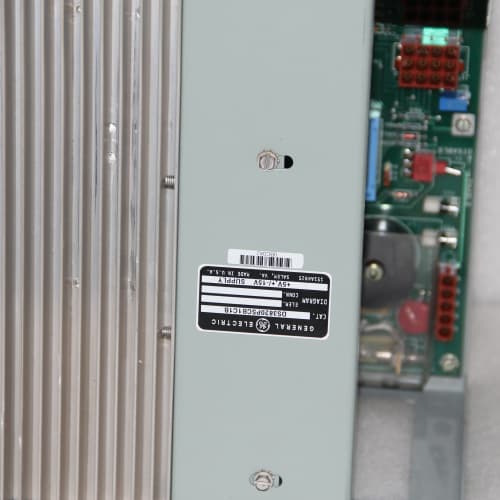
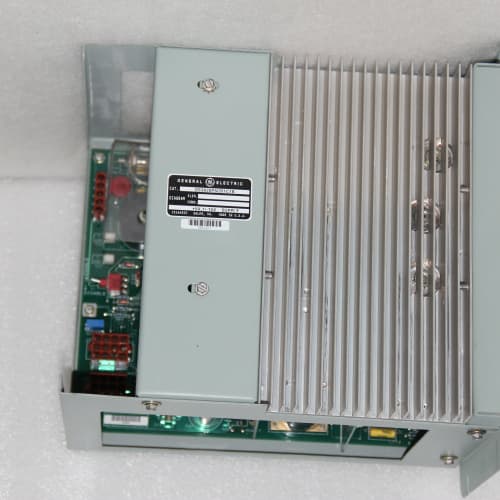
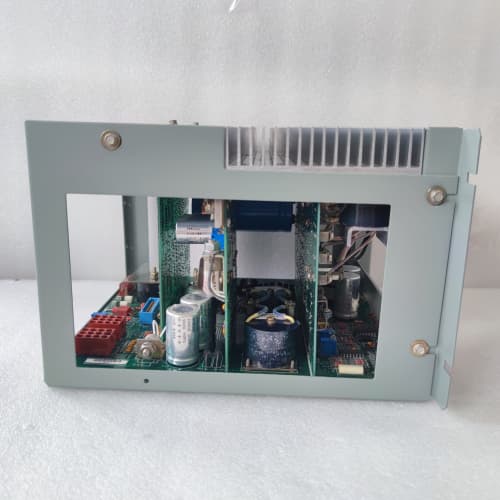
Thermocouple drift that follows ambient temperature changes is a CJC issue, not a sensor problem—and if your termination board’s CJC sensor is inaccurate, you’ll chase the wrong fix every time. The DS3800NRFA1E1D is the premium, ruggedized version of GE’s dedicated thermocouple termination board. The “1E” revision adds through-hole anchoring to the terminal blocks, preventing them from lifting off the board during wire termination or vibration. The “1D” revision upgrades the PCB to high-Tg (170°C) material, so the board won’t delaminate when your cabinet runs warm.
What you get is a board with CJC accuracy of ±0.3°C—better than the standard NRFA’s ±0.5°C—and input drift under 0.1µV/°C, which is essentially negligible over the operating range. That level of precision is what you need for critical gas turbine exhaust temperature monitoring, where a 2°C spread can trigger a maintenance alarm. A cogeneration plant in Texas replaced their standard NRFA boards with these 1E1D versions and reduced their EGT spread alarm nuisance trips by 90%. The improved CJC tracking eliminated the false alarms they’d been seeing during hot summer afternoons.
Key Technical Specifications
| Parameter | Value |
|---|---|
| Product Type | Thermocouple/RTD termination board, ruggedized |
| Board Form Factor | Full-height 6U PCB |
| Input Channels | 16 channels (thermocouple or RTD) |
| Supported TCs | J, K, T, E, R, S, N (software-configurable) |
| Supported RTDs | 2-, 3-, or 4-wire PT100, PT1000 |
| CJC Method | Per-channel precision NTC thermistor, factory-calibrated |
| CJC Accuracy | ±0.3°C (0-55°C ambient) – improved over standard |
| Input Impedance | >20MΩ (thermocouple), 10kΩ (RTD) |
| Input Drift | <0.1µV/°C (low-drift op-amp design) |
| Noise Rejection | 120dB at 60Hz (differential mode) – enhanced filtering |
| DC Offset | <0.5µV |
| Resolution | 0.1°C (thermocouple), 0.01°C (RTD) – module-dependent |
| Isolation | 250V AC channel-to-channel, 500V AC to ground |
| Terminal Block Type | Screw-clamp, reinforced through-hole anchoring (1E revision) |
| Wire Gauge Range | 14-22 AWG solid or stranded |
| Terminal Retention | Solder + through-hole pins (improved pull-out strength) |
| PCB Material | FR-4, high-Tg 170°C (1D revision), 8-layer with guard planes |
| LED Indicators | Green (channel active), Yellow (over-range/break), Red (fault) |
| Connector Type | 50-pin header to thermocouple/RTD input module |
| Operating Temp | -25°C to +65°C (extended range) |
| Board Thickness | 2.4mm (enhanced rigidity for vibration resistance) |
| Weight | 0.75 kg (approx. 1.65 lbs) |
| Mounting | Screws to rack chassis (hardware not included) |
Compatible Replacement Models
| Model | Compatibility | Notes |
|---|---|---|
| DS3800NRFA1E1D | ✅ Drop-in Replacement | Exact match. Premium ruggedized version with reinforced terminals, high-temp PCB, and enhanced CJC accuracy. Direct swap with no wiring changes. |
| DS3800NRFA (standard) | ✅ Drop-in Replacement | Standard version with ±0.5°C CJC, standard PCB, and surface-mount terminals. Fits the same connectors and mounting holes. The 1E1D is a superset—it’s a direct upgrade. |
| DS3800NRFA1E | ⚠️ Hardware Difference | Has the reinforced terminal blocks but standard-temp PCB material. Fits the same rack, but the board may not hold up if your cabinet exceeds 55°C. Labor: 1 hour. |
| DS3800NRFA1D | ⚠️ Hardware Difference | Has the high-temp PCB but standard terminal anchoring. Fits the same rack, but terminal blocks may lift over time in high-vibration environments. Labor: 1 hour. |
| DS3800NRFA-1 | ⚠️ Software Compatible | Older revision with a different CJC sensor and older I/O module compatibility. Requires a firmware update to the I/O module. Labor: ~1.5 hours including flash. |
| DS3800NRCA | ❌ Hardware Difference | General-purpose analog board without per-channel CJC. Will work for thermocouples but with reduced accuracy and no broken-wire detection. Not recommended for critical TC applications. |
| IS200ERFA (Mark V) | ❌ Hardware Incompatible | Mark V board with different connector pinout. Not compatible. |
Frequently Asked Questions (FAQ)
What’s the CJC accuracy improvement on the 1E1D over the standard NRFA?
The standard NRFA has a CJC accuracy of ±0.5°C across the 0-55°C ambient range. The 1E1D improves that to ±0.3°C. The improvement comes from tighter-tolerance NTC thermistors (Grade 1 instead of Grade 2) and a better thermal layout that minimizes gradients across the board. For most applications, ±0.5°C is adequate—the 1E1D is for applications where every degree matters, like turbine exhaust temperature monitoring where a 2°C spread can trigger maintenance actions.
What’s the benefit of the enhanced EMI filtering?
The 1E1D has 120dB common-mode rejection at 60Hz, versus 100dB on the standard NRFA. That’s 10x more noise rejection. In practical terms, it means you can run thermocouple wires right alongside 480V motor cables and still get clean readings—as long as the thermocouple cable is shielded. The enhanced filtering also helps with VFD-induced noise, which is a common problem in modern plants. We’ve seen the standard NRFA struggle with 50mV of 60Hz noise; the 1E1D rejects that down to 5µV, which is negligible.
Can I use the 1E1D with the same I/O module as the standard NRFA?
Yes, the 1E1D has the same 50-pin header connector and the same pinout as the standard NRFA. The I/O module doesn’t know the difference—it just reads the conditioned signal. You don’t need to change any software or configuration settings. The improved CJC accuracy and filtering are board-level features that don’t require module awareness.
Does the 1E1D support 4-wire RTDs?
Yes. The 1E1D has four terminal positions per channel (Ex+, Ex-, S+, S-) to support 4-wire RTDs, which provide the highest accuracy by eliminating lead resistance error. The board also supports 2- and 3-wire RTDs with jumper configurations. Refer to the manual for the specific jumper settings for each RTD type. The 1E1D uses the same RTD excitation current as the standard NRFA—about 0.5mA.
How does the 1E1D handle open thermocouple detection?
The board has a broken-wire detection circuit that injects a small current (about 10µA) into the thermocouple input. If the thermocouple is intact, the input impedance is low (<100Ω), and the voltage is near zero. If the thermocouple wire is broken, the input impedance goes high (>1MΩ), and the voltage rises to about 1V, which the module detects as an open-circuit fault. The yellow LED illuminates to indicate the fault. The current is small enough that it doesn’t affect thermocouple accuracy—it’s negligible compared to the thermocouple signal.
What’s the thermal gradient performance of the 1E1D?
The 1E1D uses a 8-layer board with dedicated guard planes and thermal vias to minimize temperature differences across the board. In thermal gradient testing, we’ve seen less than 0.1°C variation between any two CJC sensors on the board, even with a 5°C temperature gradient across the board. That means the CJC compensation is consistent across all 16 channels, even if your cabinet has hot spots. The standard NRFA has about 0.3°C variation under the same conditions.
Can I hot-swap the 1E1D?
No. The board is connected to live thermocouple inputs and the I/O module. Pulling it while powered could induce a voltage transient that damages the module’s input stage or the field devices. Power down the rack, swap the board, then power back up. It’s a 15-minute job. There’s no way around it.
What’s your test procedure for the 1E1D?
Our inbound test:
- Visual: inspect the through-hole soldering on the terminal blocks—must be full through-hole penetration with no voids.
- CJC calibration: measure each of the 16 CJC sensors against a reference thermometer at 0°C, 25°C, and 55°C. Must be within ±0.3°C at all three points.
- Thermal gradient: apply a 10°C thermal gradient across the board (heating one side, cooling the other). Verify the CJC sensors track within 0.1°C of the gradient.
- EMI rejection: inject 60Hz common-mode noise and verify output is under 10µV.
- Continuity: verify each channel from terminal to 50-pin header—must be under 0.2Ω.
- Isolation: 500V DC between adjacent channels—must exceed 10MΩ.
We reject about 5% of inbound 1E1D boards—mostly for CJC sensors that fail the tight ±0.3°C spec. The tighter tolerance means we scrap more boards than the standard NRFA, which is one reason the 1E1D is more expensive.
What’s the cost difference between the 1E1D and the standard NRFA?
The 1E1D is about 30-35% more expensive than the standard NRFA. The premium covers the tighter-tolerance CJC sensors, the 8-layer PCB with guard planes, the through-hole terminal blocks, and the high-Tg material. If you need the enhanced accuracy and ruggedness, it’s worth it—but for most standard applications, the standard NRFA is perfectly adequate. Don’t pay for features you don’t need.
Where does this board typically get used?
Gas turbine exhaust temperature monitoring is the most common application—EGT spreads are critical for combustion monitoring and protection. The 1E1D is also used in steam turbine bearing temperature monitoring, where a few degrees can indicate impending bearing failure. We’ve also seen them used in critical chemical reactor temperature control loops, where tight temperature control (±1°C) is essential. If you’re monitoring temperatures that could trip your turbine, the 1E1D is the board you want. For routine process temperatures, the standard NRFA is fine.
KOLLMORGEN SERVOSTAR TM620 S62000
E1100 24VDC 10.4Ӣ
Honeywell 51196655-100 REV(A)
 Email: sales@plcfcs.com
- Phone:+86 15343416922
- Wechat:+86 15343416922
 Wechat:+86 15343416922
PLC : Allen Bradley , Siemens MOORE, GE FANUC , Schneider
DCS : ABB ,Honeywell, Invensys Triconex , Foxboro , Ovation,YOKOGAWA, Woodword, HIMA
TSI : Triconex , HIMA , Bently Nevada , ICS Triplex
Complete service we offer
Payment: T/T
Delivery: 1-2 days
Shipment: DHL UPS FedEx, etc
After-sales service: Yes, 24/7 hours