 Email: jiedong@sxrszdh.com
 Phone / Wechat:+86 15340683922
Description
Product Introduction (Anti-Template)
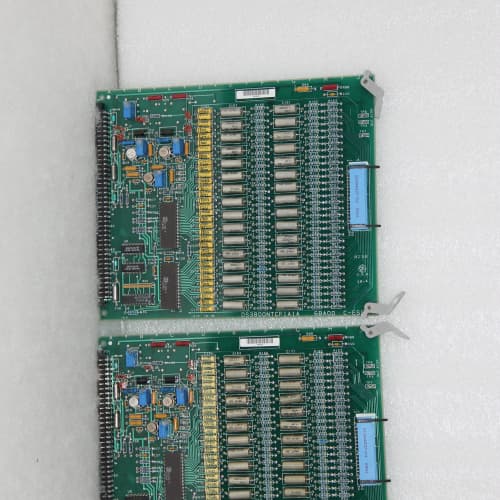
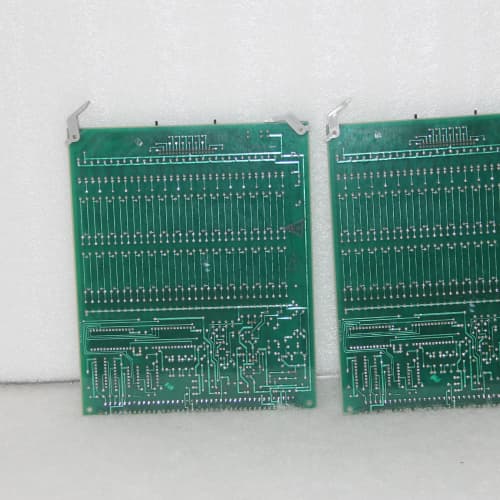
Fluctuating thermocouple readings that track with the phase of the moon? That’s usually a wiring or termination problem, not the sensor. The DS3800NRCA is GE’s termination board for analog I/O in the Mark VIe system. It takes the raw signal from your field devices—thermocouples, RTDs, 4-20mA transmitters—and conditions it before passing it to the analog input modules. And for outputs, it converts the module’s command signal into a robust field-drive signal.
What makes the NRCA different from a simple terminal strip? On-board EMI filtering, channel-to-channel isolation, and precision resistor networks for scaling and cold-junction compensation. That filtering knocks down common-mode noise by about 60dB at 60Hz—critical when your thermocouple leads run alongside 480V motor cables. Compared to the older Mark V termination board (IS200ERCA), the NRCA has twice the channel density (32 vs 16) and a more robust terminal block design. A Gulf Coast refinery swapped out their old Mark V boards for Mark VIe with NRCAs and saw their process temperature variation drop from ±5°F to ±1°F—the EMI filtering cleaned up the noise they’d been chasing for years.
Key Technical Specifications
| Parameter | Value |
|---|---|
| Product Type | Analog I/O termination board |
| Board Form Factor | Full-height 6U PCB |
| Analog Channels | 32 channels (mix of inputs and outputs, module-dependent) |
| Input Types | Thermocouple (J, K, T, E), RTD (2- or 3-wire), 4-20mA |
| Output Types | 4-20mA, 0-10V DC |
| Channel Isolation | 250V AC (channel-to-channel and channel-to-ground) |
| EMI Filtering | 60dB common-mode rejection at 60Hz |
| Cold-Junction Compensation | On-board temperature sensor per channel |
| Scaling Resistors | Precision 0.1% resistors for 4-20mA scaling |
| Terminal Block Type | Screw-clamp, accepts 14-22 AWG wire |
| LED Status Indicators | Green (channel active), Red (fault) |
| Input Connector | 50-pin header to analog I/O module |
| Output Connector | Barrier-style terminal strips |
| PCB Material | FR-4, 6-layer with guard planes |
| Operating Temp | 0°C to +55°C |
| Board Thickness | 2.0mm (enhanced rigidity) |
| Weight | 0.8 kg (approx. 1.8 lbs) |
| Mounting | Screws to rack chassis (hardware not included) |
Compatible Replacement Models
| Model | Compatibility | Notes |
|---|---|---|
| DS3800NRCA | ✅ Drop-in Replacement | Exact match. Same channel count, same terminal layout, same connector. Direct swap with no wiring changes. |
| DS3800NRCA-1 | ⚠️ Software Compatible | Older revision with a different input impedance (250Ω vs 100Ω for current inputs). If you’re using 4-20mA loops, you may need to recalibrate your I/O module configuration. Labor: ~2 hours to verify and adjust scaling. |
| DS3800NRCB | ⚠️ Hardware Difference | Similar board but with spring-clamp terminals instead of screw-clamp. Fits the same mounting holes and connector. Requires re-terminating field wiring. Labor: ~3-4 hours. |
| IS200ERCA (Mark V) | ❌ Hardware Incompatible | Mark V analog termination board with 16 channels and different connector pinout. Not compatible. |
| Third-party terminal boards | ❌ Hardware Incompatible | Generic terminal boards lack the EMI filtering and scaling resistors. Signal integrity will suffer. |
Frequently Asked Questions (FAQ)
What’s the difference between the NRCA and a standard terminal strip?
Signal integrity. The NRCA has EMI filtering (common-mode chokes and capacitors) that knocks down electrical noise from nearby AC lines, VFDs, and switching power supplies. It also has precision scaling resistors (0.1%) that convert the 4-20mA loop signal to a voltage the analog module can read. A terminal strip just connects wires—no filtering, no scaling. If you try to bypass the NRCA and wire direct to the analog module, you’ll get noisy, inaccurate readings. The NRCA is essential for reliable analog measurement.
Can I mix inputs and outputs on the same NRCA board?
Yes, the NRCA is a passive termination board—it doesn’t care if the channel is an input or an output. The channel function is determined by the analog I/O module plugged into the backplane. The termination board just provides the physical connection and signal conditioning. So a single NRCA board can support a mix of analog inputs and outputs, as long as the module supports them. Each channel is independent.
What’s the maximum current I can source through the NRCA?
For analog outputs, the NRCA can handle up to 22mA continuous (the 4-20mA loop maximum). The board’s traces and terminal blocks are rated for 5A, but the analog module limits the output to 22mA. For inputs, the NRCA only passes the signal—it doesn’t generate current. The loop is powered by the transmitter or a separate power supply. The board’s current rating isn’t the limiting factor—the module’s capabilities are.
How do I configure the NRCA for thermocouple vs 4-20mA?
The NRCA has jumper blocks on the PCB that set the channel configuration. Each channel can be individually configured for thermocouple (default), RTD, or 4-20mA input. The jumpers set the scaling resistors and the cold-junction compensation. Refer to your GE manual—the jumper positions are well-documented. If you’re reconfiguring a channel, verify the jumper settings match your field device before powering up. A mismatch will give you wrong readings, not a catastrophic failure—but it wastes time.
Does the NRCA provide 24V loop power for transmitters?
No. The NRCA is a passive board—it doesn’t supply power to field devices. If your transmitters need loop power, you need a separate power supply or a GE NRCA variant that includes loop power (not this one). The standard NRCA assumes that transmitters are self-powered or powered by a separate supply. If you’re using a 2-wire transmitter, you’ll need an external 24V DC supply or the DS3800NRCA-P variant (which has loop power). Verify your system design before ordering.
What’s the typical failure mode on the NRCA?
Terminal block solder joints cracking from thermal cycling. The board sees temperature changes from cabinet ambient, and the terminal blocks (which are heavy) can stress the solder joints over time. The 2mm PCB thickness on the NRCA reduces this problem compared to thinner boards, but it still happens. We’ve also seen cold-junction sensors fail—the NTC thermistor on the board drifts out of spec, causing temperature errors. That’s a board-level issue; you can’t replace the sensor separately. If you see consistent temperature offset across multiple channels, the cold-junction sensor may be faulty.
Can I hot-swap the NRCA while the rack is powered?
No. The NRCA has no active components, but it’s connected to live field devices and the analog module. Pulling it while powered could damage the analog module’s input stage or the field transmitter. Power down the rack, swap the board, then power back up. It’s a 30-minute job if you’re careful. Don’t hot-swap—it’s not worth risking the analog module.
What’s the channel isolation on the NRCA?
The NRCA provides 250V AC isolation between each channel and between the channel and ground. That means you can run thermocouple leads at different potentials without creating ground loops. The isolation also protects the analog module from surges on the field wiring (within reason—a lightning strike will still fry everything). The isolation is achieved through optocouplers and transformers on the analog module, not the NRCA itself—the termination board just provides the physical separation and EMI filtering.
How do I test the NRCA before installation?
Our inbound test:
- Visual: inspect terminal blocks for cracks, bent pins, and burned or discolored areas.
- Continuity: verify each channel has continuity from the terminal block to the 50-pin header—must be under 0.5Ω.
- Isolation check: measure resistance between adjacent channels—must exceed 10MΩ at 500V.
- Scaling check: measure the shunt resistor value on a sample of channels—must be 0.1% tolerance or better.
- LED test: power up the board (24V DC) and verify the LEDs illuminate correctly. We use a test jig with simulated signals.
We reject about 6% of inbound NRCA boards—most commonly for terminal block damage, cracked PCB traces, or out-of-spec scaling resistors.
What’s the most common field complaint about the NRCA?
Terminal block labeling. The 32 channels are labeled 1-32, but the terminal blocks are arranged in two rows of 16—the top row is channels 1-16, the bottom row is 17-32. It’s not intuitive, and techs sometimes wire channel 17 to the bottom row of channel 1. The result: you get a reading on the wrong channel. We recommend color-coding the terminal block rows (top row = group A, bottom row = group B) and double-checking your wiring diagram. It saves a lot of troubleshooting time. Also, the screw-clamp terminals require a small flathead screwdriver—use the right size, or you’ll strip the screw heads.
WESTINGHOUSE 5A26458G05
ABB 3BHB000652R0101
A-B 1756-L63
GE VMIVME-3122-020
 Email: sales@plcfcs.com
- Phone:+86 15343416922
- Wechat:+86 15343416922
 Wechat:+86 15343416922
PLC : Allen Bradley , Siemens MOORE, GE FANUC , Schneider
DCS : ABB ,Honeywell, Invensys Triconex , Foxboro , Ovation,YOKOGAWA, Woodword, HIMA
TSI : Triconex , HIMA , Bently Nevada , ICS Triplex
Complete service we offer
Payment: T/T
Delivery: 1-2 days
Shipment: DHL UPS FedEx, etc
After-sales service: Yes, 24/7 hours