 Email: jiedong@sxrszdh.com
 Phone / Wechat:+86 15340683922
Description
Product Introduction (Anti-Template)
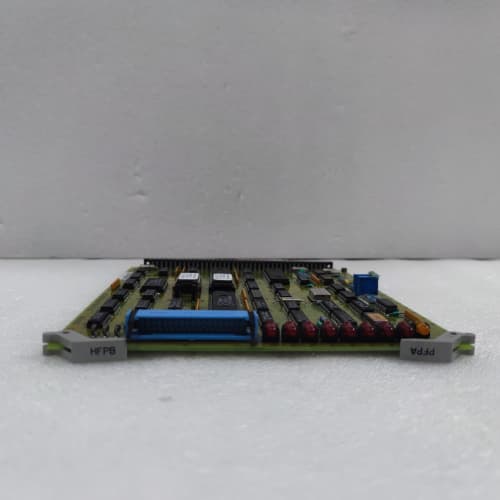
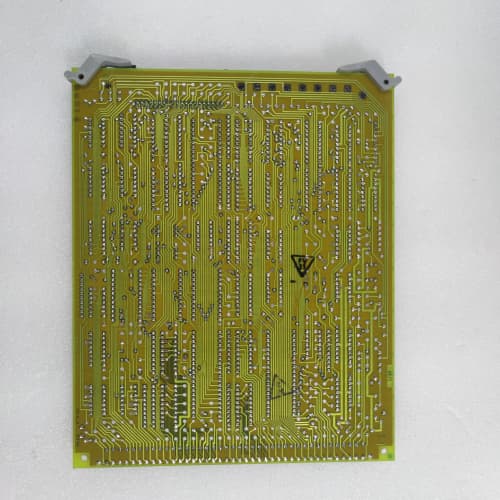
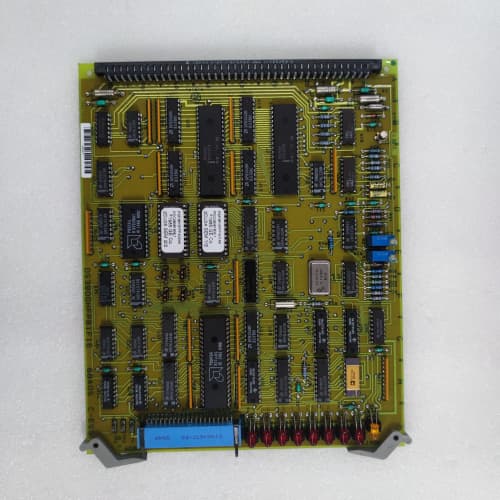
Field wiring that keeps pulling loose from cheap terminal blocks is a nuisance you don’t need during a turbine startup. The DS3800NPTA is GE’s answer to reliable field power distribution in the Mark VIe system. It’s the board that takes the DC power from the rack backplane and fans it out to your field devices—transmitters, solenoids, indicator lights, and relay coils—through a bank of fused, LED-indicated output channels.
What you get with the NPTA versus the NPSV (which distributes internal rack power): the NPTA is designed for field terminations. It uses larger, more robust terminal blocks that accept 12 AWG wire (versus the NPSV’s header connectors for internal wiring). Each of the 16 channels has a status LED that tells you at a glance if the fuse is good or blown—saves you from probing each circuit with a meter during troubleshooting. A Texas chemical plant replaced a failed NPTA and cut their field power troubleshooting time by 60%. They had been chasing a blown fuse issue for two days; the LED on the NPTA showed the fault in 10 seconds.
Key Technical Specifications
| Parameter | Value |
|---|---|
| Product Type | Field power termination board |
| Board Form Factor | Half-height 3U PCB |
| Input Voltage | 24V DC nominal (derived from NPSM) |
| Output Channels | 16 fused field output channels |
| Channel Fusing | 5x20mm cartridge fuse per channel, field-replaceable |
| Fuse Rating | 2A per channel standard (field-configurable) |
| Terminal Block Type | Screw-clamp, accepts 12-22 AWG wire |
| LED Status Indicators | Green (power OK), Red (fuse blown) |
| Input Connector | 24-pin header to NPSM power supply |
| Output Connector | Barrier-style terminal strips |
| Maximum Current per Channel | 5A (derated to 3A for continuous use) |
| Total Board Power | 100W maximum (limited by field wiring) |
| PCB Layers | 6-layer, FR-4 material |
| Operating Temp | 0°C to +55°C |
| Board Thickness | 1.6mm |
| Weight | 0.4 kg (approx. 0.9 lbs) |
| Mounting | Screws to rack chassis (hardware not included) |
Compatible Replacement Models
| Model | Compatibility | Notes |
|---|---|---|
| DS3800NPTA | ✅ Drop-in Replacement | Exact match. Same terminal layout, same channel count, same fuse type. Direct swap with no wiring changes. |
| DS3800NPTA-1 | ⚠️ Software Compatible | Older revision with a different fuse holder type (clips instead of cartridge style). Fits the same mounting holes and connector. Labor: ~1 hour to swap fuses and verify connections. |
| DS3800NPTS | ⚠️ Hardware Difference | Similar board but with spring-clamp terminals instead of screw-clamp. Fits the same rack but requires re-terminating your field wiring. Labor: ~3-4 hours if rewiring. |
| DS3800NPSV | ❌ Hardware Incompatible | The NPSV distributes rack power to I/O modules, not field power. Different terminal sizes and pinout. Not a replacement. |
| IS200EPTTG (Mark V) | ❌ Hardware Incompatible | Mark V field termination board. Different connector pinout and mounting hole positions. Not compatible with Mark VIe wiring. |
Frequently Asked Questions (FAQ)
What’s the difference between the NPTA and the NPSV?
The NPSV distributes power to the I/O modules inside the rack—it’s the board that powers the cards themselves. The NPTA distributes power to field devices outside the rack—transmitters, solenoids, relays, and indicators. The NPTA has larger terminal blocks for field wiring (12 AWG) and a different fuse rating (2A per channel). If you’re replacing a board that field wiring connects to, you need the NPTA. If you’re replacing a board that’s internal to the rack, you need the NPSV.
What size wire should I use for field connections to the NPTA?
The terminal blocks accept 12-22 AWG solid or stranded wire. For most field devices drawing 1-2A, 16 AWG is sufficient. For long runs (over 50 feet), use 14 AWG to minimize voltage drop. If you’re driving a solenoid that draws 3A inrush, use 14 AWG and a 5A fuse (upgraded from the standard 2A). We recommend you do a voltage drop calculation for each channel—the terminal blocks are rated for 5A, but the wire size determines your actual current limit.
Can I change the fuse ratings on the NPTA?
Yes. The board uses standard 5x20mm cartridge fuses. You can install any fuse from 0.5A to 5A. The standard is 2A, which works for most analog and digital field devices. If you’re driving a high-inrush load (like a valve solenoid), you might need a slow-blow 5A fuse. We’ve seen plants use 3A fuses for transmitter loops without any issue. Just don’t exceed 5A—the PCB traces are rated for 5A continuous, and 6A will heat the board.
What do the LED indicators on the NPTA actually tell me?
There are two LEDs per channel:
- Green: power is present and the fuse is good.
- Red: the fuse has blown (or the channel is shorted).
- If both are off: no power is reaching the board (check the NPSM or the input connection).
- If green is dim or flickering: you have a high-resistance connection—likely a loose terminal screw or a corroded wire end.
The LEDs are powered from the field side, so they work even if the field device is disconnected. They’re a quick diagnostic tool—a red LED tells you exactly which channel to check.
Is the NPTA compatible with 125V DC input systems?
Not directly. The NPTA expects 24V DC input from the NPSM. If your plant runs on 125V, the NPSM1B converts that to 24V DC internally—but the NPTA sees only 24V. So as long as you have the correct NPSM in the rack, the NPTA works fine. The board itself doesn’t handle high voltage; it just distributes the 24V power. That said, the terminal blocks on the NPTA are rated for 300V, so you could theoretically use them for other purposes—but not without a proper isolation scheme.
Can I hot-swap the NPTA while the rack is powered?
We don’t recommend it. The NPTA has no active components, but the field wiring connects to live devices. When you unplug the NPTA, you interrupt the field power to all 16 channels—which could trip solenoids, drop valves, or cause loss of instrumentation. Power down the rack, swap the board, then power back up. It’s a 10-minute procedure. Don’t try to pull it live unless you’ve verified that all field devices are safely off.
What’s the maximum total power I can draw from the NPTA?
The board itself can handle up to 100W total across all 16 channels (about 4A at 24V). The limiting factor is the input connection—the 24-pin header carries about 5A total from the NPSM. If you’re running 16 channels at 0.5A each (8A total), you’ll exceed the NPSM’s capacity. You need to load-balance across multiple NPTA boards. A typical plant uses one NPTA per rack and stays under 60W (2.5A total). If you’re drawing more, you should add a second NPTA board in a separate rack or use an external power supply.
How do I test the NPTA before installation?
Our inbound test:
- Visual: inspect terminal blocks for cracks, bent pins, or burned areas.
- Continuity: verify each fuse holder has continuity with the terminal block (fuse installed).
- Fuse test: insert a test fuse and measure resistance—must be under 0.1Ω.
- LED test: apply 24V DC to the input and verify all green LEDs illuminate.
- High-pot: 500V DC between input and output—must exceed 10MΩ.
We reject about 3% of inbound boards—mostly for terminal block damage or cracked fuse holders. If a board passes our test, it’ll run reliably in your rack.
What’s the most common failure mode on the NPTA?
Fuse holder fatigue. The clips that hold the 5x20mm fuses lose tension after multiple replacements, causing intermittent contact. The fix: replace the fuse holder clips (they’re standard parts, about $0.50 each) or just swap the board. We’ve also seen terminal block screws loosen from vibration—we recommend using a dab of threadlocker (blue Loctite) on the terminal screws if your cabinet is in a high-vibration area. Not too much, just a small drop. You’ll thank yourself later.
ISH100/30025/0/0/00/0/00/00/00
A-B 1756-L73
ABB UNITROL 1010
Kollmorgen CB06551
 Email: sales@plcfcs.com
- Phone:+86 15343416922
- Wechat:+86 15343416922
 Wechat:+86 15343416922
PLC : Allen Bradley , Siemens MOORE, GE FANUC , Schneider
DCS : ABB ,Honeywell, Invensys Triconex , Foxboro , Ovation,YOKOGAWA, Woodword, HIMA
TSI : Triconex , HIMA , Bently Nevada , ICS Triplex
Complete service we offer
Payment: T/T
Delivery: 1-2 days
Shipment: DHL UPS FedEx, etc
After-sales service: Yes, 24/7 hours