 Email: jiedong@sxrszdh.com
 Phone / Wechat:+86 15340683922
Description
Product Introduction (Anti-Template)
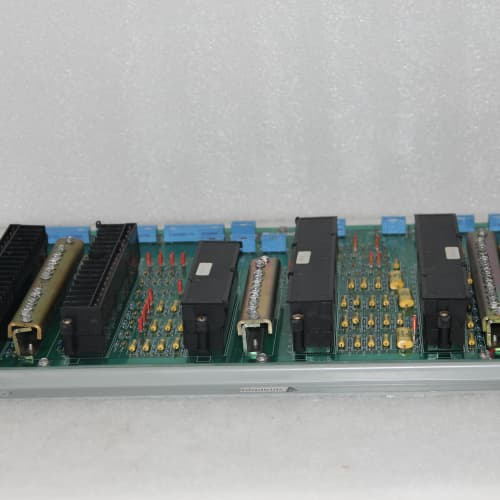
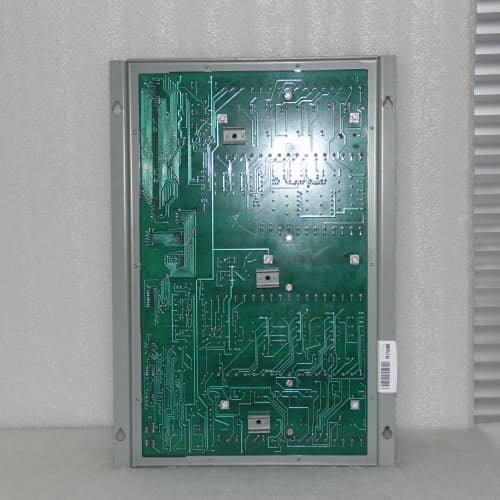
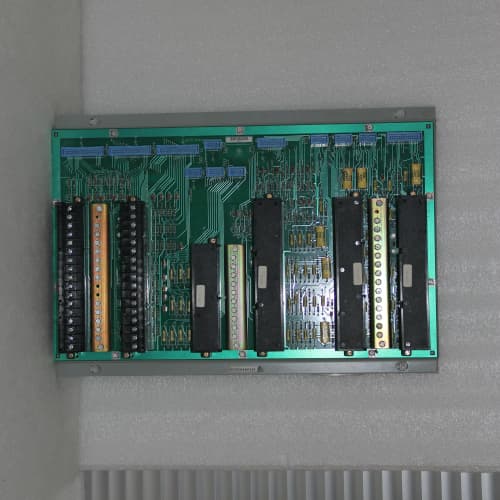
A backplane that works fine on 24V can fail catastrophically on 125V—not because of the voltage itself, but because of creepage breakdown over time. The DS3800NPSZ1B1A is the high-voltage variant of GE’s Mark VIe backplane, designed specifically for systems powered by 125V DC plant batteries. It has wider trace spacing, thicker PCB material, and a higher CTI-rated substrate compared to the standard NPSZ.
The 1B1A suffix tells you this board is built for the 125V input version of the system. The “1B” refers to the high-voltage rating (extended creepage and clearance); the “1A” is the mechanical revision (mounting hole positions, connector keying). What that gets you is a board that won’t develop carbon tracking between the 125V input traces and the low-voltage signal traces—even in dusty, humid cabinet environments. A chemical plant in Louisiana swapped a standard NPSZ into a 125V rack as a “temporary” fix and ran it for two years. When they finally opened the cabinet, they found visible carbon trails on the board. The 1B1A board they replaced it with has the extended creepage—that issue won’t recur.
Key Technical Specifications
| Parameter | Value |
|---|---|
| Product Type | High-voltage passive backplane board |
| Board Form Factor | Full-height 6U PCB (matches Mark VIe rack) |
| I/O Slots | 8 slots |
| Slot Pitch | 20.32mm (0.8 inches) standard Eurocard spacing |
| Connector Type | 96-pin DIN 41612, Type C, male |
| Creepage Distance | 4mm minimum (input-to-low-voltage sections) |
| Clearance Distance | 3mm minimum |
| PCB Material | FR-4 with higher CTI rating (Class IIIb) |
| PCB Layers | 12-layer, with reinforced isolation between layers |
| Copper Weight | 4oz power planes, 2oz signal layers |
| Communication Bus | Proprietary GE Mark VIe parallel bus (75Ω differential) |
| Impedance Control | 75Ω ±10% differential (communication traces) |
| Power Distribution | +5V @ 20A, +15V @ 8A, -15V @ 4A, Vaux |
| Slot Keying | Mechanical keys for analog (slots 1-4) vs digital (slots 5-8) |
| High-Pot Rating | 1500V AC (input-to-ground, 1 second) |
| Operating Temp | 0°C to +60°C |
| Weight | 1.25 kg (approx. 2.75 lbs)—slightly heavier due to thicker PCB |
| Mounting | Standoff holes for rack chassis (M3 screws) |
Compatible Replacement Models
| Model | Compatibility | Notes |
|---|---|---|
| DS3800NPSZ1B1A | ✅ Drop-in Replacement | Exact match. High-voltage variant with extended creepage. Direct swap—same mounting, same connectors, same keying. |
| DS3800NPSZ (standard 24V version) | ❌ Hardware Incompatible | Does not have the extended creepage and clearance distances. In a 125V system, this board will eventually develop carbon tracking—especially in humid or dusty environments. We strongly advise against using it as a permanent replacement. |
| DS3800NPSZ1B (older high-voltage variant) | ⚠️ Software Compatible | Earlier high-voltage board with the same creepage distances but different connector keying (older style). Fits the same rack but may not accept newer I/O modules with the updated key position. Labor to swap: ~2 hours if you also need to re-key your modules. |
| DS3800NPSZ-2 (24V version) | ❌ Hardware Incompatible | Standard clearance board. Same physical dimensions but missing the extended creepage. Not safe for 125V systems. |
| IS200EPDG (Mark V backplane) | ❌ Hardware Incompatible | Mark V backplane with 10 slots, different pinout. Not compatible with Mark VIe I/O modules. No workaround. |
Frequently Asked Questions (FAQ)
What exactly makes the 1B1A different from the standard NPSZ?
Three key differences:
- Creepage distance: the 1B1A has 4mm minimum creepage between the 125V input traces and the low-voltage sections. The standard NPSZ has 2mm.
- PCB material: the 1B1A uses a higher CTI-rated FR-4 (Comparative Tracking Index of 400 or better) to resist carbon tracking.
- Clearance: the 1B1A has 3mm minimum clearance through air for the same isolation path.
The pinout, connector positions, and mounting holes are identical. Functionally, the board distributes power and communication exactly the same way. The difference is all about long-term reliability in a high-voltage environment.
Can I use the 1B1A on a 24V system?
Yes, absolutely. The extended creepage doesn’t hurt anything. It’s overkill for a 24V system, but it will work perfectly fine. The board is a drop-in replacement for the standard NPSZ in terms of fit and function. If you have a 24V system and you receive a 1B1A as a replacement, you can install it without any modifications.
Why does the 1B1A weigh more than the standard NPSZ?
The 1B1A uses a thicker PCB (2.4mm vs 1.6mm) to accommodate the extended creepage distances—deeper isolation slots and wider trace spacing require more board area and thicker material to maintain mechanical rigidity. The 4oz copper planes are also on a thicker core. The weight difference is about 50g—not enough to affect installation or mounting. You’ll notice it when you pick it up, though.
What’s the risk of using a standard NPSZ in a 125V system?
Carbon tracking. Over time—typically 2-5 years depending on humidity and airborne dust—the 125V input traces can develop a carbonized path across the PCB surface. That carbon path conducts electricity, which shorts the high-voltage input to the low-voltage +5V rail. When that happens, every I/O card in the rack gets 125V injected onto its +5V supply. That’s a catastrophic failure. We’ve seen it take out an entire rack of I/O cards. A few plants have done this as a “temporary” fix and regretted it. The 1B1A’s 4mm creepage prevents the carbon track from forming—even in harsh environments.
How do I identify a 1B1A board versus a standard NPSZ?
Look for the silkscreen on the top edge of the board. The 1B1A has a yellow warning box around the power input connector area with text that reads “125V DC INPUT ONLY.” The standard NPSZ has a white silkscreen with no warning box. Also, the part number is printed on the bottom-left corner—it should read “DS3800NPSZ1B1A Rev X.” If it just says “DS3800NPSZ,” it’s the standard 24V version.
Can I use the 1B1A with the NPSM1A (24V) power supply?
Yes, the backplane doesn’t care what power supply is connected to it—it just distributes the rails. However, if you’re using a 24V power supply, you don’t need the high-voltage isolation. But the board will work fine. The only combination you should avoid is using a standard NPSZ with a 125V power supply (NPSM1B). That’s the dangerous mismatch.
What’s the slot keying on this board—is it the same as the standard NPSZ?
The slot keying positions are slightly different on the 1B1A. This board uses the newer keying standard, which prevents you from inserting older (pre-2015) I/O modules into slots 1-4 or 5-8. If you have older modules, you’ll need to either replace the plastic keys on the modules or use a keying adapter. Check your module’s part number—if it ends in “A” or “B,” it’s the older keying; if it ends in “C” or later, it’s compatible. If you’re unsure, consult your GE rep or test-fit the module before you finalize the board install.
What’s your test procedure for the 1B1A?
Our standard test includes:
- Visual: inspect for bent pins, cracked connectors, discolored traces, and proper silkscreen labeling.
- Continuity: automated bed-of-nails test of all 768 pins.
- Impedance: TDR verification of all bus traces (75Ω ±10%).
- High-pot: 1500V AC between the power planes and ground—must pass for 1 second without breakdown.
- Creepage test: measure the distance between the 125V traces and low-voltage sections—must exceed 4mm at all points.
We reject about 6% of inbound 1B1A boards—most commonly for cosmetic damage (scratched traces, lifted pads) or out-of-spec creepage from manufacturing variations. Boards that pass get a “QC Passed—125V Variant” sticker and an anti-static bag.
A-B 1756-L72
CISCO IE-4000-16GT4G-E
TRICONEX 3481
 Email: sales@plcfcs.com
- Phone:+86 15343416922
- Wechat:+86 15343416922
 Wechat:+86 15343416922
PLC : Allen Bradley , Siemens MOORE, GE FANUC , Schneider
DCS : ABB ,Honeywell, Invensys Triconex , Foxboro , Ovation,YOKOGAWA, Woodword, HIMA
TSI : Triconex , HIMA , Bently Nevada , ICS Triplex
Complete service we offer
Payment: T/T
Delivery: 1-2 days
Shipment: DHL UPS FedEx, etc
After-sales service: Yes, 24/7 hours