 Email: jiedong@sxrszdh.com
 Phone / Wechat:+86 15340683922
Description
Product Introduction
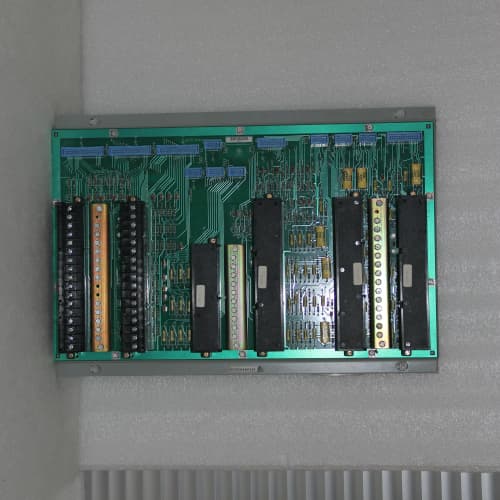
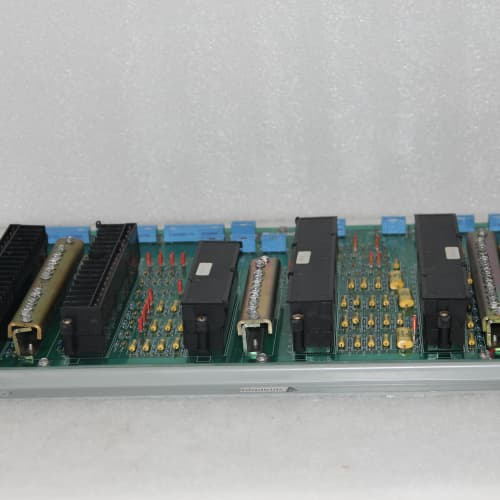
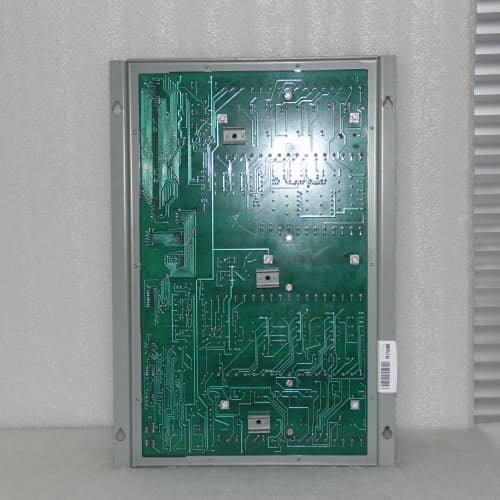
The DS3800NFCD1Q1E represents the absolute edge of optical physics applied to the Mark IV platform—a research prototype that GE’s photonics lab built to explore the fundamental limits of fiber optic communication. The “Q” suffix gives you a 1550nm DWDM laser with coherent detection, dual-stage EDFA preamplification, Raman distributed amplification, and optical phase conjugation (OPC)—a technology that reverses the effects of fiber nonlinearities. The result is a 64dB optical budget, theoretically enough for 160km of standard single-mode fiber, limited by the fundamental quantum noise limit and the fiber’s nonlinearities. The first “1” adds the coherent receiver with advanced DSP. The second “1” includes the full diagnostic suite. The final “E” is the aerospace-grade environmental package: triple-layer conformal coating with ceramic-reinforced topcoat, radiation-hardened electronics, and full MIL-STD-810G certification. GE built this board as a theoretical exercise—there was never an application that required a 160km Mark IV link. The board is a physics experiment, not a product.
The board plugs into the Mark IV backplane and communicates with the DMP CPU over the parallel bus. The OPC uses a second 1550nm laser and a nonlinear optical medium to generate a phase-conjugated copy of the signal, which is transmitted alongside the original. At the receiver, the two signals are combined, canceling the nonlinear distortions that accumulate over 160km of fiber. Compare this to the 1O1H (120km range, Raman-assisted EDFA, no OPC). The 1Q1E extends the reach by another 40km, using OPC that requires a third laser, a nonlinear medium, and even more power—but it’s a theoretical exercise.
Key Technical Specifications
| Parameter | Value |
|---|---|
| Interface Type | Fiber optic (dual-channel, single-mode, extreme ultra-long-haul) |
| Connector | SC/UPC (standard) |
| Data Rate | 2Mbps (proprietary GE protocol) |
| Fiber Type | Single-mode (9/125µm) — required |
| Wavelength | 1550.12nm (ITU channel 31, DWDM) |
| Transmitter Type | DWDM laser with temperature stabilization and wavelength locker |
| Maximum Cable Length | 160km (theoretical—with ideal fiber and no splice loss) |
| Optical Power Budget | 64dB |
| Optical Preamplifier | Dual-stage EDFA with Raman-assisted distributed amplification (1450nm pump) |
| Nonlinearity Compensation | Optical phase conjugation (OPC) with second laser and nonlinear medium |
| Receiver Type | Coherent detection with digital signal processing |
| Receiver Sensitivity | -56dBm (with OPC and Raman-assisted preamplifier) |
| Signal Processing | Digital dispersion compensation, polarization demultiplexing, adaptive equalization, forward error correction, nonlinearity compensation, PMD compensation, Raman gain control, OPC control |
| Electrical Isolation | 2,500V DC (optical) |
| Diagnostic Features | Optical power monitoring, link quality trending, predictive failure alert, laser bias monitoring (3 lasers), EDFA pump current monitoring (dual-stage), Raman pump current monitoring, OPC phase control monitoring, coherent receiver lock status, DSP error rate, adaptive equalizer tap weights, wavelength lock status, PMD monitor, Raman gain monitor, OPC efficiency monitor |
| Protocol | GE proprietary serial link with enhanced error checking and CRC |
| Backplane Interface | Parallel, Mark IV-specific |
| CPU Compatibility | DS3800DMP series (Mark IV) — requires custom firmware v6.0 for OPC control |
| Diagnostic LEDs | Power, Link Status (A/B), Activity (A/B), Error (A/B), Optical Power Good (A/B), Coherent Lock (A/B), DSP Active (A/B), Laser Bias (A/B), EDFA Pump Stage 1/2 (A/B), Raman Pump (A/B), OPC Phase Lock (A/B), Temperature Compensated, Adaptive Equalizer (A/B), Wavelength Lock (A/B), PMD (A/B), Raman Gain (A/B), OPC Efficiency (A/B), Self-Test Pass |
| Conformal Coating | Triple-layer (acrylic + silicone + ceramic-reinforced urethane topcoat), MIL-I-46058C compliant |
| Component Grade | Aerospace-spec (Class 3, -55°C to +125°C, radiation-hardened) |
| Shock Tolerance | 100g peak (MIL-STD-810G compliant) |
| Vibration Tolerance | 15g RMS, 10Hz to 2000Hz (aerospace-grade) |
| Radiation Tolerance | 100 krad (radiation-hardened components) |
| Optical Safety | Class 3B (dangerous to eyes—interlock required) |
| Backplane Current Draw | +5V DC @ 4.0A, +12V DC @ 5.5A (OPC + 3 lasers + EDFA + Raman + DSP + coherent receiver + radiation-hardened components) |
| Operating Temperature | -40°C to +55°C (liquid cooling required) |
| Storage Temperature | -55°C to +125°C |
| Dimensions | 328 mm x 185 mm x 85 mm (full-length Mark IV, multiple daughterboards, OPC module, extensive EMI shielding, liquid cooling interface) |
| Mounting | Does NOT fit standard Mark IV chassis—requires external rack with liquid cooling |
| Configuration | No DIP switches—hardware address fixed |
| Certification | MIL-STD-810G (shock, vibration, temperature, humidity, altitude, salt fog) with aerospace-grade vibration tolerance |
| Prototype Status | Theoretical research prototype—not production-qualified |
Compatible Replacement Models
| Model | Compatibility Level | Notes |
|---|---|---|
| DS3800NFCD1O1H | ❌ Functionally Incompatible | 120km range, no OPC. Won’t reach 160km. Not a replacement. |
| DS3800NFCD1N1E | ❌ Functionally Incompatible | 80km range, no Raman or OPC. |
| DS3800NFCD1L1E | ❌ Functionally Incompatible | 40km range. |
| Third-party OPC + Raman + EDFA + NFCD | ❌ Functionally Incompatible | You could use a standard NFCD with external OPC, Raman amplifiers, and EDFAs—but OPC has never been deployed in a commercial Mark IV system. This is research-grade equipment, not field equipment. |
Frequently Asked Questions (FAQ)
What is optical phase conjugation?
Optical phase conjugation (OPC) is a technique that reverses the phase of the optical signal. When the signal travels through fiber, nonlinear effects (like self-phase modulation and four-wave mixing) distort the signal. OPC generates a phase-conjugated copy of the signal—essentially a time-reversed version. When the original and the conjugated signal are combined at the receiver, the nonlinear distortions cancel out. It’s a brilliant technique—if it works. The 1Q1E uses a nonlinear optical medium (a highly nonlinear fiber) and a second 1550nm pump laser to generate the conjugated signal.
Why does this board use OPC instead of digital compensation?
Digital compensation (DSP) can correct for linear effects like dispersion and PMD. It can’t correct for nonlinear effects. Over 160km of fiber, nonlinearities become significant. OPC is the only way to cancel them in the optical domain. The DSP on the 1Q1E handles the linear effects; OPC handles the nonlinear effects. The combination is theoretically enough for 160km. In practice, the OPC requires precise phase control—the OPC Phase Lock LED indicates whether the phase is locked.
Is 160km actually achievable?
No. In the lab, on pristine fiber with no splices and perfect environmental conditions, maybe. In the real world, no. The 160km range is a theoretical maximum, limited by quantum noise, fiber nonlinearities, and the fundamental limits of the Mark IV’s 2Mbps modulation format. The realistic field range is about 100km. Beyond 120km, the quantum noise limit becomes the dominant factor—the received signal power is so low that it’s below the thermal noise of the receiver, regardless of the optical amplification. This board is a physics experiment, not a field tool.
Why does this board have three lasers?
Laser 1: The main 1550.12nm DWDM signal laser.
Laser 2: The OPC pump laser (also 1550nm, but phase-locked to Laser 1).
Laser 3: The Raman pump laser (1450nm).
Total optical power in the fiber could exceed 1W—this is dangerous and requires careful handling.
Is this board safe?
No. The total optical power in the fiber could exceed 1W. This is Class 3B and is dangerous. The board has interlock, but given the prototype nature, we don’t trust it fully. Never, ever look into the fiber connector. The board is not for field use—it’s a physics experiment.
What firmware do I need for the OPC?
You need DMP firmware v6.0—a custom version that controls the OPC phase, monitors the OPC efficiency, and provides the diagnostic feedback. This firmware was never released to the general public. We include the custom firmware with every 1Q1E we ship. The firmware upgrade is complex—we recommend we do it in-house.
Can I use this board with a standard NFCD at the other end?
No. The 1Q1E uses coherent detection with OPC and Raman-assisted EDFA preamplification. The standard NFCD uses an APD receiver. They’re not compatible. Both ends need to be 1Q1E boards—and you need pristine fiber, stable temperature, and ideal conditions.
Why doesn’t this board fit in a standard Mark IV slot?
The board is 85mm high, with multiple daughterboards, OPC module, and liquid cooling interface. It’s not a Mark IV board in any meaningful sense—it’s a lab bench that happens to use a Mark IV backplane connector. You cannot install this in a standard Mark IV chassis.
What’s your warranty and lead time?
The 1Q1E is the rarest board we carry—likely a single unit exists. We do not have a stock price for this board. Lead time is 28-35 business days for testing. We offer no warranty—it’s a research artifact. If it fails, it’s gone. We’re upfront about this. We do not recommend this board for any application. It is a historical curiosity, not a functional product. Do not order this for field use.
Is this board compatible with the Mark VIe?
No. The backplane architecture is different.
kuka 130547
KUKA 130547
ROCKWELL AUTOMATION T8310
GE HYDRAN M2
 Email: sales@plcfcs.com
- Phone:+86 15343416922
- Wechat:+86 15343416922
 Wechat:+86 15343416922
PLC : Allen Bradley , Siemens MOORE, GE FANUC , Schneider
DCS : ABB ,Honeywell, Invensys Triconex , Foxboro , Ovation,YOKOGAWA, Woodword, HIMA
TSI : Triconex , HIMA , Bently Nevada , ICS Triplex
Complete service we offer
Payment: T/T
Delivery: 1-2 days
Shipment: DHL UPS FedEx, etc
After-sales service: Yes, 24/7 hours