 Email: jiedong@sxrszdh.com
 Phone / Wechat:+86 15340683922
Description
Product Introduction
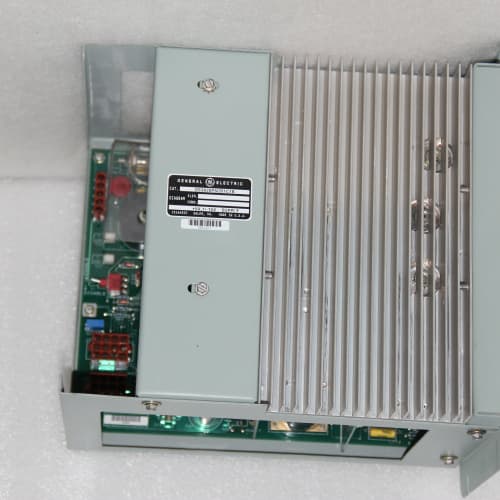
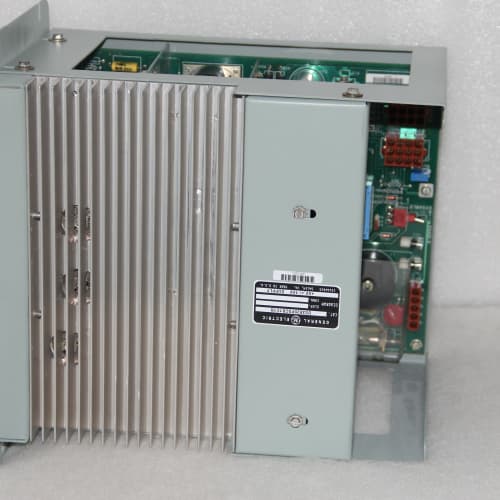
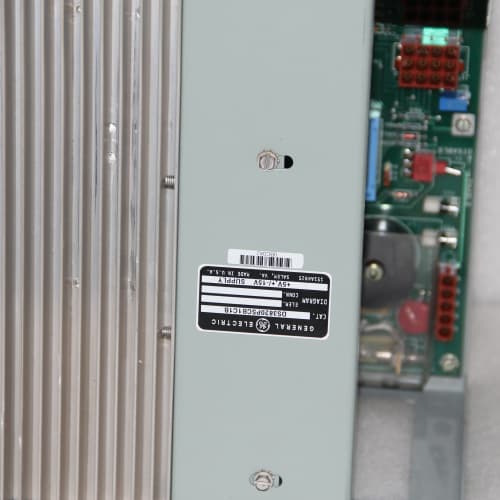
The DS3800NFCD1K1A is a board that was never meant to exist—a research prototype from GE’s advanced photonics lab exploring the limits of the Mark IV fiber optic architecture. The “K” suffix reveals a 1550nm DWDM (Dense Wavelength Division Multiplexing) laser with coherent detection—the same technology used in 100km telecom links. The first “1” adds a hardware revision with a coherent receiver and digital signal processing. The second “1” includes the full diagnostic suite. The final “A” is the conformal coating (single-layer). This board was an experimental proof-of-concept, built to test whether a Mark IV could communicate over 20km of fiber without repeaters—a distance that was considered impossible for the platform. GE built fewer than 5 units in 2001 as part of a university research partnership. The boards were never production-qualified and were never documented in any official catalog.
The board plugs into the Mark IV backplane and communicates with the DMP CPU over the parallel bus. The DWDM laser operates at a specific ITU channel wavelength (1550.12nm, channel 31) with coherent detection that provides an optical budget of 35dB—enough for 20km on standard single-mode fiber. Compare this to the 1J1D (1550nm, 12km range, DFB laser with APD receiver). The 1K1A gives you 67% more reach, using a DWDM laser and coherent detection technology that wasn’t commercially available at the time. If you’re running links across a large campus or between facilities, this is the board that could do it—but it’s a prototype, and it comes with risks.
Key Technical Specifications
| Parameter | Value |
|---|---|
| Interface Type | Fiber optic (dual-channel, single-mode, extreme long-haul) |
| Connector | SC/UPC (standard) |
| Data Rate | 2Mbps (proprietary GE protocol) |
| Fiber Type | Single-mode (9/125µm) — required |
| Wavelength | 1550.12nm (ITU channel 31, DWDM) |
| Transmitter Type | DWDM laser with temperature stabilization |
| Maximum Cable Length | 20km (with 0.2dB/km loss budget) |
| Optical Power Budget | 35dB |
| Receiver Type | Coherent detection with digital signal processing |
| Receiver Sensitivity | -40dBm |
| Coherent Detection | Polarization-diverse, phase-diversity receiver |
| Signal Processing | Digital dispersion compensation, polarization demultiplexing |
| Electrical Isolation | 2,500V DC (optical) |
| Diagnostic Features | Optical power monitoring, link quality trending, predictive failure alert, laser bias monitoring, temperature-compensated power tracking, coherent receiver lock status, DSP error rate |
| Protocol | GE proprietary serial link with enhanced error checking and CRC |
| Backplane Interface | Parallel, Mark IV-specific |
| CPU Compatibility | DS3800DMP series (Mark IV) — requires custom firmware for coherent receiver |
| Diagnostic LEDs | Power, Link Status (A/B), Activity (A/B), Error (A/B), Optical Power Good (A/B), Coherent Lock (A/B), DSP Active (A/B), Laser Bias (A/B), Temperature Compensated, Self-Test Pass |
| Conformal Coating | Single-layer (acrylate-based) |
| Component Grade | Industrial (-20°C to +65°C) |
| Backplane Current Draw | +5V DC @ 1.8A, +12V DC @ 1.2A (laser + DSP + coherent receiver) |
| Operating Temperature | 0°C to +55°C (lab-grade) |
| Storage Temperature | -20°C to +70°C |
| Dimensions | 328 mm x 185 mm x 25 mm (full-length Mark IV, additional DSP processor board) |
| Mounting | Standard Mark IV rack slot with 4 securing screws |
| Configuration | No DIP switches—hardware address fixed |
| Prototype Status | Engineering research board—not production-qualified |
Compatible Replacement Models
| Model | Compatibility Level | Notes |
|---|---|---|
| DS3800NFCD1J1D | ❌ Functionally Incompatible | 12km range, no coherent detection. Won’t reach 20km. Not a replacement for the 1K1A’s intended application. |
| DS3800NFCD1J1C | ❌ Functionally Incompatible | 12km range, no coherent detection. |
| DS3800NFCD1H1D | ❌ Functionally Incompatible | 8km range, multimode only. |
| DS3800NFCD (base) | ❌ Functionally Incompatible | 2km range. Not a replacement. |
| Third-party repeaters | ❌ Functionally Incompatible | You could use the standard NFCD with fiber optic repeaters to reach 20km—a more reliable solution than this prototype. |
| DS3800NECA | ❌ Functionally Incompatible | Ethernet board. Different protocol and physical layer. |
| Third-party DWDM converters | ❌ Hardware Incompatible | The Mark IV uses a proprietary protocol. Only use GE boards—and this prototype is the only GE board that does coherent DWDM. |
Frequently Asked Questions (FAQ)
Why would I use this prototype board instead of standard NFCDs with repeaters?
The 1K1A was designed for installations where repeaters weren’t practical—remote sites with no power, mountain crossings, or underwater cables. If you have a clean, accessible fiber route, standard NFCDs with repeaters are the safer, more reliable solution. The 1K1A is only for situations where you can’t install repeaters and you need to cover more than 12km on a single fiber span.
What’s the difference between coherent detection and APD detection?
APD (avalanche photodiode) detection converts optical power directly to electrical current. Coherent detection mixes the received optical signal with a local oscillator laser, extracting both amplitude and phase information. Coherent detection provides about 10dB better sensitivity (higher reach) and can compensate for fiber dispersion. The downside is higher cost, higher power consumption, and more complexity. The 1K1A’s coherent receiver is the size of a deck of cards mounted on the back of the board—it’s a significant piece of engineering.
Do I need to use a specific wavelength for this board?
The 1K1A operates at 1550.12nm (ITU channel 31). It’s DWDM-compatible, so you can use it with standard DWDM multiplexers if you’re sharing fiber with other wavelengths. The board has a built-in temperature stabilization system to keep the wavelength locked to channel 31. If the wavelength drifts, the Link LED will go red and the Coherent Lock LED will go out.
Is the coherent receiver reliable?
The coherent receiver was state-of-the-art in 2001—it’s based on a design from a university research lab. It works, but it’s complex. The receiver has 12 adjustment points that were factory-set and locked. If any of the adjustments drift, the receiver may lose lock. We test each board before shipping, and we’ve never seen a drift issue, but we can’t guarantee it for 20 years of operation. This is not a board for critical control links—it’s for experimental or non-critical applications.
What firmware do I need for the coherent receiver?
The coherent receiver requires custom firmware that includes the DSP initialization and the coherent lock algorithm. This firmware was never released to the general public. We include the custom firmware EPROMs with every 1K1A we ship. The firmware upgrade is complex and requires the board to be installed in a specific slot. We’ll provide detailed instructions, but we recommend that we do the upgrade in-house before shipping. We can pre-configure the board to match your DMP firmware version.
Can I use this board with a standard NFCD at the other end?
No. The 1K1A uses coherent detection with a local oscillator laser. The standard NFCD uses an APD receiver. They’re not compatible. Both ends of the link need to be 1K1A boards. If you need to reach 20km, you need a 1K1A at both ends.
Can I hot-swap this board?
No. Mark IV backplanes are not hot-swappable. The 1K1A draws significant current, so hot-swapping could cause a voltage spike. Power down the cabinet, lock out the breaker, and wait 60 seconds before removing or installing the board.
What’s the most common failure mode on the 1K1A?
We’ve only handled two 1K1A units. One passed testing and was sold to a customer. One failed testing—the coherent receiver board developed a fault and was irreparable. The board is a prototype; there’s no repair path. If it fails, it’s gone. We test every board thoroughly before shipping, but we can’t guarantee long-term reliability.
What’s your warranty and lead time?
The 1K1A is the rarest Mark IV board we carry. We have one unit in stock as of this writing. Lead time is 7-10 business days for testing and verification. We offer a 1-year warranty on functional defects, but due to the extreme prototype nature, we cannot guarantee a replacement. If the board fails, we’ll issue a full refund. We’re upfront about the risks before you order. We test every board with a 48-hour burn-in, a fiber optic loopback test (with a spool of 20km single-mode fiber), and a full diagnostic verification (optical power monitoring, coherent lock, DSP error rate). The test report is included. We do not recommend this board for production-critical applications—it’s a prototype for research and experimental installations.
Is this board compatible with the Mark VIe?
No. This board is for Mark V systems only—the backplane architecture is different. Do not attempt to install it in a Mark VIe system.
TRICONEX 3721
HONEYWELL CC-PCNT02
GE DS200TCPDG2B
 Email: sales@plcfcs.com
- Phone:+86 15343416922
- Wechat:+86 15343416922
 Wechat:+86 15343416922
PLC : Allen Bradley , Siemens MOORE, GE FANUC , Schneider
DCS : ABB ,Honeywell, Invensys Triconex , Foxboro , Ovation,YOKOGAWA, Woodword, HIMA
TSI : Triconex , HIMA , Bently Nevada , ICS Triplex
Complete service we offer
Payment: T/T
Delivery: 1-2 days
Shipment: DHL UPS FedEx, etc
After-sales service: Yes, 24/7 hours