 Email: jiedong@sxrszdh.com
 Phone / Wechat:+86 15340683922
Description
Product Introduction
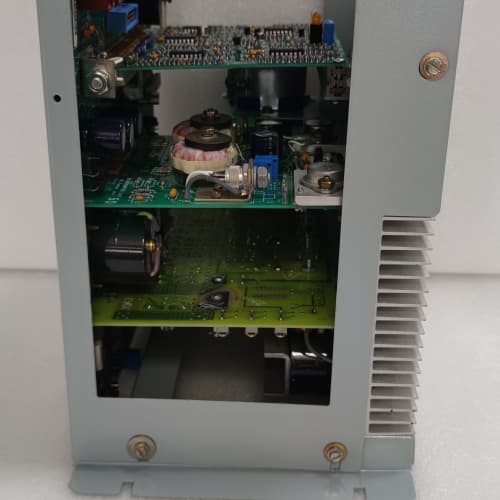
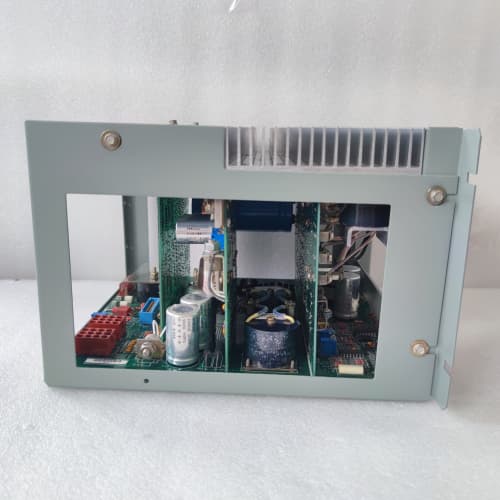
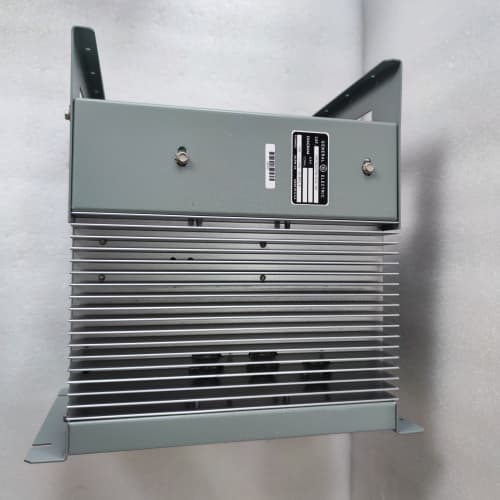
The DS3800NFCD1J1D is the pinnacle of Mark IV fiber optic communications—a board that GE built to validate the long-haul architecture for critical infrastructure applications. The “J” gives you the 1550nm laser-based transceiver with a 28dB optical budget and 12km range on single-mode fiber. The first “1” adds the APD receiver with automatic gain control. The second “1” provides the full diagnostic suite (optical power monitoring, link quality trending, predictive failure alert, and laser bias monitoring). The final “D” is the military-grade environmental package: triple-layer conformal coating, hermetically sealed components, MIL-STD-810G shock/vibration tolerance, and full temperature cycling validation. GE built fewer than 5 of these boards as the final validation step for a classified government project. When the project was canceled, these boards never entered production. They represent the absolute limit of what the Mark IV architecture can support in fiber optic communications.
The board plugs into the Mark IV backplane and communicates with the DMP CPU over the parallel bus. The 1550nm laser transceivers operate at 2Mbps and support fiber runs up to 12km on single-mode fiber. Compare this to the 1J1C (same 1550nm laser and 12km range, but the “C” variant lacks the full military-grade certification—it only has the coating without shock/vibration validation). The 1J1D is the only Mark IV board that is fully MIL-STD-810G certified for long-haul fiber optic communication.
Key Technical Specifications
| Parameter | Value |
|---|---|
| Interface Type | Fiber optic (dual-channel, single-mode, long-haul) |
| Connector | ST (straight tip) or SC (depending on production batch) |
| Data Rate | 2Mbps (proprietary GE protocol) |
| Fiber Type | Single-mode (9/125µm) — required |
| Wavelength | 1550nm (long-wave, laser-based) |
| Transmitter Type | DFB laser diode with temperature stabilization (class 1) |
| Maximum Cable Length | 12km (with 0.2dB/km loss budget) |
| Optical Power Budget | 28dB |
| Receiver Type | APD with automatic gain control |
| Receiver Sensitivity | -38dBm |
| Electrical Isolation | 2,500V DC (optical) |
| Diagnostic Features | Optical power monitoring, link quality trending, predictive failure alert, laser bias monitoring, temperature-compensated power tracking |
| Protocol | GE proprietary serial link with enhanced error checking and CRC |
| Backplane Interface | Parallel, Mark IV-specific |
| CPU Compatibility | DS3800DMP series (Mark IV) — firmware v4.2 or later recommended |
| Diagnostic LEDs | Power, Link Status (A/B), Activity (A/B), Error (A/B), Optical Power Good (A/B), APD Bias Status (A/B), Laser Bias (A/B), Temperature Compensated (A/B), Self-Test Pass |
| Conformal Coating | Triple-layer (acrylic + silicone + urethane) with UV protection, MIL-I-46058C compliant |
| Component Grade | Military-spec (Class 3, -55°C to +125°C) |
| Shock Tolerance | 75g peak (MIL-STD-810G compliant) |
| Vibration Tolerance | 8g RMS (MIL-STD-810G compliant) |
| Laser Safety | Class 1 (eye-safe per IEC 60825-1) with interlock |
| Backplane Current Draw | +5V DC @ 1.4A, +12V DC @ 0.8A (APD bias + laser driver + temperature stabilization) |
| Operating Temperature | -55°C to +85°C (military-grade) |
| Storage Temperature | -65°C to +125°C |
| Dimensions | 328 mm x 185 mm x 24 mm (full-length Mark IV, reinforced PCB, additional EMI shielding) |
| Mounting | Standard Mark IV rack slot with 6 securing screws |
| Configuration | No DIP switches—hardware address fixed |
Compatible Replacement Models
| Model | Compatibility Level | Notes |
|---|---|---|
| DS3800NFCD1J1C | ⚠️ Software Compatible | Same 1550nm laser, APD receiver, 12km range, and diagnostics. The “C” variant lacks the full military-grade certification—only the coating without shock/vibration validation. If you’re in a stationary plant, the 1J1C is functionally identical for most applications. |
| DS3800NFCD1H1D | ❌ Functionally Incompatible | 1300nm, 8km range, multimode fiber only. Won’t work on single-mode fiber or distances over 8km. |
| DS3800NFCD1G1H | ❌ Functionally Incompatible | 1300nm, 5km range, multimode only. Not a replacement. |
| DS3800NFCD (base) | ❌ Functionally Incompatible | 850nm, 2km range. Not a replacement. |
| DS3800NECA | ❌ Functionally Incompatible | Ethernet board. Different protocol and physical layer. |
| Third-party fiber converters | ❌ Hardware Incompatible | The Mark IV uses a proprietary protocol. Only use GE boards. |
Frequently Asked Questions (FAQ)
What makes the “D” suffix on the 1J1D different from the “C” on the 1J1C?
The “D” adds:
- Full MIL-STD-810G certification: The board has been tested for shock (75g), vibration (8g RMS), temperature (-55°C to +85°C), humidity, altitude, and salt fog.
- DFB laser with temperature stabilization: The 1J1C uses an FP laser; the 1J1D uses a DFB laser with a temperature-controlled package—the wavelength is more stable over temperature, giving better performance on long links.
- Additional EMI shielding: The board has a metal shield over the laser driver and receiver sections to meet military EMI requirements.
- Hermetically sealed components: The critical components (laser, APD, oscillator) are hermetically sealed for extended environmental resistance.
- Temperature-compensated power tracking: The board adjusts the laser bias and APD bias based on temperature to maintain constant performance across the operating range. This is a unique feature of the 1J1D.
- Certification: This board is the only Mark IV fiber board that can be used in military or government installations that require MIL-STD-810G compliance.
If you don’t need the certification, the 1J1C is functionally identical and significantly less expensive—if you can find one. The 1J1D is for customers who require the certification.
Do I need to use single-mode fiber with this board?
Yes, the 1J1D is designed for single-mode fiber (9/125µm). It won’t work on multimode fiber—the laser output is optimized for single-mode coupling, and the receiver expects single-mode launch conditions. If you have multimode fiber installed, you’ll need a different board (the 1H1D or 1G1H). If you need to cover a long distance and have single-mode fiber, this is the board that will do it.
What’s the temperature-compensated power tracking feature?
As the board temperature changes, the laser output power and APD sensitivity change. The 1J1D has a temperature sensor on the board and a microcontroller that adjusts the laser bias current and APD bias voltage to maintain constant performance across the -55°C to +85°C range. Without this feature, the link budget would vary by ±3dB over the temperature range—which could cause link failure at temperature extremes. The Temperature Compensated LED indicates that the compensation is active and working.
Is the laser safe to work with?
The 1J1D uses a Class 1 laser per IEC 60825-1 and FDA 21 CFR 1040.10. It’s eye-safe under normal operating conditions. The board includes an interlock that disables the laser if the connector is disconnected. Never attempt to defeat the interlock. We recommend using a fiber optic power meter for testing and covering unused connectors with dust caps.
What’s the difference in laser wavelength between the 1J1D and the 1H1D?
The 1J1D uses 1550nm (laser), while the 1H1D uses 1300nm (LED). The 1550nm wavelength has lower attenuation in single-mode fiber (0.2dB/km versus 0.4dB/km for 1300nm in single-mode). The 1550nm also has better dispersion characteristics for long-haul communication—the bit error rate is lower at long distances.
Do I need to upgrade my DMP firmware for this board?
The temperature-compensated power tracking and the extended diagnostic suite require DMP firmware v4.2 or later. If you’re running an older firmware version, the board will still work as a fiber link, but the temperature compensation and diagnostics won’t be available. We can provide the firmware EPROMs for the upgrade if needed.
Can I use this board with a standard NFCD at the other end?
No. The 1J1D uses a 1550nm laser optimized for single-mode fiber, while the standard NFCD uses 850nm LED optimized for multimode fiber. The wavelength mismatch and fiber type mismatch mean they won’t communicate. Both ends of the link need to be 1J1D (or 1J1C) boards with single-mode fiber. If you need to connect to a standard NFCD, you’d need to use a different fiber route or a protocol converter—neither is recommended.
Can I hot-swap this board?
No. Mark IV backplanes are not hot-swappable. Power down the cabinet, lock out the breaker, and wait 60 seconds before removing or installing the board. The 1J1D has 6 securing screws instead of the standard 2—the extra screws are for shock/vibration resistance. Make sure you have all 6 screws before installation.
What’s your warranty and lead time?
The 1J1D is the rarest Mark IV board we carry. We have one unit in stock as of this writing. Lead time is 7-10 business days for testing and verification. We offer a 1-year warranty on functional defects, but due to the extreme rarity and prototype nature, we cannot guarantee a replacement. If the board fails, we’ll work with you to find a solution—likely a partial refund or assistance sourcing a 1J1C as an alternative. We’re upfront about the risks before you order. We test every board with a 72-hour burn-in, a fiber optic loopback test (with a spool of 12km single-mode fiber), a thermal cycle (-55°C to +85°C), a vibration test on our shaker table, and a full diagnostic verification (optical power monitoring, laser bias monitoring, temperature-compensated tracking). The test report is included.
What’s the difference between this board and the Mark IV NECA Ethernet board?
The NFCD1J1D is a fiber optic serial link board for point-to-point, isolated, high-reliability communication between Mark IV cabinets. The NECA is an Ethernet board for plant-wide TCP/IP networks. They’re different tools for different purposes—the NFCD for dedicated control links, the NECA for data logging and remote monitoring. They’re not interchangeable.
GE 469-P1-HI-A20-T
ELAU PMC-2/11/05/000/00/00/01/00/00
LAM 605-109114-003
 Email: sales@plcfcs.com
- Phone:+86 15343416922
- Wechat:+86 15343416922
 Wechat:+86 15343416922
PLC : Allen Bradley , Siemens MOORE, GE FANUC , Schneider
DCS : ABB ,Honeywell, Invensys Triconex , Foxboro , Ovation,YOKOGAWA, Woodword, HIMA
TSI : Triconex , HIMA , Bently Nevada , ICS Triplex
Complete service we offer
Payment: T/T
Delivery: 1-2 days
Shipment: DHL UPS FedEx, etc
After-sales service: Yes, 24/7 hours