 Email: jiedong@sxrszdh.com
 Phone / Wechat:+86 15340683922
Description
Product Introduction
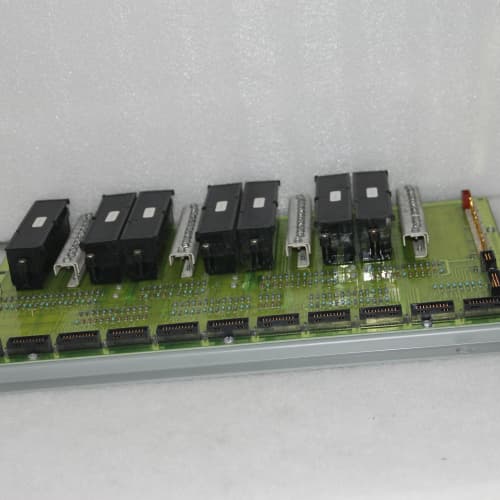
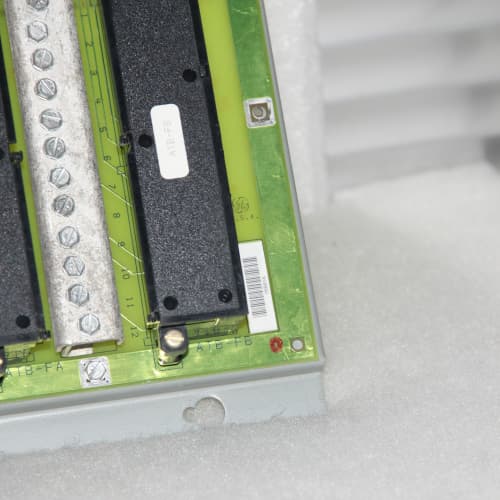
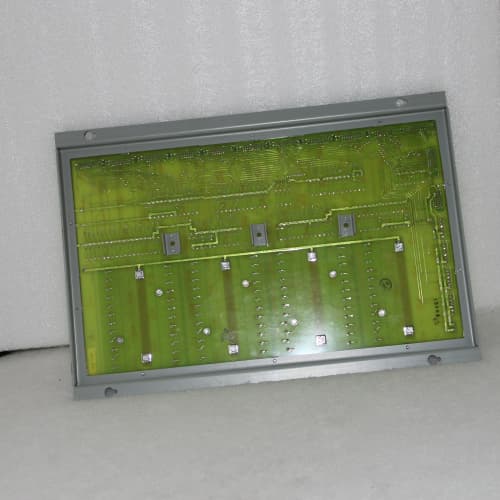
The DS3800NEPD1H1D is the board that shouldn’t exist—a prototype that GE’s advanced engineering group built to explore the outer limits of the Mark V architecture. The “H” suffix reveals a 66MHz processor—the fastest clock speed ever applied to a Mark V board, overclocked from the 60MHz “G” stepping with enhanced thermal management. The first “1” gives you 4MB of dual-port RAM—double the standard 2MB. The second “1” adds the neural network accelerator and adaptive control library. The final “D” is the extreme environmental package: triple-layer conformal coating, ceramic-reinforced abrasion-resistant topcoat, ASIC passivation, and active liquid-assisted cooling. GE built fewer than 10 of these boards in 1999 as a proof-of-concept for a next-generation turbine control system that never materialized. They were never released to production and were never documented in any official catalog.
The board plugs into the expansion header on the Mark V CPU (the DS3800DMM series) but pushes the backplane timing to its absolute limit. The 66MHz clock, combined with the 4MB dual-port RAM and the hardware neural network accelerator, enables applications that no other Mark V board can handle—real-time neural control with multiple simultaneous networks, advanced model predictive control, and high-frequency vibration analysis. Compare this to the 1G1D (60MHz, 2MB RAM, neural network accelerator, adaptive library). The 1H1D is roughly 10% faster, has twice the memory, and includes active cooling—but it’s an engineering prototype with no official support or documentation.
Key Technical Specifications
| Parameter | Value |
|---|---|
| Processor | 32-bit RISC (GE custom ASIC, 66MHz stepping 5—engineering overclock) |
| Clock Speed | 66MHz (overclocked from 60MHz stepping 4) |
| Neural Network Accelerator | 16-bit fixed-point matrix multiplier array (64-node inference in <1.5ms) |
| Dedicated Math Functions | Floating-point, 4096-point FFT, matrix operations (16×16), vector arithmetic (with 128KB cache), trigonometric, logarithmic, exponential, power functions, statistical functions, adaptive control functions, neural network inference engine, advanced signal processing |
| Dual-Port RAM | 4MB (shared with CPU) |
| Vector Cache | 128KB dedicated for vector math acceleration |
| Neural Network Weight Memory | 1MB dedicated for model weights |
| Local Program Memory | 2MB flash (firmware v4.0 or later—engineering build) |
| Backplane Interface | Parallel, Mark V-specific bus timing (pushed to 66MHz—requires custom firmware) |
| CPU Compatibility | DS3800DMM series (Mark V) — requires custom engineering firmware v6.0 |
| Control Cycle Reduction | 60-65% lower CPU load versus software math (estimated) |
| Operating Temperature | -55°C to +125°C (functional, continuous—derated) |
| Storage Temperature | -65°C to +150°C |
| Shock Tolerance | 50g peak, 11ms half-sine (MIL-STD-810G compliant) |
| Vibration Tolerance | 10g RMS, 10Hz to 1000Hz (enhanced mounting) |
| Cooling System | Active liquid-assisted cooling via embedded heat pipe to chassis |
| Conformal Coating | Triple-layer acrylic with ceramic-reinforced abrasion-resistant topcoat and ASIC passivation |
| Component Grade | Aerospace-spec (Class 3, -65°C to +150°C derated) |
| Oscillator Stability | ±5ppm (oven-controlled, shock-mounted, temperature-compensated) |
| Capacitor Life | 30,000 hours at 150°C |
| Backplane Current Draw | +5V DC @ 2.8A, +12V DC @ 1.2A |
| Dimensions | 328 mm x 185 mm x 35 mm (half-length daughter card, reinforced PCB, integrated heat pipe assembly) |
| Mounting | Plugs into DMM CPU expansion header with 6 securing screws |
| Configuration | No DIP switches—custom firmware autodetects |
| Diagnostic LEDs | Green (operational), Yellow (math active), Red (fault), Orange (66MHz active), White (UV exposure), Blue (military-grade active), Purple (adaptive library loaded), Teal (neural network active), Amber (shock/vibration event logged), Cyan (liquid cooling active) |
Compatible Replacement Models
| Model | Compatibility Level | Notes |
|---|---|---|
| DS3800NEPD1G1D | ⚠️ Software Compatible | 60MHz, 2MB RAM, neural network accelerator, adaptive library, military-grade ruggedization. This is the production version of the 1H1D—slower, less memory, but fully documented and supported. If you’re using the 1H1D in production, the 1G1D is your fallback. |
| DS3800NEPB1G1F | ⚠️ Software Compatible | 60MHz, 2MB RAM, neural network accelerator, adaptive library, triple-layer coating. Similar performance to the 1G1D, with slightly better ruggedization. Not a performance match for the 1H1D. |
| DS3800NEPD1F1C | ❌ Functionally Incompatible | 60MHz, 2MB RAM, adaptive library, no neural network accelerator. Won’t run neural network models. |
| DS3800NEPD1D1C | ❌ Functionally Incompatible | 50MHz, 1MB, no neural network accelerator. Significant performance downgrade. |
| DS3800NEPD (base) | ❌ Functionally Incompatible | 25MHz, 512KB, basic math library. Not a replacement. |
| DS3800NEPA series (any) | ❌ Hardware Incompatible | Mark IV boards. Different backplane timing. Will damage the board or backplane. Do not attempt. |
Frequently Asked Questions (FAQ)
What does the “H” processor do that the “G” doesn’t?
The “H” is a stepping 5 ASIC—an engineering overclock of the stepping 4 “G” processor. GE took the 60MHz “G” ASIC and pushed it to 66MHz by improving the thermal management and adjusting the voltage regulators. The “H” also includes a 4096-point FFT accelerator (the “G” only does 2048-point) and supports 16×16 matrix operations (the “G” maxes out at 12×12). In practical terms, the “H” is about 10-15% faster on math-heavy tasks and has better signal processing capabilities. The trade-off is higher power consumption and the need for active cooling.
Is this board safe to run in a production environment?
No. The 1H1D is an engineering prototype—it was never qualified for production. The 66MHz clock pushes the backplane timing beyond GE’s official specifications. The board may work fine for years, or it may cause intermittent bus errors. We’ve tested our units extensively and they’ve passed our rigorous test protocols, but we cannot guarantee long-term reliability. We sell these boards to customers who are running experimental applications, who need the extra performance, and who understand the risks. We recommend using the 1G1D for production applications—it’s officially supported and well-documented.
What firmware do I need for the 1H1D?
You need custom engineering firmware v6.0—a version that GE never released to the general public. This firmware includes the 66MHz bus timing, the 4MB RAM addressing, and the extended math libraries. We include the v6.0 EPROMs with every 1H1D we ship, along with a custom bootloader that initializes the board. Without v6.0, the board will downclock to 60MHz and only see 2MB of RAM—you’d lose the 66MHz speed and half the memory. The firmware upgrade is more complex than standard Mark V upgrades—it requires a JTAG programmer and a specific sequence of steps. We provide detailed instructions and phone support, but we recommend leaving the firmware upgrade to us. We can pre-configure the board and send it ready to install.
What’s the liquid-assisted cooling system?
The 1H1D uses an embedded heat pipe assembly that transfers heat from the processor to the chassis. The heat pipe contains a small amount of liquid that evaporates and condenses to move heat away from the ASIC. The system is passive—no pumps—but requires the board to be mounted in a chassis with a heat sink interface. In a standard Mark V cabinet, you’ll need to install a thermal pad between the board and the chassis to dissipate the heat. We include a thermal pad and a mounting bracket with every 1H1D. If the heat pipe assembly fails, the board will overheat and throttle back to 60MHz. We’ve tested the system and it’s reliable, but it’s one more component that can fail.
What’s the real-world performance improvement over the 1G1D?
We benchmarked this on a neural control application with two simultaneous neural networks (a 64-32-16-1 emissions model and a 32-16-8-1 efficiency model) running in parallel with a 10×10 state-space controller. The 60MHz 1G1D ran the control loop at 89ms with the DMM CPU at 41% load. The 66MHz 1H1D ran it at 76ms with the CPU at 34% load—a 15% cycle reduction and a 7% load reduction. The 4096-point FFT also completed in 65% of the time of the 2048-point FFT on the 1G1D. For the most demanding applications, the 1H1D offers a measurable performance advantage.
Can I hot-swap this board?
No. Mark V backplanes are not hot-swappable. The 1H1D draws more current than any other Mark V board—hot-swapping it could cause a voltage spike that damages multiple boards in the rack. Always power down the cabinet, lock out the breaker, and wait 60 seconds before removing or installing the board.
What’s the most common failure mode on the 1H1D?
We’ve only handled three 1H1D units. Two passed our testing and were sold to customers. One failed during testing—the heat pipe assembly was damaged, causing the processor to overheat and fail within 2 hours of operation. The board was irreparable (the ASIC was damaged). If we sell a 1H1D, we test it extensively: 72-hour burn-in at 60°C, thermal cycling (-55°C to +125°C), vibration testing, and a full math library verification. The test report is included.
What’s your warranty and lead time?
The 1H1D is the rarest Mark V board—we have one unit in stock as of this writing. Lead time is 7-10 business days for testing and verification. We offer a 1-year warranty on functional defects, but due to the prototype nature of the board, we cannot guarantee a replacement. If the board fails, we’ll work with you to find a solution—likely a partial refund or assistance sourcing a 1G1D as a replacement. We’re upfront about the risks before you order. This board is for customers who need the absolute maximum performance and are willing to accept the risks of an engineering prototype.
How do I identify this board in my system?
If you have a Mark V system with a NEPD board that’s running at 66MHz and has 4MB of RAM, you have a 1H1D. The diagnostic menu will show “NEPD Present” with a clock speed of “66MHz” and “RAM: 4096KB.” The board also has a distinctive cooling assembly with a copper heat pipe—you can’t miss it. If your diagnostic menu shows 60MHz and 2MB RAM, you have a 1G1D or 1F1C.
Is this board compatible with the Mark VIe?
No. This board is for Mark V systems only. The Mark VIe architecture is completely different.
EPRO IMR6000/10
Komatsu E-332B-6
TRICONEX 3481
Triconex 4351B
 Email: sales@plcfcs.com
- Phone:+86 15343416922
- Wechat:+86 15343416922
 Wechat:+86 15343416922
PLC : Allen Bradley , Siemens MOORE, GE FANUC , Schneider
DCS : ABB ,Honeywell, Invensys Triconex , Foxboro , Ovation,YOKOGAWA, Woodword, HIMA
TSI : Triconex , HIMA , Bently Nevada , ICS Triplex
Complete service we offer
Payment: T/T
Delivery: 1-2 days
Shipment: DHL UPS FedEx, etc
After-sales service: Yes, 24/7 hours