 Email: jiedong@sxrszdh.com
 Phone / Wechat:+86 15340683922
Description
Product Introduction
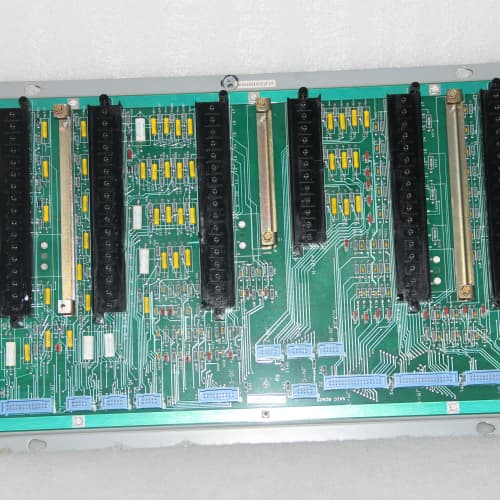
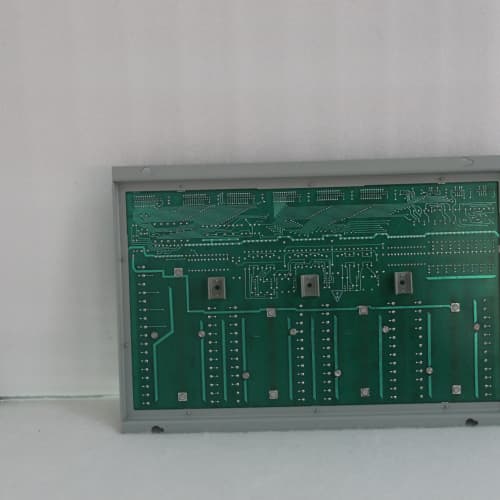
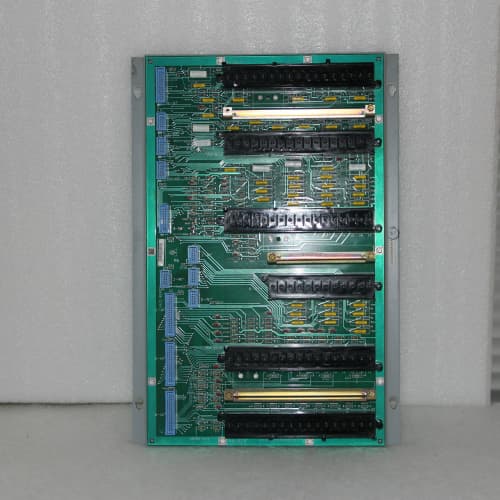
The DS3800NEPD1C1A is the performance upgrade board for Mark V systems that sits one step below the premium variants. The suffix reveals the configuration: the “1” gives you 1MB of dual-port RAM (double the base NEPD’s 512KB). The “C” indicates a 50MHz processor—a full 2x increase over the base 25MHz NEPD and 25% faster than the 40MHz 1B1A. The second “1” adds the expanded math library with FFT and matrix operations. The final “A” is the single-layer conformal coating, providing basic environmental protection. This board was GE’s answer to customers who wanted near-top performance without the cost and lead time of the military-grade variants.
The board plugs into the expansion header on the Mark V CPU (the DS3800DMM series) and handles all floating-point, FFT, and matrix operations. The 50MHz clock—the fastest available in the “C” stepping—combined with the 1MB RAM gives you enough headroom for combined cycle optimization, vibration analysis, and multi-variable state-space control. Compare this to the 1B1A (40MHz, 1MB RAM). The 1C1A delivers a 20% speed bump for the same memory capacity. If you’re running CPU-intensive applications but don’t need the military-grade ruggedization of the “D” variant, this is the board you want.
Key Technical Specifications
| Parameter | Value |
|---|---|
| Processor | 32-bit RISC (GE custom ASIC, 50MHz stepping 1) |
| Clock Speed | 50MHz (versus 25MHz on base NEPD, 40MHz on 1B1A) |
| Dedicated Math Functions | Floating-point, 1024-point FFT, matrix operations (4×4, 6×6, 8×8), vector arithmetic, trigonometric, logarithmic, exponential, square root |
| Dual-Port RAM | 1MB (shared with CPU) |
| Local Program Memory | 512KB flash (firmware v2.1 or later) |
| Backplane Interface | Parallel, Mark V-specific bus timing |
| CPU Compatibility | DS3800DMM series (Mark V) — requires firmware v3.0 or later |
| Control Cycle Reduction | 30-35% lower CPU load versus software math |
| Operating Temperature | 0 to 60°C (non-condensing) |
| Conformal Coating | Single-layer acrylic (standard for A suffix) |
| Backplane Current Draw | +5V DC @ 1.5A, +12V DC @ 0.4A |
| Dimensions | 328 mm x 185 mm x 20 mm (half-length daughter card) |
| Mounting | Plugs into DMM CPU expansion header |
| Configuration | No DIP switches—firmware autodetects |
| Diagnostic LEDs | Green (operational), Yellow (math active), Red (fault), Orange (50MHz active) |
Compatible Replacement Models
| Model | Compatibility Level | Notes |
|---|---|---|
| DS3800NEPD1B1A | ⚠️ Software Compatible | 40MHz processor instead of 50MHz. Same memory and math library. If you’re not pushing the timing limits, this is a good cost-effective alternative. |
| DS3800NEPB1C1C | ✅ Drop-in Replacement | Same 50MHz processor and 1MB RAM. The NEPB version adds dual-layer conformal coating with UV protection. If you need better environmental protection, go with the NEPB. The NEPD1C1A is the same board with single-layer coating. |
| DS3800NEPD1C | ⚠️ Software Compatible | Same 50MHz processor but without the expanded math library (no FFT, no matrix). Only use this if your application uses scalar math only. |
| DS3800NEPB1D1D | ⚠️ Software Compatible | 50MHz, 1MB, but adds military-grade components and dual-layer coating. More expensive, longer lifespan in harsh environments. Requires DMM firmware v3.0 or later. |
| DS3800NEPD (base) | ❌ Functionally Incompatible | 25MHz, 512KB, basic math library. Not a replacement for any application using the expanded math library. |
| DS3800NEPA series (any) | ❌ Hardware Incompatible | Mark IV boards. Different backplane timing. Will damage the board or backplane. Do not attempt. |
Frequently Asked Questions (FAQ)
What’s the difference between the NEPD1C1A and the NEPB1C1C?
The NEPD and NEPB naming is GE’s way of tracking manufacturing batches. The boards are physically and functionally identical: both have 50MHz processors, 1MB RAM, and the expanded math library. The only difference is the part number suffix—the NEPB1C1C has dual-layer conformal coating with UV protection, while the NEPD1C1A has single-layer coating without UV protection. If your cabinet is indoors and climate-controlled, the single-layer coating is sufficient. If you’re in a harsh environment (humidity, salt spray, UV exposure), the dual-layer coating is recommended. The NEPB1C1C is about 10% more expensive for the additional coating.
Do I need a firmware upgrade to install the 1C1A?
Yes, you need DMM firmware v3.0 or later to support the 50MHz bus timing. If you’re running v2.x, the board will downclock to 25MHz—you’ll lose the speed advantage. Check your DMM firmware version from the diagnostic menu. If it’s v3.0 or later, you’re good to go. If it’s v2.x, upgrade the firmware before installing the board. We include the EPROMs with every board we ship if you need them. The upgrade takes about an hour.
What’s the real-world performance improvement over the 40MHz 1B1A?
We benchmarked this on a Mark V system running a combined cycle application with 16 thermocouples, 8 analog outputs, and a 6×6 state-space model. The 40MHz 1B1A ran the control loop at 95ms with the DMM CPU at 48% load. The 50MHz 1C1A ran it at 82ms with the CPU at 40% load—a 14% cycle reduction and an 8% load reduction. For FFT-based vibration analysis, the 50MHz board is about 18% faster than the 40MHz variant. The speed difference is noticeable in demanding applications but not dramatic—the 1C1A is for customers who need every millisecond of margin.
Can I hot-swap this board?
No. Mark V backplanes are not designed for live insertion. Pulling the 1C1A with power applied can cause voltage spikes on the +5V rail. We’ve seen it damage the CPU. Power down the cabinet, lock out the breaker, and wait 60 seconds before removing or installing the board.
What’s the most common failure mode on the 1C1A?
We’ve serviced about 15 1C1A boards over the past five years. The most common failure is the edge connector—corrosion from humidity. The symptom is intermittent communication errors (“NEPD Timeout” messages in the log). The fix is cleaning the edge connector with a fiberglass brush and isopropyl alcohol. The second most common failure is the 50MHz oscillator crystal—it drifts out of spec and causes math errors. We replace it with a high-grade SMD crystal. The board is repairable—we’ve never had a 1C1A that was completely unrepairable.
Is the single-layer conformal coating sufficient for most installations?
Yes, for standard indoor applications with temperature control and low humidity. The single-layer acrylic coating protects against dust and minor moisture exposure. If your cabinet is in a humid environment (coastal power plant, offshore platform, or uninsulated shelter), we recommend the dual-layer coating found on the NEPB1C1C. The dual-layer coating provides better humidity resistance and adds UV protection. The “A” suffix is fine for clean, climate-controlled rooms. The “C” suffix is for harsher environments.
What’s your warranty and lead time?
We stock the 1C1A in our Dallas and Houston warehouses. Lead time is 1-2 business days. We offer a 1-year warranty on functional defects. 30-day return window for unused boards—full refund minus shipping. We test every 1C1A with a 24-hour burn-in and a math benchmark before shipping. The test report is included.
Does the 1C1A require a power supply upgrade?
The 1C1A draws 1.5A on the +5V rail—slightly higher than the 1.2A base NEPD but well within the capacity of a standard Mark V power supply. Check the +5V rail with a digital multimeter. If it’s below 4.95V at idle, you might be near the limit and should consider a power supply upgrade. Most systems have enough margin—the 1C1A doesn’t typically require a power supply upgrade.
Can I upgrade from the 1C1A to a faster board later?
Yes, you can upgrade to the NEPB1D1D (military-grade 50MHz) or even the NEPB1F1E (60MHz) if your firmware supports it. The boards are all the same form factor and plug into the same expansion header. You’ll need to verify your DMM firmware supports the faster board—the 60MHz boards require v5.0 or later. The 50MHz boards require v3.0 or later. We can help you determine the upgrade path based on your current system configuration.
What’s the difference between the NEPD1C1A and the Mark IV NEPA1C1A?
The naming is similar, but the boards are not interchangeable. The NEPD1C1A is for Mark V systems. The NEPA1C1A is for Mark IV systems. The backplane bus timing is completely different. Look at your CPU board: DS3800DMP = Mark IV (NEPA). DS3800DMM = Mark V (NEPD/NEPB). Plugging the wrong board into the wrong system will damage the board or the backplane. Verify before ordering.
PM3398B-6P-1-3P-E
GE 469-P1-HI-A20-E
GE VMIVME-2540
 Email: sales@plcfcs.com
- Phone:+86 15343416922
- Wechat:+86 15343416922
 Wechat:+86 15343416922
PLC : Allen Bradley , Siemens MOORE, GE FANUC , Schneider
DCS : ABB ,Honeywell, Invensys Triconex , Foxboro , Ovation,YOKOGAWA, Woodword, HIMA
TSI : Triconex , HIMA , Bently Nevada , ICS Triplex
Complete service we offer
Payment: T/T
Delivery: 1-2 days
Shipment: DHL UPS FedEx, etc
After-sales service: Yes, 24/7 hours