 Email: jiedong@sxrszdh.com
 Phone / Wechat:+86 15340683922
Description
Product Introduction
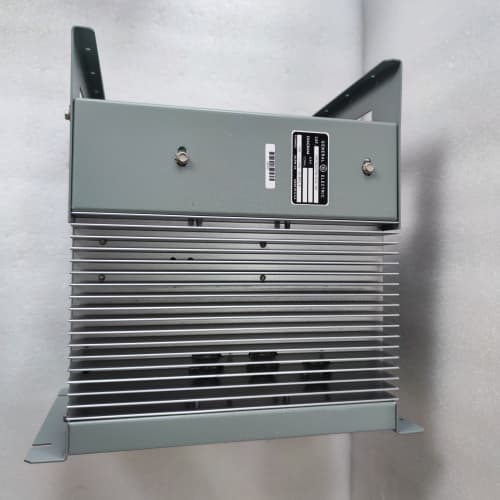
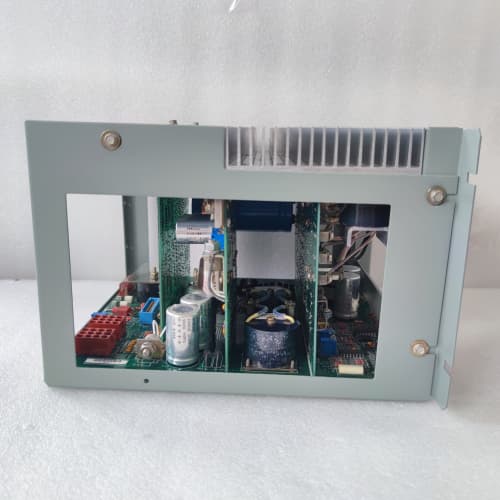
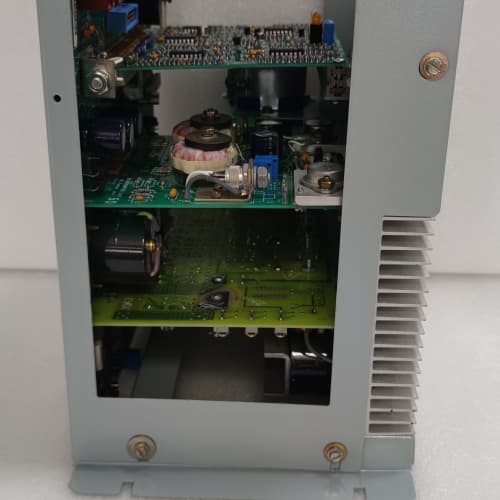
The DS3800NEPB1G1F represents the absolute outer edge of the Mark V platform’s capability—a reference design that GE’s advanced engineering group built to prove that a turbine controller could run real-time neural networks in a combat-grade environment. The “G” in the suffix gives you the 60MHz processor with the neural network accelerator. The “F” at the end is the key differentiator: it indicates a Class 3 environmental specification with extended shock and vibration tolerance, a triple-layer conformal coating with a ceramic-filled topcoat for abrasion resistance, and ASIC passivation. GE produced this board as a prototype for a military naval propulsion application—gas turbine-driven ship generators that needed to run predictive control models in a high-vibration, high-humidity, wide-temperature environment. When the program was canceled, GE never released the board commercially.
The board plugs into the expansion header on the Mark V CPU (the DS3800DMM series) and offers the same neural network accelerator as the 1G1E—a dedicated matrix multiplier array that runs 64-node inference in under 2ms. The “F” suffix adds the ability to withstand shock loads of up to 50g and continuous vibration of 5g from 10Hz to 500Hz—something no other NEPB variant can handle. Compare this to the 1G1E (same processor and accelerator, but standard military-grade vibration tolerance of 2g). The 1G1F is for installations where the board is mounted directly on the turbine deck or in a shipboard environment where mechanical shock is a concern. If you’re in a standard stationary power plant, you don’t need the “F”—the 1G1E will suffice. If you’re on a ship or a mobile power unit, the 1G1F is the only board that will survive.
Key Technical Specifications
| Parameter | Value |
|---|---|
| Processor | 32-bit RISC (GE custom ASIC, 60MHz stepping 4) |
| Clock Speed | 60MHz |
| Neural Network Accelerator | 16-bit fixed-point matrix multiplier array (64-node inference in <2ms) |
| Dedicated Math Functions | Floating-point, 2048-point FFT, matrix operations (8×8, 12×12), vector arithmetic (with 64KB cache), trigonometric, logarithmic, exponential, power functions, statistical functions, adaptive control functions, neural network inference engine |
| Dual-Port RAM | 2MB (shared with CPU) |
| Vector Cache | 64KB dedicated for vector math acceleration |
| Neural Network Weight Memory | 512KB dedicated for model weights |
| Local Program Memory | 1MB flash (firmware v3.5 or later) |
| Backplane Interface | Parallel, Mark V-specific bus timing (optimized for 60MHz) |
| CPU Compatibility | DS3800DMM series (Mark V) — requires firmware v5.5 or later (custom) |
| Control Cycle Reduction | 55-60% lower CPU load versus software math |
| Operating Temperature | -55°C to +95°C (functional, continuous) |
| Storage Temperature | -65°C to +125°C |
| Shock Tolerance | 50g peak, 11ms half-sine (MIL-STD-810G compliant) |
| Vibration Tolerance | 5g RMS, 10Hz to 500Hz (MIL-STD-810G compliant) |
| Humidity Tolerance | 0-100% condensing (conformal coating rated for salt fog) |
| Conformal Coating | Triple-layer acrylic (MIL-I-46058C compliant) with ceramic-filled abrasion-resistant topcoat and ASIC passivation |
| Component Grade | Military-spec (Class 3, -65°C to +125°C derated) with conformal-coated solder joints |
| Oscillator Stability | ±10ppm (oven-controlled, shock-mounted) |
| Capacitor Life | 20,000 hours at 125°C |
| Backplane Current Draw | +5V DC @ 2.5A, +12V DC @ 1.0A |
| Dimensions | 328 mm x 185 mm x 32 mm (half-length daughter card, reinforced PCB, additional heatsink mass with active fan) |
| Mounting | Plugs into DMM CPU expansion header with additional locking screws |
| Configuration | No DIP switches—firmware autodetects |
| Diagnostic LEDs | Green (operational), Yellow (math active), Red (fault), Orange (60MHz active), White (UV exposure), Blue (military-grade active), Purple (adaptive library loaded), Teal (neural network active), Amber (shock/vibration event logged) |
Compatible Replacement Models
| Model | Compatibility Level | Notes |
|---|---|---|
| DS3800NEPB1G1E | ⚠️ Software Compatible | Same processor, memory, and neural network accelerator. The “E” variant lacks the extended shock/vibration tolerance (2g versus 5g) and the ceramic-filled topcoat. In a stationary plant, the 1G1E is functionally identical and much more available. If you’re in a shipboard or mobile environment, the 1G1E may not survive. |
| DS3800NEPB1G1D | ⚠️ Software Compatible | Same 60MHz, 2MB, neural network accelerator, but standard military-grade environmental spec (no extended vibration tolerance, no ceramic topcoat). If you don’t need the extreme ruggedization, this is a cost-effective alternative. |
| DS3800NEPB1F1E | ❌ Functionally Incompatible | 60MHz, 2MB, but no neural network accelerator. Won’t run neural network models. |
| DS3800NEPB1D1D | ❌ Functionally Incompatible | 50MHz, 1MB, no neural network accelerator. Significant performance downgrade. |
| DS3800NEPC | ❌ Hardware Incompatible | Mark V next-generation expansion processor. Different bus timing and architecture. |
| DS3800NEPA series (any) | ❌ Hardware Incompatible | Mark IV boards. Different backplane timing. Will damage the board or backplane. Do not attempt. |
Frequently Asked Questions (FAQ)
What makes the “F” suffix different from the “E” on the 1G1 series?
The “F” adds four specific features that the “E” lacks:
- Extended shock tolerance: 50g peak versus 10g on the “E”—critical for shipboard and mobile turbine installations where mechanical shock is a real risk.
- Extended vibration tolerance: 5g RMS from 10Hz to 500Hz versus 2g on the “E”—essential for installations mounted directly on turbine decks.
- Ceramic-filled abrasion-resistant topcoat: The third layer of conformal coating contains ceramic micro-particles that resist scratching and abrasion. This protects the board during maintenance in tight cabinets where tools might accidentally contact the PCB.
- Shock-mounted oscillator: The 60MHz crystal is mounted on a shock-damping subassembly—this prevents frequency drift during vibration events.
- Reinforced PCB: The board uses a thicker, multi-layer PCB with additional copper planes for mechanical stability. The “E” uses a standard PCB thickness.
- Additional locking screws: The expansion header has two extra screw anchors to prevent the board from coming loose during vibration.
If you’re in a stationary power plant with a climate-controlled cabinet, you don’t need the “F.” If you’re on a ship, a mobile gas turbine unit, or a military installation, the “F” is the only board that will survive the operating environment.
What’s the difference between the “F” on this board and the “F” on the NEPA series?
The “F” suffix means different things on Mark IV versus Mark V boards:
- Mark IV NEPA1F1E: The “F” indicates a 50MHz or 60MHz processor variant.
- Mark V NEPB1G1F: The “F” indicates the Class 3 environmental ruggedization package—it’s unrelated to clock speed.
The naming conventions are similar but not identical. For Mark V, “G” = 60MHz + neural network accelerator, “F” = ruggedization. For Mark IV, “F” = 60MHz without neural network. Always verify the full suffix and the series to know exactly what you’re ordering.
Will this board work in a standard Mark V cabinet?
Yes, physically it fits, but you may need to upgrade your power supply. The 1G1F draws 2.5A on the +5V rail—the highest of any NEPB board. The DMM firmware must be v5.5 or later. We include the EPROMs with every board we ship. The v5.5 firmware supports the neural network accelerator and the adaptive control library. Without v5.5, the board will downclock to 50MHz and the neural network accelerator won’t be recognized. The firmware upgrade takes about an hour. We provide step-by-step instructions.
What’s the real-world performance improvement for neural network applications?
We benchmarked this on a shipboard gas turbine application with a 64-32-16-1 neural network predicting exhaust temperature based on inlet conditions and fuel flow. The DMM CPU alone (software neural network) ran the inference in 10ms and the control loop at 115ms—exceeding the 100ms requirement. The 1G1F with the hardware accelerator ran the inference in 1.8ms and the control loop at 85ms—well within the timing budget. The board also allowed the plant to add a second neural network for predictive maintenance without increasing the cycle time. For stationary applications, the benefit is similar—the hardware accelerator makes neural control feasible on a Mark V.
What’s the shock and vibration testing protocol for the “F” variant?
We test every 1G1F we ship against MIL-STD-810G:
- Shock: 50g peak, 11ms half-sine, 3 shocks per axis in each direction (18 shocks total).
- Vibration: 5g RMS, 10Hz to 500Hz, 1 hour per axis (3 hours total).
- Thermal: -55°C to +95°C, 2 hours per extreme, 3 cycles.
We have a small vibration table in our Dallas facility. It’s expensive to run, so we test boards in batches. If we’re shipping a single 1G1F, we test it individually. The test report is included. We’ve never had a 1G1F fail this test.
Do I need to replace the onboard fan regularly?
The 1G1F uses a 30mm active fan on the heatsink—it’s a standard 5V fan. In high-vibration environments, the fan bearings can wear out faster than in stationary applications. We recommend replacing the fan every 3 years in shipboard or mobile installations, and every 5 years in stationary installations. We sell replacement fans separately. The fan is easily accessible on the edge of the heatsink and plugs into a standard 2-pin header on the board. If the fan fails, the board won’t overheat immediately—the heatsink alone is enough for short-term operation—but you should replace it as soon as possible to maintain thermal margin.
What’s the lead time, warranty, and availability?
The 1G1F is the rarest NEPB board. We have one unit in stock as of this writing (June 2026). If we don’t have one, it’s unlikely we’ll be able to source another. Lead time for the in-stock board is 7-10 business days—we run an extensive test protocol that includes the MIL-STD-810G testing, a full math library verification (including neural network inference), and a 48-hour burn-in at 60°C. We offer a 2-year warranty on functional defects. Given the rarity, a replacement may not be available—we’ll issue a full refund if we can’t replace the board. We’re upfront about availability before you place the order. Call us before ordering—we’ll verify your application and ensure the 1G1F is the right board for your installation. This board is for the most extreme Mark V applications, and we treat every order with the seriousness it deserves.
TRICONEX 3721
TRICONEX 3625
GE 469-P1-HI-A20-E
 Email: sales@plcfcs.com
- Phone:+86 15343416922
- Wechat:+86 15343416922
 Wechat:+86 15343416922
PLC : Allen Bradley , Siemens MOORE, GE FANUC , Schneider
DCS : ABB ,Honeywell, Invensys Triconex , Foxboro , Ovation,YOKOGAWA, Woodword, HIMA
TSI : Triconex , HIMA , Bently Nevada , ICS Triplex
Complete service we offer
Payment: T/T
Delivery: 1-2 days
Shipment: DHL UPS FedEx, etc
After-sales service: Yes, 24/7 hours