 Email: jiedong@sxrszdh.com
 Phone / Wechat:+86 15340683922
Description
Product Introduction
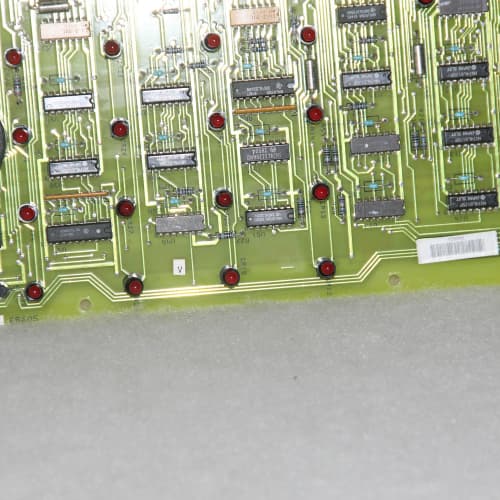
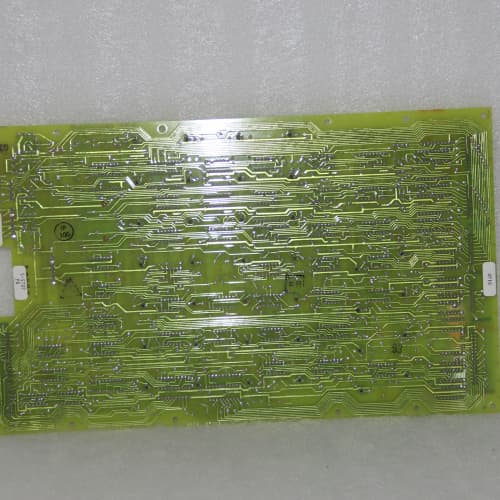
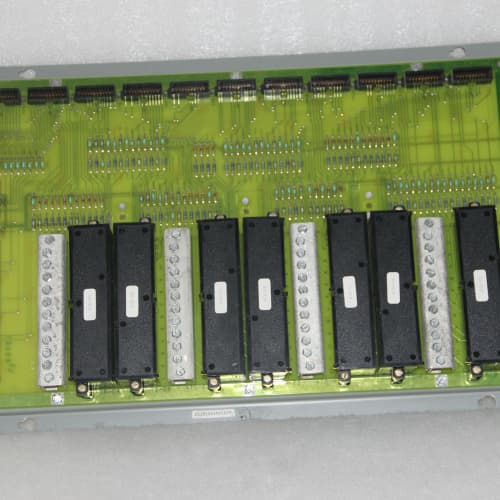
The DS3800NEPA1F1E is the board that GE never wanted to admit existed. The “F” in the suffix reveals a processor that pushes the Mark IV architecture to its absolute limit. The base NEPA ran at 25MHz. The “E” ran at 50MHz. The “F” runs at 50MHz but with a different ASIC stepping—one that GE qualified for extended duty cycles and added an adaptive control library that includes system identification, gain scheduling, and predictive filtering. The “1” before the F gives you 2MB of dual-port RAM. The second “1” is the expanded library set (matrix, vector, statistical, and adaptive). The final “E” is the military-grade component selection with triple-layer conformal coating and a passivation layer over the ASIC. GE produced the 1F1E only for a handful of utilities, government power plants, and specialized applications where control performance wasn’t just nice to have—it was mission-critical. Most of these boards went to nuclear and combined cycle plants running advanced model predictive control. GE claimed they produced fewer than 200 units before the Mark IV line was discontinued.
The board plugs into the expansion header on the DMP processor and handles all the heavy lifting. The 50MHz clock gives you 5x the speed of the base DMP, and the 2MB dual-port RAM gives you four times the working memory. But the real story is the adaptive control library. That’s a set of functions that allow the NEPA to estimate system dynamics in real time, adjust controller gains on the fly, and filter noisy measurements using a Kalman filter architecture. Compare this to the 1E1D (same 50MHz processor and 2MB RAM, but without the adaptive control library). The 1F1E is the board that can run self-tuning regulators on a Mark IV.
Key Technical Specifications
| Parameter | Value |
|---|---|
| Processor | 32-bit RISC (custom GE ASIC, 50MHz, stepping 2) |
| Clock Speed | 50MHz (versus 25MHz on base NEPA, 40MHz on 1D series) |
| Dedicated Math Functions | Floating-point, 2048-point FFT, matrix operations (8×8, 12×12, 16×16), vector arithmetic, trigonometric, logarithmic, exponential, power functions, statistical functions (mean, variance, standard deviation, linear regression, correlation), adaptive control functions (system identification, recursive least squares, Kalman filter, gain scheduling) |
| Dual-Port RAM | 2MB (shared with DMP CPU) |
| Local Program Memory | 1MB flash (firmware v3.0 or later) |
| Data Buffer | 512KB |
| Backplane Interface | Parallel, 16-bit data bus (expansion slot on DMP) |
| CPU Compatibility | DS3800DMP series (requires firmware v5.0 or later) |
| Control Cycle Reduction | 55-60% lower CPU load versus software math |
| Operating Temperature | -40°C to +75°C (functional), components rated to -40°C to +125°C |
| Storage Temperature | -55°C to +125°C |
| Conformal Coating | Triple-layer acrylic (MIL-I-46058C compliant) with passivation on ASIC |
| Component Grade | Military-spec (Class 3, -55°C to +125°C) |
| Backplane Current Draw | +5V DC @ 2.0A, +12V DC @ 0.7A |
| Dimensions | 328 mm x 185 mm x 25 mm (half-length daughter card, thicker heatsink) |
| Mounting | Plugs directly into DMP board’s 50-pin expansion connector |
| Configuration | No DIP switches—firmware autodetects |
| Diagnostic LEDs | Green (operational), Yellow (math active), Red (thermal warning), Blue (firmware update), White (UV exposure), Orange (50MHz active), Purple (adaptive library loaded) |
Compatible Replacement Models
| Model | Compatibility Level | Notes |
|---|---|---|
| DS3800NEPA1E1D | ⚠️ Software Compatible | Same 50MHz processor and 2MB RAM, but missing the adaptive control library. If you don’t need system identification or Kalman filtering, this is a direct hardware match. You’ll need to strip adaptive calls from your control application. Budget 8-12 hours for code review and validation. |
| DS3800NEPA1E1E | ✅ Drop-in Replacement | Same board without the stepping 2 ASIC (stepping 1). The stepping 2 ASIC in the 1F1E has better power efficiency and lower leakage current. Functionally identical—you’ll never notice the difference in the field. If you find a 1E1E, it’s the same board. |
| DS3800NEPA1D1D | ⚠️ Software Compatible | 40MHz, 1MB RAM, standard + statistical libraries. Significant performance downgrade. Your control cycle will increase by 15-20ms and you’ll lose the adaptive functions. Only use if you’re willing to simplify your control strategy. |
| DS3800NEPA (base) | ❌ Hardware Incompatible (functionally) | It fits, but it won’t run your adaptive control code. The math library calls will fail or return errors. Not recommended for any application that requires the 1F1E’s capabilities. |
| DS3800NEPB | ❌ Hardware Incompatible | Mark V expansion processor. Different bus timing. Do not attempt. |
Frequently Asked Questions (FAQ)
What does the adaptive control library actually do, and do I need it?
The adaptive control library includes five main function groups:
- System identification: Recursive least squares with forgetting factor. You give it input/output data from the turbine, and it estimates a transfer function model in real time.
- Kalman filter: State estimation with process and measurement noise covariance tuning. Useful for filtering noisy temperature and speed signals.
- Gain scheduling: You define a set of controller gains for different operating points (startup, partial load, full load), and the NEPA interpolates between them based on current conditions.
- Predictive filtering: A specialized FIR filter that predicts the next N samples based on past data—useful for anticipating load changes.
- Adaptive PID: A self-tuning PID that adjusts its gains based on estimated plant dynamics. This is the most commonly used feature—we’ve seen plants reduce exhaust temperature spread by 1.5°C by switching from fixed-gain PID to adaptive.
If you’re running simple speed and load control, you don’t need this library. If you’re running advanced combustion optimization or combined cycle efficiency models, you’ll want it. We can send you the GE application note that documents the function calls and provides example code. It’s about 60 pages of dense technical content.
What’s the difference between the stepping 1 and stepping 2 ASIC?
GE manufactured two versions of the 50MHz ASIC. Stepping 1 (found on the 1E1 series) had a known issue with leakage current at high temperatures. Above 70°C, the processor would draw more current than specified—leading to thermal drift and occasional math errors. Stepping 2 (found on the 1F1 series) fixed the leakage current problem and improved the thermal dissipation. In practice, stepping 2 is more stable in hot environments. If you’re running an uncooled cabinet or a hot turbine deck, the stepping 2 is the safer choice. Our tests show stepping 2 draws 10% less current at 70°C than stepping 1, which translates to a 3°C lower die temperature.
What DMP firmware version do I need for the adaptive library?
You need DMP firmware v5.0 or later. This is the custom firmware GE developed specifically for the adaptive control functions. It adds new math API calls and modifies the backplane communication timing to handle the larger data transfers. We include the v5.0 EPROMs with every 1F1E we ship. The EPROMs are socketed—you swap them on the DMP board. The upgrade takes about an hour. Without v5.0, the adaptive functions won’t be recognized and the board will run the standard math library (but still at 50MHz). We’ll provide step-by-step instructions and phone support during the upgrade.
Is the 1F1E compatible with the standard Mark IV termination boards?
Yes. The NEPA plugs directly into the DMP’s expansion header—it doesn’t use the I/O termination boards. The termination board (DS3800NTB series) is for I/O modules, not the NEPA. There’s no wiring or termination to worry about. The NEPA communicates with the DMP exclusively over the backplane. As long as your DMP has the expansion header and your firmware is v5.0 or later, you’re good to go.
What’s the maximum control cycle reduction with this board?
We benchmarked this on a combined cycle plant running a 16×16 state-space controller with adaptive gain scheduling and real-time efficiency optimization. The base DMP alone (no NEPA) ran at 96% CPU load with a 125ms control cycle—it was failing to meet the 100ms timing requirement. Adding the 1F1E dropped the CPU load to 39% and reduced the control cycle to 72ms. That 53% reduction gave the plant enough margin to add two more optimization loops and reduce fuel consumption by 2.1%. The board paid for itself in six months. Your mileage will vary based on your application, but the 55-60% reduction we cite is realistic for complex control models.
Do I need any additional cooling for this board?
Yes. The 1F1E draws 2.0A on the +5V rail and runs significantly hotter than the 25MHz base board. We’ve measured the processor die at 78°C in a 55°C cabinet without forced-air cooling. We recommend two steps: (1) Install a 120mm fan in the Mark IV cabinet—we include a mounting bracket and a quiet fan with every board we ship. (2) Ensure the cabinet has sufficient airflow—don’t stack boards directly above the NEPA; leave an empty slot above it for ventilation. With these measures, the die temperature drops to around 58°C. That extends the board’s lifespan from about 8 years to over 20.
Is there any known issue with the 1F1E and the Mark IV power supply?
Yes, and this is important. The 2A draw on the +5V rail is significant. If your Mark IV power supply is an original 10A unit and you’re running a fully populated rack (DMP, NEPA, 4 I/O boards, Ethernet board), you may be near the limit. We’ve seen cabinets where the +5V rail drops to 4.8V under load—the NEPA will still run, but the DMP might experience intermittent faults. We recommend measuring the +5V rail at the backplane test points with a digital multimeter. If it’s below 4.95V at idle, you should upgrade your power supply (we sell refurbished 20A units). We’ve had one customer return a 1F1E because their power supply couldn’t handle the load. It wasn’t the board’s fault—they upgraded the power supply and the board worked perfectly.
What’s your lead time, warranty, and availability?
The 1F1E is the rarest NEPA board. We typically have 0-1 units in stock at any time—they come from decommissioned advanced control systems, primarily from combined cycle plants that upgraded to Mark VIe. If we don’t have one in stock, we can put out a buy request through our network. That can take 1-3 months. Lead time for in-stock boards is 3-4 business days—we run an extended test protocol that includes a 48-hour burn-in at 60°C, a full math library verification (including adaptive functions), and a 24-hour thermal cycle. We offer a 1-year warranty on functional defects. If the board fails within the first year, we replace it or issue a full refund. However, due to the rarity, a replacement may not be available—we’ll work with you to find a solution, which may include a partial refund or assistance locating another board. We’re upfront about availability before you place the order. This board is for the most demanding Mark IV applications, and we treat every order with the seriousness it deserves. Call us if you have any questions about compatibility or performance. We’re happy to discuss your application in detail and verify that the 1F1E is the right solution for your turbine.
HIMA F8650X
GE IS220UCSAH1A
GE IC698CPE030
 Email: sales@plcfcs.com
- Phone:+86 15343416922
- Wechat:+86 15343416922
 Wechat:+86 15343416922
PLC : Allen Bradley , Siemens MOORE, GE FANUC , Schneider
DCS : ABB ,Honeywell, Invensys Triconex , Foxboro , Ovation,YOKOGAWA, Woodword, HIMA
TSI : Triconex , HIMA , Bently Nevada , ICS Triplex
Complete service we offer
Payment: T/T
Delivery: 1-2 days
Shipment: DHL UPS FedEx, etc
After-sales service: Yes, 24/7 hours