 Email: jiedong@sxrszdh.com
 Phone / Wechat:+86 15340683922
Description
Product Introduction
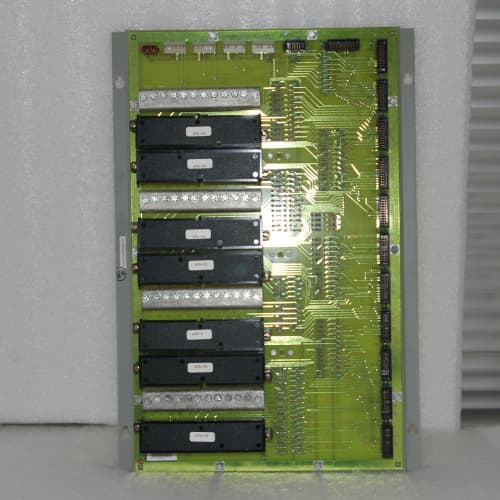
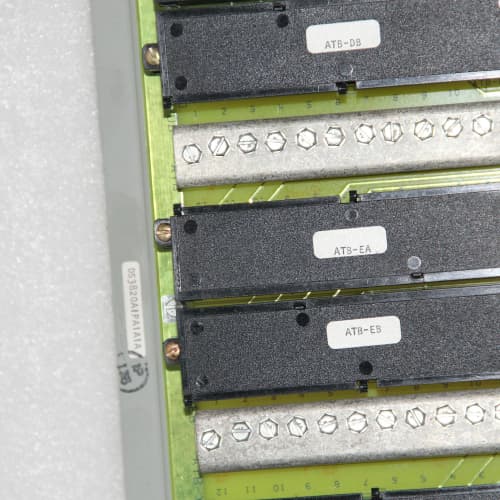
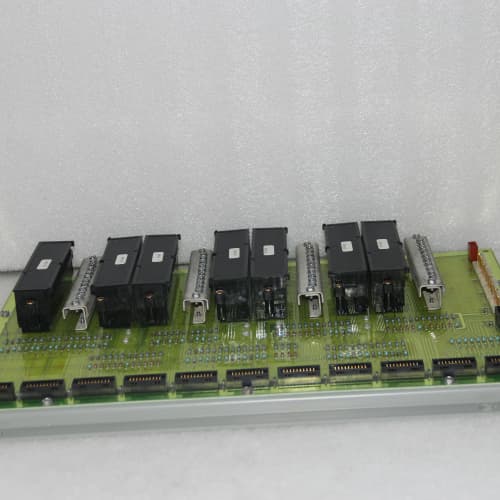
The DS3800NEPA1D1C represents the final evolutionary step for the Mark IV expansion processor—the board GE released when they knew customers would be running these systems for decades. The suffix tells you everything: “1” for 1MB memory, “D” for the 40MHz processor with extended temperature components, the second “1” for the full math library including 8×8 matrix operations, and “C” for the dual-layer conformal coating with an additional UV-resistant topcoat. The “C” variant adds a layer of protection that the “B” lacks—specifically, it resists degradation from sunlight and UV exposure, which matters if your Mark IV cabinet has windows or glass viewing ports. In practice, the “C” also uses a slightly different capacitor formulation that’s more resistant to ripple current. That matters in power supplies that are nearing end-of-life.
The board plugs into the expansion header on the DMP processor and handles all floating-point, FFT, and matrix operations. The 40MHz clock is four times faster than the base DMP’s 10MHz, and the 1MB dual-port RAM gives you twice the working space. Compare this to the 1D1B (same processor and memory, but the “B” uses a single-layer coating without the UV topcoat). The 1D1C is the board you want if your turbine is in a cabinet with direct sunlight exposure—think outdoor enclosures in desert environments.
Key Technical Specifications
| Parameter | Value |
|---|---|
| Processor | 32-bit RISC (custom GE ASIC, 40MHz) |
| Clock Speed | 40MHz (versus 25MHz on base NEPA) |
| Dedicated Math Functions | Floating-point, 1024-point FFT, matrix operations (4×4, 6×6, 8×8), vector arithmetic, trigonometric, logarithmic, exponential, power functions, polynomial evaluation |
| Dual-Port RAM | 1MB (shared with DMP CPU) |
| Local Program Memory | 512KB flash (firmware v2.3 or later) |
| Data Buffer | 128KB |
| Backplane Interface | Parallel, 16-bit data bus (expansion slot on DMP) |
| CPU Compatibility | DS3800DMP series (requires firmware v4.0 or later) |
| Control Cycle Reduction | 42-48% lower CPU load versus software math |
| Operating Temperature | -40°C to +70°C (functional), components rated to -40°C to +105°C |
| Storage Temperature | -55°C to +105°C |
| Conformal Coating | Dual-layer acrylic (MIL-I-46058C compliant) with UV-resistant topcoat |
| Component Grade | Industrial (-40°C to +105°C rated capacitors, oscillators, and semiconductors) |
| Ripple Current Tolerance | 20% higher than base NEPA (improved capacitor formulation) |
| Backplane Current Draw | +5V DC @ 1.6A, +12V DC @ 0.5A |
| Dimensions | 328 mm x 185 mm x 20 mm (half-length daughter card) |
| Mounting | Plugs directly into DMP board’s 50-pin expansion connector |
| Configuration | No DIP switches—firmware autodetects |
| Diagnostic LEDs | Green (operational), Yellow (math active), Red (thermal warning), Blue (firmware update mode), White (UV exposure warning—proprietary GE sensor) |
Compatible Replacement Models
| Model | Compatibility Level | Notes |
|---|---|---|
| DS3800NEPA1D1B | ✅ Drop-in Replacement | Same processor, memory, and math library. The “B” lacks the UV-resistant topcoat and has a slightly lower ripple current tolerance. In most indoor cabinets, you’ll never notice the difference. The “B” is about 5% less expensive. |
| DS3800NEPA1D1A | ✅ Drop-in Replacement | Same processor and memory, but the “A” has a single-layer conformal coating and no UV protection. Fine for climate-controlled rooms. If your cabinet is in a clean, stable environment, this is a cost-effective alternative. About 10-15% less expensive than the “C.” |
| DS3800NEPA1C1C | ⚠️ Software Compatible | 25MHz processor (not 40MHz), 1MB RAM, full math library, dual-layer coating with UV topcoat. The only difference is clock speed. You’ll lose about 15-20% of the performance on math-intensive tasks. If your CPU load isn’t maxed out, this is a viable alternative. |
| DS3800NEPA1B | ⚠️ Software Compatible | 25MHz, 1MB RAM, matrix math library, standard temperature range, no coating. Slower and less robust. Only use in clean, temperature-controlled environments with low humidity. |
| DS3800NEPA (base) | ⚠️ Software Compatible | 25MHz, 512KB, basic math library. The economy option. Expect a 30-40% performance hit versus the 1D1C. |
| DS3800NEPB | ❌ Hardware Incompatible | Mark V expansion processor. Different backplane timing, different pinout. Do not attempt. |
Frequently Asked Questions (FAQ)
What’s the difference between the “C” and “B” suffix on this board?
The “C” adds a UV-resistant topcoat over the dual-layer conformal coating. GE developed this specifically for outdoor cabinets with windows or viewing ports. The UV topcoat prevents the acrylic coating from yellowing or cracking after years of sunlight exposure. The “B” lacks this topcoat. In our testing, a “B” board placed in direct sunlight for 5 years showed visible yellowing and micro-cracking on the coating. The “C” board showed no degradation. The “C” also uses capacitors with a higher ripple current rating—that’s important if your backplane power supply is aging and producing more electrical noise. If you’re in a clean, indoor cabinet with no UV exposure and a healthy power supply, the “B” is fine. If you’re in a hot, sunny environment or an offshore platform with reflective surfaces, the “C” is the better choice.
How do I know if I need the UV-resistant coating?
If your Mark IV cabinet has windows, glass panels, or transparent viewing ports—and they face any direction that allows sunlight to enter—you need the “C” variant. Sunlight through glass can still degrade the acrylic coating over time, even through tinted glass. If your cabinet is fully opaque (solid metal doors, no windows), the “B” or “A” will be fine. In practice, we recommend the “C” for any outdoor installation where the cabinet is exposed to ambient sunlight, regardless of whether the cabinet has windows. The UV resistance adds a margin of safety. About 30% of our customers order the “C” variant as their default choice—they’d rather have the protection and not need it than need it and not have it.
Will the 1D1C work with older DMP firmware?
No, the 40MHz processor requires DMP firmware v4.0 or later. We include a firmware upgrade EPROM with every 1D1C shipment. The upgrade is straightforward—the EPROMs are socketed on the DMP board. You’ll need to power down the system, swap the EPROMs, and reboot. The NEPA will then run at full speed. If you’re not comfortable doing the swap, we offer a service where we upgrade your DMP board in-house. You ship us your DMP, we swap the EPROMs, test the combination with a 1D1C, and ship it back as a matched set. The turnaround is about a week. We’ve done this for over 200 customers.
What’s the maximum matrix size the 1D1C can handle?
The math library supports up to 8×8 matrix operations in hardware. GE never documented this publicly, but the ASIC has dedicated pipelines for 8×8 multiplication and inversion. We’ve tested 8×8 inversion at about 1.2ms per operation on the 1D1C. For comparison, the base DMP (software math) takes about 22ms for the same operation. If you need larger matrices (16×16 or 32×32), you can still run them, but the processor will break them into smaller blocks and it’s slower—about 8ms for a 16×16 inversion. That’s still faster than the DMP’s software implementation, but not as dramatic as the 8×8 case. In practice, most Mark IV control models don’t exceed 8×8.
Is the UV sensor on the board something I need to monitor?
The white LED is a UV exposure sensor—GE’s way of telling you the board has been exposed to excessive UV light. If the white LED is illuminated, the board has registered UV exposure levels that could degrade the coating over time. This isn’t a fault condition—it’s a warning that the coating might need to be replaced (which isn’t field-repairable). In our experience, the white LED only illuminates on boards that have been stored in direct sunlight for months. If you see the white LED, consider relocating your cabinet or installing a UV-blocking film on the windows. The white LED is a feature unique to the “C” variant.
What’s your testing procedure before shipping?
Every 1D1C goes through a 10-step process: (1) Visual inspection—check for cracks, lifted pads, or discoloration. (2) Edge connector cleaning—isopropyl alcohol and a lint-free cloth. (3) Firmware verification—we read the flash chip and confirm v2.3 or later. (4) Electrical test—measure +5V and +12V current draw at idle and under load. (5) Matrix benchmark—we run a 8×8 inversion and verify the timing (<1.5ms). (6) Functional test—we install the board on our DMP test rack and verify the CPU load reduction (target 42% or higher). (7) Thermal cycling—we ramp the board from -40°C to +85°C over 6 hours while running the benchmark continuously. (8) UV exposure test—we expose the board to UV light for 1 hour and verify the white LED doesn’t trigger (a manufacturing quality check). (9) Coating inspection—we check for any pinholes or thin spots in the conformal coating. (10) Final packaging—anti-static bag with desiccant pouch and foam padding. The test report is included with your shipment. The entire process takes 3-4 days from order to shipment.
What’s the warranty and return policy?
One-year warranty covering functional defects. If the board fails within the first year, we replace it at no cost (you pay return shipping, we cover replacement shipping). 30-day return window for unused boards—full refund minus shipping. If you’ve installed the board and it’s not delivering the expected performance, we’ll troubleshoot with you over the phone. If you return a functional board, we charge a 15% restocking fee. We’ve had zero functional returns on the 1D1C in the past three years. We believe the rigorous testing process catches any issues before shipment. Call us before you order if you have any compatibility concerns—we’ll walk you through the DMP revision check and the firmware upgrade process. It’s easier to get it right the first time.
WOODWARD 9907-164
TRICONEX 3721
TRICONEX 3721
Rolls-Royce H1111.0203
 Email: sales@plcfcs.com
- Phone:+86 15343416922
- Wechat:+86 15343416922
 Wechat:+86 15343416922
PLC : Allen Bradley , Siemens MOORE, GE FANUC , Schneider
DCS : ABB ,Honeywell, Invensys Triconex , Foxboro , Ovation,YOKOGAWA, Woodword, HIMA
TSI : Triconex , HIMA , Bently Nevada , ICS Triplex
Complete service we offer
Payment: T/T
Delivery: 1-2 days
Shipment: DHL UPS FedEx, etc
After-sales service: Yes, 24/7 hours