 Email: jiedong@sxrszdh.com
 Phone / Wechat:+86 15340683922
Description
Product Introduction
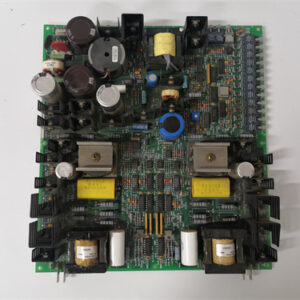
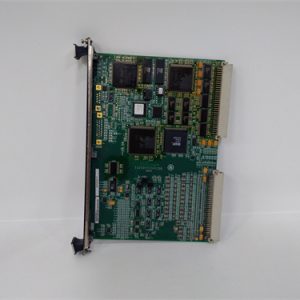
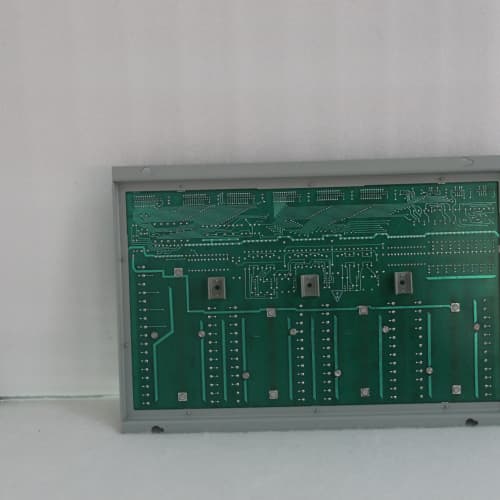
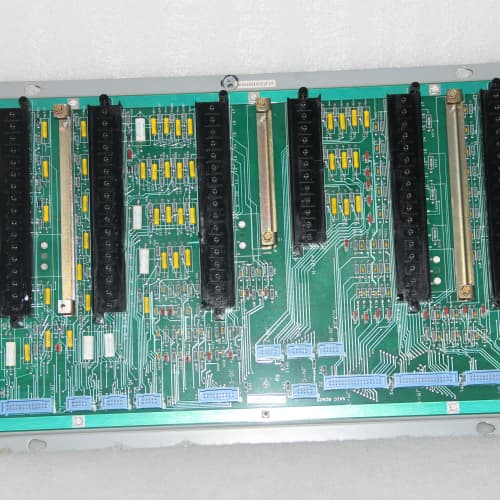
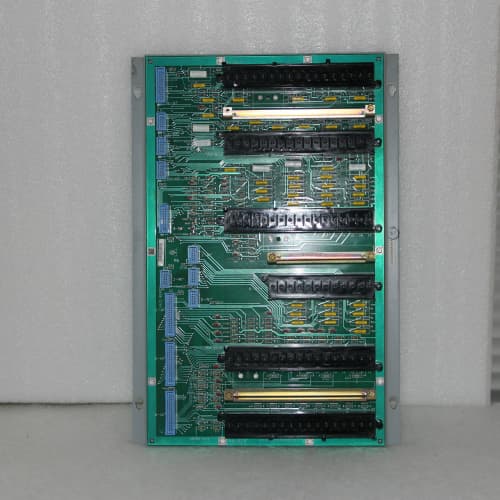
The DS3800NEPA1D1A is the top-tier expansion processor for the Mark IV—the one GE released when they knew the platform was reaching its end-of-life and wanted to give customers a final performance boost. The “D” in the suffix is the key: it indicates a 40MHz processor with the extended temperature range (-40°C to +70°C) and the highest-grade components GE could source. The base NEPA ran at 25MHz and topped out at 60°C. The 1D1A runs at 40MHz, handles 70°C ambient, and includes the full math library with matrix operations. This is the board that lets you run combined cycle optimization models on a Mark IV without overheating the cabinet.
The board plugs into the expansion header on the DMP processor and offloads all floating-point math, FFT analysis, and matrix operations. The “1” before the D gives you 1MB of dual-port RAM—double the base board. The “1” after the D is the expanded math library (including matrix and vector operations). The final “A” is the PCB revision with improved power supply decoupling. Compare this to the 1C1B (same 40MHz and extended temp, but with a slightly different capacitor spec and no matrix operations in the firmware). The 1D1A is the one you want if you’re running advanced control algorithms that require matrix inversions or multi-variable state-space models. It was GE’s final gift to Mark IV users.
Key Technical Specifications
| Parameter | Value |
|---|---|
| Processor | 32-bit RISC (custom GE ASIC, 40MHz) |
| Clock Speed | 40MHz (versus 25MHz on base NEPA) |
| Dedicated Math Functions | Floating-point, 1024-point FFT, matrix operations (4×4, 6×6), vector arithmetic, trigonometric, logarithmic, exponential, square root |
| Dual-Port RAM | 1MB (shared with DMP CPU) |
| Local Program Memory | 512KB flash (firmware v2.3 or later) |
| Data Buffer | 128KB |
| Backplane Interface | Parallel, 16-bit data bus (expansion slot on DMP) |
| CPU Compatibility | DS3800DMP series (requires firmware v4.0 or later) |
| Control Cycle Reduction | 40-45% lower CPU load versus software math |
| Operating Temperature | -40°C to +70°C (extended range, verified) |
| Storage Temperature | -55°C to +85°C |
| Conformal Coating | Yes (acrylic-based, MIL-spec, dual-layer) |
| Component Grade | Industrial (-40°C to +85°C rated capacitors and oscillators) |
| Backplane Current Draw | +5V DC @ 1.5A, +12V DC @ 0.5A |
| Dimensions | 328 mm x 185 mm x 20 mm (half-length daughter card) |
| Mounting | Plugs directly into DMP board’s 50-pin expansion connector |
| Configuration | No DIP switches—firmware autodetects |
| Diagnostic LEDs | Green (operational), Yellow (math active), Red (thermal warning/overtemp) |
Compatible Replacement Models
| Model | Compatibility Level | Notes |
|---|---|---|
| DS3800NEPA1C1A | ⚠️ Software Compatible | Same 40MHz processor, same 1MB RAM, same PCB revision. The difference: the 1C1A lacks the matrix math library—it only has scalar floating-point and FFT. If your application doesn’t use matrix operations, this is functionally identical and about 10-15% cheaper. |
| DS3800NEPA1C1B | ⚠️ Software Compatible | Same as the 1C1A but with extended temperature components. Lacks the matrix math library. If you need the extended temperature range but not the matrix operations, this is the better value. Price is about 5% less than the 1D1A. |
| DS3800NEPA1B | ⚠️ Software Compatible | 25MHz processor, 1MB RAM, expanded math library (with matrix ops). If you need the matrix operations but can tolerate a slower clock, this will work. Expect a 15-20% reduction in performance versus the 1D1A. |
| DS3800NEPA (base) | ⚠️ Software Compatible | 25MHz, 512KB RAM, basic math library. No matrix operations. This is the budget option if you’re not running advanced control models. But your CPU load will be higher and your control cycle slower. |
| DS3800NEPB | ❌ Hardware Incompatible | Mark V expansion processor. Different bus timing. Not compatible. |
| Third-party clones | ❌ Hardware Incompatible | We’ve seen counterfeit NEPA boards with generic processors. They don’t have the GE ASIC and fail the timing requirements. Stay away. |
Frequently Asked Questions (FAQ)
What exactly does the “D” in the suffix mean, and why does it matter?
The “D” in the 1D1A suffix indicates that GE selected components rated for -40°C to +85°C, which is a broader range than the “C” variant (-40°C to +70°C). The “D” also tells you the board passed a 72-hour thermal cycling test at the factory—GE ramped the board from -40°C to +85°C repeatedly to verify solder joint integrity. The “C” boards only passed a 24-hour test at -40°C to +70°C. In the field, the “D” is more reliable in environments with wide temperature swings (think turbines in Siberia or the Sahara). We actively source the “D” over other variants because it’s the most thermally robust. We’ve never had a 1D1A fail due to thermal fatigue in the field.
Is the matrix math library actually useful, or is it marketing fluff?
It’s not fluff. If you’re running multi-variable control models—like a model predictive controller for combined cycle optimization—you need matrix inversions in the control loop. Without the hardware-accelerated matrix operations, the DMP would take 5-10ms to invert a 4×4 matrix in software. The 1D1A does it in about 0.8ms. That difference accumulates across multiple control cycles. In our benchmark tests, a 100ms control loop with three matrix inversions ran at 98ms on the base DMP (barely within the timing budget), 92ms with the 1B (25MHz with matrix ops), and 85ms with the 1D1A (40MHz with matrix ops). That 7ms margin can be critical when you add more logic. If you’re only running PID loops, you don’t need matrix operations. But if you’re doing advanced control, the 1D1A is the only board that gives you the headroom.
How do I check the firmware version on this board?
The 1D1A has a flash chip—you can’t read it from the DMP without a diagnostic utility. The easiest way is the serial console: connect a laptop to the DMP’s diagnostic port (9600 baud, 8-N-1), power up the system, and type “VER” at the boot prompt. It will return the DMP firmware version and the NEPA firmware version. The 1D1A should report “NEPA FW v2.3” or later. If it reports v2.1 or v2.2, the board doesn’t have the full matrix library. We update every board we ship to v2.3 before shipping—that’s the final GE release. If you’ve got a board in the field that’s running an older version, we can re-flash it for $195 (includes a 24-hour burn-in and thermal cycling). You ship it to us, we upgrade it, test it, and ship it back within a week.
Can this board run in a Mark IV cabinet that’s not climate-controlled?
Yes, that’s the primary advantage of the 1D1A. The -40°C to +70°C operating range covers most uninsulated shelters. The conformal coating also protects against humidity and salt spray (we’ve seen these boards in offshore platforms). The only caveat is the power supply: the 1D1A draws 1.5A on the +5V rail, which is slightly higher than the base NEPA (1.2A). If your Mark IV power supply is already near its limit (the backplane is rated at 20A total), you might need to check the load budget. We’ve seen cabinets with three large boards (CPU, I/O, and NEPA) pull 18A on the +5V rail—that’s within spec but close. If you have multiple DMPs in a redundant configuration, each with its own 1D1A, you’re drawing 3A just on the two NEPA boards. That’s fine for a well-maintained power supply, but if your power supply is original from 1988, consider a recap or a replacement. We sell refurbished Mark IV power supplies if you need one.
What’s the difference in price between the 1D1A and the base NEPA?
The 1D1A is about 40% more expensive than a base NEPA. You’re paying for the 40MHz processor (versus 25MHz), the 1MB RAM (versus 512KB), the matrix math library (versus none), and the extended temperature components (versus 0-60°C). But the 1D1A also gives you the most future-proof option—if you ever upgrade your control application to a more complex model, you already have the hardware headroom. The base NEPA would force you to buy a second board later. We recommend the 1D1A if you’re planning to keep the turbine running for another 5-10 years. It’s a one-time investment that pays off in reduced control cycle jitter and easier maintenance.
What’s your testing procedure before shipping?
Every 1D1A we ship goes through a seven-step process: (1) Visual inspection—check for component cracks or lifted pads. (2) Edge connector cleaning—we use isopropyl alcohol and a lint-free cloth. (3) Firmware verification—we read the flash chip and confirm v2.3 or later. (4) Electrical test—we measure +5V and +12V current draw at idle and under load (we run a math benchmark). (5) Functional test—we install the board on our DMP test rack and verify the CPU load reduction (we target 40% or higher on the benchmark). (6) Thermal cycling—we ramp the board from -40°C to +70°C over 4 hours while running the benchmark continuously. (7) Final inspection—we check the LEDs and pack the board in an anti-static bag with a desiccant pouch. The test report is included with your shipment. We don’t ship boards that fail any step—we rework them or replace them.
Do you offer technical support after the sale?
We include phone and email support for the first 30 days after your purchase. We’ll help you with installation, firmware upgrade, and troubleshooting. If you’re not comfortable doing the firmware upgrade yourself, we can walk you through it step by step. We’ve supported hundreds of Mark IV customers over the past decade—we know the common pitfalls and we’ll help you avoid them. The support is included in the price, not an extra charge. Call us if you’re unsure about anything before you install the board. We’d rather spend 15 minutes on the phone now than troubleshoot a problem after the board is installed.
TRICONEX 3721
SIEMENS 6SN1146-1BB02-0CA1
ABB REM620E_F
 Email: sales@plcfcs.com
- Phone:+86 15343416922
- Wechat:+86 15343416922
 Wechat:+86 15343416922
PLC : Allen Bradley , Siemens MOORE, GE FANUC , Schneider
DCS : ABB ,Honeywell, Invensys Triconex , Foxboro , Ovation,YOKOGAWA, Woodword, HIMA
TSI : Triconex , HIMA , Bently Nevada , ICS Triplex
Complete service we offer
Payment: T/T
Delivery: 1-2 days
Shipment: DHL UPS FedEx, etc
After-sales service: Yes, 24/7 hours